
Golden Retriever Puppy Training
By JJ Allan (goldenretriever.hair)
A Golden Retriever puppy is ready for a short lesson the week it comes home, usually around eight weeks. The AKC's guide to five basic cues starts there: five to ten minutes, and a reward for the behavior you want. The same page says a leash correction or yelling leaves a puppy unsure of what was asked. A fast learner still learns because something good followed the behavior.
This page is the overview. Coming when called is the recall guide. Walking without a drag is the leash guide. What to introduce, and in what order, is the socialization guide. Panic when you leave is the separation anxiety guide. Stairs, a late-night potty trip, and a crate in a small room are the apartment living guide. The daily rhythm is the puppy training schedule. Ages on a chart are the puppy training timeline. The cue list is the basic commands checklist, and the next layer is the basic obedience guide.
This guide is general information, not veterinary advice. Every dog is different, so check with your veterinarian before starting classes or changing your puppy's routine, and see a vet right away if your puppy is fearful, aggressive, or suddenly starts having accidents after being reliable.
Reward the behavior you want
The AVSAB position statement on humane dog training says evidence supports reward-based methods for all canine training, including unwanted behavior. It defines aversive methods as those that rely on force, pain, or emotional or physical discomfort, and it says they should not be used in training or for behavior disorders. The conclusion is that there is no evidence aversive methods are more effective in any context.
The tools AVSAB names to avoid are choke chains, prong collars, and electronic shock collars; intimidation such as squirt bottles, shaker cans, compressed air, shouting, staring, and the forceful handling it calls alpha rolls or dominance downs; leash jerking and other physical force; and flooding, which is overwhelming exposure. The puppy has to feel safe and be able to opt out of a session. Ideas sold as dominance, leader of the pack, or alpha are outdated. AVSAB says to advise a client against a trainer who uses them.
The ASPCA position statement on training aids and methods says the same: food, praise, petting, and play, and no equipment that causes discomfort or undue anxiety. Training is unregulated in the United States, so the ASPCA points owners to a credential such as the Certification Council for Professional Dog Trainers. Severe distress, or a risk of injury, goes to a certified applied animal behaviorist or a board-certified veterinary behaviorist.
AVSAB summarizes the research and says a survey cannot separate cause from correlation. Aversive sessions were linked with stress-related behavior, including a tense body, lip licking, panting, and yelping, while reward-trained dogs paid more attention to the owner. Surveys associated aversive methods with later aggression and avoidance. The methods may contribute, or owners of dogs who already have problems may reach for harsher tools. Either reading, AVSAB says, fails the claim that those tools remove the problem. On obedience it cites Hiby, Rooney, and Bradshaw (2004): highest scores for reward-only training, lowest for aversive-only, and a mix in between. Recall is the usual reason for an electronic collar. AVSAB says research, including work with experienced trainers, did not find those collars more effective than reward-based recall.
AVSAB's picture of a session is a cue, a click or a word that marks the instant, and a toy or a treat right after. Capturing, shaping, and luring get you something to mark. Structure stays. Jumping, barking, and housetraining are handled by arranging the room and reinforcing the response you want, without fear or pain. Aggression, anxiety, and fear can need medication. AVSAB says a veterinarian should not save drugs for a last resort. The clinic decides.
The AKC adds the split between a lure and a bribe. Food shows the body position for a few repetitions. Then the empty hand signals, and the treat comes after. A reward can be valued food, kibble, praise, play, or petting. Praise is taught by pairing "good dog" with a treat. Food is the default in a five-minute session.
Keep the session short enough to end on a success
The AKC's five-cues article sets the length. Simple training starts as soon as the puppy comes home, usually around eight weeks. Sessions stay at five to ten minutes and end on a success. If the new behavior is falling apart, review something the puppy already knows, pay it well, and stop. When a puppy looks stubborn, the article says to check the size of the step and the value of the reward.
One cue means one word for the whole house. The AKC makes that point on the leash: pick "let's go" or "forward" or "heel," pick one side, and stay there. The same rule covers sit, down, and the release word. If one person says "off" and another says "down," the puppy is taking two quizzes. Write the words on a card by the treat jar.
The AKC starts recall indoors, in a quiet room, before any outdoor distance. A new sit happens in the kitchen. Distractions come after the behavior is easy in the boring room. A Golden's reputation for intelligence is a reason the steps can move. It is not a reason to skip the kitchen. A longer course on the same idea is the books list. The setup before any of this is fair to ask is the first week home and the puppy checklist.
Part of a meal can be the paycheck. The AKC's potty article says small treats let you reward often without turning the session into a second breakfast. If stools are routinely loose, bulky, or unusually foul, that article says to call the veterinarian. Overfeeding can contribute to diarrhea, and diarrhea wrecks housetraining. Day-to-day health is the puppy care guide. A training walk is not the day's exercise. How far a growing Golden should go is the exercise guide.
Read the puppy in front of you
| What you see | What it often means | What to do |
|---|---|---|
| Sniffing the floor, circling, a sudden stop in play, restlessness, or stiff back legs. | The pre-potty signs named by the AKC, VCA, and the ASPCA. The bladder is already deciding. | Same door, same spot, on a leash. Reward outside, next to the spot. |
| A puddle or a pile found after you looked away. The puppy is now across the room, or greeting you. | ASPCA: a scolding for a finished accident teaches nothing. VCA: punishment can make the puppy hide the next one. | Enzymatic cleanup. Supervise inside about ten feet, VCA's line. Follow the schedule below. |
| The puppy squats again on a spot you already cleaned with a household spray. | AKC and VCA both say leftover odor is a cue to reuse the spot. | Enzymatic cleaner, full strength, then blot. Keep the puppy off the spot until it is dry. |
| You say the name or "come" and the puppy keeps sniffing, or runs the other way. | The AKC's warning: a repeated name becomes easy to ignore. The outdoor distance is too big. | Move closer, pay the first response, and practice outside on a long line. That progression is the recall guide. |
| The leash goes tight the moment you step onto the sidewalk. At home, the puppy mouths hands and pant legs. | Ordinary pulling and mouthing. The AKC builds the leash one step at a time. | Turn and reward the catch-up. Trade a hand for a toy. The leash guide is the walking plan. Stop if you are angry. |
| Ears back, a refusal to approach a new person or a new floor, or crying in the crate that climbs instead of settling. | AVSAB's overstimulation: excessive fear, withdrawal, or avoidance. Panic when you leave is a different problem from a first-night fuss. | Stop that exposure. Panic, destruction, or drooling when left alone is the separation anxiety guide. |
Housetraining
The AKC's potty-training article says training begins the day the puppy comes home. Most arrive around eight weeks, when bladder control is weakest. The VCA housetraining article, by Ellen Lindell, VMD, DACVB, and Monique Feyrecilde, BA, LVT, VTS (Behavior), says the same start: one outdoor area, always through the same door. An indoor pad or box, if that is the plan, gets every trip instead. The ASPCA's house-training note adds the limit: there is no formula and no timetable that fits every dog.
The two clinical schedules are not copies of each other. Use both, and let the puppy in front of you break the tie.
The AKC's holding guideline is about as many hours as the puppy's age in months, up to about nine months to a year. A six-month-old may hold for around six hours. Individuals vary, and some need more trips than the guideline. On top of that estimate, very young puppies go out first thing, last thing, after naps, after the crate, after meals, after drinking, after chewing, and after indoor play. That can be a dozen trips a day. The AKC's FAQ tightens it further for the youngest: every one to two hours during waking periods.
VCA's list is how often you offer the chance, not a record of what the bladder can store. Overnight outings may be needed until five months. Also: after a meal or a big drink, immediately after a nap, every half hour during hard play, every one to two hours while awake in addition to those times, and every four hours even at rest. Alone more than three hours means a potty break, a sitter, or a pen that has both a bed and a toilet surface such as a pad. A four-month-old who can sometimes hold for four hours still goes out after breakfast, after a zoom around the room, and after a nap. The ASPCA's point sits over both clocks. Treat either one as a promise and you will be late.
Take the puppy out on a leash, even in a fenced yard. VCA says a puppy sent out alone gets distracted and eliminates back indoors. Wait about five minutes. If nothing happens, supervise indoors and return at the first restlessness. Play waits until the puppy has finished.
Reward outside, next to the spot: quiet praise and a small treat on VCA's page, an obvious party on the AKC's. Say "go potty" only as the posture starts. Both pages time the cue that way.
If you catch the squat, the sources differ on the interrupt and agree on the aftermath. The AKC says to pick the puppy up calmly and finish outside, then reward. VCA says to interrupt without scaring, with an odd noise or a light tap on your leg, then guide and praise. The ASPCA allows a clap if you catch the act itself. None of them supports a punishment after the fact. The ASPCA says yelling at a mess a few minutes old teaches nothing, and rubbing a face in it teaches fear and sneakier hiding. VCA says never rub a nose in an elimination and never strike a puppy. That punishment can make the puppy decide it should never toilet where a person can see.
Cleanup is part of the lesson. The AKC and VCA both say leftover odor is a cue to reuse the spot. Use an enzymatic cleaner the way the label says. A perfume spray covers the smell for you and leaves it for the puppy.
VCA waits eight to twelve weeks without mistakes before more freedom. The AKC's matching warning is that owners open the house too soon. A reliable dog who starts soiling goes to a veterinarian on both pages. Excited urination at a greeting is a different pattern, and VCA sends that one to a behavior professional after a medical check.
Mary Burch, Ph.D., of the AKC Canine Good Citizen program, says pads reinforce two options when the goal is outdoors. They fit a schedule that cannot get you home, or severe weather for a very small dog. VCA allows one indoor latrine if every trip uses it. An apartment often needs that compromise, which is the apartment living guide. Do not add a second surface in another room.
The crate is a bed, and time alone is a skill
The AKC calls the crate one of the most effective housetraining tools because dogs generally prefer not to soil where they sleep, and because a puppy who needs to go will often whine, scratch, or get restless. Answer that signal. The crate is large enough to stand, turn, and lie down, and small enough that a corner cannot become a toilet. A moving partition keeps that size as the puppy grows. AVSAB adds that a puppy used to a crate is less stressed if it has to be hospitalized or confined for travel.
For an absence under VCA's three-hour limit, a crate can work because many puppies sleep and are less likely to need to eliminate while asleep. Longer than that needs a potty break, a sitter, or a pen with a pad, as in the housetraining section.
AVSAB wants the crate to be a comfort or a play area, and it wants alone time on purpose: a stuffed food toy, or a nap in a crate or a pen, so the puppy learns to amuse itself. Varied experiences through the first year may help prevent separation-related behavior. That practice is ordinary. Panic, drooling, door destruction, or an injury from trying to get out is the separation anxiety guide, and it belongs with a veterinarian. AVSAB lists separation anxiety among problems that can need medication after a diagnosis. A crate used as the consequence for a chewed shoe stops being a bed. Retire a stuffed toy that is cracking. The toy does not replace the three-hour check.
Sit, down, stay, and come
The AKC's five cues are come, loose-leash walking, sit, down, and stay. This page keeps the shape. Repetitions live in the basic commands checklist and the basic obedience guide. Outdoor come lives in the recall guide.
Sit is captured or lured. Capturing means you wait, mark the sit with "yes," and pay. Luring means the treat moves from the nose up and back until the bottom touches down. After a couple of lures, the hand is empty and the treat comes after the sit. The word joins the hand signal only once the hand works. Do not push a puppy into a sit. AVSAB lists physical force among the methods to avoid. Down is the same pattern, to the floor, and force is out there too.
Stay needs a release word first, such as "OK" or "free," paired with a step forward to a tossed treat. Then sit, treat, pause, treat again, and release. Add time slowly, and shorten it if the puppy gets up. Distance is the next dial: one step away, return, treat, release.
Come starts as a paid sound. Say the name or "come" and treat, for nothing, then for a look-up, then for a turn. The AKC says not to repeat the name when the puppy ignores it. Move closer and return to a step that works the first time. Once the turn is easy, toss a treat, take a few steps away, and let the puppy chase you. Pay the arrival. Do not grab. For a timid puppy, kneel sideways and offer the treat as your hand goes to the collar. Outdoor practice stays on a long line in a safe enclosed area. A kitchen come that vanishes in the park is still a kitchen game, which is the correct first chapter.
Mouthing is why people reach for a punishment the sources reject. Trade the hand for a toy and end the game if teeth stay on skin. AVSAB's avoid-list covers the old fixes: no scruff shake, no shouting program, no dominance down. Mouthing that breaks skin and does not improve with that management needs a reward-based trainer, not a harsher tool.
The leash, in one paragraph
The AKC starts with treats while the leash goes on, then several treats for standing at your leg, then one step and a treat when the puppy arrives, food held near your knee or hip. When the puppy forges, turn, call, and reward the new direction. Treats thin out from every step to every few steps. Sniffing stays part of the walk, and "let's go" is the cue back into position. One side, one word. Equipment and sidewalk problems are the leash guide. A 30-foot line is for recall in a field or a yard. In a hallway it is a tangle.
Socialize before the vaccine series is finished
The AVSAB position statement on puppy socialization says the primary window is the first three months. A puppy should meet as many new people, animals, stimuli, and places as can be done safely, without overstimulation, which the statement describes as excessive fear, withdrawal, or avoidance. Sociability outweighs fear in these months. Incomplete socialization raises the later risk of fear, avoidance, and aggression.
AVSAB states the tradeoff directly. Behavior problems are the greatest threat to the owner-dog bond, the number one cause of relinquishment to shelters, and, rather than infectious diseases, the number one cause of death for dogs under three years of age. Maternal immunity, the primary vaccine series, and appropriate care make infection risk relatively small beside the chance of death from a behavior problem. Socialization before the puppy is fully vaccinated should be the standard of care.
The class rule is AVSAB's, and the veterinarian still sets this puppy's dates. Classes can start as early as seven to eight weeks. The puppy needs a minimum of one set of vaccines at least seven days before the first class, and a first deworming, and stays up to date through the class. Classmates should be disease-free and parasite-free. Prefer a surface that can be disinfected, usually indoors. Avoid dog parks and other unsanitized, highly trafficked places where you do not know the dogs' vaccines or health. Show the clinic the class so the seven-day gap is real.
Classes and home practice use praise, petting, play, and treats. AVSAB says positive, consistent training is associated with fewer behavior problems and greater obedience than punishment or dominance methods. Handle every body part. Offer surfaces, steps, sounds, and car trips while food is still flowing. The week-by-week list is the socialization guide.
The window does not slam at twelve weeks. Keep introducing people, pets, and places. A puppy who is already afraid needs veterinary guidance. Flooding, which AVSAB rejects, is forcing the puppy to stay until it stops struggling. The alternative is a smaller step that keeps the puppy safe, with a reward for the calm response. If a visitor, a floor, or a sound produces withdrawal, that item is done for the day.
When to call a veterinarian or a behavior specialist
Call when housetraining stays stuck despite the schedule, the supervision, and the cleanup. The AKC, citing Dr. Burch, says a dog who remains difficult to housetrain should be examined, because a medical problem can look like a training failure. VCA says the same when a reliable dog starts soiling: some dogs cannot control it. Loose, bulky, or unusually foul stools are a call too. The AKC ties diet problems and overfeeding to diarrhea that wrecks the schedule.
Call when the puppy is afraid. AVSAB says fearful puppies need veterinary guidance, and that aggression is not a reason for a harsher method. A stuck trainer refers on: another reward-based trainer, a veterinarian, a board-certified veterinary behaviorist, or a certified applied animal behaviorist. The ASPCA draws that line for serious fear, anxiety, and aggression. Separation panic and mouthing that keeps breaking skin belong there too.
Watch a session before you pay. AVSAB wants a certified humane trainer, and it says not to send clients to aversive tools or dominance talk. The ASPCA's filter is rewards and a real credential, such as CCPDT certification. AVSAB adds that a trainer's methods should be observed before anyone recommends them. A board-and-train stay helps only if you learn how to keep the behavior at home.
If a behavior problem needs medication, it comes from the veterinarian after an exam. AVSAB says drugs are not something to withhold until every other idea has failed. The exam is also what rules out a medical contributor. This page does not include a dose.
Gear that matches the lesson
A marker, food you can reach, a toy that holds part of a meal, a line you are holding, and a cleaner that removes odor. Check the size on the page before you buy.
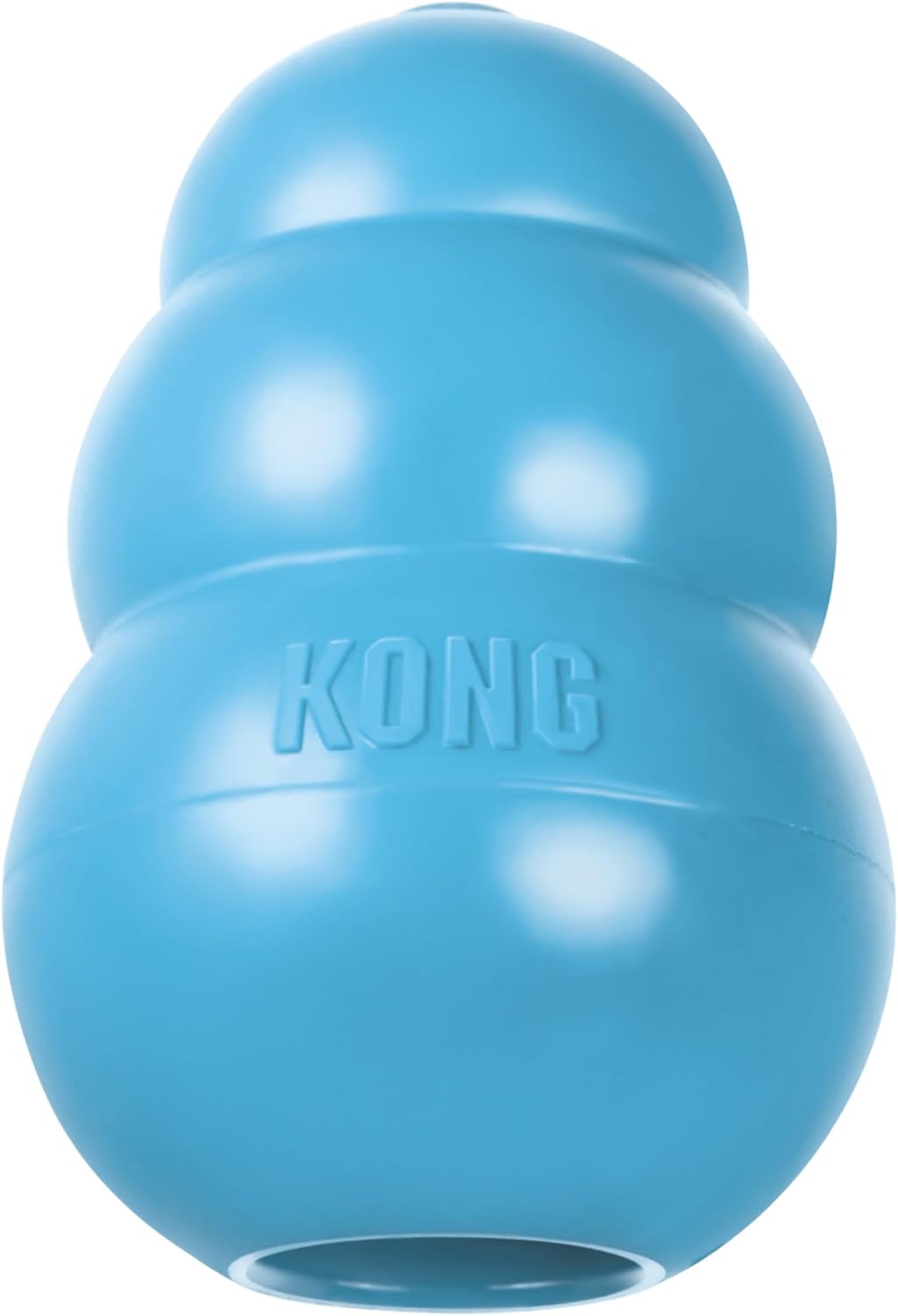
KONG Puppy, blue, Large
A hollow puppy-formula rubber toy. This Large is 4 by 2.75 by 2.75 inches and 7.05 ounces, labeled for large puppies, the size a Golden grows through. Once adult teeth are in, around six months, move to the regular-formula KONG in Large or XL. KONG says the rubber is for baby teeth and that the toy can be stuffed so crate time lasts longer, which is the alone-time toy AVSAB describes. Supervise, and retire it if it cracks. KONG says no toy is indestructible.
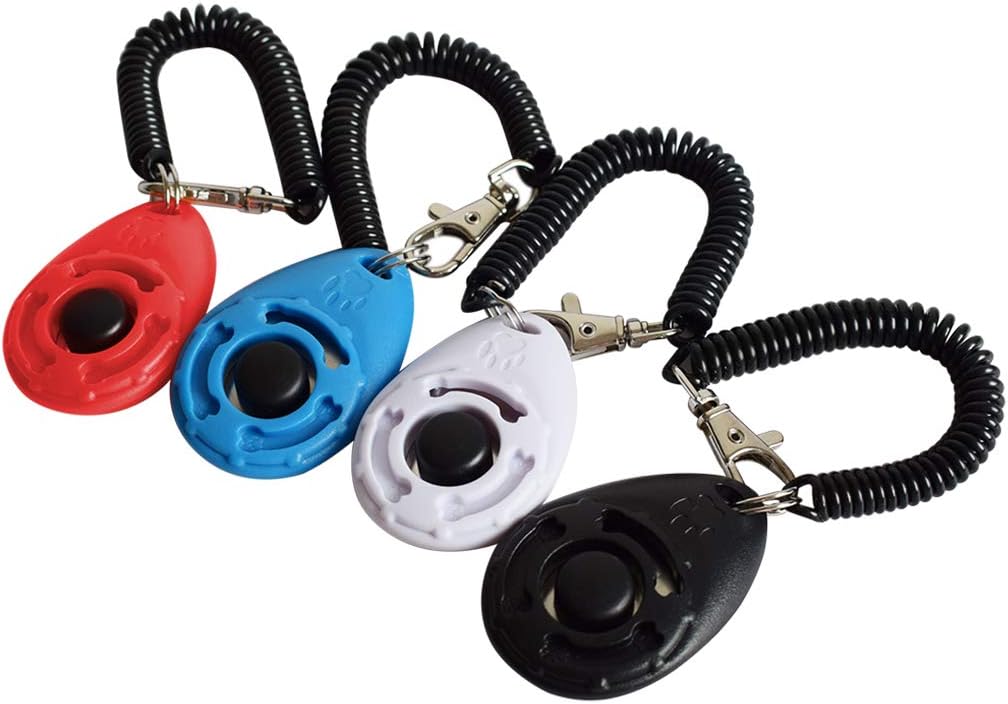
Ruconla training clicker, four-pack with wrist straps
Four box clickers, black, red, white, and blue, each with a wrist strap. Product details list one clicker at 2.4 by 1.8 by 0.6 inches. AVSAB's marker is a click or a word at the instant the behavior happens, with the treat right after. A click with no treat stops meaning anything. Use one marker, the click or the word "yes," so the puppy has a single signal that food is coming.
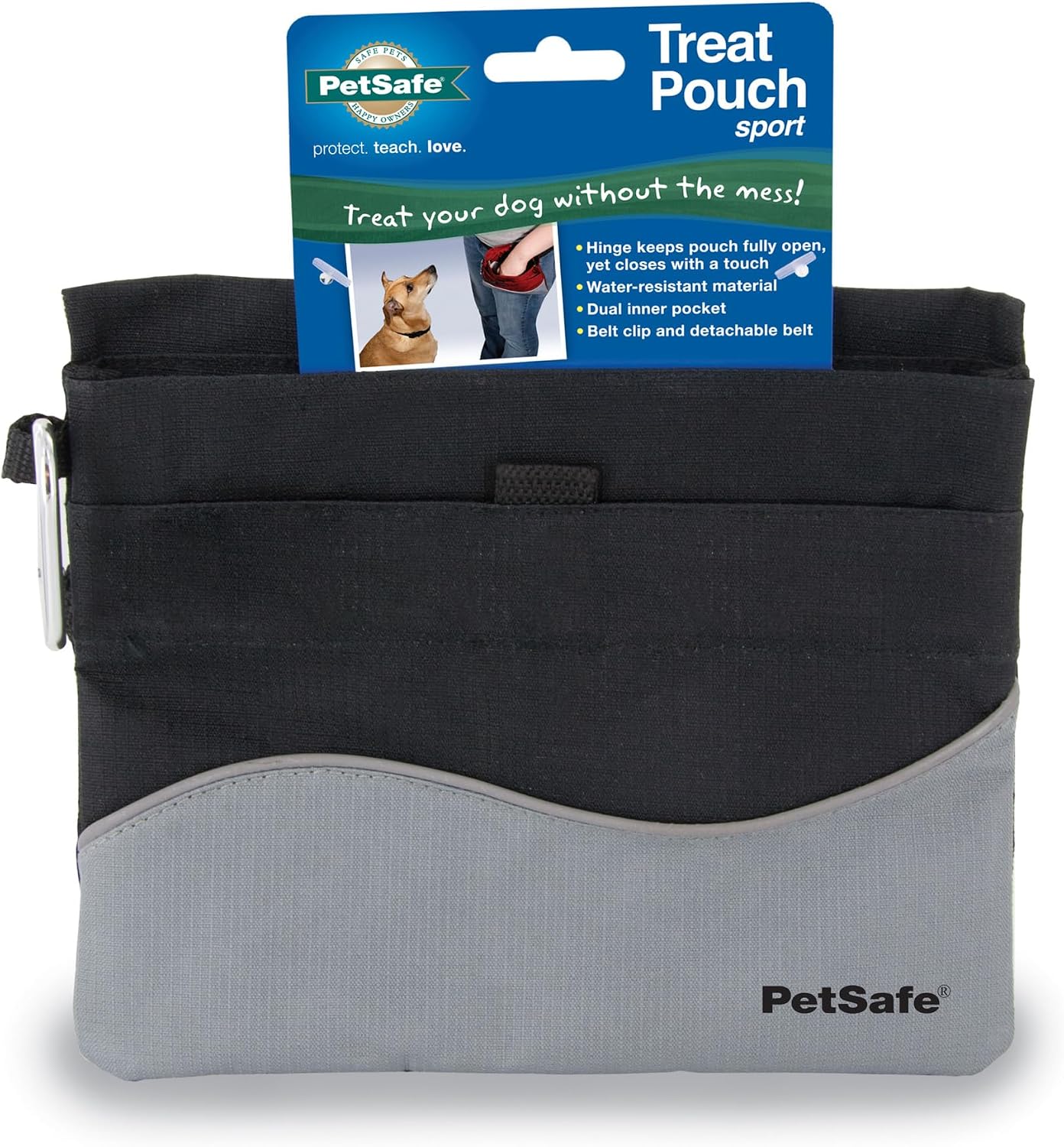
PetSafe Treat Pouch Sport, black, Standard
A belt pouch for the five-minute session in the yard. PetSafe lists the Standard at about 7.75 inches wide by 6.25 inches tall, with a belt to 48 inches. The treat pocket stays open while you feed and closes against a puppy shopping for itself. PetSafe says to hand wash and air dry. Fill it with the AKC's small training treats, not the whole dinner.
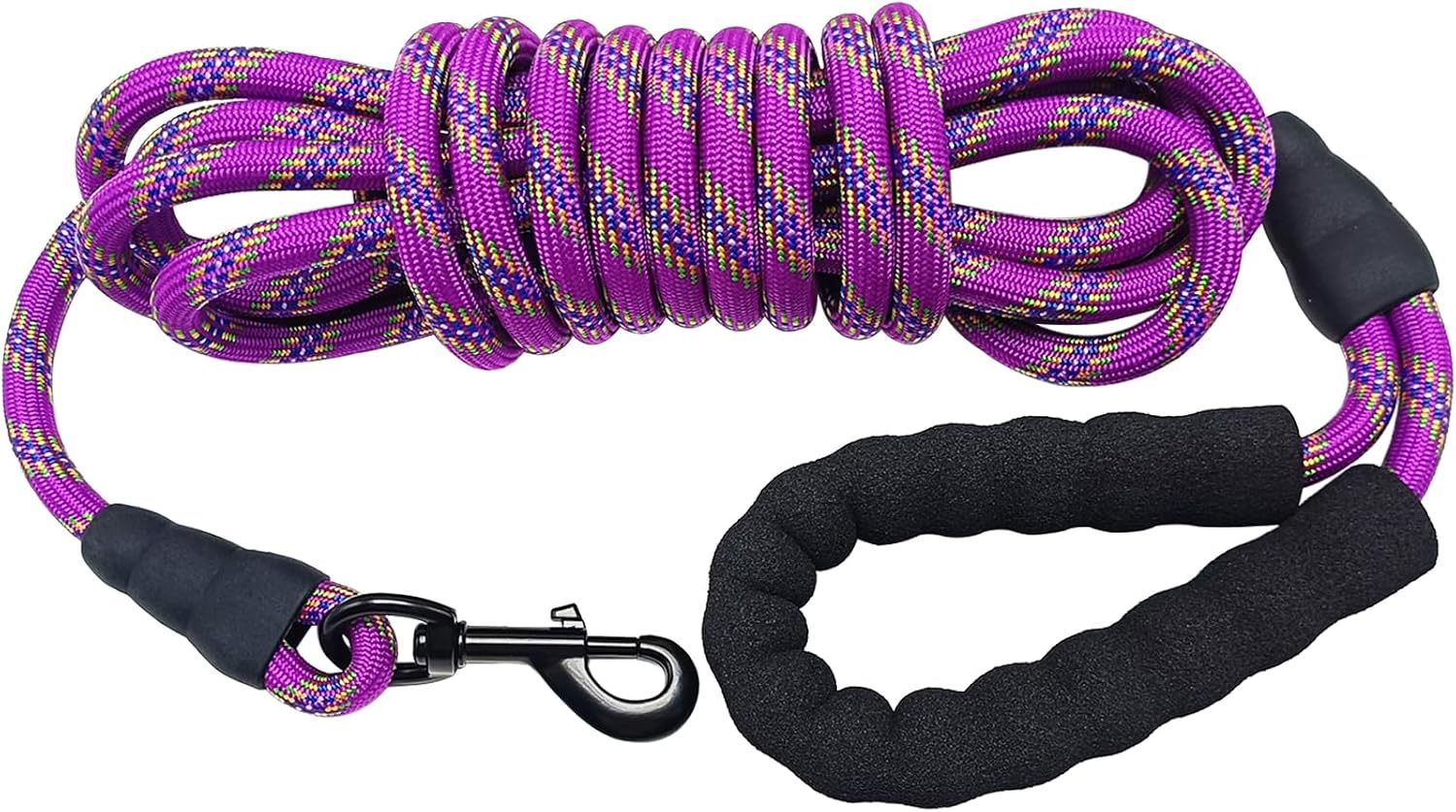
MayPaw rope leash, purple, 1/2 inch by 30 feet
A long line for outdoor come. This size is a 1/2-inch rope, 30 feet, with a padded handle and a swivel hook. The AKC wants that practice in a safe enclosed area, with you holding the handle. Thirty feet lets a growing Golden turn and run back without being loose near a road. Do not leave a puppy tied out on it, and do not use it as the hallway leash. The method is the recall guide.
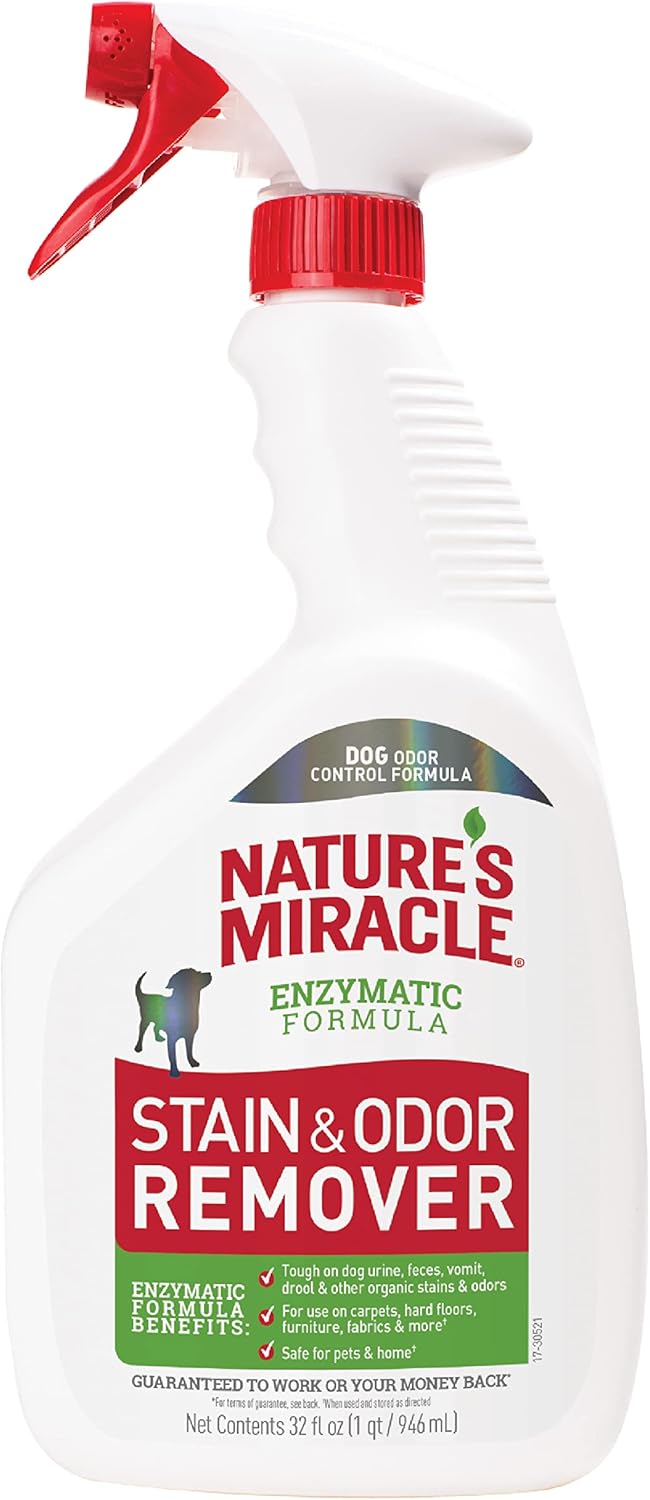
Nature's Miracle stain and odor remover, 32-ounce spray
An enzymatic cleaner for the accident you are going to clean, not scold. The AKC and VCA both say leftover odor invites the next squat. This is the 32-ounce dog formula, light citrus scent. The page says full strength, spray, wait 10 minutes, blot with a white cloth. Skip untreated hardwood, leather, suede, silk, and wool. Use it before a detergent, which can set the stain. Keep the puppy off the wet spot.
Questions owners ask
When should I start training a Golden Retriever puppy?
The week the puppy comes home. The AKC starts potty training that day and simple cues around eight weeks. AVSAB puts classes as early as seven to eight weeks, after one vaccine set at least seven days prior and a first deworming. The veterinarian times the shots. Safe exposures do not wait for the last vaccine in the series.
How often does a puppy need to go outside?
Both clocks, and the earlier one wins. The AKC's holding guideline is about an hour per month of age, and its young-puppy list is after sleep, meals, water, play, and the crate, often every one to two hours while awake. VCA adds overnight trips until about five months, every half hour during hard play, and a break if the puppy is alone more than three hours. The ASPCA says there is no single timetable. The housetraining section has the full lists.
How long should a training session be?
Five to ten minutes, on the AKC's five-cues page, ended on a cue the puppy can do. If the new one is failing, pay an old one and stop.
Can I take my puppy to class before the vaccines are finished?
AVSAB calls socialization before full vaccination the standard of care, with the class rule above, a surface that can be disinfected, and no dog parks. The socialization guide is the practice list. A puppy who is already afraid needs veterinary guidance before more exposure.
What if my puppy cries in the crate?
Answer a whine or a scratch that means the puppy has to toilet, and follow VCA's limit of about three hours. Short stays with a stuffed toy, while you are home, are AVSAB's alone-time practice. Panic when you leave is the separation anxiety guide. A crate used as punishment stops being a bed.
Should I use a prong collar, a choke chain, or a shock collar on a Golden puppy?
AVSAB says no, for ordinary cues and for behavior problems, and it says research has not shown those tools work better, including for recall. The ASPCA opposes equipment that causes discomfort or undue anxiety. If a cue is failing, shorten the session and improve the reward.
When is a potty problem a veterinary problem?
When a consistent plan still fails, or a reliable dog starts soiling. The AKC and VCA both send that dog to a veterinarian. Excited urination at greetings is a different pattern. Foul or loose stools are a call too, because diarrhea makes any schedule fail.
Sources
Five-to-ten-minute sessions, rewards instead of leash corrections or yelling, and indoor recall before outdoor distance: AKC, five basic cues.
Potty training from day one, the age-in-months holding guideline, crate size, an immediate outdoor reward, enzymatic cleanup, and a veterinary exam when housetraining stays stuck: AKC, how to potty train a puppy.
The one-to-two-hour schedule, overnight trips until about five months, about three hours as a crate limit, a reward given outside, and more freedom after eight to twelve clean weeks: VCA Animal Hospitals, house training.
No scolding of an earlier mess, and no rubbing a face in an accident: ASPCA, house training. Food, praise, petting, and play, and opposition to equipment that causes discomfort: ASPCA, training aids and methods.
Reward-based methods for training and for behavior problems, the tools to avoid, and referrals to humane trainers or a veterinary behaviorist: AVSAB, humane dog training (2021).
The first three months, socialization before full vaccination, the class vaccine rule, dog parks to avoid, and veterinary guidance for fearful puppies: AVSAB, puppy socialization.
P.S. Get the free Golden Retriever Owner Cheat Sheet — daily feeding, sleep, and care in one printable guide.
Get the Cheat Sheet when you join the newsletter — instant access in your welcome email.