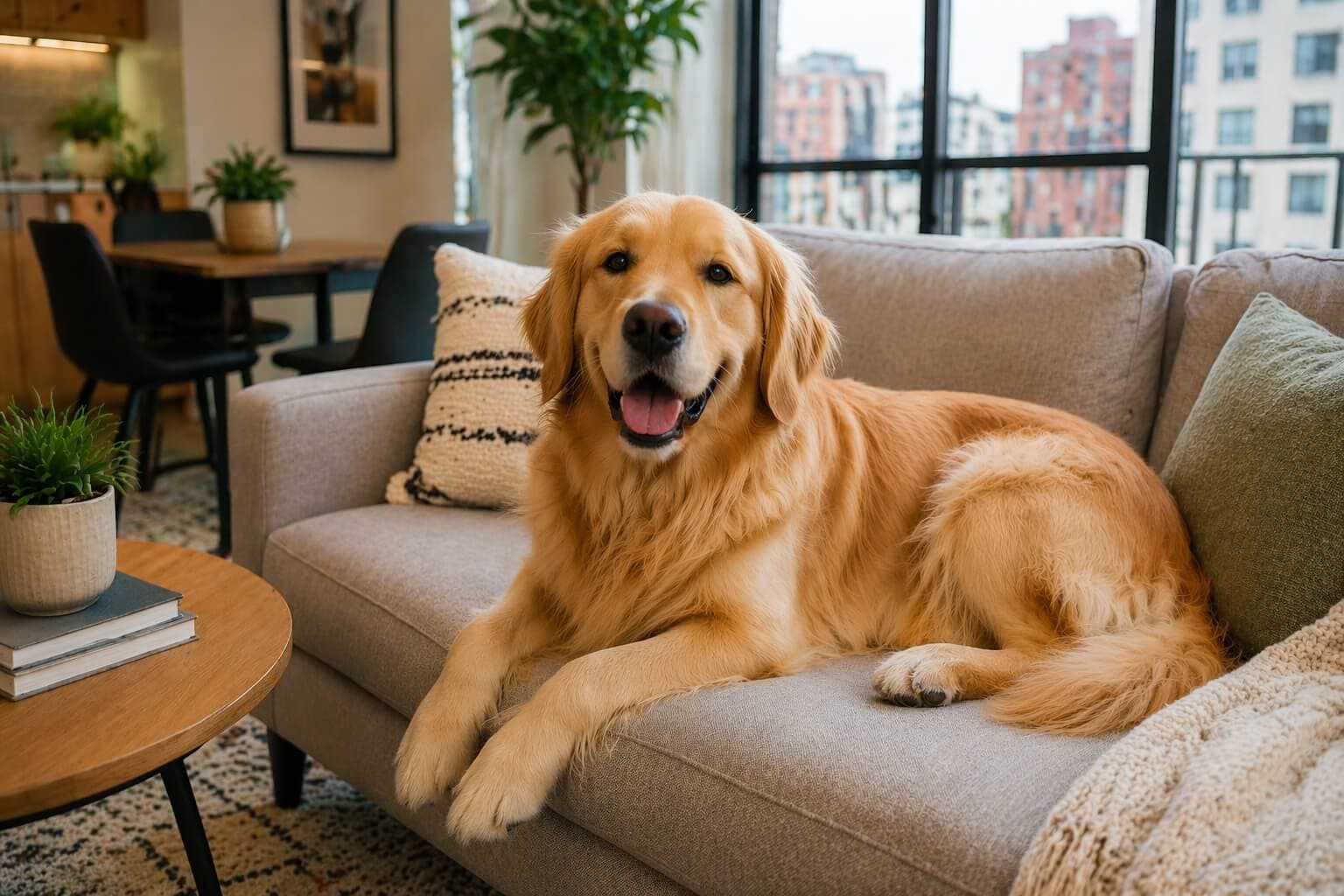
Golden Retriever Apartment Living Guide (Can They Live Happily in Smaller Spaces?)
GoldenRetriever.hair
By GoldenRetriever.hair
Many people fall in love with Golden Retrievers but hesitate because they live in an apartment or small home. Goldens are medium-to-large, athletic dogs, and it’s easy to assume they “need a big yard” to be happy. The truth is more nuanced: Golden Retriever apartment living can work very well—for the right owners with the right routines.
Golden Retrievers care far more about:
- 🐾Time with their people.
- 🐾Consistent exercise and mental stimulation.
- 🐾Predictable routines and clear training.
…than they do about square footage alone. An under-exercised Golden in a large yard may be less content than a well-exercised, well-trained Golden living in a thoughtfully managed apartment.
This guide explains whether Golden Retrievers can live in apartments, what challenges you may face, and how to successfully raise a Golden Retriever in a smaller living space.
Can Golden Retrievers Live in Apartments?
Yes—Golden Retrievers can live in apartments if their needs are met. They are:
- 🐾Highly adaptable.
- 🐾Deeply people-oriented.
- 🐾Typically easy to train when given structure.
The key questions are less about the apartment itself and more about:
- 🐾Your lifestyle – Are you home enough to provide:
- 🐾Multiple walks per day?
- 🐾Regular bathroom breaks?
- 🐾Daily training and interaction?
- 🐾Your schedule – Can you:
- 🐾Build in morning and evening exercise?
- 🐾Provide midday breaks (or hire help) for puppies?
- 🐾Your willingness to commit – Are you prepared to:
- 🐾Go outside in all weather.
- 🐾Stick to routines even when busy or tired.
As we cover in the Golden Retriever Exercise Needs Guide, Goldens are active working dogs, not low-energy lap dogs. Apartment living is most successful when owners treat:
- 🐾Walks, training, and play as non-negotiable parts of daily life.
If you can do that, a Golden can absolutely be a happy, well-adjusted apartment dog.
The Biggest Challenge: Exercise Needs
The single biggest challenge of Golden Retriever apartment living is meeting their exercise requirements without a private yard. A backyard is helpful when you have one, but it is not a requirement—see our Golden Retriever yard-and-fence guide for what outdoor space actually changes (and what it doesn’t).
Golden Retrievers need:
- 🐾Daily walks – Often 1–2 walks of meaningful length.
- 🐾Off-leash play or structured activity when possible (in safe, legal areas).
- 🐾Mental stimulation to prevent boredom and frustration.
If these needs aren’t met, you’ll likely see:
- 🐾Restlessness.
- 🐾Destructive chewing.
- 🐾Excessive barking.
- 🐾Difficulty settling indoors.
The Golden Retriever Exercise Needs Guide goes into detail on:
- 🐾Exercise by age.
- 🐾Safe activity types.
- 🐾Signs your dog needs more (or less) exercise.
In an apartment context, this often translates into:
- 🐾Morning routine:
- 🐾A potty break followed by a walk or play session long enough to take the edge off.
- 🐾Midday:
- 🐾A shorter walk or potty break (especially for puppies).
- 🐾Evening:
- 🐾Another substantial walk, training, or fetch game.
Think of your apartment as the “rest zone” and the outdoors as the “work and play zone.” When you consistently meet exercise needs, your Golden is far more likely to relax calmly indoors, regardless of square footage.
Mental Stimulation for Apartment Dogs
Physical exercise alone isn’t enough for a smart, high-drive breed. Golden Retrievers also need mental stimulation, especially when they spend many hours indoors.
As we explain in our Golden Retriever intelligence guide and behavior guides, under-stimulated dogs often develop:
- 🐾Barking.
- 🐾Chewing.
- 🐾Digging (if they have access to soft materials).
- 🐾Attention-seeking behaviors.
Indoor Mental Stimulation Ideas
Some of the best tools for Golden Retriever indoor living include:
- 🐾
Puzzle toys
- 🐾Food-dispensing toys that require paw or nose work.
- 🐾Snuffle mats that encourage foraging.
- 🐾See the puzzle toys for mental stimulation section under
/products.
- 🐾
Durable chew toys
- 🐾Long-lasting chews and rubber toys give your Golden something appropriate to focus on.
- 🐾Look for durable chew toys sized for large breeds under
/products.
- 🐾
Training games
- 🐾Short obedience sessions (sit, down, stay, come).
- 🐾Trick training (spin, bow, touch, roll over).
- 🐾Scent games (finding treats hidden under cups or around the room).
- 🐾
Interactive play
- 🐾Tug with rules.
- 🐾Fetch down a hallway (if it’s safe and allowed).
- 🐾Hide-and-seek with family members.
These activities are ideal for apartment life because they:
- 🐾Use relatively little physical space.
- 🐾Can tire your Golden mentally, making it easier for them to settle afterward.
Aim for:
- 🐾Several short mental workouts throughout the day, especially on days with limited outdoor time.
Managing Barking in Apartment Environments
In an apartment, barking carries through walls and ceilings much more than in a standalone home. While Golden Retrievers are not typically constant barkers by breed, they may bark due to:
- 🐾Boredom or lack of exercise.
- 🐾Environmental noises in hallways or outside doors.
- 🐾Attention-seeking or anxiety.
The Golden Retriever Barking Guide explains common bark triggers and training strategies in depth. For apartment life, focus on:
Reduce Triggers Where Possible
- 🐾Use white noise or fans to cover hallway sounds.
- 🐾Keep blinds partially closed if your dog barks at passersby or other dogs outside.
- 🐾Provide a quiet resting area away from the front door when you’re not actively working on training.
Teach a Calm Indoor Routine
- 🐾Reward relaxed behavior on a bed or mat.
- 🐾Use cues like “settle” paired with:
- 🐾A comfortable dog bed (see options under
/products). - 🐾Chew toys or a stuffed food toy.
- 🐾A comfortable dog bed (see options under
Address the Underlying Needs
Most apartment barking problems improve when:
- 🐾Exercise and mental stimulation are sufficient.
- 🐾The dog has clear routines and knows what’s expected indoors.
If barking persists, revisit:
- 🐾The Golden Retriever Behavior Problems Guide to ensure:
- 🐾Needs are being met.
- 🐾You’re not unintentionally reinforcing noisy behavior.
Potty Training in an Apartment
Apartment living changes the logistics of bathroom breaks, especially for puppies. There’s no quick back door—every potty trip means:
- 🐾Leash, elevator or stairs, and a walk to a designated area.
This makes planning and consistency even more important.
Outdoor Potty Routines
The Golden Retriever Potty Training Guide outlines schedules and strategies for house training. In an apartment, you’ll likely need to:
- 🐾Take your puppy out:
- 🐾First thing in the morning.
- 🐾After meals.
- 🐾After naps.
- 🐾After play sessions.
- 🐾Before bedtime.
- 🐾Use the same outdoor bathroom spot whenever possible, so your puppy builds a strong association.
Managing Elevators and Hallways
It’s common for young puppies to:
- 🐾Have accidents in hallways or elevators before they reach the outdoor area.
To reduce this:
- 🐾Carry very young puppies if possible until you reach the outside door.
- 🐾Give them a chance to potty right before going back upstairs, even if they just went.
Patience is key. Apartment potty training is absolutely achievable, but it demands:
- 🐾More effort and planning than a yard situation.
Many owners find it helpful to:
- 🐾Keep cleaning supplies handy for accidental messes.
- 🐾Stick to consistent feeding times to make bathroom patterns more predictable.
Creating a Comfortable Indoor Environment
Even without a big yard, you can make your apartment feel like a comfortable, secure home for your Golden Retriever.
Designated Resting Areas
Goldens usually appreciate having:
- 🐾A consistent, comfortable dog bed or mat where they can relax.
Consider:
- 🐾A supportive orthopedic-style dog bed for larger breeds (see dog beds under
/products). - 🐾A quiet corner away from heavy foot traffic.
You can teach a cue like “bed” and reward your Golden for:
- 🐾Choosing to rest there instead of pacing or seeking constant attention.
Safe Spaces for Alone Time
Even in an apartment, your dog should have a safe place for:
- 🐾Short periods alone.
- 🐾Downtime when you’re busy.
Options include:
- 🐾A crate (if well-introduced and positive).
- 🐾A small gated area or playpen.
The Golden Retriever First Week Home Guide covers early routines for:
- 🐾Sleep.
- 🐾Alone time.
- 🐾Settling—these remain essential in apartment life.
For realistic age-based limits while you build those habits, see our Golden Retriever alone time by age guide.
Indoor Training Tools
Apartment living is a great context for:
- 🐾Indoor training tools, such as:
- 🐾Target mats for “go to place.”
- 🐾Clickers and treat pouches for short sessions.
- 🐾Light, soft indoor toys for fetch in a hallway (if safe).
You can find some of these under general indoor training tools in /products. Used thoughtfully, they help keep your Golden’s mind and body engaged without needing a backyard.
Signs Your Golden Retriever Needs More Activity
Living in a smaller space often makes it easier to notice behavior changes. Some warning signs that your Golden Retriever needs more exercise or mental stimulation include:
- 🐾
Destructive chewing
- 🐾Shoes, furniture, rugs, or doors become targets.
- 🐾
Excessive barking or whining
- 🐾Especially when you leave or when neighbors move in the hallway.
- 🐾
Restlessness
- 🐾Pacing.
- 🐾Difficulty settling for more than a few minutes.
- 🐾Constant demands for attention.
- 🐾
Attention-seeking behaviors
- 🐾Pawing, nudging, or “stealing” items to start a chase game.
As described in the Golden Retriever Behavior Problems Guide, many of these issues stem from:
- 🐾Under-exercise.
- 🐾Under-stimulation.
- 🐾Inconsistent structure.
When you see these signs:
- 🐾Review your daily routine:
- 🐾Are walks long and frequent enough?
- 🐾Is there dedicated training and puzzle time?
- 🐾Does your Golden have predictable rest periods?
Oftentimes, a modest increase in:
- 🐾Physical exercise.
- 🐾Mental challenges (puzzle toys, training).
…results in a noticeable improvement in indoor behavior.
Frequently Asked Questions
Are Golden Retrievers good apartment dogs?
Golden Retrievers can be excellent apartment dogs for owners who are:
- 🐾Committed to daily exercise and mental stimulation.
- 🐾Willing to spend time training and socializing.
- 🐾Comfortable taking multiple trips outside every day.
While they are larger dogs, their generally friendly, trainable nature and strong desire to be with their family make them well-suited to apartment living when their needs are met.
How much exercise does a Golden Retriever need in an apartment?
The amount of exercise a Golden needs doesn’t change just because you live in an apartment. As outlined in the Golden Retriever Exercise Needs Guide and the Golden Retriever exercise chart, many adult Goldens do best with:
- 🐾Around 1–2 hours of physical activity per day, adjusted for age and health.
- 🐾Additional mental work through training and enrichment.
In an apartment, that typically means:
- 🐾Multiple daily walks.
- 🐾Regular play or training sessions.
- 🐾Occasional higher-intensity outings (parks, hikes, safe off-leash areas).
Will a Golden Retriever bark too much in an apartment?
Golden Retrievers are not usually excessive barkers by default, but:
- 🐾Any dog can develop barking problems if:
- 🐾They are bored.
- 🐾Under-exercised.
- 🐾Anxious or overstimulated by noises.
Proper exercise, mental enrichment, and training—such as the strategies described in the Golden Retriever Barking Guide—go a long way toward keeping barking at a reasonable level in an apartment.
Is apartment living harder with a Golden Retriever puppy?
Yes, apartment living is more demanding with a puppy than with an adult dog, mainly because:
- 🐾Puppies need:
- 🐾Very frequent bathroom breaks.
- 🐾More supervision.
- 🐾Extra training and socialization.
However, it’s still very doable. By following:
- 🐾The Golden Retriever Potty Training Guide.
- 🐾The Golden Retriever First Week Home Guide.
- 🐾The Golden Retriever Socialization Guide.
…you can set strong habits early that make apartment life much smoother as your puppy grows.
Conclusion
Golden Retriever apartment living is absolutely possible—and often very rewarding—when owners approach it with realistic expectations and a strong commitment to daily care. While Goldens are active, medium-to-large dogs, they can adapt beautifully to smaller spaces if they receive enough exercise, mental stimulation, training, and companionship. By planning regular walks, using puzzle and chew toys, managing barking and potty routines, and creating a comfortable indoor environment, many families successfully raise a happy, healthy Golden Retriever in an apartment. With thoughtful planning and consistency, your Golden can thrive by your side, no matter the size of your home.
P.S. Get the free Golden Retriever Owner Cheat Sheet — daily feeding, sleep, and care in one printable guide.
Get the Cheat Sheet when you join the newsletter — instant access in your welcome email.