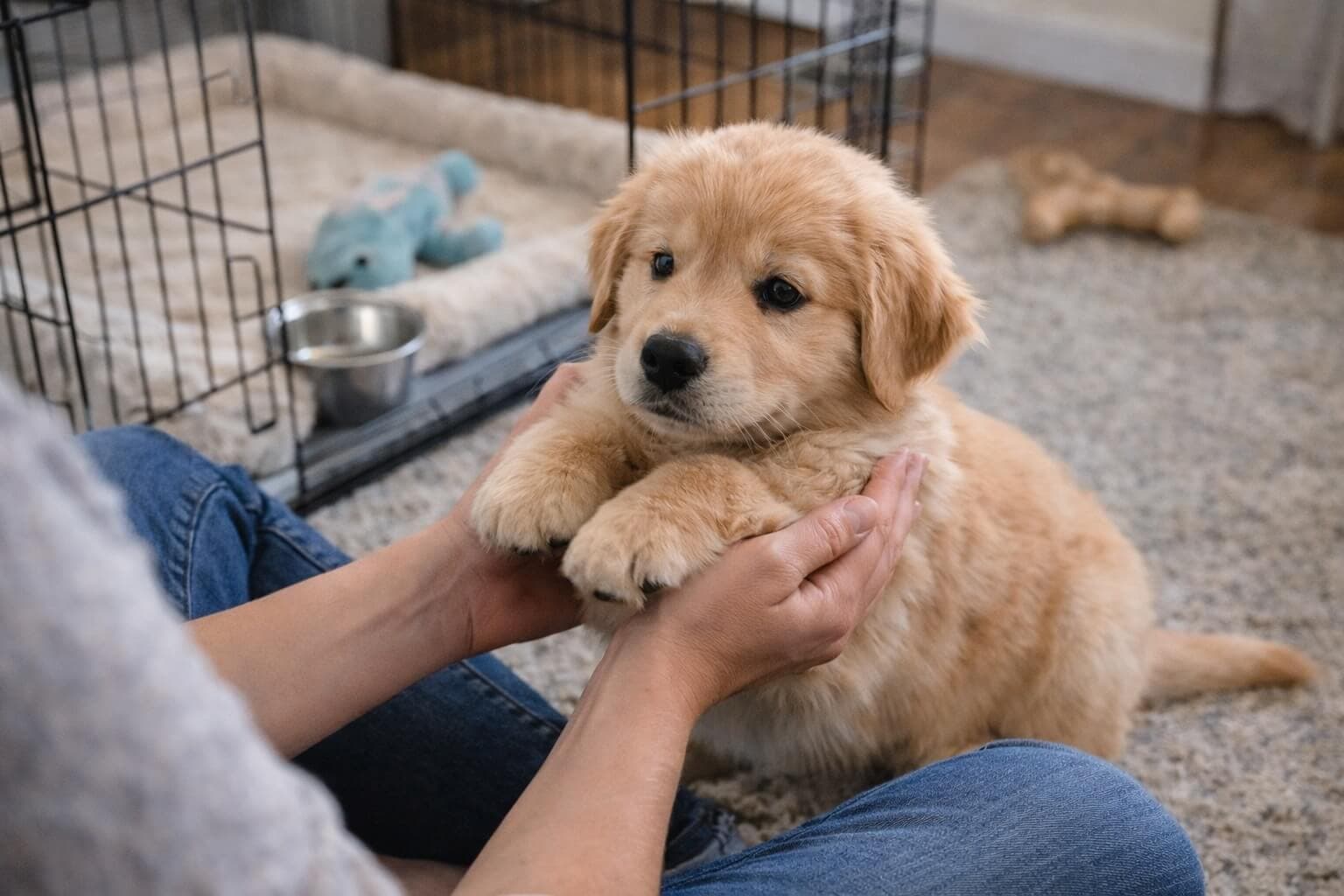
Golden Retriever First Week Home Guide (What to Expect & What to Do)
GoldenRetriever.hair
By GoldenRetriever.hair
Bringing home a Golden Retriever puppy is equal parts exciting and overwhelming. One moment you’re watching a fluffy ball of energy bounce around the living room; the next you’re wondering if you’re doing any of this right. The first week home is especially intense—everything is new for your puppy, and you’re suddenly responsible for shaping the habits that will last a lifetime.
Golden Retrievers are highly social and intelligent, which is great news for training and bonding—but it also means that early structure and routines matter. Your puppy is learning from every interaction, whether you intend to teach something or not.
This guide walks through the Golden Retriever first week home step by step: how to prepare your house, what to expect on the first day and first night, how to set up a Golden Retriever puppy routine, and the common mistakes to avoid. The goal is to help you and your puppy start off calmly, safely, and confidently.
Preparing Your Home Before the Puppy Arrives
The work of your Golden Retriever puppy first week actually starts before you bring your puppy home. A bit of preparation reduces stress for everyone.
If you want more background on puppy preparation and behavior before those first days unfold, our recommended dog books guide is a useful next read.
Puppy-Proofing the House
Puppies explore the world with their mouths. Anything on the floor—or low enough to reach—is fair game. Before your puppy arrives:
- 🐾
Remove or secure electrical cords
- 🐾Use cord covers or route cables behind furniture.
- 🐾Block access to power strips.
- 🐾
Check for toxic plants and substances
- 🐾Many common houseplants are toxic to dogs.
- 🐾Store cleaning supplies, medications, and chemicals in closed cabinets.
- 🐾
Pick up small objects
- 🐾Socks, kids’ toys, hair ties, coins, batteries, and Lego pieces can all be swallowed.
- 🐾
Block off unsafe areas
- 🐾Use baby gates to keep the puppy in easy-to-supervise zones.
- 🐾Consider limiting access to stairs at first to prevent tumbles.
- 🐾If you have outdoor space, review fence gaps and yard hazards in our Golden Retriever yard-and-fence guide before unsupervised outdoor time.
Think of your puppy as a mobile, determined toddler with sharp teeth—if they can reach it, they will try it.
Creating a Safe Sleeping Space
Your Golden Retriever puppy needs a secure, quiet place to rest:
- 🐾
Choose a location that is:
- 🐾Close to family activity but not in the direct path of constant traffic.
- 🐾Protected from drafts and too much heat.
- 🐾
Decide on:
- 🐾A crate (recommended for most homes).
- 🐾Or a puppy pen with a crate or bed inside.
Crate considerations:
- 🐾Size: large enough for the puppy to stand, turn around, and lie comfortably, but not so large that one end becomes a bathroom spot.
- 🐾Style: wire crates allow more airflow; plastic crates can feel more den-like. Either works if introduced correctly.
Setting Up Food and Water Areas
Decide where your food and water bowls will live:
- 🐾
Choose a spot that is:
- 🐾Easy to clean (tile or washable mat).
- 🐾Not in a high-traffic walkway where the puppy can be bumped.
- 🐾
Set up:
- 🐾Non-slip bowls that are appropriately sized.
- 🐾A washable mat underneath to catch spills.
Keeping these spots consistent helps your puppy understand the household map more quickly.
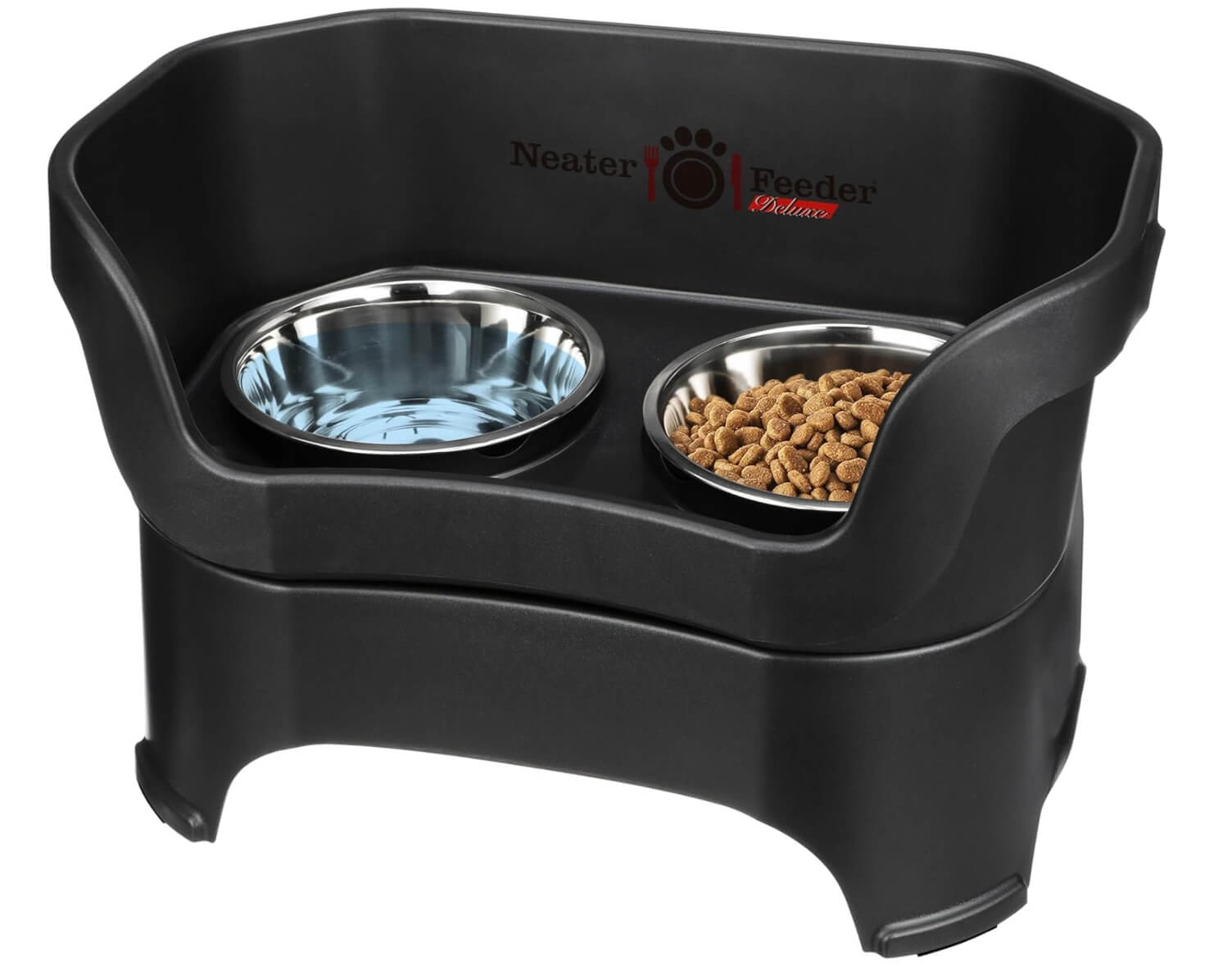
Best for: a clean, comfortable feeding setup from day one
Neater Feeder Deluxe Elevated Dog Bowl (Large Breed)
Setting up a clean, comfortable feeding area from day one makes a big difference. This raised, mess-proof feeder helps keep food and water contained while giving your Golden Retriever a better eating position.
Great for reducing spills and making feeding routines easier right from the start.
Basic Supplies Checklist
Before your Golden Retriever puppy first week begins, have on hand:
- 🐾Crate and/or puppy pen.
- 🐾Collar with ID tag and a flat leash.
- 🐾Food your breeder or rescue has been feeding (you can transition later).
- 🐾Puppy-safe treats for training.
- 🐾Chew toys and soft toys (rotate to keep interest).
- 🐾Enzymatic cleaner for accidents.
- 🐾Puppy-safe brush and basic grooming tools.
Preparing your home ahead of time means that on day one, you can focus on helping your puppy feel safe, not scrambling for supplies. Our Golden Retriever puppy checklist guide is the fuller pre-arrival shopping list if you want to go beyond these basics.
The First Day Home With Your Golden Retriever
Your puppy’s first day home is a big shock:
- 🐾New sights, smells, and sounds.
- 🐾New people.
- 🐾Separation from their mother, littermates, and familiar environment.
Expect your Golden Retriever puppy first week to start with a mix of curiosity and uncertainty.
Keep the Environment Calm
On day one:
- 🐾Keep things quiet and predictable.
- 🐾Avoid hosting a bunch of friends and family to “meet the puppy” right away.
- 🐾Let your puppy:
- 🐾Explore a limited area of your home.
- 🐾Take breaks as needed to eat, drink, and nap.
Remember:
- 🐾Your puppy does not yet know that you are “home”—they only know that everything familiar is gone. Calm, gentle handling helps them start rebuilding a sense of security.
Allow Time for Exploration
In safe, puppy-proofed areas:
- 🐾Let your Golden sniff, look, and move at their own pace.
- 🐾Stay nearby so they:
- 🐾Can use you as a base if they get nervous.
- 🐾Don’t have the chance to rehearse unsafe behavior (like chewing cords).
Keep sessions short:
- 🐾Rotate between:
- 🐾Short explorations.
- 🐾Potty breaks.
- 🐾Rest in the crate or pen.
Limit Visitors the First Day
While socialization is important, the first day home is not the time for:
- 🐾Large groups.
- 🐾Very young children tugging and grabbing.
- 🐾Multiple dogs crowding the new puppy.
Instead:
- 🐾Introduce core household members one at a time.
- 🐾Allow calm, seated interactions with gentle petting and treats.
You’ll have plenty of time in the weeks ahead for wider socialization. The first day is about bonding and safety, not showing off the new puppy.
Helping Your Puppy Adjust to a New Environment
During your first week with a Golden Retriever puppy, your main jobs are:
- 🐾Helping them feel safe.
- 🐾Giving them a predictable routine.
- 🐾Showing them that good things happen when they’re calm and engaged with you.
Separation From Littermates and Breeder
Even in the best circumstances, the transition from:
- 🐾Familiar litter and mother
to - 🐾New home and people
…is stressful. Common signs:
- 🐾Whining or crying.
- 🐾Clinginess.
- 🐾Temporary appetite changes the first day.
These reactions are normal. Respond with:
- 🐾Patience – Don’t scold for crying; instead, give structure and reassurance.
- 🐾Gentle interaction – Speak softly, move slowly, and provide safe touch if the puppy seeks it.
Building Trust in the First Few Days
Trust grows when your puppy experiences:
- 🐾Predictable responses – similar reactions to similar behaviors every time.
- 🐾Kind handling – no yelling, hitting, or roughness.
- 🐾Comfort and care – food, water, warmth, and safe places to sleep.
Practical ways to build trust:
- 🐾Sit on the floor at your puppy’s level and let them come to you.
- 🐾Offer small treats for checking in, sitting calmly, or making eye contact.
- 🐾Avoid forcing interactions—let the puppy retreat to the crate or pen when they’re tired.
Your goal this first week is not to create a “perfectly behaved” puppy. It’s to create a puppy who sees you as a safe, reliable base.
The First Night With Your Golden Retriever Puppy
The Golden Retriever puppy first night is often the hardest part of the whole first week.
What to Expect
Common experiences:
- 🐾Whining, crying, or barking when left alone—even short absences should stay within age-appropriate limits (see our Golden Retriever alone time by age guide).
- 🐾Restless shifting in the crate.
- 🐾One or more overnight potty breaks.
Remember:
- 🐾Your puppy may be:
- 🐾Alone at night for the first time ever.
- 🐾In a new crate and unfamiliar environment.
Crate Training Basics for the First Night
A crate can help with:
- 🐾Potty training.
- 🐾Preventing destructive chewing.
- 🐾Teaching your puppy to self-soothe and settle.
A properly sized crate makes the first night much easier and helps your puppy settle faster in a new environment:
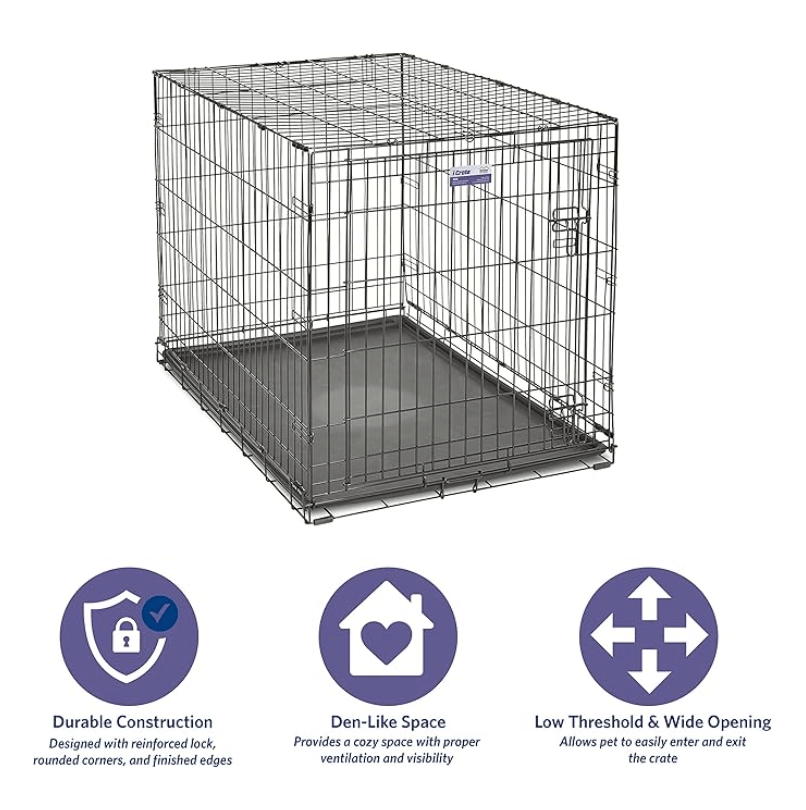
Best for: safe overnight sleep, potty-training structure, and a calmer first night
MidWest Homes for Pets iCrate Folding Dog Crate
Larger size (42 x 28 x 30) – Best for home use, more room to stretch (especially for males). Smaller size (36 x 23 x 25) – Great for travel, fits most SUVs/vans.
A secure, den-like crate helps puppies settle when everything is new—supporting overnight potty habits (when sized so they don't treat one end as a bathroom) and reducing restless wandering compared to loose sleeping in an overwhelming space.
For the first night:
- 🐾
Place the crate:
- 🐾In your bedroom, or
- 🐾Very close by, where the puppy can hear and smell you.
- 🐾
Outfit the crate with:
- 🐾A soft blanket or crate mat.
- 🐾A safe chew or comfort toy (if your breeder recommends one).
Helping Your Puppy Settle
Tips for the first night:
- 🐾
Bedtime routine:
- 🐾Last potty break right before bed.
- 🐾Bring the puppy calmly to the crate.
- 🐾Use a cue like “bedtime” or “crate” as you guide them in.
- 🐾
Responding to crying:
- 🐾Expect some vocalizing.
- 🐾Calm reassurance (quiet words, hand on the crate for a moment) can help.
- 🐾Avoid immediately taking the puppy out for every noise, or they’ll learn that crying = release.
- 🐾
Night potty breaks:
- 🐾For very young puppies, set an alarm for at least one overnight outing.
- 🐾When taking them out:
- 🐾Be boring and businesslike (no play).
- 🐾Go straight outside, potty, then straight back in and into the crate.
Most puppies make dramatic improvement over the first few nights as they learn the pattern and feel safer.
If nights stay rough after those first adjustments—frequent waking, crate crying, or a puppy that will not settle—use our guide to helping a puppy sleep through the night.
Establishing a Daily Routine
Golden Retrievers thrive on structure. A predictable Golden Retriever puppy routine helps:
- 🐾Reduce anxiety.
- 🐾Speed up potty training.
- 🐾Make training sessions more effective.
For a simple hour-by-hour template of meals, naps, potty breaks, and play, use our Golden Retriever first week home schedule chart.
Elements of a Good Puppy Routine
In a typical day, you want a rhythm of:
- 🐾Wake up → potty → brief play → breakfast → potty → nap
- 🐾Repeat cycles of:
- 🐾Potty
- 🐾Short play/training
- 🐾Supervised exploration
- 🐾Nap
Key components:
- 🐾
Feeding schedule
- 🐾3 meals per day for most young puppies (e.g., morning, midday, early evening).
- 🐾Put food down, give 10–15 minutes, then pick up any leftovers.
- 🐾
Potty breaks
- 🐾After waking up.
- 🐾After eating or drinking.
- 🐾After play or excitement.
- 🐾Every 1–2 hours during the day in the first week.
- 🐾
Play and training sessions
- 🐾Several short bursts (5–10 minutes) throughout the day.
- 🐾
Nap times
- 🐾Puppies need a lot of sleep (often 18–20 hours per day).
- 🐾Protect quiet times in the crate or pen to avoid overtired meltdowns—see puppy fighting sleep if your Golden gets bitey or zoomy instead of resting.
Consistency teaches your puppy:
- 🐾What to expect.
- 🐾When it’s time to play, eat, or rest.
This makes your first week with a Golden Retriever puppy much smoother.
Beginning Potty Training
Potty training should start from day one. Your puppy is not being “bad” if they have accidents—they simply:
- 🐾Don’t know the rules yet.
- 🐾Have very limited bladder control.
Potty Training Basics
Key principles:
- 🐾
Go outside frequently
- 🐾Every 1–2 hours during the day at first.
- 🐾After naps, meals, play sessions, and crate time.
- 🐾
Use the same potty spot if possible
- 🐾The smell helps cue the puppy to go.
- 🐾
Reward immediately
- 🐾As soon as your puppy finishes, praise warmly and give a treat.
- 🐾Reward outside, not after you come back in.
Using small, high-value training treats makes potty training much faster and helps your puppy clearly understand what they did right:

Best for: fast, frequent rewards during potty trips and short training sessions
Zuke’s Mini Naturals Training Dog Treats
Made with high-quality real ingredients – free from artificial colors, flavors, and preservatives.
Tiny, soft pieces are ideal for puppies: you can reward the exact moment they finish outside without overfeeding, and the small, low-calorie format supports many reps while you build the habit.
- 🐾Supervise indoors
- 🐾If your puppy is loose in the house, someone should be watching.
- 🐾Use a leash or small gated area to prevent wandering off to have accidents.
Recognizing Signs Your Puppy Needs to Go Out
Watch for:
- 🐾Circling or sniffing one area.
- 🐾Suddenly wandering away from play.
- 🐾Heading toward the door (even if they don’t scratch yet).
When you see these signs:
- 🐾Calmly take the puppy outside to the potty spot.
- 🐾Wait quietly and reward if they go.
Avoid Punishment
If your puppy has an accident:
- 🐾Do not punish—no yelling, rubbing noses, or scolding.
- 🐾Quietly take them outside if you catch them mid-stream.
- 🐾Clean up with an enzymatic cleaner to remove odor.
Punishment can:
- 🐾Make puppies afraid to go in front of you.
- 🐾Lead them to hide and have accidents out of sight.
Patience and consistency will get you much better results than anger.
Early Socialization During the First Week
Full socialization is a long process, but it starts during your Golden Retriever puppy first week home.
Safe Early Socialization at Home
Focus on:
- 🐾
Household members
- 🐾Gentle, calm introductions.
- 🐾Teach children to:
- 🐾Sit to greet the puppy.
- 🐾Pet softly (no grabbing or hugging).
- 🐾Leave the puppy alone while sleeping or eating.
- 🐾
Normal household sounds
- 🐾TV, vacuum, dishwasher, doorbell.
- 🐾Pair new sounds with:
- 🐾Treats.
- 🐾Play.
- 🐾Calm reassurance.
- 🐾
Handling exercises
- 🐾Gently touch paws, ears, tail, and collar.
- 🐾Reward your puppy for allowing handling without pulling away.
Outside World in the First Week
Until your vet advises about vaccine status, be cautious about:
- 🐾High-traffic dog areas (dog parks, pet store floors).
- 🐾Unknown dogs with unknown vaccination history.
You can still:
- 🐾Carry your puppy in safe public spaces to observe:
- 🐾People.
- 🐾Cars.
- 🐾Bicycles.
- 🐾New environments.
Keep experiences short, positive, and not overwhelming. The goal is to start building the idea that the world is safe and interesting, not scary.
Basic Training That Can Begin Immediately
Your Golden’s first week home is not too early to start training. In fact, this is when training happens whether you plan it or not, because your puppy is constantly learning what “works.”
Name Recognition
Begin by teaching your puppy their name:
- 🐾Say the puppy’s name in a friendly tone.
- 🐾When they look at you, mark and reward (e.g., “Yes!” + treat).
- 🐾Repeat several times a day in short bursts.
Result:
- 🐾Your puppy learns that responding to their name brings good things.
Responding to Basic Cues
You can gently introduce:
- 🐾
“Sit”
- 🐾Lure the puppy’s nose upward with a treat; as they sit, say “sit,” then reward.
- 🐾
“Come”
- 🐾At close range, say “come” in a happy voice, move backward, and reward heavily when they reach you.
- 🐾
“Down” (optional in week one)
- 🐾Only if your puppy is comfortable and not over-tired.
Keep sessions:
- 🐾Very short (1–3 minutes).
- 🐾Positive—if the puppy seems confused or tired, end on an easy win and take a break.
Rewarding Calm Behavior
One of the most valuable things you can do in the first week with a Golden Retriever puppy is:
- 🐾Notice and reward calm behavior.
Examples:
- 🐾Puppy chooses to:
- 🐾Lie on a mat.
- 🐾Chew a toy quietly.
- 🐾Sit instead of jump.
You can:
- 🐾Gently praise.
- 🐾Drop a small treat near their feet.
Over time, the puppy learns that calm, polite behavior pays just as well (or better) than hyper or pushy behavior.
Common Mistakes During the First Week
Avoiding a few key pitfalls will make your Golden Retriever first week home much smoother.
Overwhelming the Puppy
Common issue:
- 🐾Inviting lots of visitors.
- 🐾Taking the puppy everywhere immediately.
Better approach:
- 🐾Keep things simple and calm in week one.
- 🐾Let your puppy adjust to:
- 🐾You.
- 🐾Your home.
- 🐾Basic routines.
You’ll have many weeks and months ahead for broader experiences.
Inconsistent Routines
If everyone in the household:
- 🐾Feeds at random times.
- 🐾Takes the puppy out “whenever.”
- 🐾Responds differently to behaviors.
…your puppy will be confused.
Instead:
- 🐾Agree on:
- 🐾Feeding times.
- 🐾Potty schedule.
- 🐾Where the puppy sleeps.
- 🐾Basic rules (on furniture? jumping allowed?).
Consistency speeds up:
- 🐾Potty training.
- 🐾Crate training.
- 🐾General behavior expectations.
Unrealistic Training Expectations
In the first week, your puppy is:
- 🐾A baby in a brand new world.
Common unrealistic expectations:
- 🐾Perfect house training after a few days.
- 🐾Full sleeping through the night immediately.
- 🐾Flawless leash walking out of the box—see our Golden Retriever leash training guide for how to build calm walks over time.
Instead, focus on:
- 🐾Progress, not perfection.
- 🐾Building positive associations with crate, leash, and handling.
Allowing Bad Habits to Form
Habits are easiest to prevent before they start:
- 🐾Jumping for attention.
- 🐾Mouthing hands and clothes.
- 🐾Chewing furniture.
Use management:
- 🐾Leash indoors when needed.
- 🐾Puppy pen or gated areas.
- 🐾Provide appropriate chews and redirect quickly.
If you allow a behavior repeatedly in the first week, your puppy will learn that it’s acceptable—and it will be harder to change later.
Frequently Asked Questions
How stressful is the first week for a Golden Retriever puppy?
The first week home is a big adjustment for any puppy. They may:
- 🐾Whine, cry, or seem unsettled, especially at night.
- 🐾Be clingy or, in some cases, a bit shut down at first.
With:
- 🐾A calm environment,
- 🐾Gentle handling,
- 🐾Predictable routines,
most Golden Retriever puppies start to relax within a few days and show more of their true personality.
How long does it take a puppy to adjust to a new home?
Most Golden Retriever puppies:
- 🐾Begin to feel comfortable and show playful behavior within 2–3 days.
- 🐾Start understanding basic routines (potty, meals, sleep spots) within the first week.
Full adjustment—including:
- 🐾Strong bond.
- 🐾Solid training foundations.
…takes weeks to months, but the groundwork is laid during this first week.
Should I start training my Golden Retriever puppy immediately?
Yes—but training in the first week should be:
- 🐾Simple and positive, not strict or harsh.
You can:
- 🐾Teach their name.
- 🐾Reward natural sits and calm behavior.
- 🐾Introduce short “come” games.
- 🐾Start building crate and potty training routines.
As those early cues stick, our basic puppy commands checklist is a helpful next-step reference without turning week one into formal classwork.
Formal obedience can wait; what matters now is that your puppy learns:
- 🐾You are safe and predictable.
- 🐾Offering attention and cooperation is rewarding.
How much sleep does a Golden Retriever puppy need?
Young Golden Retriever puppies typically sleep:
- 🐾18–20 hours per day.
Normal patterns:
- 🐾Short bursts of energy.
- 🐾Followed by long naps.
If your puppy becomes:
- 🐾Overly mouthy.
- 🐾Wild and zoomy.
- 🐾Unable to settle.
…they may simply be overtired. Providing a quiet crate or pen and encouraging rest is part of good care. For a fuller checklist of signs your puppy needs a nap, see that guide.
Conclusion
Your Golden Retriever puppy first week home is a whirlwind—but it’s also a powerful opportunity. In just a few days, you can:
- 🐾Help your puppy feel safe and secure.
- 🐾Establish the beginnings of a solid daily routine.
- 🐾Start potty training and crate training.
- 🐾Introduce gentle socialization and basic cues.
The keys are:
- 🐾Patience – Accept that your puppy is learning and adjusting.
- 🐾Consistency – Use clear, repeatable patterns for feeding, potty, and sleep.
- 🐾Positive reinforcement – Reward what you want to see more of.
With thoughtful handling in this first week, you lay the foundation for a confident, well-adjusted Golden Retriever who understands your expectations and trusts you deeply.
For next steps beyond week one, see our Golden Retriever puppy care guide, training guide, and exercise needs guide.
P.S. Get the free Golden Retriever Owner Cheat Sheet — daily feeding, sleep, and care in one printable guide.
Get the Cheat Sheet when you join the newsletter — instant access in your welcome email.