
Golden Retriever Puppy Care
By JJ Allan (goldenretriever.hair)
The first year is a health year. Vaccines, deworming, what goes in the bowl, and how fast the skeleton is allowed to grow decide more of the adult dog than any one afternoon of tricks. Training still matters. Sit, down, stay, come, housetraining, bite inhibition, and socialization practice live on the puppy training hub. This page is the veterinary side of the same puppy: the visit schedule, the parasites, the growth diet, sleep, teeth, coat handling, and the exercise a large sporting puppy can actually do.
A Golden sits on the large-breed line. The AKC breed page lists males at 65 to 75 pounds and 23 to 24 inches, and females at 55 to 65 pounds and 21.5 to 22.5 inches. VCA's large- and giant-breed nutrition page uses 70 pounds or more at adulthood as its line for large and giant dogs. Many males land on that line. Many females finish under it. This page will not call every Golden a giant, and it will not hand you one month when the growth plates close.
This guide is general information, not veterinary advice. Vaccines, deworming, feeding, and growth rate are individual decisions. Your veterinarian sets the vaccine plan, the parasite preventives, and how much this puppy should eat. This page gives no medication doses. Call the clinic the same day for a quiet puppy, vomiting, watery or bloody stool, a limp, or trouble breathing.
The first veterinary visit
AVMA's page on selecting a pet dog says to arrange an exam as soon as possible and to bring any vaccination and deworming history. Puppies need more housetraining, socialization, obedience work, feeding, exercise, and supervision than adults. The critical socialization period on that page is 3 to 14 weeks. The practice itself, including outings before the series is finished, is the socialization guide and the training hub.
VCA's recommendations for new puppy owners says puppy vaccines ideally start between six and eight weeks, and the same early visits cover deworming. The 2019 AAHA new-puppy checklist calls the puppy stage birth through the end of rapid growth, about 6 to 9 months depending on breed and size, with a visit every 3 to 4 weeks. Those visits cover breed risks, grooming, teeth, what and how often the puppy eats, exercise, a microchip, puppy-proofing, a car restraint, and fear. The first week home guide is the arrival week. The same checklist says to discuss the best age to spay or neuter, with benefits and risks. It prints no Golden month. The arthritis guide is the joint side of that conversation.
Vaccines, and why the schedules differ
Vaccine schedules aren't one-size-fits-all. The right plan depends on your puppy's age and health, where you live, and how your puppy will spend time, such as daycare, boarding, hiking, or swimming. Rabies timing is set by your state and local law. Use this section to understand the shots and prepare questions, then follow the schedule your veterinarian recommends.
AVMA's vaccination page says the veterinarian builds an individualized plan. For the first months of life, that page describes a series starting at 6 to 8 weeks. For most puppies the final dose in the series is given at 16 weeks of age or older, and the veterinarian may adjust for the individual. Skipping or delaying recommended vaccinations can leave protection incomplete.
The 2022 AAHA canine vaccination guidelines separate core vaccines, for all dogs unless there is a medical reason not to vaccinate, from noncore vaccines chosen by lifestyle and place. The task force agreed on core. It did not always agree on noncore, and the veterinarian has discretion. Table 2's core antigens are distemper, adenovirus, parvovirus, with or without parainfluenza, leptospirosis since AAHA's 2024 update, and rabies as the law requires.
For a dog 16 weeks or younger, that table asks for at least three doses of a combination vaccine between 6 and 16 weeks, 2 to 4 weeks apart. A dog older than 16 weeks at the start gets two doses, 2 to 4 weeks apart. Revaccination is one dose within a year of the last puppy dose, then boosters every three years. The distemper and parvovirus narrative explains why the series is long. Maternal antibodies can block a modified-live vaccine. They usually fade by 12 to 14 weeks, sometimes later, so AAHA says to revaccinate every 2 to 4 weeks until the puppy is older than 16 weeks. Where distemper risk is high, 18 to 20 weeks may be the preferred finish. Rabies follows local law.
Leptospirosis changed in 2024, when AAHA updated the guidelines to make it a core vaccine for all dogs. Table 2 lists a killed four-serovar vaccine: two doses, 2 to 4 weeks apart, starting at 12 weeks, one more within a year, then yearly. AAHA's narrative says the disease is life-threatening, endemic in much of North America, and can pass to people. VCA's owner page groups it with the core diseases. Distemper, hepatitis, and parvovirus are generally three injections, about 3 to 4 weeks apart, from 6 to 8 weeks through 16 weeks or later. Leptospirosis may share that shot or take two of its own. Rabies is often first given at 12 to 16 weeks, but state and local law sets the age and how often it is repeated. Bordetella, Lyme, and influenza depend on where the dog lives and what it does, such as boarding, daycare, classes, or tick country. Swimming and courtyard life are different exposures: the swimming guide and the apartment living guide. The clinic writes the card.
| Question | What the source says | What you do |
|---|---|---|
| When does the series start? | AVMA and VCA: about 6 to 8 weeks. AAHA's distemper and parvovirus narrative: minimum age 6 to 8 weeks. | Book the first exam with the records you were given. |
| How many combination doses? | AAHA table, dog 16 weeks or younger: at least three doses between 6 and 16 weeks, 2 to 4 weeks apart. VCA: generally three doses, about 3 to 4 weeks apart, finishing at or after 16 weeks. | Keep every appointment. AVMA says a delay can leave protection incomplete. |
| When is the puppy finished? | AVMA: for most puppies, the final dose is at 16 weeks or older. AAHA: repeat until older than 16 weeks, and 18 to 20 weeks may be preferred where distemper risk is high. | Ask which finish this clinic uses. Outings during the series are the training hub. |
| Is leptospirosis core? | Yes, on both. AAHA's 2024 update made it core for all dogs: two doses from 12 weeks, then yearly. VCA's owner page groups it with the core diseases. | Expect it on the plan, and ask whether it is combined with the other shots or given separately. |
AAHA says no vaccine produces complete immunity, and it tells clinics to report an adverse event to the manufacturer and to the USDA Center for Veterinary Biologics. If the puppy is not themselves after a vaccine, call the clinic that gave it. This page lists no home treatment. A quiet puppy with vomiting or watery stool is the diarrhea guide, including parvovirus in a puppy who is still in the series.
Worms, fleas, and the preventives you do not dose at home
VCA's new-owner page says intestinal worms are common. Some arrive before birth or through milk. A fecal exam is recommended at the early visits, because an infected puppy may not pass visible worms every day. The clinic may give a dewormer for that reason. Some of these parasites can pass to people. Repeat the treatment: it kills adult worms, and larvae become adults in about three to four weeks. Hookworms, whipworms, and roundworms can reinfect a dog for life.
VCA's 8-week page says to bring a fresh stool sample and to wash your hands after handling feces, because hookworms and roundworms can reach people. The main dewormer at those visits does not treat tapeworms. Tapeworms usually follow a swallowed flea, or sometimes a rodent. Segments look like rice or cucumber seeds. Tell the veterinarian. A second product from the store is a guess.
AAHA's checklist puts intestinal parasites, heartworm prevention, and flea and tick prevention on the every-three-to-four-week list. VCA's parasite-preventive page says year-round cover for heartworms, fleas, ticks, and intestinal worms, as one product or several, chosen with the clinic. A rice-like segment, a dull coat with a big belly, or a puppy who is not gaining is a call, and so is a breeder deworming that never came with a fecal result you can hand over.
Feeding a Golden who is still growing
VCA's large- and giant-breed page is for dogs who will reach 70 pounds or more. Overfeeding can speed growth even when the puppy does not look fat, and the skeleton may not keep up. The feeding growing puppies page ties free-choice feeding to extra body fat and, in large-breed puppies, skeletal abnormalities. Measured meals, generally two or three times a day, follow body condition and age. Moderate energy restriction during growth can lower hip dysplasia risk without changing adult size.
Merck says adding calcium, phosphorus, or vitamin D to a complete growth diet is rarely necessary and may be contraindicated, and excess calcium is a known risk for a large-breed skeleton. Growth foods for large and giant breeds keep calcium and phosphorus tighter. VCA says a ratio of about 1.1 to 1 to 1.4 to 1 is usually safe if the puppy is not overeating. That describes the food. It is not a powder to add. High protein raises phosphorus and then calcium, so VCA prefers a moderate protein level. EPA and DHA belong in the food. VCA says a large-breed puppy should get only a growth food made for large breeds, with no supplements added. AAHA's 2021 nutrition guidelines say the same for giant-breed growth: stay lean, and avoid excess calcium.
The label to read is an AAFCO statement for growth that includes large-size dogs. VCA and the Merck Veterinary Manual both use about 70 pounds, or 32 kilograms, as that adult line. VCA accepts three wordings: a feeding trial, a food formulated to the AAFCO profiles, or a food comparable to one that passed a trial. All three are described as safe, and most foods never go through a feeding trial. A food labeled for all life stages can also suit growth. Typical adult food is the switch to avoid until the puppy reaches adult weight. How many months that takes is the disagreement in the table.
| Topic | Source | What it actually says |
|---|---|---|
| Meals per day | Merck Veterinary Manual | Weaning to 6 months, three times a day. From 6 to 12 months, twice a day. |
| Meals per day | VCA, feeding growing puppies | Measured meals, generally two or three times a day, by body condition and age. |
| Meals per day | VCA, large and giant breeds, written with bloat in mind | At least four small meals for puppies, or at least three for adults. Feed from the ground. Do not moisten dry food. Do not use an elevated bowl. |
| When growth finishes | Merck | Skeletal maturity may be done by 8 to 12 months in small and medium breeds, and may not be done until 10 to 16 months in large and giant breeds. |
| When growth finishes | AAHA nutrition, 2021 | Growth diets until skeletal maturity. Small and medium dogs, typically about 1 year. Some large and giant dogs, closer to 15 to 16 months. |
| When growth finishes | VCA, large and giant breeds | A large-breed growth formula until around 18 months, and 24 months for giant puppies. The same page also says large and giant puppies grow until 18 to 24 months depending on breed, and to feed a growth diet until adult weight. |
The 24-month figure is for giants. The clinic picks the month for this Golden. VCA's Waltham charts do not fit giant breeds. AAHA's puppy stage, about 6 to 9 months, is fast growth. Skeletal maturity is later.
The WSAVA chart is a 9-point scale. Scores 4 and 5 are ideal: ribs you can feel, a waist from above, a tuck from the side. VCA says puppies are safer at 4 out of 9. Weigh weekly. Merck wants a small gain and the slower rate. Puppies held to 50 to 70 percent of free-choice intake did not finish shorter, or short on bone or muscle. Body fat is what changed. Measure meals on a kitchen scale. Cups drift. Treats count. VCA's growing-puppy page caps them at 10 percent of the day's calories, so take them out of the measured meal. The weight guide and the puppy feeding chart sit beside the clinic's number. Ribs win.
VCA's large-breed page links bloat with one meal a day, fast eating, an elevated bowl, water restricted around meals, moistened kibble, a single food form, and stress. Its advice is at least four small meals for a puppy, kibble left dry, and a slow bowl on the ground. The bloat guide is the emergency. A slow bowl changes pace.
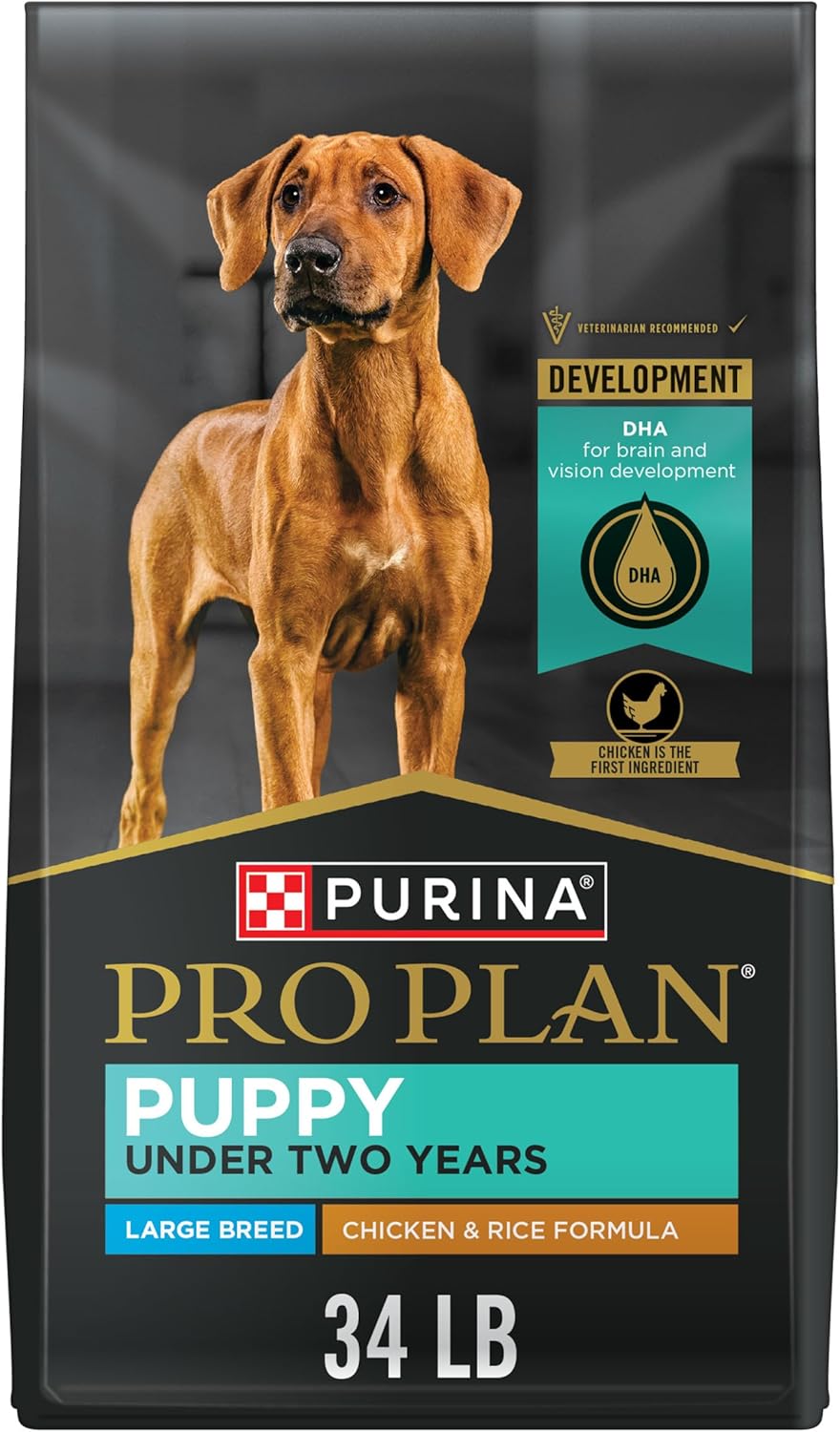
Purina Pro Plan large breed puppy, chicken and rice, 34 lb
A 34-pound bag for large-breed puppies. The maker says it supports an appropriate growth rate, with chicken first and DHA from fish oil, for puppies expected to pass 50 pounds. Read the AAFCO line on the bag for growth of large-size dogs. It is not a prescription. The bag is marketed as high protein, and VCA prefers moderate protein so phosphorus and calcium stay in range. Ask the veterinarian first. Feed to body condition.
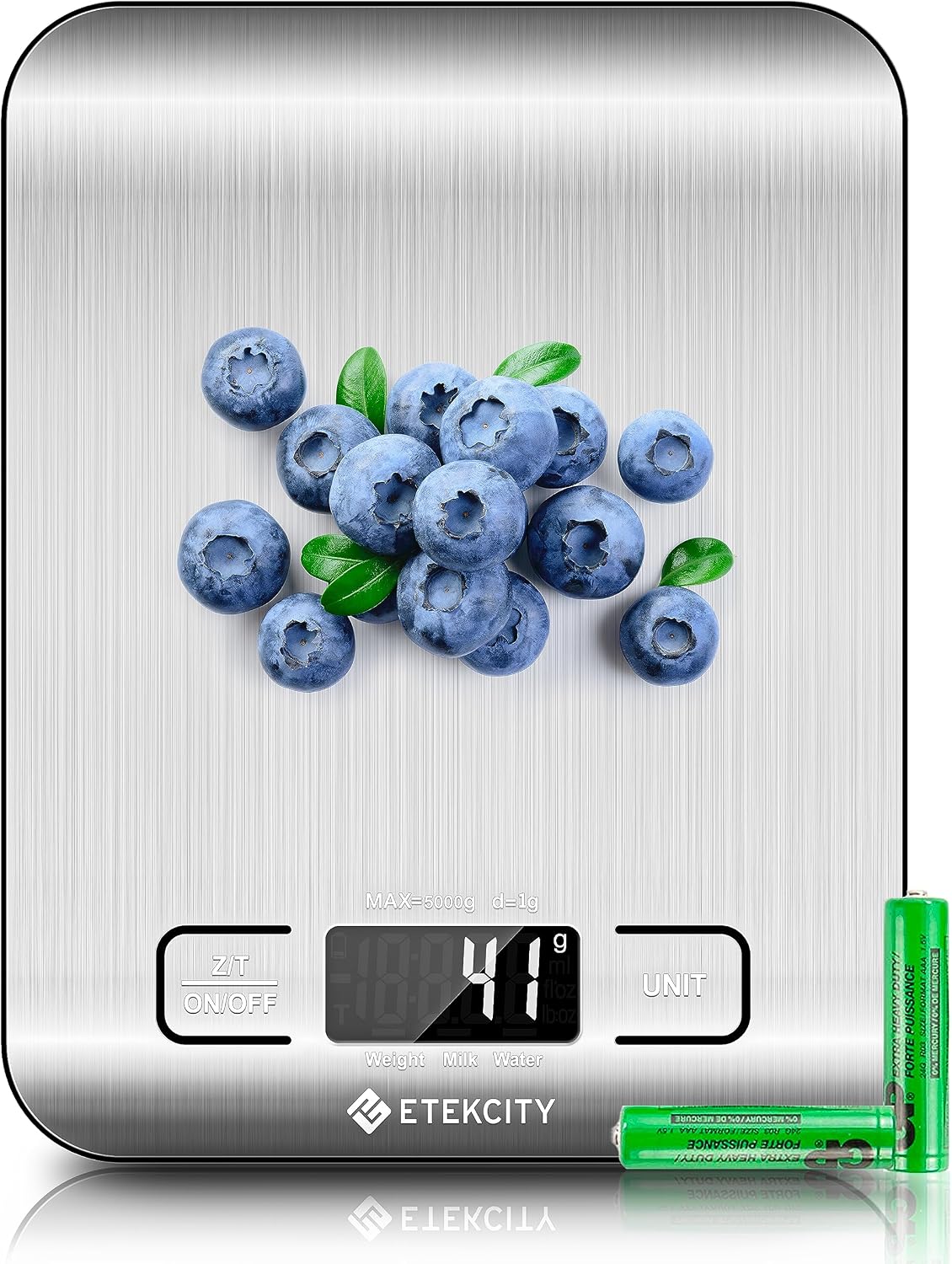
Etekcity digital kitchen scale, 11 lb capacity
This scale weighs up to 11 pounds in 1-gram steps, with tare so you can zero the bowl. It is for the meal. A Golden puppy passes 11 pounds of body weight early, so weekly weigh-ins need a different scale. Tare the bowl, add kibble to the gram amount the clinic set, and change that number when the ribs get harder to find. VCA wants a scale because cups drift.
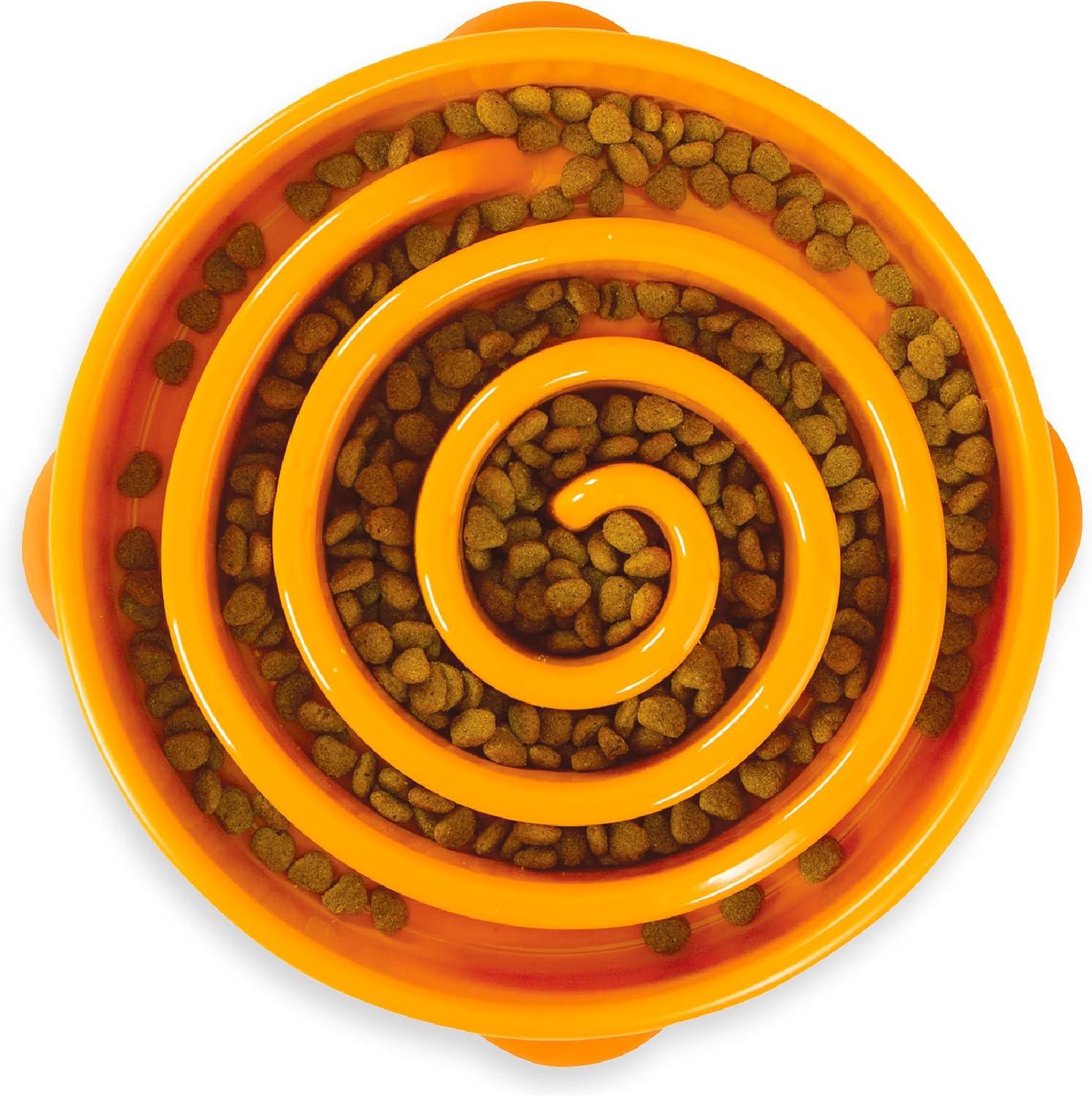
Outward Hound Fun Feeder, large, orange swirl
The large size, about 12 inches across, with the swirl the maker calls its slower level. It holds about 4 cups for medium to large dogs. Put it on the floor. A young puppy who walks away needs an easier bowl for part of the meal. Stay nearby, and take it up if the puppy chews the plastic. It slows eating. A suddenly swollen abdomen is the bloat guide.
Sleep
AKC's sleep page says puppies usually sleep 18 to 20 hours a day, in naps of about 30 minutes to two hours, and to take them out when they wake. AKC's schedule article says some puppies sleep as much as 16 to 18 hours, and that a sleeping puppy should be left alone. Both numbers are published. An overtired puppy is the one who will not settle, which is a reason to start the nap sooner.
ASPCA's general care page wants a warm, quiet rest place off the floor, and bedding that gets washed. AKC's crate article sizes the crate so the dog can stand, turn, and lie down, with a divider for a puppy, and says to stop if the dog panics: pacing, shaking, chewing the door, long howling, drooling. Teaching the crate, and how long a Golden can be alone, is the training hub and the alone-time guide. Age totals are the puppy sleep chart. Night waking is why a puppy will not sleep. Adults and seniors are the sleeping guide. The arrival week is the first-week schedule.
A puddle on waking is timing, and the method is the puppy training hub and the potty schedule chart. A puppy who had been reliable and then strains, passes blood, or goes quiet is a same-day call.
Teeth
The teething and nipping page says baby teeth can appear by two weeks, adult teeth start around three to four months, and baby teeth should be gone by about six months: 28, then 42. The timeline puts the baby set in by five to six weeks and the first lost teeth around 12 to 16 weeks. The tooth-count page finishes the baby set a little later, then incisors near four months, canines near five to six months, and premolars and molars from five to eight months. A tooth on the floor can be normal. Jerry Klein says to tell the veterinarian if baby teeth remain. Do not pull them.
Drooling and a small blood spot on a toy can be teething, and that page says the same signs can be something else. Offer a chew that stays in one piece, and stay in the room. Start touching the mouth now, which the timeline page recommends, so brushing is possible later. Human toothpaste can contain xylitol. Bite inhibition is the training hub and the biting guide. The month-by-month charts are the teething guide and the teething timeline chart. Adult teeth are the dental care guide.
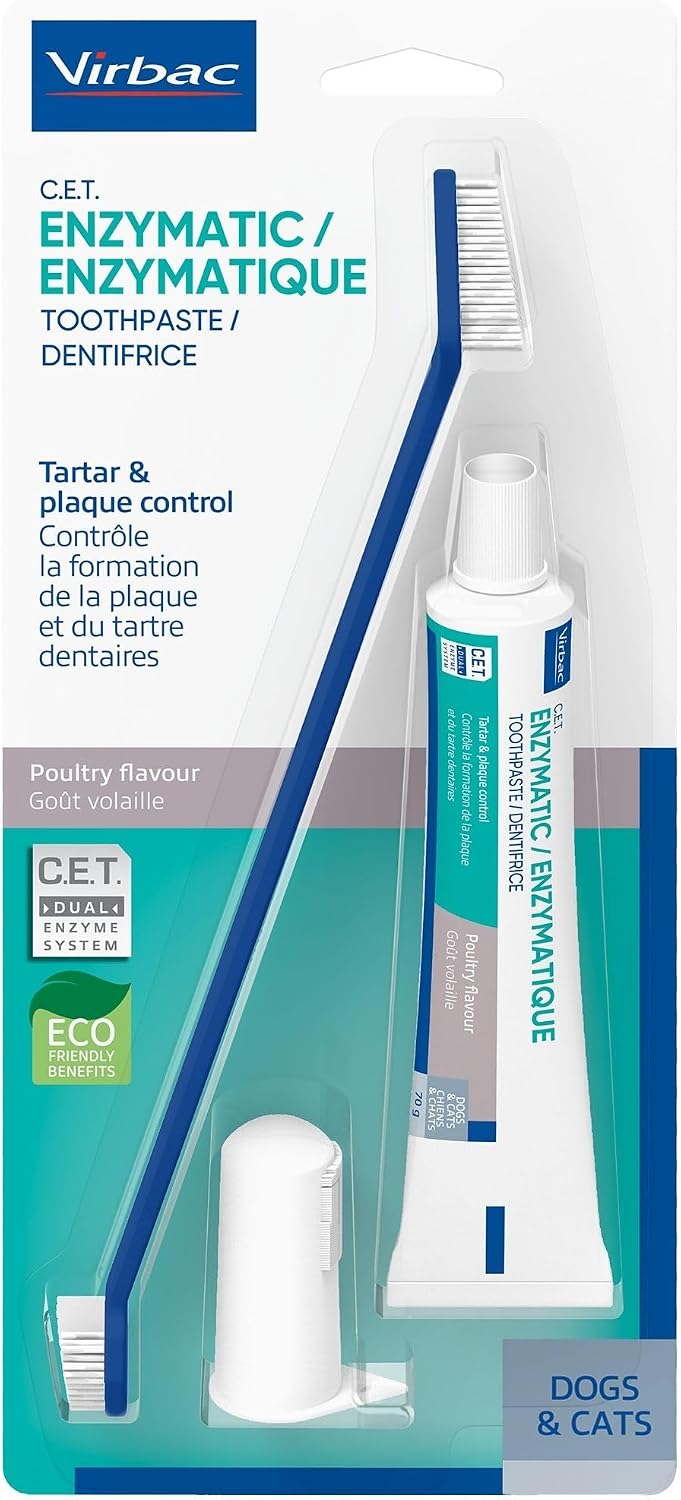
Virbac C.E.T. oral hygiene kit, poultry
Poultry enzymatic toothpaste, a soft dual-end brush, and a finger brush. The listing says adult dogs and cats, but nothing in it rules out a puppy, and the paste is made to be swallowed. The maker says the paste is safe if swallowed and that the kit is for starting a brushing habit. On a Golden puppy, use the finger brush for a few seconds, then stop. Skip a session the puppy fights. No human toothpaste, and no set amount of paste. The dental guide is the adult routine.
Coat handling
The AKC breed page says Goldens heavily shed once or twice a year and more moderately the rest of the time. A slicker once or twice a week catches dead hair. A heavy shed becomes daily, after the dog is fully dry from a bath. Nails are trimmed on a schedule. A puppy needs the handling, which AAHA puts on the early visits: one or two calm passes, then stop. Keep the bristles off the skin. The grooming guide is the adult sequence. Wash the bed, which ASPCA already asks for.

Hertzko self-cleaning slicker brush, purple
A slicker with fine wire bristles and a button that retracts them so hair wipes off. It is the brush type the AKC breed page names for a Golden. On a puppy, use the tips in short strokes and lift off at the skin. Stop when the puppy moves away. Leave the heavy shed, and any idea of shaving the coat, for the grooming guide.
Exercise, stairs, and open growth plates
The AKC breed page says a Golden needs plenty of daily exercise, and that a dog who misses it is likely to invent a project. Ask the veterinarian before any strenuous or high-impact work while the skeleton is still growing. AKC's exercise article says the amount depends on age, health, and breed, and that puppies need several short sessions. A long one is hard on a body that is still growing. Mental work complements the outing. ASPCA says exercise needs vary, and that boredom feeds destructive behavior.
VCA's growth-plate page says to wait on long jogs, long hikes, jumps, and competitive agility until the puppy is mature. That may be a little past six months in a small dog and closer to a year and a half in a giant. A Golden is large. Neither VCA nor this page names the month a Golden's plates close. Walks and self-directed play are allowed. The puppy sets the pace. A limp, or a change in how the puppy sits or stands, is a clinic visit.
Krontveit and colleagues (American Journal of Veterinary Research, 2012) followed Newfoundlands, Labrador Retrievers, Leonbergers, and Irish Wolfhounds. Stair use from birth to three months was tied to higher radiographic hip dysplasia risk. Off-leash work on soft ground in that window went the other way. Goldens were not in the study. The apartment living guide is the stair page: carry a very young puppy, and skip stair sprints. VCA names Goldens among commonly affected large breeds. Signs include hind-end weakness, trouble rising, a limp, and reluctance to climb, sometimes in a puppy and more often at one to two years. The hip dysplasia guide, the arthritis guide, and the exercise needs guide continue from here. The AKC prints no minute count.
The rest of the checklist
AAHA's checklist asks the clinic to cover spay or neuter timing, a microchip with a current phone number, hazards, a car restraint, and positive reinforcement. The car travel guide is the restraint. The training hub is the reinforcement, the housetraining method, the leash, and the short sessions. Supplements are on that same discuss list. VCA's answer is to leave supplements out of a large-breed puppy's diet. A joint chew for a growing Golden is that conversation. The arthritis guide is for a dog who already needs joint care.
When to call the vet
Call the same day for any of these:
- 🐾Vomiting, watery or bloody stool, or a puppy who is quiet and will not eat. The diarrhea guide covers that pattern, including parvovirus during the vaccine series.
- 🐾A limp, or a change in how the puppy sits or stands. VCA treats open growth plates as something hard work can injure.
- 🐾Hind-end weakness, trouble rising, or a puppy who stops climbing. VCA lists those as hip dysplasia signs, including in young dogs.
- 🐾A hard, swelling abdomen after a meal, with restlessness or retching. That is the bloat guide and an emergency clinic.
- 🐾Rice-like segments, or a puppy who is not gaining on the weekly weigh-in. Bring a stool sample. Add no second dewormer yourself.
- 🐾A baby tooth beside an adult tooth, or mouth bleeding beyond a small spot on a toy.
- 🐾A puppy who is not themselves after a vaccine. Tell the clinic that gave it.
- 🐾Crate panic: pacing, shaking, door chewing, long howling, drooling. Stop that plan. The training hub comes after pain is ruled out.
A bright puppy with a soft stool the day the food changed can go back to the growth diet the clinic already approved, and still deserves a call if it lasts.
Questions owners ask
When do Golden Retriever puppy vaccines finish?
AVMA says the final dose for most puppies is at 16 weeks or older, and the veterinarian may move it. AAHA asks for at least three combination doses between 6 and 16 weeks, continued until the puppy is older than 16 weeks, sometimes to 18 or 20 weeks where distemper risk is high. Leptospirosis is now core in AAHA's guidelines and grouped with the core diseases on VCA's owner page, starting at 12 weeks. Rabies follows local law. A missed visit is a phone call.
Does a Golden need large-breed puppy food?
If this puppy should reach about 70 pounds, use a growth diet whose AAFCO statement includes large-size dogs. AKC males are 65 to 75 pounds and females 55 to 65, so ask. Stay on it until the clinic calls the skeleton mature: Merck 10 to 16 months for large and giant breeds, AAHA closer to 15 to 16 months for some, VCA around 18 months for large breeds and 24 for giants. Leave extra calcium out.
How many meals a day should a Golden puppy get?
Merck says three times a day until 6 months, then twice until 12 months. VCA's growing-puppy page says two or three measured meals. VCA's large-breed page says at least four small meals, from the ground, with dry food left dry. The veterinarian sets the number. Free-choice feeding is the plan VCA ties to extra fat and skeletal abnormalities.
How much do Golden puppies sleep?
AKC's sleep article says 18 to 20 hours, in naps of about 30 minutes to two hours. AKC's schedule article says some puppies sleep as much as 16 to 18 hours. Take them out when they wake, and leave a sleeping puppy asleep. The sleep chart and the night-waking guide split the rest. Panic in the crate is a reason to stop and call.
When do puppy teeth fall out?
Baby teeth can start by two weeks and should be gone by about six months, with adult teeth arriving from about three to eight months depending on which AKC page you read. There are about 28 baby teeth and 42 adult teeth. A baby tooth still beside an adult tooth is a veterinary visit. A small blood spot on a toy can be teething, and unusual bleeding can be something else.
How much exercise is safe before the growth plates close?
Several short walks and free play, with the puppy setting the pace. VCA waits on long runs, jumps, and competitive agility until maturity, a little past six months in small dogs and closer to a year and a half in giants. A Golden is large, and this page will not invent the closing month. A limp ends the outing. Stair repeats are a poor workout. The apartment guide has the hip study, which did not include Goldens.
When should a Golden be spayed or neutered?
AAHA's checklist says to discuss the best age, and the benefits and risks, with the veterinarian. It publishes no Golden Retriever age. The arthritis guide is the joint side of that talk. Book it at a puppy visit.
Sources
Individual vaccine plans, a series starting at 6 to 8 weeks, a final dose for most puppies at 16 weeks or older, and the risk of skipping or delaying: AVMA, vaccinations. A first exam as soon as possible, bringing vaccine and deworming records, the 3-to-14-week socialization period, and the extra time puppies need for housetraining, feeding, exercise, and supervision: AVMA, selecting a pet dog.
Core and noncore antigens, three or more combination doses from 6 to 16 weeks, maternal antibody, an 18-to-20-week finish where risk is high, rabies by law, leptospirosis as a core vaccine since the 2024 update, and adverse-event reporting: AAHA Canine Vaccination Guidelines, core and noncore vaccines. Visits every 3 to 4 weeks through about 6 to 9 months, including spay or neuter timing, diet, and parasites: AAHA new-puppy checklist (PDF). Growth diets until skeletal maturity, about a year for small and medium dogs, closer to 15 to 16 months for some large and giant dogs, and no excess calcium: 2021 AAHA Nutrition and Weight Management Guidelines (PDF).
Nine-point body condition scores, with 4 and 5 as the ideal band: WSAVA body condition score chart (PDF).
Vaccines at 6 to 8 weeks, the DHPP series, leptospirosis, rabies, fecal exams, repeated deworming, and tapeworm segments: VCA, new puppy owners. Stool samples, handwashing, and flea-borne tapeworms: VCA, 8-week-old puppy care. Year-round parasite prevention: VCA, puppy vaccines and preventives. Overfeeding, calcium, the AAFCO large-size statement, a puppy body condition of 4 out of 9, a kitchen scale, and four small meals from the ground: VCA, large and giant breed dogs. Two or three measured meals and free-choice feeding: VCA, feeding growing puppies. Growth plates: VCA, puppy exercise. Hip dysplasia: VCA, hip dysplasia in dogs.
Meal counts from weaning to 12 months, the AAFCO large-breed statement, skeletal maturity at 10 to 16 months in large and giant breeds, weekly small weight gains, and the 50-to-70-percent feeding comparison: Merck Veterinary Manual, feeding practices in small animals.
Weight, height, daily exercise, a check before strenuous work, seasonal shedding, and slicker brushing: AKC, Golden Retriever. Short sessions for puppies: AKC, how much exercise. Sleep of 18 to 20 hours: AKC, how much do puppies sleep. Sleep of as much as 16 to 18 hours: AKC, a schedule for a new puppy. Crate size and panic: AKC, crate training. Teething: AKC, teething and nipping, timeline, and tooth count.
A quiet rest place and exercise that varies by age and health: ASPCA, general dog care.
Stair use before three months and later hip dysplasia, in four large breeds that did not include Golden Retrievers: Randi I. Krontveit, Ane Nødtvedt, Bente K. Sævik, Erik Ropstad, and Cathrine Trangerud, American Journal of Veterinary Research, 2012. PubMed 22620698.
P.S. Get the free Golden Retriever Owner Cheat Sheet — daily feeding, sleep, and care in one printable guide.
Get the Cheat Sheet when you join the newsletter — instant access in your welcome email.