
Golden Retriever Puppy Biting Timeline Chart (When Puppies Stop Biting)
By JJ Allan (goldenretriever.hair)
Quick answer: most puppies, Goldens included, get much less mouthy between about 4 and 6 months of age, as they finish teething and mature. That timing comes from the AKC. Biting is often worst in the first weeks home and during teething, which starts at about 3 to 4 months. Teething is usually done by about 6 months. Some Goldens keep mouthing in excited play well into adolescence, and progress is slow and not always steady. If biting hasn't eased by about 6 months, the AKC's chief veterinarian suggests getting help from an experienced trainer or behavior specialist. None of our sources give a separate timeline for Golden Retrievers, so the ages below are general puppy ages.
Below: a by-age biting phase chart, why Golden puppies bite so much, what to do when your puppy bites, mouthing versus nipping, when the chewing phase ends, and when biting is not ordinary.
Sources checked November 15, 2026.
General information, not veterinary advice. Every puppy is an individual. If your puppy's biting seems painful, fearful or aggressive, or the mouth looks sore, check with your veterinarian.
Quick answer: when do Golden Retrievers stop biting?
- 🐾Normal: mouthing and play-biting are a normal part of puppy development (AKC). The ASPCA calls playful mouthing normal for a puppy or young dog.
- 🐾When it eases: the AKC says most puppies become "significantly less mouthy" as they finish teething and mature, often between 4 and 6 months. Consistent training speeds this up.
- 🐾Why it can drag on: trainer Laura Naito, quoted by the AKC, notes that some dogs keep "puppy-like play energy well into their second year." She expects slow, not always steady, progress through adolescence (AKC).
- 🐾When to get help: "Play biting does not mean your puppy is vicious," says Dr. Jerry Klein, the AKC's chief veterinarian. If you haven't been able to moderate it by 6 months, he suggests an experienced trainer or animal behavior specialist (AKC).
There is no exact day when biting stops. What you're aiming for is a puppy who mouths less often and much more gently, then chooses a toy instead of your hand.
Golden Retriever puppy biting phase timeline by age
| Age | What you'll usually see | What's going on |
|---|---|---|
| Up to 7–8 weeks (with the litter) | Rough play with littermates, with yelps when a bite is too hard | Puppies start learning bite inhibition here. VCA says this is one reason puppies shouldn't go to new homes before 7 to 8 weeks. |
| First weeks home (about 8 weeks to 3 months) | Lots of biting, chewing and mouthing on hands, feet and clothes during play | Normal exploring and play. The ASPCA notes it seems cute at seven weeks but much less so by three or four months. |
| About 3 to 4 months | More chewing and mouthing, maybe drooling or a little blood on toys | Baby teeth start falling out to make room for 42 adult teeth. The gums are sore (AKC, VCA). |
| About 4 to 6 months | Mouthing becomes much less frequent and softer | The AKC says most puppies become significantly less mouthy as they finish teething and mature, often in this window. |
| About 6 months | Teething is over for most puppies | Baby teeth should be gone by about 6 months (AKC, VCA). If biting isn't moderated by now, the AKC advises a trainer or behavior specialist. |
| Adolescence (after about 6 months) | Occasional mouthing in excited play | Some dogs keep puppy-like play energy into their second year. Progress continues slowly with consistent polite-play training (AKC). |
For the tooth side of the timeline, see the Golden Retriever teething timeline chart. For what to teach at each age, see the Golden Retriever puppy training schedule.
Why do Golden Retriever puppies bite so much?
Do Golden Retriever puppies bite a lot? Most puppies do, and it is normal. The ASPCA says puppies spend much of their time playing, chewing and investigating, all with needle-sharp teeth. When they play with people, they often bite and mouth hands, limbs and clothing. The usual reasons:
- 🐾Exploring and play. The AKC says puppies use their mouths to investigate the world and to play, the way they played with littermates.
- 🐾Teething. Sore gums make puppies even more likely to chew and mouth things to ease the discomfort (AKC). VCA says teething puppies may be irritable because of a tender mouth.
- 🐾Being overtired. "Overtired puppies are often mouthier puppies," says the AKC, which notes that most puppies need up to 18 hours of sleep a day. See the puppy sleep chart, overtired Golden puppy signs and what to do when your puppy won't sleep.
- 🐾Too little to do. The AKC says a puppy with excess energy is more likely to mouth and nip. VCA's first step for play biting is making sure the puppy gets enough play, exploration, attention and exercise.
- 🐾Accidental rewards. Attention is rewarding for puppies (AKC). Pulling away, squealing and wrestling can all keep the game going. VCA says children are the most vulnerable, because a child's reaction often looks to the puppy like an invitation to more chase and play. Supervise puppies with kids.
- 🐾Hunger, thirst or a potty break. The AKC says a biting puppy may simply need one of these. Meal timing by age is in our puppy feeding schedule chart.
One easy way to give a mouthy puppy something to do is a food toy. VCA lists food toys, soft toys and tug games as ways to meet a mouthy puppy's need to use its mouth, and the AKC suggests quiet crate time when a puppy needs to wind down.
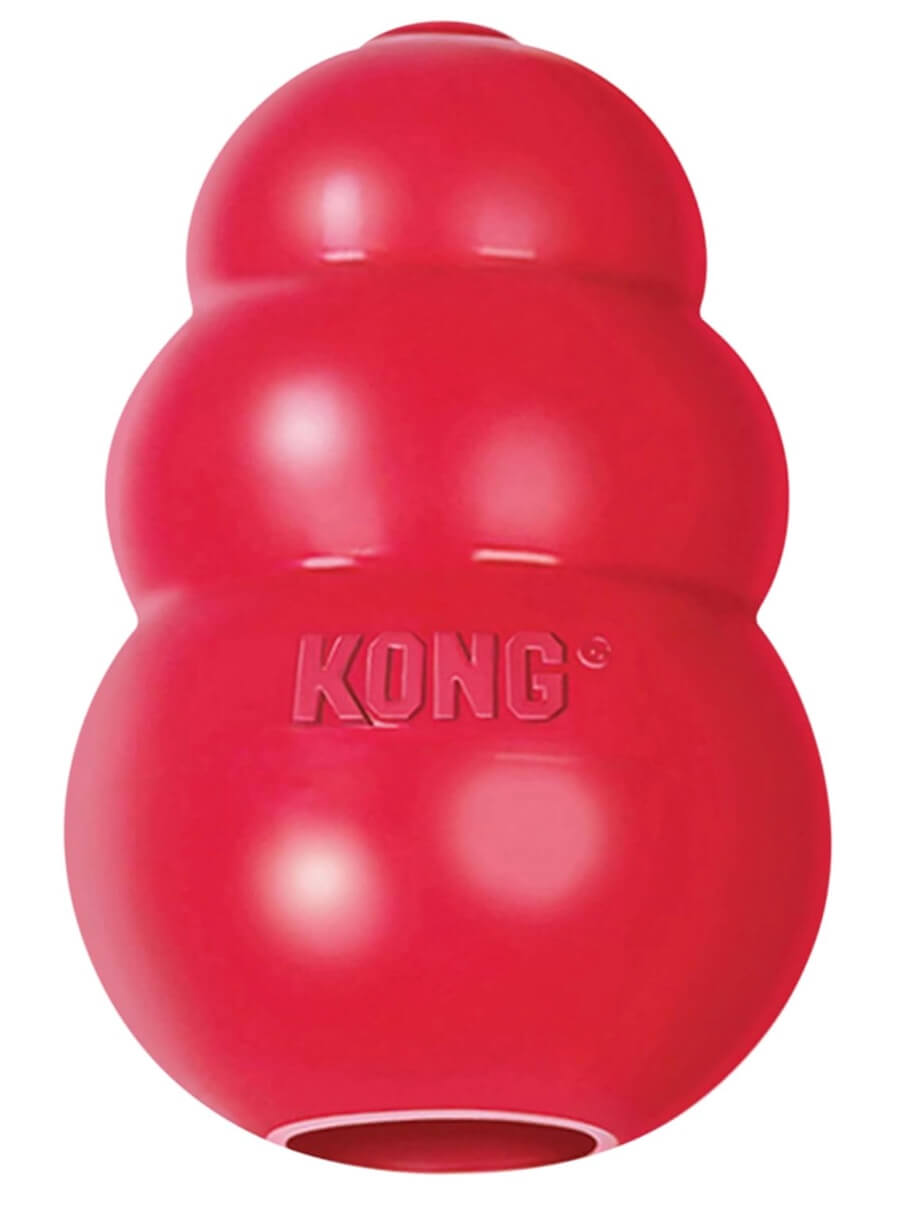
Best for: giving a mouthy puppy a job while it settles
KONG Classic Stuffable Dog Toy
A stuffable rubber toy you can fill with part of a meal, the kind of food toy VCA suggests for a mouthy puppy. It works well before a nap or quiet crate time. If you use peanut butter, check that it has no xylitol.
Pick a size that suits your puppy and watch the first few uses.
How to reduce Golden Retriever puppy biting
The full step-by-step plan is in our Golden Retriever puppy biting guide. The core of it, from the AKC, ASPCA and VCA:
| When this happens | Try this | Source |
|---|---|---|
| Teeth touch your skin hard | Give a high-pitched yelp and let your hand go limp. Praise your puppy for stopping or licking you, then carry on. Repeat no more than three times in 15 minutes. | ASPCA |
| The yelp makes your puppy wilder | Walk away, or calmly put your puppy in its crate for a short break. | AKC |
| Hard bites keep coming | Time-out: ignore your puppy for 10 to 20 seconds or move away, then go back to gentle play. | ASPCA |
| Your puppy goes for fingers or toes | Swap in a toy or chew. Keep a puppy chew toy at hand at all times so you can offer it first. | ASPCA, AKC |
| Your puppy mouths you when petted | Feed small treats from your other hand while you stroke it. | ASPCA |
| Your puppy ambushes your feet | Freeze, offer a tug toy and praise the second it lets go. | ASPCA |
| Your puppy is wild and bitey after a long time awake | Offer a potty break, then quiet time or a nap in the crate. | AKC |
A few rules make all of these work:
- 🐾Choose games that keep hands out of it. The ASPCA suggests fetch and tug-of-war instead of wrestling with your hands, and keeping a tug toy handy to redirect.
- 🐾Keep the rules the same for everyone. VCA says all family members should agree that the puppy is never allowed or encouraged to bite hands, feet or clothes.
- 🐾Don't punish. The ASPCA warns against slapping, scruff shaking or whacking the nose. These can make biting harder and can cause real aggression.
- 🐾Get help early if it isn't working. The ASPCA recommends a good puppy class or a Certified Professional Dog Trainer.

Best for: rewarding a soft mouth and calm play
Zuke's Mini Naturals Training Dog Treats
Small, soft training treats to keep in a pocket. The AKC suggests rewarding your puppy with a treat and praise when it backs off, and the ASPCA suggests feeding small treats from your other hand so your puppy gets used to being petted without mouthing.
Use them to mark the moment your puppy lets go, licks instead of bites, or takes a toy instead of your hand.
Biting, mouthing and nipping: is there a difference?
Owners use all three words, and so do our sources. The ASPCA covers mouthing, nipping and biting together, and the AKC uses mouthing, nipping and play-biting for the same thing. The useful difference is force. Bite inhibition, a dog's ability to control the force of its mouthing, is the goal because, the ASPCA explains, a dog who learns to use its mouth gently is less likely to bite hard if it ever bites in fear or pain.
Play mouthing looks relaxed. A stiff or frozen body is different, says the ASPCA, and so are pulled-back lips and growling. These can mean a puppy is biting out of fear or frustration. See the vet section below.
When do Golden Retrievers stop chewing?
The ASPCA says the intensified chewing phase that comes with teething usually ends by six months of age. Chewing as a habit carries on for life. The ASPCA calls it normal for dogs of all ages, and in older dogs it keeps the jaws strong and the teeth clean. Chewing also relieves boredom. So a Golden who chews everything after teething usually needs better outlets and supervision, not to "grow out of it." For gum care and safe chews while the teeth change, see our Golden Retriever teething guide. For the tooth-by-tooth timeline, see the teething timeline chart.
VCA notes that most veterinary dentists advise against letting puppies or older dogs chew hard things that won't bend, including nylon, bones and antlers. They can break teeth. Ask your vet which chews are safest for your puppy, and always supervise chewing.
When it's not ordinary: see your vet
Most puppy biting is ordinary. Get help from your veterinarian, and then a trainer or behavior professional, if your puppy:
- 🐾goes stiff or frozen, pulls its lips back or growls, and bites much harder than in play. The ASPCA says biting from fear or frustration can signal problems with future aggression;
- 🐾bites when handled or held still. The ASPCA calls these temper tantrums, and they are more serious than play mouthing;
- 🐾bites in a way that is unusually intense or causes injury, or that doesn't improve with consistent training. The AKC says to get a qualified trainer;
- 🐾is still biting regularly at about 6 months despite your work (AKC);
- 🐾seems to bite out of aggression and not during play. The AKC says to talk to a veterinarian or dog trainer;
- 🐾has what looks like two teeth in one spot, which VCA says can be a retained baby tooth that needs a vet visit. A little red on a chew toy during teething is normal, VCA says, but the AKC says to talk to your vet about anything unusual.
If your puppy's biting looks more like aggression than play, read our guide to Golden Retriever puppy biting aggressively and talk to your vet.
See your vet if your puppy's biting comes with any of the signs above. The ASPCA notes that dogs may bite when they are afraid or in pain, and only your veterinarian can rule out a medical cause.
Related Golden Retriever guides
- 🐾Golden Retriever Puppy Biting Guide, the full step-by-step plan
- 🐾Golden Retriever Puppy Biting Aggressively, when it's more than play
- 🐾Golden Retriever Teething Guide
- 🐾Golden Retriever Teething Timeline Chart
- 🐾Golden Retriever Puppy Training Schedule
- 🐾Golden Retriever Puppy Sleep Chart
- 🐾Overtired Golden Retriever Puppy
- 🐾Golden Retriever Puppy Won't Sleep
- 🐾Golden Retriever Puppy Feeding Schedule Chart
Quick answers
When do Golden Retriever puppies stop biting?
Most puppies become much less mouthy between about 4 and 6 months as they finish teething and mature, according to the AKC. Some keep mouthing in excited play into adolescence. If biting hasn't eased by 6 months, get help from a trainer or behavior specialist.
How long does the Golden Retriever puppy biting phase last?
It usually runs from the first weeks home through teething, which is normally done by about 6 months. Gentle play mouthing can fade slowly through adolescence, and consistent training shortens it.
Why does my Golden Retriever puppy bite so much?
Usually for normal reasons: play, exploring, teething, being overtired, or not enough to do. Pulling away or squealing can also make biting more fun for the puppy.
Is puppy biting normal?
Yes. The AKC and ASPCA both call mouthing and play-biting normal puppy behavior. The goal is to teach bite inhibition and give the mouth a better target, not to punish.
How do I teach bite inhibition?
When teeth touch skin, yelp and go limp, or end play for 10 to 20 seconds, then go back to calm play. Redirect to a toy and keep the rules the same for everyone. The ASPCA warns against physical punishment.
When does puppy biting become a problem?
When it looks stiff, fearful or angry, causes injury, happens when the puppy is handled, or doesn't improve with consistent training. Talk to your vet and a qualified trainer.
Sources
- 🐾AKC: Puppy mouthing, expert tips (age it eases, rest, redirecting)
- 🐾AKC: How to stop puppy biting (Dr. Jerry Klein, time-outs, overtired puppies)
- 🐾AKC: Why does my puppy nip at me and chew on my clothes? (Laura Naito)
- 🐾AKC: Puppy teething and nipping
- 🐾ASPCA: Mouthing, nipping and biting in puppies
- 🐾ASPCA: Destructive chewing
- 🐾VCA Animal Hospitals: Play biting in puppies
- 🐾VCA Animal Hospitals: Teeth, teething and chewing in puppies
- 🐾VCA Animal Hospitals: Persistent deciduous (baby) teeth in dogs
P.S. Get the free Golden Retriever Owner Cheat Sheet — daily feeding, sleep, and care in one printable guide.
Get the Cheat Sheet when you join the newsletter — instant access in your welcome email.