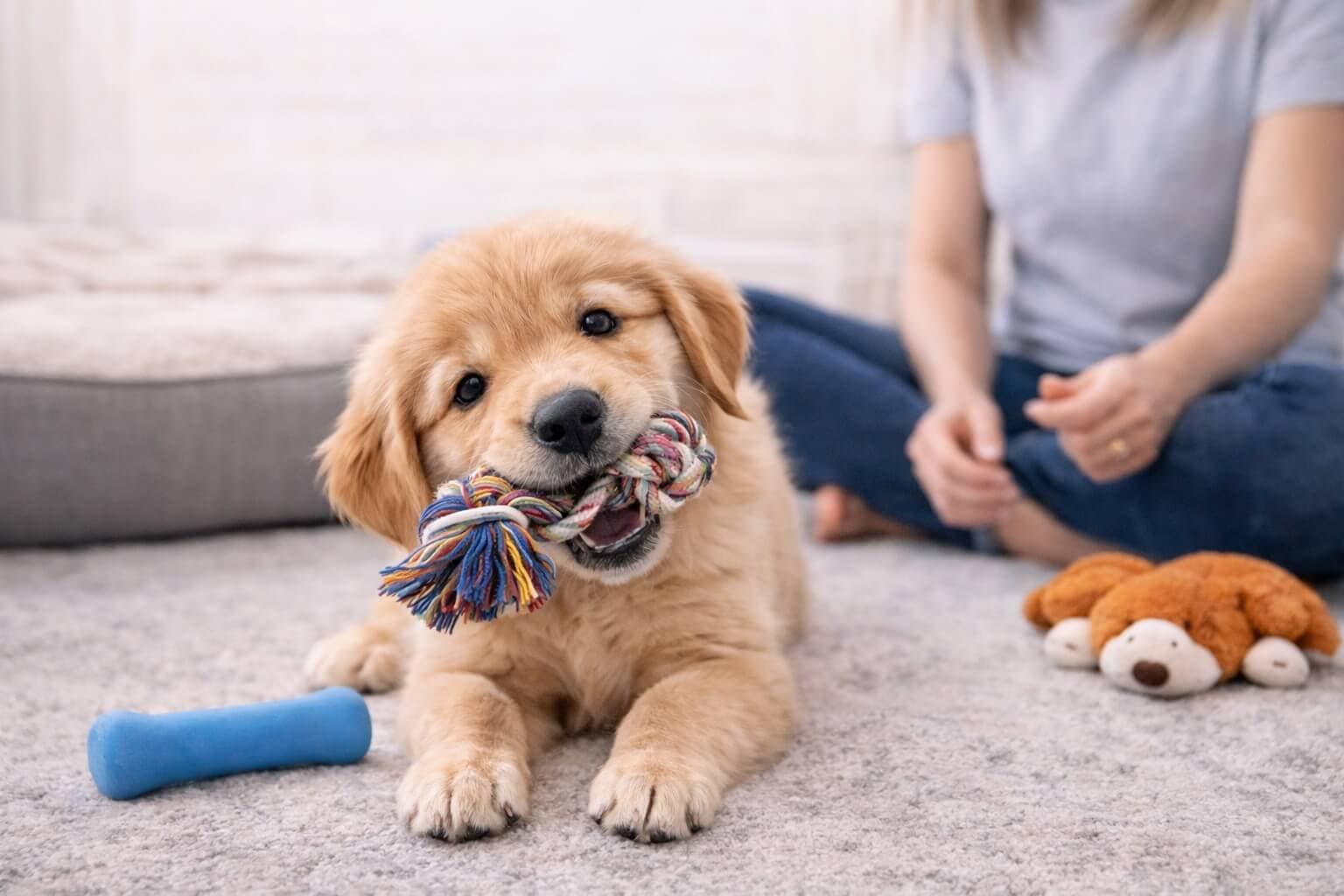
Golden Retriever Puppy Biting Guide (Why It Happens & How to Stop It)
GoldenRetriever.hair
By GoldenRetriever.hair
Many new Golden Retriever owners are surprised—sometimes shocked—by how much Golden Retriever puppies bite. The sweet, fluffy puppy they brought home suddenly turns into a little shark that latches onto hands, feet, and clothing at every opportunity. It’s easy to worry that something is wrong or that you’ve adopted an aggressive dog.
In reality, Golden Retriever puppy biting is a normal part of development, especially during the teething stage. That doesn’t mean you should ignore it. Your job is to guide your puppy through this biting stage, teaching them what is and isn’t appropriate to chew on and how to control the strength of their mouth.
This guide explains why Golden Retriever puppies bite, what counts as normal vs concerning behavior, and how to stop Golden Retriever puppy biting using safe, effective training and management.
Why Golden Retriever Puppies Bite
All puppies bite—Golden Retrievers included. Biting is part of how they:
- 🐾Explore the world.
- 🐾Communicate with littermates.
- 🐾Relieve discomfort from teething.
Normal Reasons for Puppy Biting
Common causes of Golden Retriever puppy biting include:
- 🐾
Teething discomfort
- 🐾As teeth erupt and gums feel sore, puppies chew and bite more to relieve pressure.
- 🐾
Playful exploration
- 🐾Puppies use their mouths the way human toddlers use their hands.
- 🐾They grab, tug, and mouth objects (and people) to learn about them.
- 🐾
Learning boundaries
- 🐾With littermates, puppies learn:
- 🐾How hard they can bite before a sibling yelps and stops playing.
- 🐾With humans, they must learn a different, gentler standard—human skin is more delicate.
- 🐾With littermates, puppies learn:
- 🐾
High energy and arousal
- 🐾Energetic, curious Golden Retriever puppies often bite more when:
- 🐾Excited.
- 🐾Overtired.
- 🐾Under-exercised or bored.
- 🐾Energetic, curious Golden Retriever puppies often bite more when:
Goldens are bred to hold and carry things in their mouths, so it’s not surprising that mouthing and chewing are particularly strong behaviors in the breed.
The Golden Retriever Teething Stage
Understanding Golden Retriever teething helps you set realistic expectations for the puppy biting stage. For stage-by-stage timelines and gum-soothing tips, see our Golden Retriever teething guide.
Teething Timeline
Roughly:
- 🐾2–4 weeks – Baby (deciduous) teeth start to come in.
- 🐾6–8 weeks – Most baby teeth are present when you bring your puppy home.
- 🐾12–16 weeks – Adult teeth begin to replace baby teeth; teething intensifies.
- 🐾4–6 months – Most adult teeth have erupted; biting and chewing gradually decrease.
During this time:
- 🐾Chewing and mouthing increase, especially around 3–5 months.
- 🐾Your puppy may:
- 🐾Drop little teeth (you might see them, or they might be swallowed).
- 🐾Experience gum sensitivity and drooling.
Why Chewing Increases
Chewing:
- 🐾Helps relieve gum pressure.
- 🐾Distracts from discomfort.
- 🐾Provides a natural outlet for oral needs.
This means that during the Golden Retriever puppy biting stage:
- 🐾You should expect more chewing, not less.
- 🐾Your main task is to direct that chewing to appropriate items, not try to eliminate it completely.
When Puppy Biting Is Normal
It’s important to distinguish normal playful biting from truly problematic behavior.
Normal Biting Situations
Common, generally normal contexts for biting:
- 🐾
During playtime
- 🐾Puppy grabs at hands, sleeves, or pant legs when excited.
- 🐾
When overtired
- 🐾Late in the evening or after a long period awake, biting increases and self-control decreases.
- 🐾
When frustrated or overstimulated
- 🐾Too much roughhousing, noise, or handling without breaks can lead to more intense mouthing.
Normal playful biting:
- 🐾Is often accompanied by:
- 🐾Loose, wiggly body language.
- 🐾Play bows and bouncy movement.
- 🐾Stops or decreases when:
- 🐾You pause play.
- 🐾You redirect to a toy.
- 🐾You provide a nap opportunity.
Differentiating Playful Biting From Aggression
Red flags that suggest biting is more than normal play:
- 🐾Body is stiff, not wiggly.
- 🐾Growling with hard stares and no play signals.
- 🐾Snapping to create distance, not just grabbing for fun.
- 🐾Biting that:
- 🐾Does not lessen when you calmly disengage and manage.
- 🐾Gets worse over weeks rather than improving.
If you see these signs, especially in contexts where the puppy is not clearly in pain or intensely frightened:
- 🐾Consult your veterinarian and a qualified positive-reinforcement trainer.
- 🐾Also review our Golden Retriever behavior problems guide.
For the vast majority of Golden Retriever puppies, though, the issue is normal mouthing and teething, not aggression.
Teaching Bite Inhibition
Bite inhibition is a dog’s ability to control the force of their bite. Even when Goldens mouth or grab something:
- 🐾A dog with good bite inhibition uses soft pressure, not a full-strength bite.
How Puppies Naturally Learn Bite Control
In the litter:
- 🐾Puppies learn from their mother and siblings:
- 🐾If one puppy bites too hard, the other yelps or stops playing.
- 🐾Over time, rough biters learn to moderate their pressure to keep the game going.
When they go home:
- 🐾That learning isn’t finished.
- 🐾You must continue teaching:
- 🐾“Human skin is even more sensitive; use an even softer mouth—or better yet, chew toys instead.”
How to Teach Bite Inhibition at Home
Practical steps:
- 🐾
Use gentle feedback
- 🐾When your puppy bites too hard:
- 🐾Say “Ouch” or a short “Ah-ah” in a calm but clear tone.
- 🐾Then immediately remove your attention:
- 🐾Turn away.
- 🐾Fold your arms.
- 🐾Pause the game for 10–20 seconds.
- 🐾When your puppy bites too hard:
- 🐾
Resume play when calm
- 🐾When the puppy settles or offers a gentler behavior (like a sit), resume interaction.
- 🐾This mirrors what happens with littermates—rough play ends, calm play continues.
- 🐾
Progress over time
- 🐾Initially, you may accept very light mouthing.
- 🐾As weeks go by, your standard should shift toward:
- 🐾“No teeth on skin at all.”
Do not:
- 🐾Yank your hand away violently (this can excite the chase reflex).
- 🐾Hit, flick, or yell at the puppy (can create fear or defensive biting).
Consistent, calm enforcement of bite rules is far more effective—and aligns with Golden Retrievers’ sensitive, eager-to-please temperaments.
Using Toys to Redirect Biting
One of the most effective ways to handle Golden Retriever puppy biting hands is to redirect to appropriate toys.
Choose the Right Chew and Play Toys
Have a variety of:
- 🐾
Soft but durable puppy chew toys
- 🐾Sized appropriately for your puppy’s mouth.
- 🐾With textures that massage gums.
- 🐾
Longer toys for tug and fetch
- 🐾Ropes or stuffed toys that keep your hands farther from teeth.
- 🐾
Food-stuffed toys
- 🐾Stuff part of their meal or a safe spread inside a durable toy.
Rotate toys to keep them interesting, as we recommend in the Golden Retriever puppy checklist guide.
Redirection Technique
When your puppy starts mouthing hands or clothes:
- 🐾
Stay calm
- 🐾Avoid big reactions that may feel like a fun game.
- 🐾
Offer an appropriate toy
- 🐾Present the chew toy right at their mouth.
- 🐾Wiggle or move it to make it exciting.
- 🐾
Encourage chewing on the toy
- 🐾Praise when they grab and chew the toy instead of you.
- 🐾
End interaction if they keep targeting you
- 🐾Step away.
- 🐾Give them a short break in a crate or pen with a chew toy if needed (not as punishment, but as a reset).
Redirection teaches your puppy:
- 🐾“Teeth on toys = yes. Teeth on people = the fun stops.”
Disclosure: This section contains affiliate links. As an Amazon Associate, GoldenRetriever.hair earns from qualifying purchases at no extra cost to you.
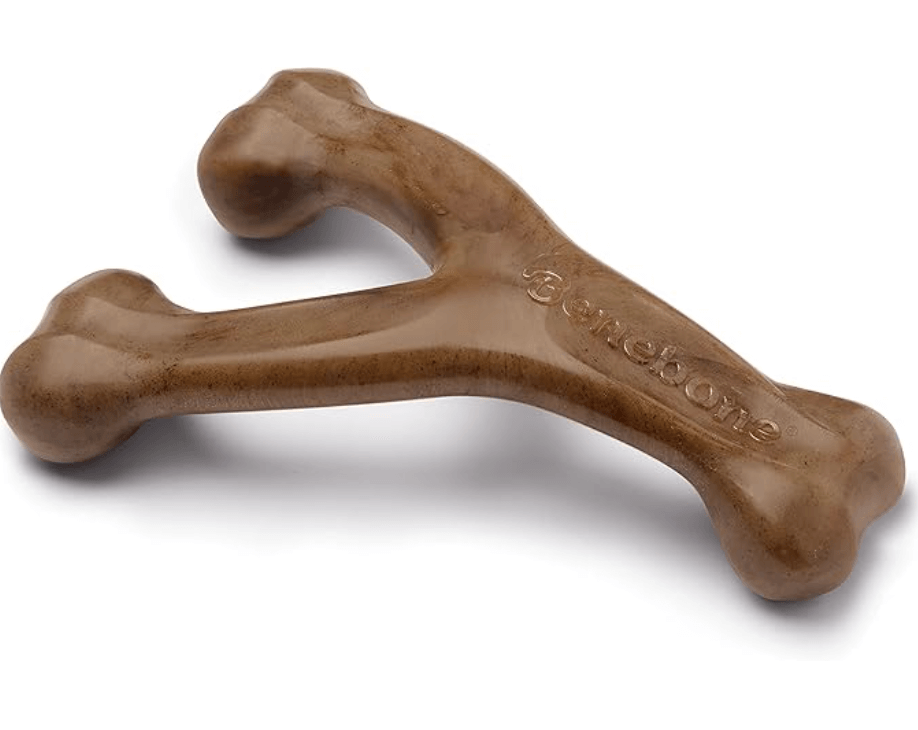
Benebone Wishbone Durable Dog Chew Toy
A supervised legal chew for redirecting biting away from hands and furniture. Size to the current label; it is not a match for every powerful chewer.
Hard nylon can present tooth-injury concerns. If your puppy still has baby teeth, start with the softer Benebone Puppy line. Inspect and replace when worn. Follow Benebone’s current directions.
Training Techniques to Reduce Biting
Beyond redirection and bite inhibition, there are additional strategies to reduce Golden Retriever puppy biting over time.
Reward Calm Behavior
It’s easy to focus only on the biting, but you should also:
- 🐾Notice and reward moments of calm:
- 🐾Sitting quietly.
- 🐾Lying down with a chew toy.
- 🐾Looking at you without jumping or nipping.
Use:
- 🐾Small, soft treats.
- 🐾Gentle praise.
This tells your puppy:
- 🐾Calmness earns attention and rewards, not just hyper mouthing.
Use Short, Structured Play Sessions
Instead of:
- 🐾Letting play escalate until the puppy is wild and bitey,
try:
- 🐾Short play bursts followed by:
- 🐾A quick training exercise (sit, down).
- 🐾A short break or nap.
This helps prevent the “overtired meltdown” where biting spirals out of control.
Avoid Rough Play With Hands
Common mistake:
- 🐾Wrestling with your puppy using your hands.
Problem:
- 🐾This teaches the puppy that hands are:
- 🐾Acceptable chew toys.
- 🐾Signals for rough play.
Better:
- 🐾Use:
- 🐾Tug toys.
- 🐾Balls.
- 🐾Long plush toys.
…to provide physical play while keeping hands out of the bite zone.
Stay Consistent
Consistency among family members is critical:
- 🐾Everyone should:
- 🐾Respond to biting the same way (redirect or disengage).
- 🐾Avoid allowing rough play “just this once.”
Inconsistent responses confuse puppies and prolong the Golden Retriever puppy biting stage.
The Role of Exercise and Mental Stimulation
Puppies often bite more when they’re:
- 🐾Under-exercised.
- 🐾Under-stimulated mentally.
Physical Exercise
Appropriate exercise (see the Golden Retriever exercise needs guide) helps:
- 🐾Use up excess energy that might otherwise go into wild biting.
For puppies:
- 🐾Focus on:
- 🐾Short, frequent play sessions.
- 🐾Controlled walks appropriate for age.
- 🐾Avoiding long, forced runs or repetitive high-impact activities.
Mental Stimulation
Goldens are very intelligent (see the Golden Retriever intelligence guide). Mental work can tire them out more effectively than physical play alone:
- 🐾Short training sessions (sit, down, come, touch)—our foundational obedience commands checklist covers the core cues to practice.
- 🐾Puzzle toys or food-dispensing toys.
- 🐾Simple scent games (“find it” with treats).
Mentally satisfied puppies are:
- 🐾Less likely to channel frustration and boredom into excessive biting.
Socialization and Bite Control
Proper Golden Retriever socialization also plays a role in bite behavior.
Learning From Other Dogs
Supervised, properly matched playdates with well-socialized adult dogs:
- 🐾Teach puppies:
- 🐾Appropriate play levels.
- 🐾When a dog says “enough” (through growls or walking away).
Adults who correct puppies appropriately:
- 🐾Help refine bite inhibition and overall manners.
Socialization With People
Exposure to different:
- 🐾Adults.
- 🐾Children.
- 🐾Visitors.
…teaches your puppy:
- 🐾That gentle, calm behavior around people is:
- 🐾Rewarded.
- 🐾Safe.
Our Golden Retriever socialization guide provides a full plan for building confidence and good manners in new situations.
Common Mistakes Owners Make
Avoiding a few common errors can make the Golden Retriever puppy biting stage much shorter and less stressful.
Encouraging Rough Play
Mistake:
- 🐾Wrestling with hands, encouraging the puppy to chase and grab clothing, or hyping them up without structure.
Result:
- 🐾Puppy learns that:
- 🐾Human skin and clothes are legitimate targets.
Fix:
- 🐾Channel energy into toys and structured games instead.
Using Hands as Toys
Mistake:
- 🐾Wiggling fingers in the puppy’s face.
- 🐾Letting them chew on hands “because they’re small now.”
Result:
- 🐾Puppy's habits don’t magically change when they’re bigger—they just become more painful and harder to stop.
Fix:
- 🐾Treat hands as tools for guidance and rewards, not chew toys.
Inconsistent Responses
Mistake:
- 🐾Sometimes laughing at biting, other times yelling at it.
Result:
- 🐾Puppy receives mixed messages and doesn’t understand the rule.
Fix:
- 🐾Decide as a household:
- 🐾How you will respond to biting.
- 🐾Stick to that plan consistently.
Harsh Punishment
Mistake:
- 🐾Hitting, alpha-rolling, yelling, or using pain-based corrections.
Risks:
- 🐾Creating fear and mistrust.
- 🐾Pushing a sensitive breed like the Golden toward defensive reactions.
Better:
- 🐾Use management, redirection, and positive reinforcement:
- 🐾Calmly remove attention.
- 🐾Provide legal chew outlets.
- 🐾Reward desired behavior.
When Puppy Biting Becomes a Concern
Most Golden Retriever puppy biting improves steadily with:
- 🐾Time (as teething ends).
- 🐾Training.
- 🐾Structure.
But there are situations where extra help is warranted.
Red Flags
Consider consulting your veterinarian and a qualified trainer if:
- 🐾
Biting:
- 🐾Is accompanied by intense, non-playful growling and hard stares.
- 🐾Happens mainly when the puppy is guarding food, toys, or resting spots.
- 🐾Is getting more frequent and more intense over time, not improving.
- 🐾
Attempts at:
- 🐾Redirection.
- 🐾Structured play.
- 🐾Routine adjustments.
…have not reduced the behavior.
These patterns may point to:
- 🐾Emerging resource guarding.
- 🐾Fear-based aggression.
- 🐾Underlying pain or medical issues.
Our Golden Retriever behavior problems guide provides more context for distinguishing normal developmental quirks from genuine red flags.
Frequently Asked Questions
When do Golden Retriever puppies stop biting?
Most Golden Retriever puppies:
- 🐾Show peak biting and chewing between 3–5 months, during intense teething.
- 🐾Begin to noticeably improve around 5–6 months, as adult teeth settle and training takes hold.
Complete resolution varies:
- 🐾Many Goldens have very manageable mouthing by 6–7 months.
- 🐾Some may still occasionally mouth or grab during excitement into adolescence, especially if habits were inadvertently reinforced.
With consistent training and boundaries, biting should decrease steadily rather than remaining at puppy-peak levels.
Is it normal for Golden Retriever puppies to bite hands?
Yes—Golden Retriever puppy biting hands is extremely common:
- 🐾Hands move, smell like food, and are often near the puppy’s face during play.
However:
- 🐾While normal, it’s not acceptable long-term.
- 🐾You should:
- 🐾Redirect to toys.
- 🐾Pause interaction when teeth touch skin.
- 🐾Reward calm, gentle behavior.
Should I punish my puppy for biting?
Harsh punishment is not recommended:
- 🐾It can:
- 🐾Damage trust.
- 🐾Increase fear or defensive behavior.
More effective:
- 🐾Calmly interrupt and redirect.
- 🐾Use:
- 🐾Short time-outs from play.
- 🐾Positive reinforcement for desired behaviors.
Goldens respond best to clear, kind guidance, not intimidation.
Do Golden Retriever puppies grow out of biting?
With:
- 🐾Normal teething progression.
- 🐾Consistent training and management.
…most Golden Retriever puppies grow out of intense biting and develop good bite inhibition by the time they reach adolescence.
However:
- 🐾Simply waiting without changing how you respond can:
- 🐾Allow bad habits to solidify.
You speed up and improve the outcome by:
- 🐾Teaching bite inhibition.
- 🐾Redirecting to toys.
- 🐾Meeting your puppy’s exercise and mental needs.
Conclusion
Golden Retriever puppy biting is a normal stage, not a sign you’ve chosen the wrong dog. Teething, play, and exploration all drive puppies to use their mouths constantly. Your role is to guide that natural behavior into healthy channels and teach your puppy that human skin is off-limits.
By combining:
- 🐾Clear bite inhibition training.
- 🐾Consistent redirection to appropriate chew toys.
- 🐾Adequate exercise and mental stimulation.
- 🐾Early socialization and structure (see our first week home guide, puppy checklist guide, and socialization guide),
…you’ll help your Golden quickly move through the puppy biting stage and grow into the gentle-mouthed, well-mannered adult the breed is known for.
P.S. Get the free Golden Retriever Owner Cheat Sheet — daily feeding, sleep, and care in one printable guide.
Get the Cheat Sheet when you join the newsletter — instant access in your welcome email.