
Golden Retriever Behavior Problems Guide (Common Issues & Solutions)
GoldenRetriever.hair
By GoldenRetriever.hair
Golden Retrievers are widely known for their friendly temperament and intelligence. When people picture a “good family dog,” they often imagine a Golden: gentle with kids, eager to please, and easy to train. That reputation is mostly deserved—but it sometimes leads owners to underestimate how much structure, exercise, and training the breed actually needs.
Like any energetic and intelligent dog, a Golden Retriever can develop behavior problems when their physical and mental needs aren’t met. Chewing, barking, jumping, digging, and anxiety are not signs of a “bad dog”; they are often signals that the dog is bored, under-exercised, confused, or stressed.
This guide explains the most common Golden Retriever behavior problems and, more importantly, how to address and prevent them through realistic training, exercise, and mental stimulation.
Why Golden Retrievers Develop Behavior Problems
Most Golden Retriever behavior issues are not about stubbornness or dominance—they’re about unmet needs or unclear expectations.
Common Underlying Causes
Key drivers of Golden Retriever bad behavior include:
- 🐾
Insufficient exercise
- 🐾Goldens are sporting dogs bred for active work. Without enough daily activity, energy has to go somewhere—often into barking, chewing, or restlessness.
- 🐾
Boredom and lack of mental stimulation
- 🐾Intelligent breeds need their brains engaged. Without appropriate outlets, they make up their own “jobs,” which might involve dismantling your shoes.
- 🐾
Inconsistent or absent training
- 🐾If rules change day to day or between family members, dogs get confused.
- 🐾Behaviors that are cute at 10 weeks (like jumping or mouthing) can become serious problems at 70 pounds.
- 🐾
Anxiety or stress
- 🐾Some dogs are more sensitive; routine changes, lack of alone-time skills, or poor early socialization can contribute to Golden Retriever anxiety when left alone and other stress behaviors.
- 🐾
Lack of routine
- 🐾Without a predictable pattern for feeding, potty, play, and rest, dogs struggle to know what’s expected of them.
Our Golden Retriever temperament guide explains how the breed’s sociable, people-focused nature is both a strength and a vulnerability: they thrive with engaged owners and clear structure, and they struggle when left to “raise themselves.”
The Role of Exercise and Mental Stimulation
Two of the most powerful tools for preventing behavior problems are:
- 🐾Adequate physical exercise – see our Golden Retriever exercise needs guide.
- 🐾Regular mental stimulation – puzzle toys, training, scent games, as outlined in our Golden Retriever intelligence guide.
When these are missing, almost any Golden—no matter how well-bred—can start showing unwanted behaviors.
Jumping on People
One of the most common Golden Retriever behavior problems is jumping on people, especially during greetings.
Why Golden Retrievers Jump on People
Jumping usually stems from:
- 🐾
Excitement and enthusiasm
- 🐾Goldens are thrilled to see people; jumping is their way of closing the distance fast.
- 🐾
Attention-seeking
- 🐾If jumping consistently gets any reaction—talking, pushing away, eye contact—it can be reinforced.
- 🐾
Lack of early training
- 🐾Puppies who practice jumping on everyone without guidance will keep doing it as adults.
This isn’t dominance—it’s big feelings in a wiggly body that hasn’t learned a better way to say hello.
How to Fix and Prevent Jumping
Goal: teach your Golden that keeping four paws on the floor is the way to get attention.
Key strategies:
- 🐾
Manage greetings
- 🐾Use a leash when guests arrive.
- 🐾Ask visitors to:
- 🐾Turn away and ignore the dog if they jump.
- 🐾Only interact when the dog is calm or sitting.
- 🐾
Teach an alternative behavior
- 🐾Train a “sit for greetings”:
- 🐾Practice when no one is at the door: ask for sit, then reward with treats and petting.
- 🐾Gradually add mild distractions, then door sounds, then actual visitors.
- 🐾Train a “sit for greetings”:
- 🐾
Reward calm
- 🐾Praise and reward standing or sitting politely instead of waiting for your dog to jump first and then correcting.
- 🐾
Be consistent
- 🐾Everyone in the household should follow the same rules:
- 🐾No petting or talking to a jumping dog.
- 🐾Plenty of reinforcement for calm behavior.
- 🐾Everyone in the household should follow the same rules:
Over time, your Golden learns that calm = attention, while jumping leads to no reward.
Excessive Barking
Some Goldens are relatively quiet; others develop a pronounced Golden Retriever barking problem. Barking itself is normal communication; it only becomes a behavior problem when it’s:
- 🐾Excessive in duration or frequency.
- 🐾Inappropriate to the situation.
Why Golden Retrievers Bark
Common reasons include:
- 🐾
Alert barking
- 🐾Barking at people passing by, doorbells, or unusual noises.
- 🐾
Boredom or under-stimulation
- 🐾Barking out the window or at the yard fence for lack of anything else to do.
- 🐾
Attention-seeking
- 🐾Learning that barking gets your focus, food, or play.
- 🐾
Separation-related distress
- 🐾Barking or howling when left alone due to anxiety.
Addressing Barking
General principles:
- 🐾
Identify the function – What is your dog getting out of barking?
- 🐾If it’s alerting, you can teach a “thank you, quiet” routine.
- 🐾If it’s boredom, you need more exercise and mental work.
- 🐾If it’s anxiety, you need a separation plan.
- 🐾
Meet core needs first
- 🐾Many barking issues improve simply by:
- 🐾Increasing daily exercise.
- 🐾Adding enrichment.
- 🐾Reducing window access if that’s a major trigger.
- 🐾Many barking issues improve simply by:
- 🐾
Reinforce quiet
- 🐾Catch and reward moments of silence, not just correct the noise.
For detailed step-by-step strategies, see our Golden Retriever barking guide and separation anxiety guide when barking is tied to being alone.
Chewing and Destructive Behavior
Another very common Golden Retriever behavior problem is chewing, especially in puppies and adolescents.
Why Golden Retrievers Chew
Normal reasons:
- 🐾
Teething
- 🐾Puppies chew to relieve gum discomfort as adult teeth come in.
- 🐾
Exploration
- 🐾Dogs experience the world partly through their mouths.
Problematic reasons:
- 🐾
Boredom and lack of supervision
- 🐾A young Golden left with nothing to do will create their own “projects.”
- 🐾
Anxiety or frustration
- 🐾Some dogs chew more during stressful times or when left alone.
Preventing and Managing Chewing
Key strategies:
- 🐾
Puppy-proof the environment
- 🐾Remove or secure:
- 🐾Shoes.
- 🐾Cords.
- 🐾Trash.
- 🐾Children’s toys.
- 🐾Use baby gates and crates to limit free roaming.
- 🐾Remove or secure:
- 🐾
Provide appropriate chew outlets
- 🐾Rotate a selection of:
- 🐾Rubber chew toys.
- 🐾Dental chews rated safe for puppies/adults.
- 🐾Stuffable food toys.
- 🐾Rotate a selection of:
- 🐾
Supervise
- 🐾If your puppy is loose, someone should be watching.
- 🐾Redirect immediately from inappropriate chewing to a legal chew.
Disclosure: This section contains affiliate links. As an Amazon Associate, GoldenRetriever.hair earns from qualifying purchases at no extra cost to you.
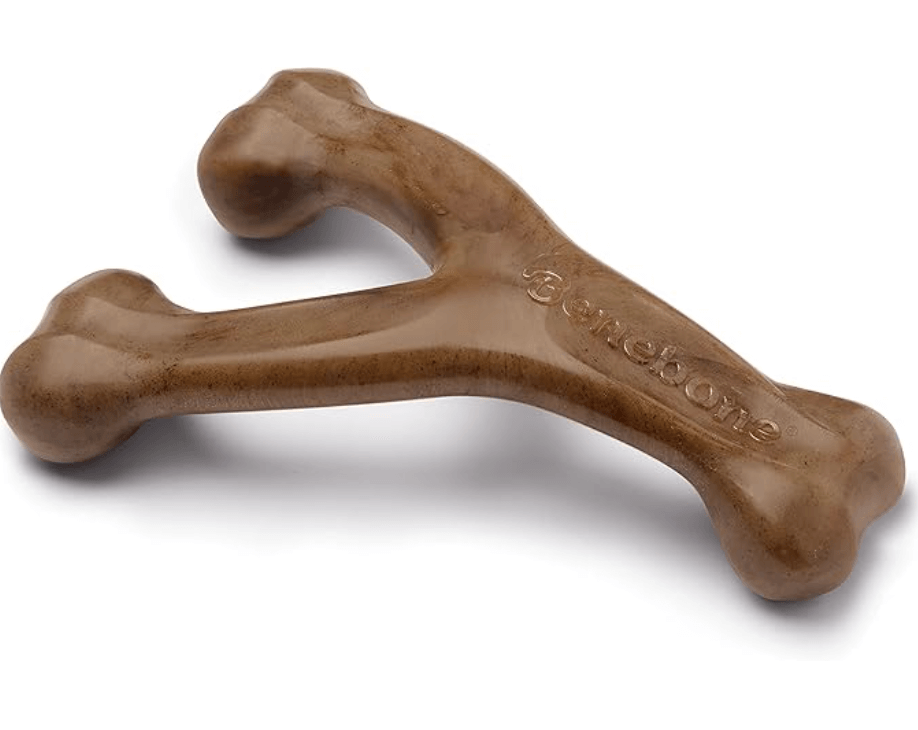
Benebone Wishbone Durable Dog Chew Toy
One possible supervised chew outlet when you need a legal toy instead of furniture, shoes, or hands. It does not replace puppy-proofing, training, or a consistent routine.
Choose the size on the current label, watch chewing, and replace when worn or damaged. Not for unsupervised crate time, and not a match for every powerful chewer or dog with dental concerns.
Puppies still on baby teeth may do better with the softer Benebone Puppy line than this adult Wishbone.
For puppy-specific chew options, see best chew toys for Golden Retriever puppies.
- 🐾Use crates and pens wisely
- 🐾During naps and unsupervised times, the crate or pen protects both your belongings and your puppy.
Setting structure early—like the routines we outline in the Golden Retriever First Week Home guide—dramatically reduces long-term destructive habits.
Separation Anxiety
Some behavior problems are driven less by energy and more by emotional panic when the dog is left alone—this is separation anxiety.
Signs of Separation Anxiety in Golden Retrievers
As covered in depth in our Golden Retriever separation anxiety guide, symptoms can include:
- 🐾Intense whining, barking, or howling when alone.
- 🐾Destructive chewing or scratching at doors, windows, or crate.
- 🐾Pacing, drooling, or panting during owner absences.
- 🐾Attempts to escape confinement, sometimes injuring themselves.
- 🐾House accidents only when left alone, despite being house trained.
Why This Is Different From Simple Boredom
Separation anxiety is driven by:
- 🐾Fear and panic, not just having nothing to do.
Treatment typically requires:
- 🐾Gradual alone-time training (see our Golden Retriever alone time by age guide for realistic windows).
- 🐾Lifestyle adjustments (exercise, routines).
- 🐾Sometimes professional help or medication in severe cases.
If you suspect true separation anxiety rather than mild frustration or boredom, read the full separation anxiety guide and consult your veterinarian or a qualified trainer.
Pulling on the Leash
Leash pulling is one of the most common Golden Retriever training problems.
Why Goldens Pull
Reasons:
- 🐾
Excitement and curiosity
- 🐾The world is full of smells, people, and other dogs.
- 🐾
Reinforcement history
- 🐾If pulling has reliably moved them toward what they want—parks, bushes, other dogs—it becomes a habit.
- 🐾
Lack of early leash training
- 🐾Puppies often go from no leash at all to walks with high distractions, skipping foundation skills.
Basics of Teaching Loose-Leash Walking
Key concepts:
- 🐾
Start in low-distraction environments
- 🐾Practice in your yard or inside the house before heading to busy streets.
- 🐾
Reward position and attention
- 🐾Mark and treat when your dog:
- 🐾Walks beside you with a slack leash.
- 🐾Checks in with eye contact.
- 🐾Mark and treat when your dog:
- 🐾
Be a tree when the leash tightens
- 🐾Stop moving forward when your dog pulls.
- 🐾Wait for slack, then resume.
- 🐾This teaches that pulling doesn’t get them where they want to go.
- 🐾
Use appropriate gear
- 🐾For strong pullers, a well-fitted front-clip harness can provide more control without discomfort.
Short, frequent sessions are more effective than long, frustrating walks where pulling is allowed half the time and corrected the other half.
Digging Behavior
Not all Goldens are avid diggers, but digging can still show up as a Golden Retriever behavior issue, especially in certain environments.
Why Golden Retrievers Dig
Common reasons:
- 🐾
Boredom or excess energy
- 🐾Digging is self-reinforcing physical and mental stimulation.
- 🐾
Instinctive behavior
- 🐾Some dogs have an innate drive to dig, especially in soft soil or sand.
- 🐾
Seeking cool ground
- 🐾In warm weather, dogs sometimes dig to expose cooler earth to lie in.
Managing and Redirecting Digging
Options:
- 🐾
Increase exercise and mental work
- 🐾Address the root cause of boredom.
- 🐾
Limit unsupervised yard time
- 🐾Don’t leave your dog outside alone for long periods with nothing to do.
- 🐾
Create a “legal” digging zone
- 🐾Designate a small area where digging is allowed (e.g., a sandbox or specific corner).
- 🐾Bury toys or treats there and reward your dog for digging only in that spot.
- 🐾
Block access to problem areas
- 🐾Use fencing or landscaping to protect special garden beds.
Punishing digging without providing alternatives or addressing boredom rarely works long-term.
Preventing Behavior Problems
While you can address existing Golden Retriever behavior issues, it’s always easier to prevent them. Prevention is mostly about:
- 🐾Meeting your dog’s physical and mental needs.
- 🐾Establishing clear, consistent rules from the start.
Provide Daily Exercise
For Goldens, adequate exercise is non-negotiable:
- 🐾Healthy adults typically need 1–2 hours of combined daily activity, tailored to their age and health.
- 🐾Include:
- 🐾Walks.
- 🐾Off-leash play in safe areas.
- 🐾Structured games like fetch or training-based play.
Benefits:
- 🐾Reduces:
- 🐾Excessive barking.
- 🐾Restlessness.
- 🐾Destructive chewing.
See our Golden Retriever exercise needs guide to tailor a plan for puppies, adolescents, adults, and seniors.
Provide Mental Stimulation
Mental work is as important as physical exercise, especially for an intelligent breed:
- 🐾
Training sessions
- 🐾Short, positive sessions 1–3 times per day.
- 🐾Teach practical cues and fun tricks.
- 🐾
Puzzle toys and enrichment
- 🐾Food-dispensing toys during alone time.
- 🐾Scent games and “find it” activities.
- 🐾
Varied experiences
- 🐾New walking routes.
- 🐾Different environments with appropriate socialization.
Our Golden Retriever intelligence guide offers many ideas for engaging their minds.
Consistent Training and Early Structure
Early days at home—as covered in our Golden Retriever First Week Home guide—set the tone for:
- 🐾Where your puppy sleeps.
- 🐾Where they potty.
- 🐾How they greet visitors.
- 🐾What gets attention and rewards.
Key principles:
- 🐾
Decide on rules as a family and stick to them.
- 🐾
Reinforce behaviors you like every time you see them, especially:
- 🐾Calm lying down.
- 🐾Quiet attention.
- 🐾Polite greetings.
- 🐾
Use positive reinforcement:
- 🐾Reward what you want more of.
- 🐾Manage or redirect what you don’t.
With structure from the start, you prevent many Golden Retriever training problems from ever taking root.
Frequently Asked Questions
Do Golden Retrievers have behavior problems?
Golden Retrievers are generally:
- 🐾Stable, friendly, and highly trainable, as described in our temperament guide.
However, they are also:
- 🐾Energetic and intelligent, which means they’re more likely to develop behavior problems if:
- 🐾They’re under-exercised.
- 🐾They’re bored.
- 🐾They receive inconsistent or minimal training.
Most Golden Retriever behavior problems are not inherent to the breed—they’re the result of a mismatch between the dog’s needs and their environment.
At what age do Golden Retrievers calm down?
Roughly:
- 🐾Puppy stage (0–12 months) – Very high energy, lots of mouthing and exploration.
- 🐾Adolescence (1–3 years) – Often the most challenging phase; big body, big energy, incomplete impulse control.
- 🐾Adult (3–7 years) – Many Goldens settle into a more predictable, manageable energy level.
- 🐾Senior (8+ years) – Typically calmer, with reduced but still important exercise needs.
With:
- 🐾Consistent training.
- 🐾Appropriate exercise and mental work.
…many Goldens become noticeably calmer by around 2–3 years old, though they often retain a playful streak for life.
How much exercise does a Golden Retriever need to prevent behavior issues?
For a healthy adult:
- 🐾Plan for about 1–2 hours of physical activity per day, divided into:
- 🐾Walks.
- 🐾Off-leash play (in safe, controlled spaces).
- 🐾Training games or sports.
Puppies and seniors need:
- 🐾Appropriately adjusted exercise:
- 🐾Shorter, gentler sessions.
- 🐾More frequent rest breaks.
Meeting exercise needs greatly reduces:
- 🐾Excessive barking.
- 🐾Chewing.
- 🐾General restlessness.
See the exercise needs guide for age-specific guidelines.
Can behavior problems be corrected?
In most cases, yes—behavior problems can improve significantly with:
- 🐾Proper exercise and mental enrichment.
- 🐾Clear, consistent training.
- 🐾Management tools (gates, crates, leashes) used thoughtfully.
Serious issues like:
- 🐾Aggression.
- 🐾Severe separation anxiety.
…may require:
- 🐾Professional support from:
- 🐾Qualified trainers.
- 🐾Veterinary behaviorists.
But even then, many dogs achieve major improvements in behavior and quality of life.
Conclusion
Golden Retrievers are not immune to behavior issues, despite their reputation as near-perfect family dogs. Their intelligence, energy, and deep attachment to people mean they absolutely require:
- 🐾Regular physical exercise
- 🐾Consistent mental stimulation
- 🐾Clear training and routines
When those needs are met, most behavior problems—chewing, barking, jumping, leash pulling, mild anxiety—either never fully develop or become highly manageable. When those needs are ignored, even the best-bred Golden can begin to struggle.
The good news is that most Golden Retriever behavior problems are fixable. By understanding why behaviors occur and addressing both the root causes and the symptoms, you can help your Golden become the calm, well-mannered, joyful companion the breed is meant to be.
For more support, explore our related guides on temperament, exercise needs, intelligence, first week home, barking, and separation anxiety.
P.S. Get the free Golden Retriever Owner Cheat Sheet — daily feeding, sleep, and care in one printable guide.
Get the Cheat Sheet when you join the newsletter — instant access in your welcome email.