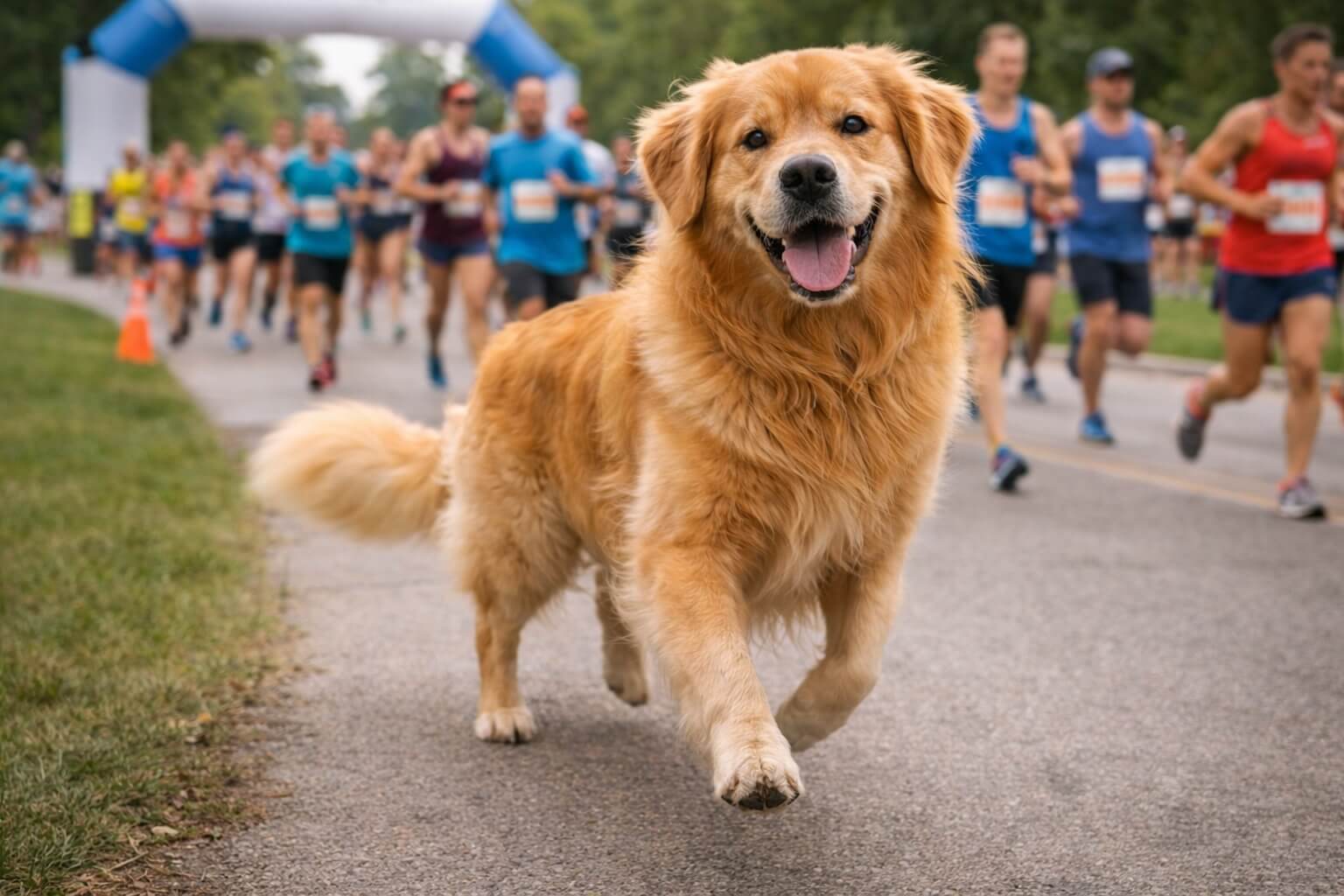
How Much Exercise Does a Golden Retriever Need? By Age Guide
GoldenRetriever.hair
By GoldenRetriever.hair
Golden Retrievers are high-energy, working-bred dogs. They were developed to spend long days in the field alongside people—running, swimming, and retrieving—not just napping on the couch. When their exercise needs and mental stimulation aren’t met, it often shows up as barking, chewing, restlessness, and weight gain rather than obvious “hyperactivity.”
This guide explains how much exercise a Golden Retriever needs at different life stages, what Golden Retriever daily exercise should look like in real homes, and how to safely combine physical activity and mental work so your dog is tired in a healthy, sustainable way.
Table of Contents
- 🐾Quick Answer: How Much Exercise Does a Golden Retriever Need?
- 🐾Why Golden Retrievers Need So Much Exercise
- 🐾Golden Retriever Exercise Needs by Age
- 🐾Best Types of Exercise for Golden Retrievers
- 🐾Mental Stimulation for Golden Retrievers
- 🐾Signs Your Golden Retriever Needs More Exercise
- 🐾Common Exercise Mistakes Golden Retriever Owners Make
- 🐾Exercising Your Golden Retriever Safely
- 🐾FAQ
- 🐾Conclusion
Quick Answer: How Much Exercise Does a Golden Retriever Need?
For a healthy adult Golden Retriever, a realistic starting point for daily exercise is:
- 🐾Around 1–2 hours of total activity per day, split into:
- 🐾At least one solid walk (30–60 minutes for most adults) and
- 🐾Additional play, training, or off-leash time tailored to your dog’s age, health, and conditioning.
But Golden Retriever exercise needs are not one-size-fits-all:
- 🐾Puppies need short, controlled sessions spread through the day—not long runs.
- 🐾Adolescents often need the most management, with high energy but still-developing joints and impulse control.
- 🐾Seniors still need daily movement, but with lower impact and shorter, more frequent outings.
Your dog’s behavior is your best feedback loop. If your Golden is consistently restless, destructive, or vocal despite basic training, their activity level and mental work likely need adjustment.
For a quick life-stage snapshot, see our Golden Retriever energy levels by age.
If weight or calorie balance is part of the problem, compare options in our best dog food for Golden Retrievers guide.
Why Golden Retrievers Need So Much Exercise
Working Breed Origins
Golden Retrievers were originally bred as gundogs:
- 🐾Working all day in fields and water.
- 🐾Moving over uneven terrain.
- 🐾Retrieving repeatedly while staying responsive to their handler.
That history gives us today’s Golden:
- 🐾A dog with stamina, strength, and willingness to work.
- 🐾Genetics that expect regular, purposeful activity, not an occasional weekend sprint.
Intelligence and Energy Levels
Goldens combine:
- 🐾High energy – ready to go when you are.
- 🐾High intelligence – quick to learn patterns (good or bad). For a deeper look at how that intelligence shows up in daily life, see our Golden Retriever intelligence guide.
- 🐾High social drive – strongly oriented toward people and interaction.
That’s why simply “letting them out in the yard” is rarely enough. Without enough structured outlets, their Golden Retriever energy level tends to go into:
- 🐾Barking.
- 🐾Chewing.
- 🐾Pacing and restlessness.
- 🐾“Zoomies” at inconvenient times.
The Role of Mental Stimulation
Mental work is as important as physical exercise:
- 🐾Goldens are problem-solvers who enjoy using their brains.
- 🐾Bored, under-stimulated dogs often look “hyper” because they’re under-challenged, not truly over-energized.
A complete Golden Retriever activity guide includes:
- 🐾Physical exercise (walks, play, swimming).
- 🐾Mental exercise (training, puzzles, scent work).
- 🐾Social time with people and, when appropriate, other dogs.
For more on building a training routine, see our Golden Retriever training guide.
Golden Retriever Exercise Needs by Age
Age changes how much and what kind of exercise is safe.
Exercise Needs Chart by Age Group
| Age Group | Exercise Needs (General Guide) |
|---|---|
| Puppy (8 weeks – ~12 months) | Short, frequent play and controlled activity; avoid long runs and high-impact jumping |
| Adolescent (~6–24 months) | Increasing structured exercise plus training; still protect joints and avoid overuse |
| Adult (~2–7 years) | Roughly 1–2 hours of daily activity, combining walks, play, and mental work |
| Senior (~8+ years) | Daily movement but lower impact; shorter, more frequent sessions tailored to health |
These are starting points, not strict rules. Always adjust for individual health and your veterinarian’s guidance.
Puppies
How much exercise does a Golden Retriever puppy need?
Key principles:
- 🐾
Puppies have:
- 🐾Short energy bursts, then crash.
- 🐾Developing joints and growth plates that are vulnerable to overuse.
- 🐾
Focus on:
- 🐾Short, frequent play sessions (5–15 minutes) spread throughout the day.
- 🐾Free play on soft surfaces (grass, carpet) rather than repetitive impact on pavement.
- 🐾Early training and mental stimulation, which tire the brain without overloading the body.
Avoid:
- 🐾Long forced walks or runs.
- 🐾Repetitive high-impact activities (lots of stairs, jumping off high surfaces, frequent ball chasing with sudden stops).
Our Golden Retriever puppy development guide goes deeper on age-appropriate activity and training milestones.
Adolescent Goldens
Adolescence (~6–24 months) is often the most challenging phase:
- 🐾Energy is high, but joints are still maturing.
- 🐾Impulse control is limited.
- 🐾Behavior issues like chewing, barking, and pulling on leash often peak here. For step-by-step loose-leash work, see our Golden Retriever leash training guide.
Exercise tips:
- 🐾
Gradually increase:
- 🐾Walk length and intensity.
- 🐾Off-leash play in safe, fenced areas.
- 🐾Training difficulty to channel mental energy.
- 🐾
Keep:
- 🐾Jumping and high-impact sports moderated until growth plates are likely closed (often around 18–24 months; confirm with your vet if you’re planning high-intensity sports).
This is also a prime time to:
- 🐾Build structured routines.
- 🐾Invest in consistent training, which pays off enormously in adulthood.
Adult Goldens
Healthy adults (~2–7 years) have the highest sustainable exercise capacity:
- 🐾A common pattern for Golden Retriever daily exercise:
- 🐾Morning: 30–45 minute walk or play session.
- 🐾Daytime: Training or enrichment (puzzle toys, sniff-based games).
- 🐾Evening: Another walk, play session, or swimming outing.
Some very active adults in working or sport homes may do more; many pet homes do well aiming for:
- 🐾Around 60–90 minutes of combined physical activity most days.
- 🐾Regular mental work to complement physical activity.
Your dog should:
- 🐾Be tired but not wiped out afterward.
- 🐾Recover normally by the next day.
If your adult Golden is chronically:
- 🐾Restless.
- 🐾Barky.
- 🐾Destructive.
—despite basic training, it’s a sign to revisit exercise and mental stimulation levels. Our Golden Retriever barking guide covers this link in more detail.
Senior Goldens
Senior Goldens (~8+ years) still need daily movement:
- 🐾Regular activity helps maintain:
- 🐾Joint mobility.
- 🐾Muscle mass.
- 🐾Weight control.
- 🐾Mental sharpness.
But exercise should be:
- 🐾Lower impact (flatter walks, more sniffing and exploring at the dog’s pace).
- 🐾Shorter, more frequent sessions rather than one big outing.
- 🐾Adjusted for:
- 🐾Arthritis or joint disease.
- 🐾Heart or respiratory conditions.
- 🐾Heat or cold sensitivity.
Work with your veterinarian to define safe Golden Retriever activity level targets for your senior dog. Gentle walks, swimming (for dogs cleared for it), and easy sniff walks can be ideal.
Best Types of Exercise for Golden Retrievers
Daily Walks
Walks are the backbone of exercising a Golden Retriever:
- 🐾Provide:
- 🐾Physical movement.
- 🐾Mental stimulation from smells and sights.
- 🐾Training opportunities (loose leash, sits, focus).
Guidelines:
- 🐾For most healthy adults: at least one 30–60 minute walk per day.
- 🐾Puppies: multiple shorter walks appropriate for age.
- 🐾Seniors: slower, shorter walks, but still daily if possible.
Vary routes when you can—new environments provide more mental stimulation.
Using the right walking gear makes daily exercise safer and much easier to manage—especially for strong dogs like Golden Retrievers:
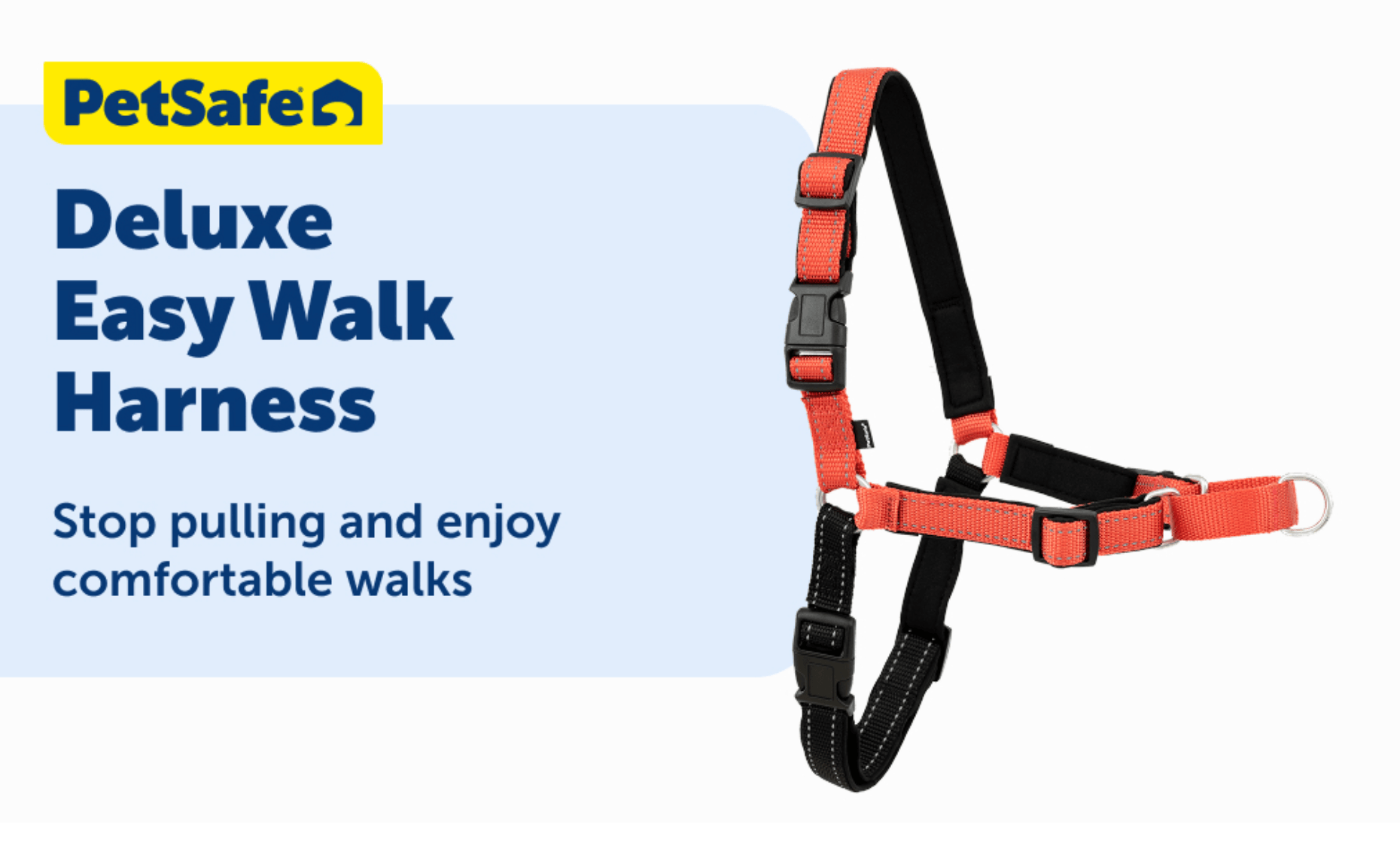
Best for: easier daily walks—less pulling, steadier control, less strain during long outings
PetSafe Deluxe Easy Walk Harness
Trainer-recommended no-pull harness designed to gently discourage pulling without choking or gagging. The front-clip design gives you better control during walks, making it ideal for strong dogs like Golden Retrievers.
Helps make daily walks easier and more enjoyable while reducing strain on your dog's neck.
When most of your dog's exercise happens on leash, support matters: a front-clip layout can feel more comfortable and manageable than depending on a collar alone if your Golden still surges forward on exciting routes.
Running and Hiking
Goldens often enjoy:
- 🐾Running with you (once mature and conditioned).
- 🐾Longer hikes on trails.
Safety tips:
- 🐾Wait until your dog is physically mature (often 18–24 months) before regular running on hard surfaces.
- 🐾Start with shorter distances, gradually increasing over weeks to avoid overuse injuries.
- 🐾Avoid high-intensity running in hot or humid conditions—see our Golden Retriever summer care guide.
Retrieving Games
Fetch taps into the breed’s original purpose:
- 🐾Use:
- 🐾Balls.
- 🐾Bumpers.
- 🐾Soft toys.
Keep it safe by:
- 🐾Using controlled throws—avoid constant full-speed sprints and sharp turns on hard surfaces.
- 🐾Mixing in:
- 🐾Obedience cues (sit before release).
- 🐾Breaks between rounds.
Retrieving is more than just exercise; it’s an excellent training and bonding opportunity.
Swimming
Many Goldens love water, and swimming is:
- 🐾Low-impact on joints.
- 🐾Excellent full-body exercise.
- 🐾A great option in warmer weather, when done safely.
Consider:
- 🐾Supervision at all times.
- 🐾Safe entry and exit points.
- 🐾Rinse and dry after swimming to maintain coat and skin health (see our Golden Retriever grooming guide).
Training and Structured Activities
Structured activities can be physically and mentally rich:
- 🐾Obedience, rally, or trick training.
- 🐾Agility or other dog sports (introduced safely and age-appropriately).
- 🐾Field training or scent work.
These give your Golden a clear job and deepen your communication skills together.
Mental Stimulation for Golden Retrievers
Training Sessions
Short, focused training sessions:
- 🐾Use mental energy and build skills.
- 🐾Can be as tiring as parts of a walk.
Aim for:
- 🐾5–10 minute sessions, 1–3 times a day.
- 🐾Mix of:
- 🐾Basic cues (sit, down, stay, recall).
- 🐾Practical skills (settle on a mat, polite greetings).
- 🐾Fun tricks (spin, bow, shake).
Our Golden Retriever training guide can help you structure these.
Puzzle Toys and Food Games
Use:
- 🐾Puzzle feeders.
- 🐾Stuffed Kongs.
- 🐾Snuffle mats.
Benefits:
- 🐾Extend mealtimes into brain work.
- 🐾Give your dog a job when you’re busy.
Start with easier puzzles and increase difficulty as your Golden learns.
Scent and Sniffing Games
Goldens have excellent noses. Simple scent games:
- 🐾Hide treats or toys around a room or yard.
- 🐾Scatter kibble in the grass for sniff-and-search.
- 🐾Play “find it” games indoors on rainy days.
Sniffing is naturally calming and highly satisfying for many dogs.
Interactive Play with People
Interactive, people-focused play:
- 🐾Tug with rules.
- 🐾Hide and seek (you or a favorite toy).
- 🐾Short, structured fetch sessions.
This combines physical, mental, and social needs in one activity.
Signs Your Golden Retriever Needs More Exercise
Behavior often tells you when Golden Retriever exercise requirements are not being met. Common signs:
- 🐾
Excessive barking
Barking at every noise, at people passing by, or for attention. See our Golden Retriever barking guide. - 🐾
Destructive behavior
Chewing furniture, shoes, or door frames; digging; shredding items. - 🐾
Restlessness and hyperactivity
Pacing, difficulty settling, “zoomies” late at night. - 🐾
Difficulty focusing during training
Too much energy to think, especially if your training sessions follow long periods of confinement. - 🐾
Weight gain
Especially when paired with a caloric intake that hasn’t changed.
These signs don’t always mean “more miles.” They often mean:
- 🐾Better balance of physical and mental work.
- 🐾More predictable routines.
- 🐾Closer alignment with your dog’s age and health.
Our Golden Retriever weight and obesity guide can help if weight is also a concern.
Common Exercise Mistakes Golden Retriever Owners Make
Over-Exercising Puppies
Common issues:
- 🐾Long walks “to tire them out.”
- 🐾Frequent stair climbing and jumping off furniture.
- 🐾Endless fetch with hard stops.
These can stress developing joints and growth plates. It’s better to:
- 🐾Use short, varied sessions.
- 🐾Emphasize exploration, socialization, and training.
- 🐾Save intense, repetitive exercise for adulthood.
Exercising During Extreme Heat
Goldens have thick double coats and can overheat quickly:
- 🐾Avoid intense exercise in hot or humid conditions.
- 🐾Use early morning and late evening for longer outings.
- 🐾Follow the detailed advice in our Golden Retriever summer care guide.
Inconsistent Exercise Routines
“Weekend warrior” patterns (very active weekends, quiet weekdays) can lead to:
- 🐾Behavior swings.
- 🐾Overuse injuries.
Goldens do best with:
- 🐾Consistent daily movement, even if some days are shorter or easier.
Ignoring Mental Stimulation
Many owners focus only on distance and time. Without Golden Retriever mental stimulation:
- 🐾Dogs may still be restless.
- 🐾Training and manners may stall.
Remember that tired brains often lead to calmer, more content dogs than tired muscles alone.
Exercising Your Golden Retriever Safely
Avoiding Extreme Temperatures
Key points:
- 🐾
In hot weather:
- 🐾Exercise in cooler parts of the day.
- 🐾Avoid hot pavement and intense midday activity.
- 🐾Monitor for signs of overheating (see summer care guide).
- 🐾
In cold weather:
- 🐾Most Goldens tolerate cold fairly well, but watch:
- 🐾Paws on ice or salted sidewalks.
- 🐾Very young, very old, or underweight dogs.
- 🐾For seasonal limits, coats, and outdoor safety details, see our Golden Retriever cold-weather guide.
- 🐾Most Goldens tolerate cold fairly well, but watch:
Hydration, Rest, and Surfaces
Always:
- 🐾Provide fresh water before and after exercise, and on longer outings.
- 🐾Include rest breaks, especially during high-intensity play or warm weather.
- 🐾Choose dog-friendly surfaces:
- 🐾Grass, dirt, or trails instead of only concrete and asphalt.
These also support joint health and paw comfort. For paw-specific issues, see our Golden Retriever paw care guide and grooming guide.
Gradual Increases in Activity
If you’re increasing your Golden’s activity:
- 🐾Treat it like a training plan:
- 🐾Add distance or intensity gradually over weeks.
- 🐾Watch for:
- 🐾Limping.
- 🐾Stiffness after rest.
- 🐾Reluctance to exercise again the next day.
If you notice problems:
- 🐾Ease back and consult your veterinarian.
FAQ
How much exercise does a Golden Retriever need each day?
Most healthy adult Golden Retrievers do well with 1–2 hours of total daily activity, split between walks, play, and mental work. Some individuals need more, some slightly less. Your dog should be calm and able to settle at home, not constantly restless or destructive, if their Golden Retriever exercise needs are being met.
How much exercise does a Golden Retriever puppy need?
Golden Retriever puppies need short, frequent sessions, not long, forced exercise. Think in minutes, not miles: multiple playtimes, short walks appropriate for age, and lots of training and exploration. Over-exercising puppies—especially on hard surfaces or with repetitive jumping—can stress growing joints. See our Golden Retriever puppy development guide for age-specific ideas.
How far can a Golden Retriever walk?
A well-conditioned adult Golden can safely walk several miles, but distance should be built up gradually and adjusted for temperature, terrain, and health. Start with shorter walks and add distance over time. Puppies and seniors should walk shorter distances at an easy pace, with your veterinarian’s guidance if there are any health concerns.
What are good exercises for Golden Retrievers besides walking?
Great options include retrieving games, swimming, hiking, and structured training activities that combine movement and thinking. Mental work—like puzzle toys, scent games, and obedience sessions—is also a critical part of exercising a Golden Retriever, especially on days when long outdoor sessions aren’t possible.
How can I tell if my Golden Retriever is getting enough exercise?
Signs that your Golden’s exercise requirements are likely being met include:
- 🐾They can relax and nap at home between activities.
- 🐾Destructive behavior and excessive barking are minimal or responsive to training.
- 🐾Their weight is stable at a healthy level.
If your dog is persistently restless, vocal, destructive, or gaining weight despite reasonable food portions, it’s a strong sign to revisit their Golden Retriever daily exercise and mental stimulation plan. Our barking guide and weight and obesity guide provide more detail.
Can I exercise my Golden Retriever off-leash?
Off-leash exercise can be fantastic for Goldens when done safely:
- 🐾Only in secure fenced areas or legal off-leash spaces.
- 🐾With a reliable recall and responsiveness to cues.
- 🐾Away from hazards like busy roads or aggressive dogs.
Build recall skills using positive methods (see our Golden Retriever training guide) before relying on off-leash activity for daily exercise.
Conclusion
Understanding Golden Retriever exercise needs is one of the most important parts of living with this breed. A Golden who gets appropriate daily exercise and mental stimulation is far more likely to be calm, healthy, and a joy to live with than one who spends most days under-exercised and bored.
By tailoring your Golden Retriever activity level to their age, health, and temperament—and by combining walks, play, training, and mental work—you can meet your dog’s needs without burning yourself out. For quick daily totals by age, use our Golden Retriever exercise chart. For a complete lifestyle plan, pair this guide with our Golden Retriever training guide, barking guide, summer care guide, weight and obesity guide, puppy development guide, and grooming guide.
P.S. Get the free Golden Retriever Owner Cheat Sheet — daily feeding, sleep, and care in one printable guide.
Get the Cheat Sheet when you join the newsletter — instant access in your welcome email.