When Do Golden Retrievers Calm Down? Energy Levels by Age
GoldenRetriever.hair
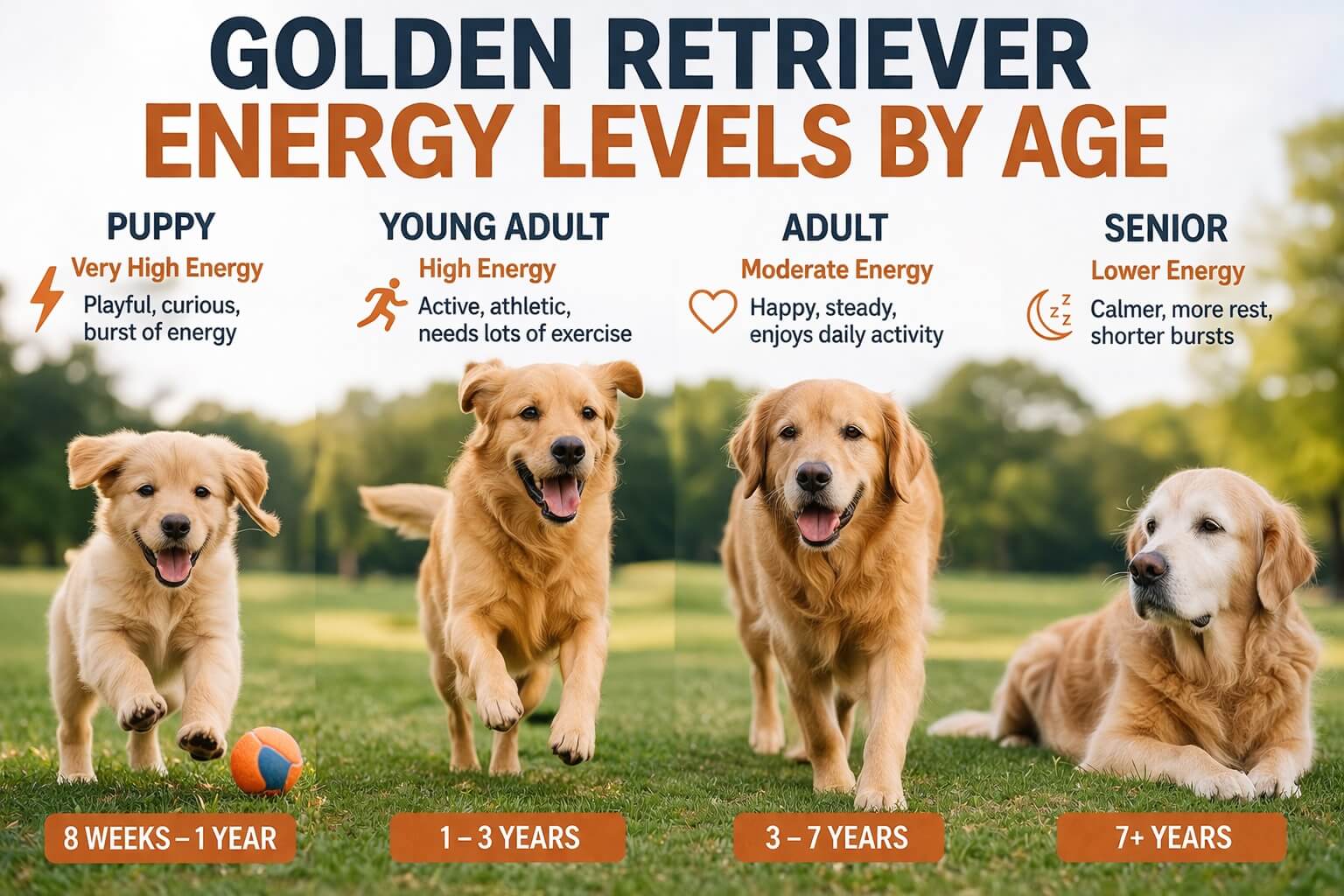
Golden Retrievers move through clear energy phases from puppyhood into adulthood. Understanding golden retriever energy levels by age helps you match exercise, training, and expectations to your dog—without mistaking normal breed enthusiasm for a behavior emergency.
Quick Answer: Golden Retriever Energy Levels
- 🐾Puppies are very energetic in short bursts and need frequent activity, training, and supervision—balanced with lots of sleep. For how sleep needs change from puppyhood into adulthood and senior years, see our Golden Retriever sleeping guide.
- 🐾Adolescence (often ~6–18 months) is when many Goldens feel the most intense: strong drive, less impulse control, and big exercise needs—similar to what we describe in the Golden Retriever Exercise Needs Guide.
- 🐾Most Golden Retrievers begin to calm down around 2–3 years old, with better settling and self-control—but they usually stay active, playful dogs, not couch-only pets.
- 🐾Adults still need substantial daily exercise and mental work; “calmer” usually means easier to live with, not low energy.
For a deeper dive on maturity and “calm,” see When Do Golden Retrievers Calm Down?.
Golden Retriever Energy Levels Chart
Typical golden retriever energy levels by age, aligned with our Exercise Needs Guide and Behavior Problems Guide.
| Age | Energy Level | Behavior Traits | What to Expect |
|---|---|---|---|
| 8–12 weeks | High in short bursts | Zoomies, mouthing, frequent naps | Short play/training bouts; no long forced exercise; routine + sleep |
| 3–6 months | High, longer awake stretches | Curiosity, teething, louder play | Training + safe chews; keep movement short and controlled |
| 6–12 months | Very high (adolescent surge) | Pulling, jumping, testing rules, “forgot” training | Increase structured exercise gradually; steady rules—see behavior guide if needed |
| 1–2 years | Still high, improving control | Athletic, playful; fewer baby-puppy antics for many dogs | Longer outings as joints mature (vet OK for intensity); daily mental work |
| 2–3 years | Often steadier | Better settling after activity; more predictable indoors | Often when owners notice calming—still needs real daily exercise |
| Adult (3+ years) | Active adult | Playful, social; thrives on routine | Daily physical + mental work; “calm” reflects maturity and habits |
Need the Full Exercise Plan?
For a more detailed breakdown of daily activity, walks, playtime, and exercise routines, read the full Golden Retriever Exercise Needs Guide.
See Golden Retriever Exercise Chart for minutes, walks, and safety by age.
Why Golden Retrievers Have High Energy
- 🐾Bred as active working dogs—retrieving and field work selected for stamina and enthusiasm.
- 🐾They need both physical and mental stimulation; yards alone rarely replace walks, training, and engagement.
- 🐾High intelligence means under-stimulated dogs may look “hyper” when they’re actually bored or under-challenged.
- 🐾Energy varies by age, health, and home routine—the chart above is a typical pattern, not a guarantee for every individual.
Signs Your Golden Retriever Has Too Much Energy
Also discussed in the Behavior Problems Guide:
- 🐾Constant jumping or hard-to-interrupt excitement
- 🐾Excessive barking or frustration at small triggers
- 🐾Chewing, digging, or other destructive behavior
- 🐾Trouble settling, pacing, or late-night zoomies
If a young puppy’s evening wildness follows skipped naps more than a quiet day, see how to calm an overtired puppy before adding more intense exercise.
If health and basic training are fine, more balanced exercise + mental work + schedule often helps.
For age-based time limits when your dog is home alone, see our Golden Retriever alone time by age guide.
How to Manage Golden Retriever Energy
Golden retriever hyper behavior usually improves when body and brain both get work—see Exercise Needs Guide for amounts by age, then add structure.
- 🐾Daily exercise routines – Consistent walks and play that fit your dog’s age and joints.
- 🐾Training and structure – Clear rules, rewards for calm behavior, short sessions through the day.
- 🐾Mental stimulation – Puzzle toys, sniff games, obedience, and food puzzles between walks.
- 🐾Consistent schedule – Predictable mealtimes, rest, and outings reduce “pent-up” energy swings.
Choosing the right food and portions for your dog’s activity level also matters — see our best dog food for Golden Retrievers guide when balancing diet with exercise.
FAQ: Golden Retriever Energy Levels
When do Golden Retrievers calm down?
Many feel noticeably calmer between about 2 and 3 years old, with better impulse control and easier settling (often after exercise). Most stay playful adults—not couch potatoes.
Why is my Golden Retriever so hyper?
Often age (puppy/adolescent intensity), too little exercise or mental work, inconsistent rules, or rewarding frenzy. Sudden changes can be medical—ask your vet.
Do Golden Retrievers have more energy than other breeds?
They’re high-energy sporting dogs vs. many companion breeds, but individuals differ; field/sport lines may need more than the average pet expects.
How do you calm a hyper Golden Retriever?
Age-appropriate exercise, training + mental games, a steady routine, and rewarding calm. Persistent issues → Behavior Problems Guide.
Related Guides
Helpful guides
- 🐾Golden Retriever Exercise Needs Guide – Daily activity by life stage, safety, and mental stimulation.
- 🐾Golden Retriever Behavior Problems Guide – When energy shows up as barking, chewing, or chaos.
Next steps
- 🐾Golden Retriever Exercise Chart – Quick reference for exercise amounts by age.
- 🐾Golden Retriever Puppy Training Schedule – Age-by-age training focus (timeline chart).
Conclusion
Golden retriever energy levels shift from puppy bursts through a demanding adolescent phase; many dogs feel steadier around 2–3 years while staying active. High energy is normal—exercise, mental work, and structure make it livable. Use this chart for a quick read; dig into Exercise Needs Guide and Behavior Problems Guide for full detail.
P.S. Get the free Golden Retriever Owner Cheat Sheet — daily feeding, sleep, and care in one printable guide.
Get the Cheat Sheet when you join the newsletter — instant access in your welcome email.