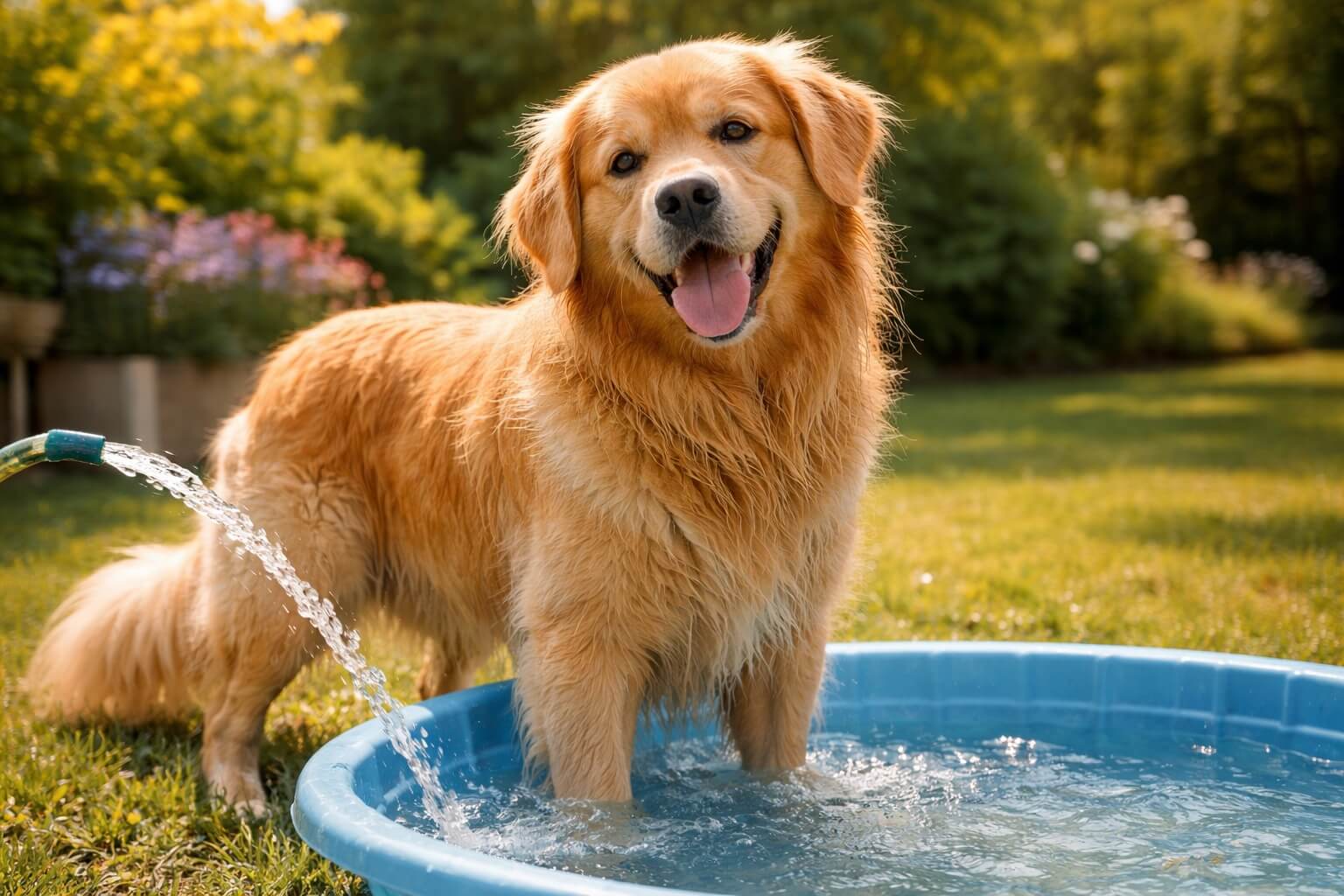
Golden Retriever Summer Care Guide (Hot Weather Safety & Cooling Tips)
GoldenRetriever.hair
By GoldenRetriever.hair
Summer can be hard on Golden Retrievers. They love being active with their families, but they also carry a thick double coat and don’t handle heat the same way humans do. A Golden that is perfectly comfortable on a cool spring hike can overheat quickly on a hot, humid July afternoon.
This guide explains Golden Retriever summer care in practical detail—why Golden Retriever hot weather can be risky, how Golden Retriever heat tolerance really works, what signs of overheating in dogs you should watch for, and exactly how to keep a Golden Retriever cool and safe when temperatures climb.
Table of Contents
- 🐾Quick Answer: How Do You Care for a Golden Retriever in Summer?
- 🐾Why Golden Retrievers Struggle in Hot Weather
- 🐾Signs Your Golden Retriever Is Overheating
- 🐾How to Keep Your Golden Retriever Cool in Summer
- 🐾Safe Exercise for Golden Retrievers in Hot Weather
- 🐾Protecting Your Golden Retriever’s Paws from Hot Pavement
- 🐾Grooming Tips for Summer
- 🐾Water Safety for Golden Retrievers
- 🐾Common Summer Mistakes Golden Retriever Owners Make
- 🐾When to Seek Veterinary Help for Heat Stroke
- 🐾FAQ
- 🐾Conclusion
Quick Answer: How Do You Care for a Golden Retriever in Summer?
Golden Retriever summer care is about managing heat and humidity. Goldens are not heat-tolerant dogs—their double coat and love of activity put them at real risk of overheating and heat stroke if owners aren’t careful.
In hot weather:
- 🐾Keep exercise to early mornings and late evenings.
- 🐾Provide constant access to fresh, cool water.
- 🐾Make sure your Golden has shade and a cool place to rest.
- 🐾Avoid hot pavement and midday sun.
- 🐾Watch closely for signs of overheating in dogs: heavy panting, drooling, slowing down, bright red or very pale gums, vomiting, or collapse.
- 🐾Never leave your Golden in a parked car, even for a few minutes. For restraint, breaks, and traveling safely with a Golden Retriever in hot weather, see that dedicated guide.
- 🐾Use brushing and proper grooming, not shaving, to help their double coat work correctly.
If you suspect Golden Retriever heat stroke—collapse, confusion, vomiting, diarrhea, or seizures in a hot environment—cool your dog immediately and go to a veterinarian urgently. Heat stroke is a medical emergency.
Why Golden Retrievers Struggle in Hot Weather
Golden Retrievers are built to retrieve in cold water and cool climates. That design doesn’t always match modern summers on hot pavement and in humid backyards.
The Role of the Double Coat
Goldens have a double coat:
- 🐾Undercoat: soft, dense, and insulating
- 🐾Outer coat: longer guard hairs that repel water and protect the undercoat
This structure:
- 🐾Helps keep them warm in cold water and winter weather.
- 🐾Provides some insulation against heat by trapping air and protecting the skin from direct sun.
But there are trade-offs:
- 🐾In high heat and humidity, the undercoat can hold warmth close to the body if it’s packed with dead hair.
- 🐾A thick, poorly maintained coat can make it harder for heat to escape.
This is why regular brushing and undercoat maintenance are a core part of Golden Retriever summer care. See our Golden Retriever grooming guide, grooming schedule, and shedding guide for full routines.
Active Temperament and Heat
Most Goldens:
- 🐾Love to run, fetch, and swim.
- 🐾Will often keep playing even when they’re getting too hot.
- 🐾Are focused on you and the game, not on their own heat tolerance.
This combination—eager to please + thick coat + warm weather—means they can overheat quickly if owners don’t enforce rest and cooling time.
How Dogs Regulate Body Temperature
Dogs don’t cool themselves like humans. They:
- 🐾Do not sweat over most of their body like we do.
- 🐾Have limited sweating through paw pads only.
- 🐾Rely mainly on panting to move heat out through evaporation in the mouth and respiratory tract.
In hot, especially humid conditions:
- 🐾Panting becomes less effective, because the air is already full of moisture.
- 🐾Heat builds up faster than the dog can release it.
That’s why Golden Retriever hot weather safety is so important. A temperature and humidity level that feels merely “uncomfortable” to you can be dangerous for your dog, especially during activity.
Signs Your Golden Retriever Is Overheating
Recognizing early signs of overheating in dogs is one of the most important parts of Golden Retriever hot weather safety.
Watch for:
- 🐾
Excessive panting
Panting that is louder, faster, or more intense than usual, even with only mild activity. - 🐾
Thick drooling or ropey saliva
Saliva may become sticky or increase significantly as your dog tries to cool off. - 🐾
Warm to the touch, especially ears and belly
The body feels hotter than normal, not just the coat. - 🐾
Lethargy or slowing down
Your Golden suddenly loses interest in playing, falls behind on walks, or lies down and doesn’t want to move. - 🐾
Unsteady gait or confusion
Stumbling, difficulty walking in a straight line, or seeming “out of it” are more serious warning signs. - 🐾
Vomiting or diarrhea
Gastrointestinal signs during or after heat exposure are concerning. - 🐾
Collapse, seizures, or loss of consciousness
These are emergency signs of possible Golden Retriever heat stroke.
If you see early signs (heavy panting, drooling, slowing down), stop activity immediately, move your Golden to a cool place, offer water, and begin gentle cooling. If severe signs appear or your dog doesn’t improve quickly, seek veterinary help right away.
How to Keep Your Golden Retriever Cool in Summer
Effective Golden Retriever summer care combines environment, routine, and owner habits. Think in layers: water, shade, rest, and smart activity.
Hydration and Access to Water
Hydration is your first line of defense:
- 🐾Provide constant access to fresh, cool water at home.
- 🐾On walks or outings, bring water and a travel bowl—don’t assume you’ll find a safe water source.
- 🐾Encourage drinking before and after exercise and swimming.
- 🐾For dogs that don’t naturally drink much, consider:
- 🐾Multiple water bowls in different locations.
- 🐾Adding a splash of low-sodium broth to encourage drinking (check with your vet if your dog has health conditions).
Avoid:
- 🐾Extremely cold ice water right after intense exercise—let your Golden cool down a bit first.
Shade and Cool Resting Areas
Your Golden needs a place to cool down away from direct sun:
- 🐾Create shaded areas in the yard with trees, shade sails, or canopies.
- 🐾Make sure your dog has access to the house or a cooled indoor area, not just a doghouse (which can trap heat).
- 🐾Indoors, provide:
- 🐾Resting spots on cool flooring (tile, hardwood) instead of carpet.
- 🐾A bed or mat placed away from sunny windows.
If you crate your Golden:
- 🐾Avoid crating in hot, unventilated rooms or garages.
- 🐾Ensure good airflow and avoid covering crates with heavy blankets in summer.
Cooling Tools: Mats, Fans, and Indoor Spaces
You can add:
- 🐾
Cooling mats or beds
These stay cooler than ambient temperature for a time and give your Golden somewhere comfortable to lie. - 🐾
Fans and air conditioning
Fans help evaporative cooling from panting; AC lowers overall ambient temperature. For many Goldens, AC access on hot days is the most effective tool. - 🐾
Cool, damp towels (used correctly)
Placed under the belly, in the armpits, or on the paws—not wrapped tightly around the body, which can trap heat.
These tools support, but do not replace, basic hot weather dog safety practices like limiting activity and avoiding the hottest parts of the day.
Using Water and Safe Swimming
Water play is one of the best ways of keeping dogs cool in summer, especially for a water-loving breed like the Golden Retriever. For technique, water safety, and post-swim coat care, see our Golden Retriever swimming guide.
- 🐾Use kiddie pools with a safe depth for splashing and lying down.
- 🐾Allow supervised swimming in safe locations (more on this in Water Safety).
- 🐾After water play:
- 🐾Rinse off chlorine or salt with fresh water.
- 🐾Dry ears and coat thoroughly to reduce the risk of skin issues and hot spots. See our Golden Retriever hot spots guide and best shampoo guide for more detail.
Remember that excited Goldens can still overheat while swimming, especially in warm water or direct sun. Watch for slowing down, heavy panting, or reluctance to continue.
Safe Exercise for Golden Retrievers in Hot Weather
Goldens still need physical and mental exercise in summer, but you must adjust the what, when, and how long.
Key principles for Golden Retriever exercise in summer:
- 🐾
Choose cooler times of day
- 🐾Walk and play in the early morning or late evening when temperatures and pavement are cooler.
- 🐾Avoid the midday heat, especially when humidity is high.
- 🐾
Shorten and slow down sessions
- 🐾Swap one long, intense session for multiple shorter, gentler sessions.
- 🐾Choose shaded routes, grass, and wooded trails over open asphalt.
- 🐾
Watch your dog, not just the clock
- 🐾If panting intensifies, your Golden starts to lag, or looks less interested in moving, stop and cool down.
- 🐾Some dogs will keep fetching until they are at risk—you have to be the one to call it.
- 🐾
Shift more stimulation indoors
- 🐾Use training games, scent work, puzzle feeders, and obedience practice inside to reduce outdoor exertion.
For a full-year plan that adapts to seasons, see our Golden Retriever grooming schedule; matching grooming and exercise planning in summer helps you stay consistent.
Protecting Your Golden Retriever’s Paws from Hot Pavement
Hot pavement dog paws is not just a phrase—it’s a real burn risk.
Pavement Temperature Risks
On sunny days:
- 🐾
Pavement and asphalt can be much hotter than the air.
An 85°F (29°C) day can mean pavement well over 100°F (38°C), enough to burn paw pads. - 🐾
Dark surfaces hold and radiate heat, which:
- 🐾Increases your Golden’s overall heat load from below.
- 🐾Can cause burns, blisters, and pain on the pads.
How to Test Pavement Temperature
Use the simple “back of the hand” test:
- 🐾Place the back of your hand on the pavement for 7 seconds.
- 🐾If it’s too hot to keep your hand there comfortably, it’s too hot for your Golden’s paws.
If the surface fails this test:
- 🐾Move walks to grass, dirt trails, or shaded paths.
- 🐾Stick to early morning or late evening when surfaces have cooled.
For more detailed paw maintenance, see our Golden Retriever paw care guide.
Safer Walking Surfaces
Prefer:
- 🐾Grass
- 🐾Packed dirt paths
- 🐾Shaded sidewalks or trails
Use boots only if properly fitted and if your dog is acclimated to wearing them—ill-fitting boots can cause rubs and discomfort and may trap heat if overused.
Grooming Tips for Summer
Grooming plays a major role in Golden Retriever summer care, but it’s important to separate helpful practices from harmful myths.
Brushing and Removing Loose Undercoat
Regular brushing:
- 🐾Removes dead undercoat that can trap heat.
- 🐾Helps air move through the coat more effectively.
- 🐾Lets you spot early skin issues like hot spots or irritation.
Focus on:
- 🐾Slicker brush for feathering, behind ears, and chest.
- 🐾Undercoat rake during shedding season to remove loose undercoat.
- 🐾Comb to check for tangles and mats.
Our Golden Retriever shedding guide and best brushes guide explain how to build a toolkit and routine that works year-round, including in summer. For a focused look at warm-weather fur loss and brushing habits, see our Golden Retriever summer shedding guide.

FURminator Deshedding Tool for Large Dogs
Deshedding tool that helps remove loose undercoat, reduce heavy shedding, and improve airflow through a thick Golden Retriever coat in summer.
Why Shaving a Golden Retriever Is Not Recommended
Shaving a Golden’s double coat down to the skin or very short length is not an effective hot-weather strategy:
- 🐾
The coat:
- 🐾Insulates against heat and cold.
- 🐾Protects the skin from sunburn and UV damage.
- 🐾Helps regulate temperature when maintained properly.
- 🐾
Shaving can:
- 🐾Disrupt how the coat grows back, sometimes leaving it uneven or woolly.
- 🐾Increase the risk of sunburn and skin damage.
- 🐾Not significantly improve your dog’s heat tolerance.
Instead of shaving:
- 🐾Stick to regular brushing and undercoat management.
- 🐾Have a groomer perform a tidy trim of feathering on paws, hocks, and sanitary areas if needed.
- 🐾Keep to a consistent schedule—our Golden Retriever grooming guide and grooming schedule give season-specific guidance.
Water Safety for Golden Retrievers
Many Goldens will happily launch themselves into any lake, pool, or ocean they see—which is great for keeping dogs cool in summer, but it adds water safety responsibilities.
Safe Swimming Environments
Choose:
- 🐾Lakes and ponds with safe entry/exit points and no toxic algae blooms.
- 🐾Pools that:
- 🐾Have steps or shallow ledges your Golden can easily use to exit.
- 🐾Are supervised and fenced.
- 🐾Calm ocean areas with mild currents and dog-safe access.
Avoid:
- 🐾Fast-moving rivers, strong currents, or undertows.
- 🐾Bodies of water with cyanobacteria (blue-green algae) warnings.
- 🐾Places with sharp rocks, glass, or fishing hooks.
Watching for Fatigue and Overheating in Water
Even in water, your Golden can overheat or become exhausted:
- 🐾
Watch for:
- 🐾Slowing strokes
- 🐾Trouble keeping the head above water
- 🐾Trying to exit repeatedly
- 🐾Heavy panting when they come out
- 🐾
Keep sessions short, especially in warm water or strong sun.
- 🐾
Always supervise; don’t assume a strong swimmer is safe without eyes on them.
Fresh Water vs Salt Water
After swimming:
- 🐾Rinse with fresh water to remove chlorine, salt, algae, and debris.
- 🐾Pay extra attention to:
- 🐾Feathering and undercoat, which hold moisture.
- 🐾Ears, which are prone to infection if left damp.
Try to prevent your Golden from drinking large amounts of pool or ocean water. Too much chlorine or salt can cause gastrointestinal upset and, in severe cases, more serious issues. Always offer fresh drinking water during and after swimming.
Use a gentle, coat-appropriate shampoo when you do a full bath; our best shampoo for Golden Retrievers guide covers good options that support skin and coat health.
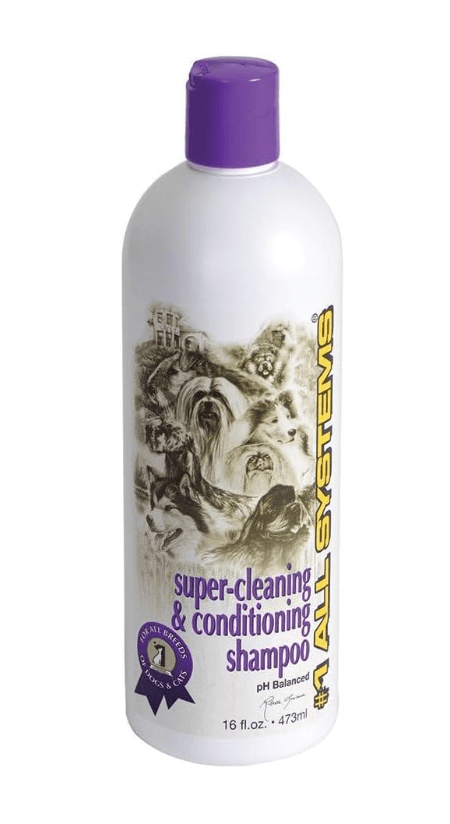
#1 All Systems Super Cleaning and Conditioning Pet Shampoo
Gentle shampoo that helps keep a Golden Retriever's skin and coat clean and comfortable after swimming, summer baths, and outdoor activity.
Common Summer Mistakes Golden Retriever Owners Make
Even experienced owners can get caught by hot weather dog safety mistakes. Some of the most common:
- 🐾
Exercising at midday
Long walks or fetch sessions in full sun and peak heat dramatically increase the risk of Golden Retriever overheating. - 🐾
Assuming water access alone is enough
Hydration helps, but doesn’t cancel out high temperature, humidity, and intense activity. - 🐾
Trusting shade without airflow
Small, enclosed shaded spaces (like some dog houses) can trap heat. Shade must be paired with ventilation. - 🐾
Ignoring pavement temperature
Walking on hot asphalt can harm paw pads and raise body temperature from below. - 🐾
Leaving dogs in parked cars
Even with cracked windows, the interior of a car can become lethal in minutes. - 🐾
Shaving the coat instead of grooming it
As discussed, shaving doesn’t solve the heat problem and can create new ones. - 🐾
Underestimating humidity
High humidity makes panting less effective, so a given temperature can feel much hotter to your Golden than to you.
Avoiding these mistakes is a simple but powerful part of Golden Retriever summer care.
When to Seek Veterinary Help for Heat Stroke
Golden Retriever heat stroke is a medical emergency. Prompt action can save your dog’s life.
Seek immediate veterinary care if your Golden has been in a hot environment and shows:
- 🐾Collapse or inability to stand
- 🐾Seizures or disorientation
- 🐾Very rapid, labored panting
- 🐾Bright red, dark red, or very pale gums and tongue
- 🐾Vomiting or diarrhea (especially with blood)
- 🐾Body that feels extremely hot to the touch
While arranging transport:
- 🐾Move your dog to a cool, shaded, or air-conditioned area.
- 🐾Begin active cooling:
- 🐾Use cool (not ice-cold) water on the body, especially belly, armpits, and paws.
- 🐾Use fans to increase evaporation.
- 🐾Offer small amounts of cool water if your dog is awake and able to drink—but do not force water if they can’t swallow properly.
Do not:
- 🐾Use ice-cold water or ice baths, which can constrict blood vessels and slow cooling.
- 🐾Assume that once your dog looks a little better, the danger has passed. Internal damage can continue even after external cooling.
If you’re unsure whether a situation is serious, err on the side of calling your vet. Heat-related illness progresses quickly.
FAQ
What temperature is too hot for a Golden Retriever?
There is no single exact number, but Golden Retriever heat tolerance drops as temperature and humidity rise together. Many Goldens begin to struggle with intense activity once temperatures climb above the mid-70s°F (mid-20s°C), especially in humid climates. By the time air temperatures reach the 80s–90s°F (high 20s–30s°C), exercise should be limited to early morning and late evening, with close monitoring and shorter sessions.
How do I keep my Golden Retriever cool in summer?
To keep a Golden Retriever cool, combine short, cooler-time walks, plenty of fresh water, shade, and cool resting areas with tools like cooling mats and fans. Use supervised swimming or kiddie pools for water-loving Goldens, and focus on regular brushing and undercoat care rather than shaving. Adjust exercise intensity, avoid midday heat, and watch for early signs of overheating.
What are the signs of heat stroke in Golden Retrievers?
Serious signs of overheating in dogs and possible heat stroke include extremely heavy panting, thick drooling, bright red or very pale gums, vomiting, diarrhea, confusion, collapse, seizures, and a body that feels very hot to the touch. This is a veterinary emergency. Begin gentle cooling and head to the vet immediately if you see these signs in a hot environment.
Is it safe to shave a Golden Retriever in summer?
Shaving a Golden Retriever’s double coat down to the skin is not recommended. The coat helps protect against both heat and sunburn when maintained properly. Shaving can alter how the coat regrows, reduce natural temperature regulation, and increase the risk of skin issues. Instead, use regular brushing, undercoat removal, and targeted trimming. Our Golden Retriever grooming guide explains how to manage the coat safely in summer.
How much exercise should a Golden Retriever get in hot weather?
In hot weather, Golden Retriever exercise should be scaled back: focus on shorter, cooler-time walks (early morning, late evening), shaded routes, and low-intensity play. Use indoor training, puzzle toys, and scent games for mental stimulation. Watch your dog closely—if panting intensifies or your Golden begins to slow down, end the session and cool down.
Can my Golden Retriever swim every day in summer?
Many Goldens can safely swim frequently if you manage it well: choose safe water, supervise closely, limit session length, and rinse and dry the coat after. Watch for fatigue and signs of overheating even in water. Provide fresh drinking water so your dog isn’t relying on pool or ocean water. Regular ear checks and a good bathing routine—see our best shampoo for Golden Retrievers guide—help prevent skin and ear issues from frequent swimming.
Conclusion
Thoughtful Golden Retriever summer care is less about fancy cooling gadgets and more about owner awareness: understanding your dog’s double coat, recognizing early signs of overheating, and adjusting routine, exercise, and environment to match the weather.
By combining smart scheduling, good grooming and shedding management, paw protection, and water safety, you can help your Golden enjoy summer while avoiding the very real risks of heat exhaustion and heat stroke. Build these habits into your daily routine, and hot weather becomes something you manage confidently—not something you fear.
For a complete warm-weather care plan, pair this guide with our Golden Retriever grooming guide, grooming schedule, shedding guide, paw care guide, hot spots guide, and best shampoo guide.
P.S. Get the free Golden Retriever Owner Cheat Sheet — daily feeding, sleep, and care in one printable guide.
Get the Cheat Sheet when you join the newsletter — instant access in your welcome email.