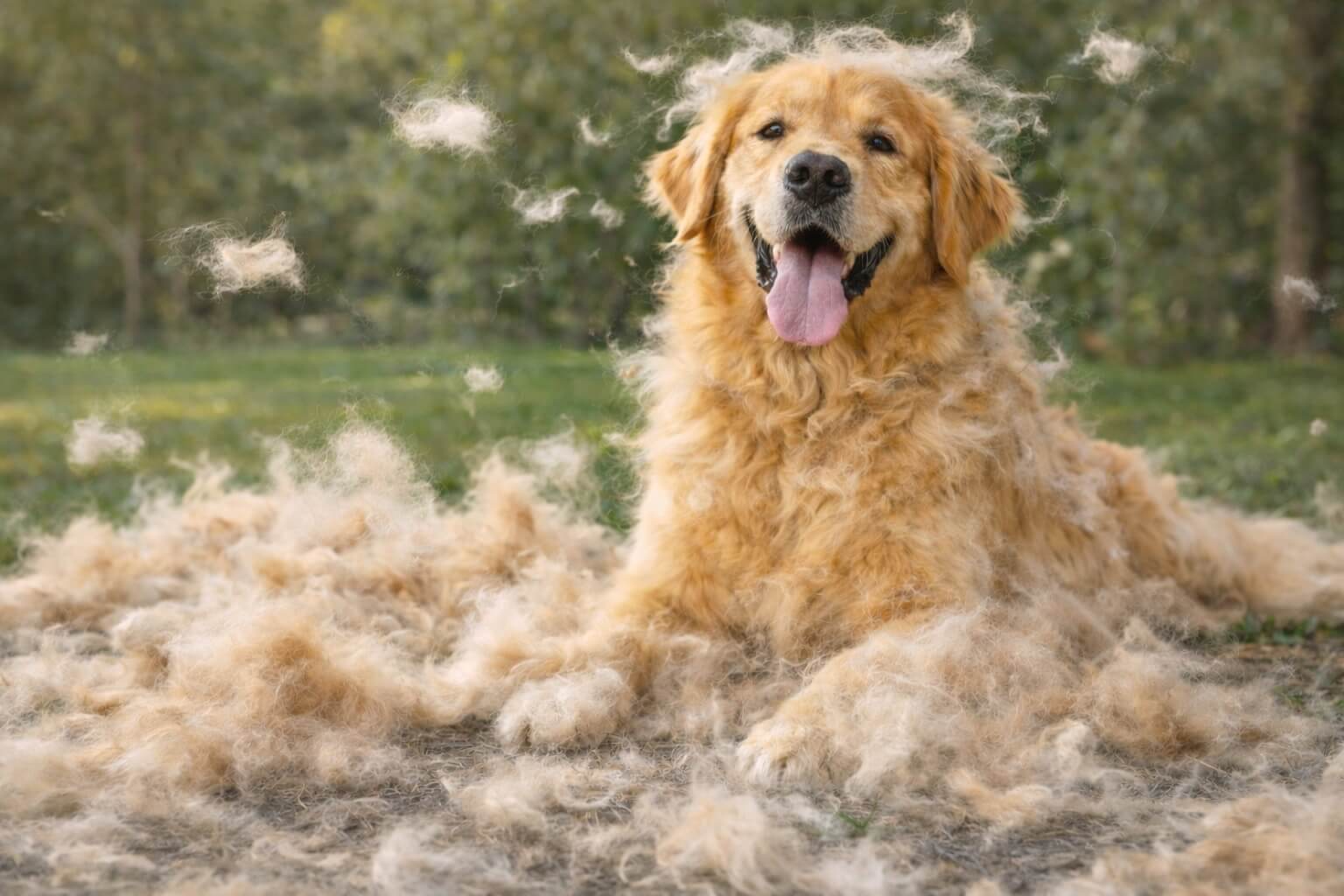
Golden Retriever Shedding Guide: Why They Shed, When It's Worst & How to Manage It
GoldenRetriever.hair
By GoldenRetriever.hair
Golden Retrievers shed year-round, and many have periods when loose undercoat increases. The timing and intensity are not identical for every dog: daylight, climate, indoor living, age, reproductive status, health, and individual coat all matter. You cannot stop normal shedding, but you can remove loose hair comfortably, protect the skin and coat, and recognize changes that deserve veterinary attention.
Table of Contents
- 🐾Quick Answer: Do Golden Retrievers Shed?
- 🐾Why Golden Retrievers Shed So Much
- 🐾How Often Do Golden Retrievers Shed?
- 🐾Golden Retriever Shedding Season
- 🐾Is Golden Retriever Shedding Normal?
- 🐾Causes of Excessive Shedding in Golden Retrievers
- 🐾How to Reduce Golden Retriever Shedding
- 🐾Best Tools for Golden Retriever Shedding
- 🐾Common Mistakes Owners Make
- 🐾When to See a Vet
- 🐾FAQ
Quick Answer: Do Golden Retrievers Shed?
Yes. Golden Retrievers have a double coat and normally shed throughout the year. Many shed more undercoat during seasonal transitions, but there is no universal calendar or fixed duration. Brushing and bathing can collect loose hair; they do not switch shedding off. If the pattern changes suddenly, becomes patchy, or comes with itch, skin changes, pain, or illness, contact your veterinarian.
Why Golden Retrievers Shed So Much
The Double Coat
Golden Retrievers have a double coat: two distinct layers of fur that work together.
- 🐾Outer coat (guard hairs): Longer, coarser, water-resistant hairs that protect against weather and dirt. These shed gradually year-round.
- 🐾Undercoat: Dense, soft, shorter fur that insulates against cold and heat. This is the layer that "blows" in spring and fall.
The double coat is a breed characteristic that helped working Goldens in water and variable weather. It also means there is more hair to cycle through. Routine shaving is not a shedding solution: it removes the coat's protective function and can alter regrowth, so discuss any medically necessary clipping with your veterinarian.
Outer Coat vs Undercoat
| Layer | What It Does | Typical Shedding Pattern |
|---|---|---|
| Outer coat | Helps repel water and protect skin | Individual guard hairs turn over throughout the year |
| Undercoat | Provides insulation | May release more heavily during seasonal transitions |
When you brush a Golden, most of the fur you remove is undercoat — the soft, fluffy stuff that accumulates on furniture and clothes. During seasonal coat blows, the undercoat comes out in clumps. That's normal and expected.
How Often Do Golden Retrievers Shed?
Year-Round Shedding
Golden Retrievers shed every day. You'll see hair on clothes, furniture, and floors throughout the year. This baseline shedding is the natural turnover of the coat — old hairs fall out as new ones grow. It's constant but manageable with regular brushing. For a humorous, owner-level look at why Golden Retriever hair gets everywhere—and sanity-saving house habits—see that companion post.
Seasonal Shedding
Many Golden Retrievers have two noticeable seasonal increases, but timing and duration vary:
- 🐾As days lengthen or weather warms: More insulating undercoat may loosen.
- 🐾As days shorten or weather cools: Another period of coat turnover may occur.
These periods are often called "coat blowing" or "blowing coat." Some dogs have dramatic clumps of loose undercoat; others shed more evenly across the year.
When Shedding Is Worst
Shedding is worst during the spring and fall coat blows. Climate, daylight, and individual variation affect timing. Some Goldens blow coat earlier or later; some have a more dramatic blow than others. Indoor dogs may shed more evenly year-round because artificial light can blur seasonal cues, but most still have noticeable peaks. During warm months, loose undercoat can also feel heavier between those classic blows — see our guide to Golden Retriever summer shedding for warm-weather brushing and management.
Golden Retriever Shedding Season
Spring Coat Blow
In spring, Goldens shed the thick winter undercoat. You'll notice:
- 🐾Large amounts of soft, fluffy fur coming out
- 🐾Clumps of undercoat on the brush
- 🐾More hair on floors and furniture than usual
- 🐾The coat may look temporarily less full as loose undercoat releases
What owners should expect: Adjust brushing to the amount of loose hair and your dog's comfort rather than a fixed schedule. Work in sections, stop if the skin becomes irritated, and make sure the tool glides rather than catches.
Fall Coat Blow
In fall, the summer coat is replaced by a denser winter undercoat. You'll see:
- 🐾Similar volume of loose fur as in spring
- 🐾The coat filling in and thickening as new undercoat grows
- 🐾A temporary increase in loose hair, with duration varying by dog and environment
What owners should expect: Use the same comfort-first approach and increase brushing only as needed. For a detailed brush-by-brush approach, see our best brushes for Golden Retrievers guide.
Is Golden Retriever Shedding Normal?
What Normal Shedding Looks Like
- 🐾Steady hair loss year-round
- 🐾Heavier shedding in spring and fall
- 🐾Hair comes out evenly across the body (no bald patches)
- 🐾Coat remains full and healthy-looking
- 🐾No excessive itching, redness, or skin changes
- 🐾Dog is otherwise healthy — eating, playing, energetic
What Excessive Shedding Looks Like
- 🐾Sudden increase in shedding outside of seasonal blows
- 🐾Patchy hair loss — bald spots, thinning areas
- 🐾Skin changes — redness, flaking, scabs, odor
- 🐾Itching — constant scratching, licking, chewing
- 🐾Dull or brittle coat — dry, lifeless fur
- 🐾Behavior changes — lethargy, loss of appetite
If you notice these signs, shedding may be a symptom of an underlying problem. See Causes of Excessive Shedding and When to See a Vet.
Causes of Excessive Shedding in Golden Retrievers
When Golden Retriever shedding goes beyond normal — sudden spikes, patchy loss, or coat deterioration — consider these possible causes.
Allergies
Environmental allergies (pollen, dust mites, mold) or food allergies can cause itching, inflammation, and increased shedding. Golden Retrievers are prone to skin allergies. Constant scratching damages the coat and pulls out hair. See our Golden Retriever skin allergies guide for diagnosis and management.
Nutrition Problems
Nutritional deficiencies or an unbalanced diet can affect skin and coat, but a coat change does not identify the cause. Feed a complete and balanced diet appropriate for your dog's life stage, and ask your veterinarian before adding supplements or changing foods to address shedding. See our best dog food for Golden Retrievers guide for questions to use when comparing foods.
Skin Infections or Irritation
Bacterial or yeast infections, hot spots, or contact irritation can cause localized or widespread hair loss. The skin may be red, moist, or odorous. These require veterinary diagnosis and treatment.
Parasites
Fleas, mites (e.g., demodectic mange), or other parasites can cause itching, hair loss, and coat damage. Flea allergy dermatitis is common in Goldens — even one bite can trigger intense scratching. Year-round parasite prevention is important.
Stress
Anxiety, changes in routine, or prolonged stress can trigger a stress-shed. This is usually temporary and improves when the stressor is addressed.
Illness or Hormonal Issues
Thyroid disease, Cushing's disease, or other hormonal imbalances can cause coat changes and excessive shedding. These require veterinary testing and treatment.
How to Reduce Golden Retriever Shedding
You cannot stop shedding, but you can reduce the amount of loose hair in your home and keep the coat healthy.
Regular Brushing
Brushing removes loose fur before it reaches furniture and clothes. Start with short sessions and use the least force that works. The right frequency is the one that keeps the coat free of tangles without redness, scraping, or broken hair; increase it when more hair is releasing and reduce it when little is coming out. For a full routine, see our Golden Retriever grooming guide.
Regular brushing tackles shedding at the source by lifting loose undercoat and guard hairs before they fall out. For hair that already lands on couches, clothes, and rugs, a reusable roller picks up embedded fur without relying on endless sticky sheets.
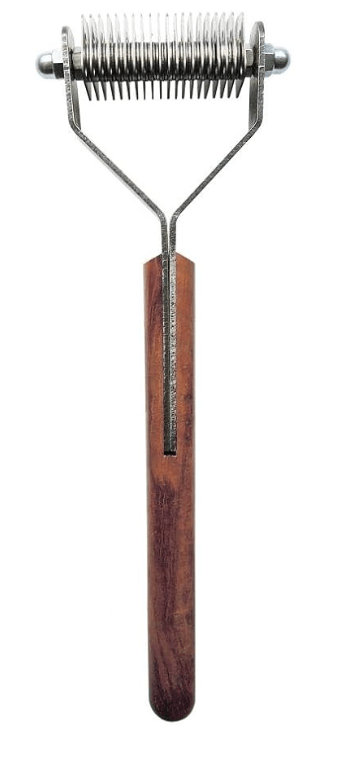
Mars Coat King bladed stripping tool
This product family uses sharpened blades rather than the rounded pins of a basic rake. Match the specific variant to coat length and density, follow the manufacturer's directions, and use light, limited passes.
Stop if it snags, scrapes skin, or appears to cut healthy coat. Ask a professional groomer to demonstrate before using a bladed tool on a Golden's undercoat.

Best for: furniture, clothing, and other fabric surfaces
Even with great brushing, some hair still ends up on sofas, blankets, and your clothes. This reusable roller lifts embedded Golden hair from those surfaces — no cartridges, just back-and-forth passes.
Pairs well with a solid brush routine: you handle shedding at the dog; ChomChom handles what already made it into the living space.
Proper Bathing
Bathing can loosen dead hair and rinse away dirt. Use a dog-specific shampoo, rinse thoroughly, and dry the coat fully. How often a dog needs a bath depends on activity, skin condition, product, and veterinary advice; there is no single interval that fits every Golden.
Complete and Balanced Diet
A complete and balanced diet supports normal skin and coat function. Do not assume a diet change or fish-oil supplement will fix shedding; talk with your veterinarian if the coat has changed or before adding supplements. See our best dog food for Golden Retrievers for food-comparison questions.
Avoid Overbathing
Frequent washing with an unsuitable product or incomplete rinsing can irritate skin. Choose a gentle dog shampoo and adjust the schedule to the individual dog; medicated shampoos should be used on the schedule your veterinarian prescribes.
Coat Maintenance
- 🐾Brush before and after bathing
- 🐾Focus on thick areas: neck, chest, shoulders, rear, tail base
- 🐾Don't forget behind the ears, under the legs, and feathering
- 🐾Use the right tools — see Best Tools for Golden Retriever Shedding
Home Cleaning Tips
- 🐾Use a lint roller or rubber broom for furniture and clothing
- 🐾Vacuum regularly — a robot vacuum can help with daily maintenance
- 🐾Wash dog bedding weekly
- 🐾Consider furniture covers that are easy to wash
- 🐾Groom outside when possible to contain fur
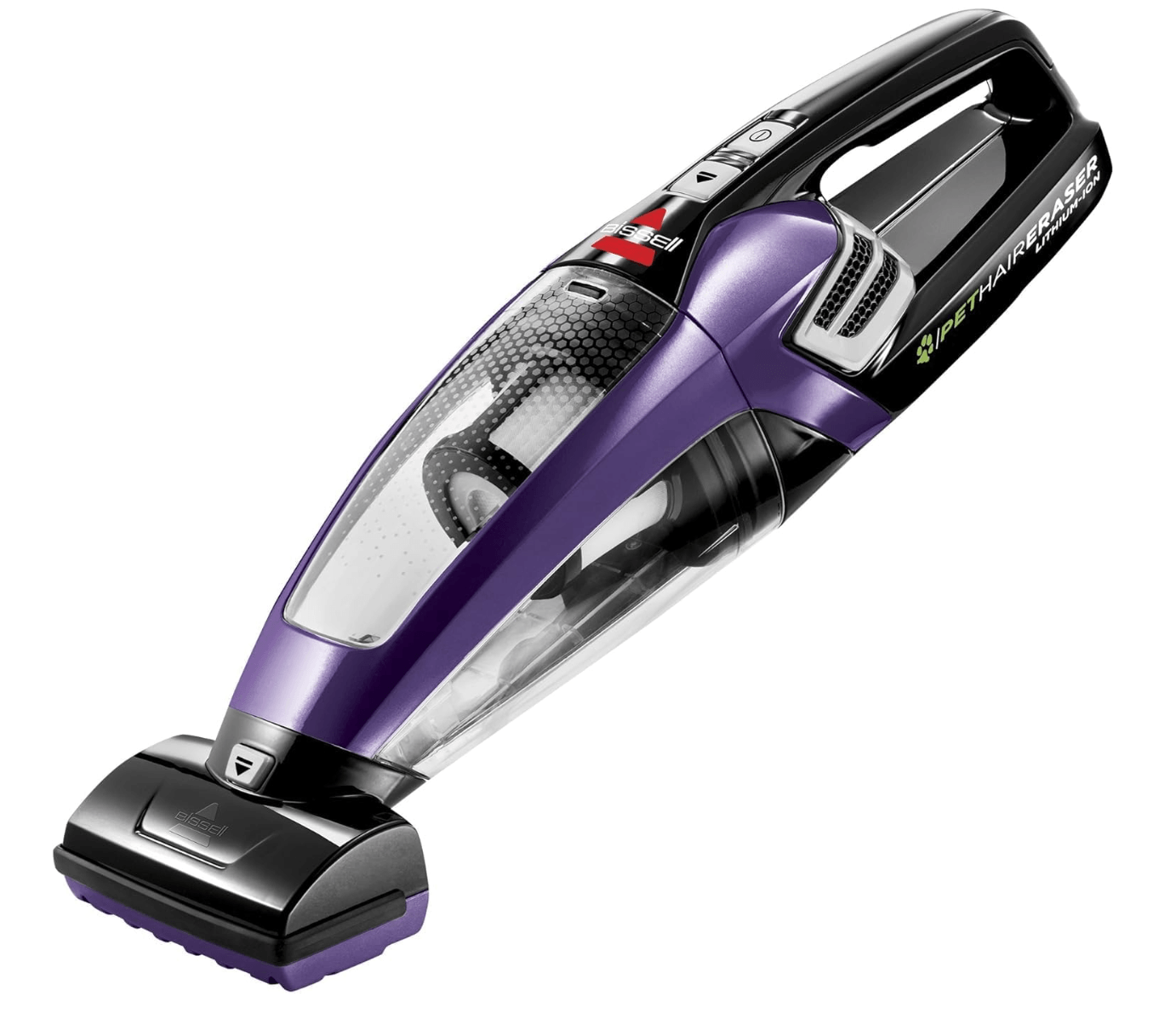
Bissell Pet Hair Eraser Handheld Vacuum
Compact handheld vacuum marketed for pet-hair cleanup on surfaces such as upholstery, stairs, and vehicle interiors.
Check the current listing for included attachments, surface guidance, warranty, and replacement-filter availability.
Best Tools for Golden Retriever Shedding
The right tools make deshedding a Golden Retriever much more effective. For a full comparison, see our best brushes for Golden Retrievers guide.
Slicker Brush
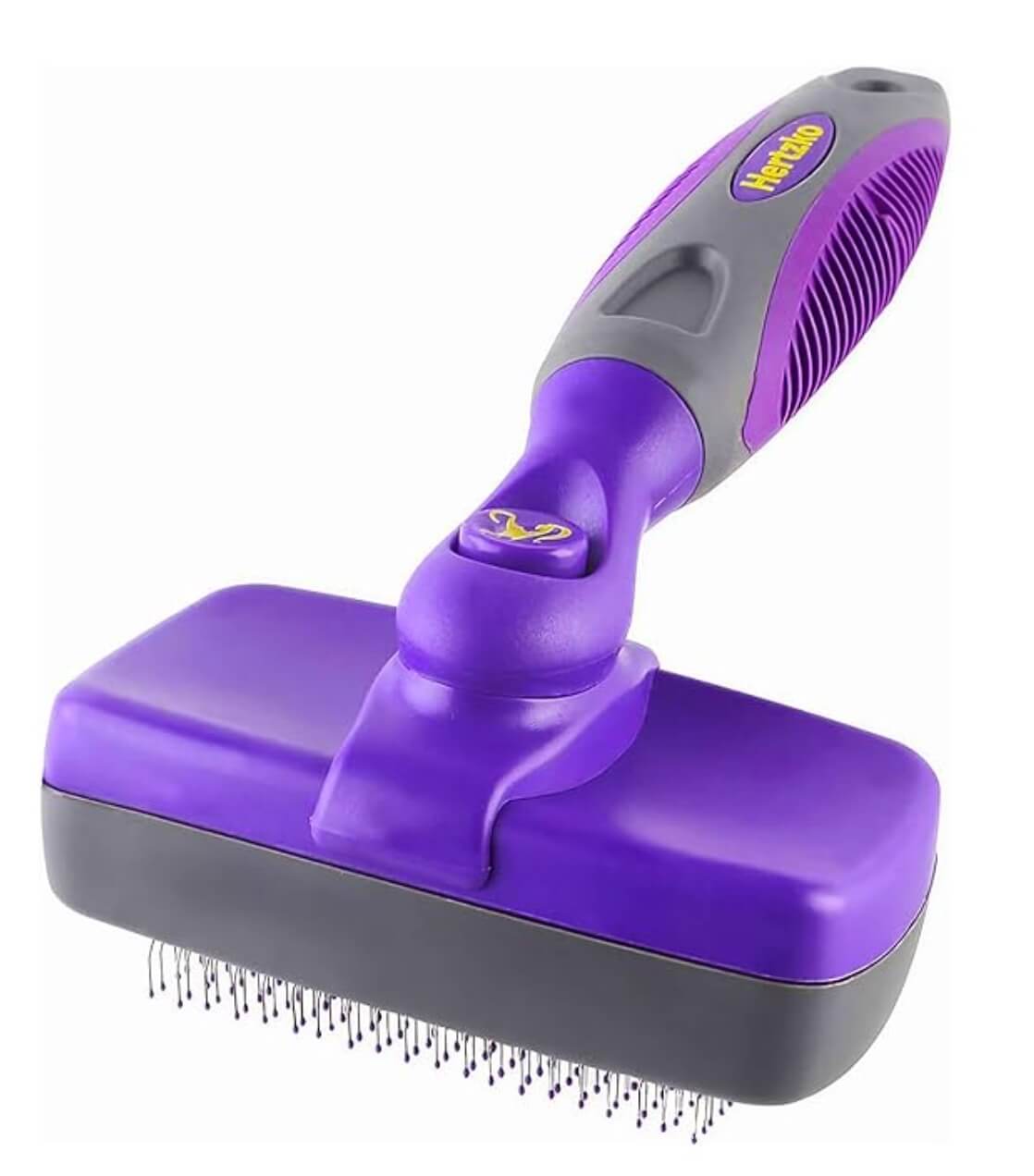
Best for heavier shedding and regular brushing
Helpful for removing loose fur and keeping tangles under control
Good for routine maintenance between heavier seasonal sheds
Undercoat Rake
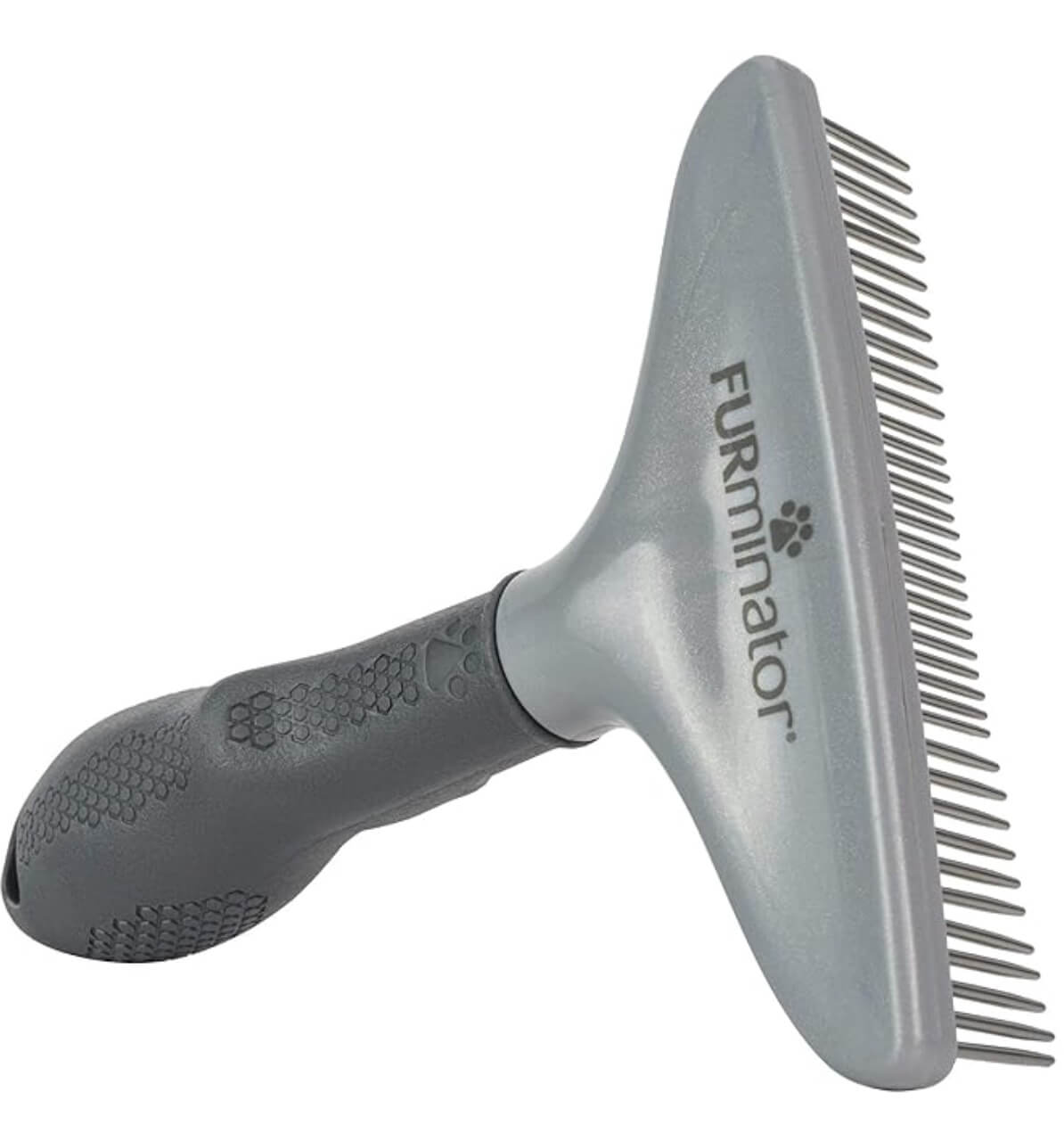
FURminator Grooming Rake with rotating metal teeth
The pictured tool is a pin-style grooming rake, not a blade-style deshedding edge. Use gentle, short passes on an unmatted coat and follow the current label for coat and size suitability.
Check the skin as you work and stop if the tool catches or causes discomfort.
Tool choice depends on coat condition and the dog's tolerance. A slicker and comb can handle much routine maintenance; a suitably sized rake can help when loose undercoat increases. Mats should not be pulled through painfully—ask a groomer for help when needed.
Deshedding Tool
Blade-style tools can cut or strip hair as they move through the coat. Do not treat every product sold as a “deshedding tool” as interchangeable: inspect the working edge, follow that exact product's directions, use minimal pressure, and stop if you see irritation or coat breakage.
Grooming Gloves
Rubber-tipped gloves can help remove loose hair during petting and are useful for dogs who dislike brushes. They're less effective than a proper undercoat rake for heavy shedding but can supplement your routine.
| Tool | Best For | Frequency |
|---|---|---|
| Slicker brush | Loose surface hair and small tangles | Short, gentle sessions as the coat requires |
| Pin-style undercoat rake | Loose undercoat on an unmatted coat | As needed; stop if it catches or irritates |
| Bladed stripping tool | Specific coat work after correct tool selection | Limited passes per the exact label or groomer guidance |
| Steel comb | Checking feathering and finding remaining tangles | Use gently after brushing |
Common Mistakes Owners Make
- 🐾Expecting to stop shedding completely — You can't. Golden Retrievers are bred to shed. Focus on management, not elimination.
- 🐾Brushing only the topcoat — The undercoat is where most shedding originates. Use tools that reach down to the skin.
- 🐾Overusing deshedding tools — Aggressive or frequent use can thin the coat and irritate skin. Limit to shedding season and follow instructions.
- 🐾Using a fixed bathing calendar without checking the dog — Skin condition, activity, shampoo, and veterinary treatment plans all affect bathing needs.
- 🐾Ignoring seasonal peaks — When coat blows hit, increase brushing frequency. Waiting makes the problem worse.
- 🐾Using the wrong tool or too much pressure — Pin rakes, slickers, and bladed stripping tools work differently. Check the tool before it touches the coat.
- 🐾Treating a food change as a diagnosis — A complete diet matters, but new coat or skin changes need veterinary assessment rather than a promised quick fix.
When to See a Vet
Schedule a vet visit if your Golden has:
- 🐾Sudden, dramatic increase in shedding outside of seasonal blows
- 🐾Patchy hair loss or bald spots
- 🐾Skin changes — redness, flaking, scabs, odor, hot spots
- 🐾Excessive itching — constant scratching, licking, or chewing
- 🐾Dull, brittle, or thinning coat that doesn't improve with better grooming
- 🐾Lethargy, loss of appetite, or other illness signs along with coat changes
These can indicate allergies, parasites, infection, hormonal issues, or other conditions that need diagnosis and treatment. Don't assume it's "just shedding" if the pattern has changed.
Before the appointment, note when the change began, which areas are affected, whether the skin is red or sore, how much your dog is itching or licking, and any appetite, energy, medication, diet, or household changes. Photos taken in consistent light can help show progression. This checklist helps your veterinarian; it cannot diagnose the cause.
FAQ
Do Golden Retrievers shed a lot?
Yes. Golden Retrievers are heavy shedders. They have a dense double coat that sheds year-round, with intense coat blowing in spring and fall. This is normal and cannot be stopped. Regular brushing, the right tools, and good nutrition help manage it.
How often do Golden Retrievers shed?
Golden Retrievers shed throughout the year. Many have heavier seasonal coat release, but its timing, intensity, and duration vary with the individual dog and environment. Adjust grooming to the coat in front of you rather than a calendar.
What is the best brush for Golden Retriever shedding?
There is no universal best brush. A slicker and steel comb are useful for many coats; a correctly sized pin-style rake can help with loose undercoat. Some tools have blades and can cut coat, so identify the working edge and follow the exact label. See our best brushes for Golden Retrievers guide for a full comparison.
How can I reduce Golden Retriever shedding?
You cannot stop normal shedding. Short, gentle brushing sessions, appropriate tools, complete and balanced nutrition, and bathing with a suitable dog shampoo can help collect loose hair and keep the coat comfortable. Adjust frequency to your dog and seek veterinary advice for a sudden or symptomatic change.
Why does my Golden Retriever shed so much?
Golden Retrievers have an outer coat and insulating undercoat, and both layers turn over. Seasonal cues can increase release of loose undercoat, while indoor living can make the pattern less distinct. If shedding suddenly increases or becomes patchy, or the skin is itchy or sore, see your veterinarian.
When is Golden Retriever shedding season?
Many Goldens shed more undercoat as daylight and weather change, often around spring and fall. Geography, indoor light and temperature, age, health, and the individual coat can shift or blur those periods, so there is no dependable month-by-month schedule.
Is excessive shedding in Golden Retrievers normal?
Baseline shedding and seasonal increases can be normal. A sudden change, patchy loss, broken hair, skin changes, itching, pain, or illness can have many causes and deserves veterinary advice.
Conclusion
Golden Retriever shedding is normal year-round, with seasonal increases that vary by dog and environment. Use short, comfortable grooming sessions and identify whether a tool has pins, wire, or blades before using it. Feed a complete and balanced diet, bathe according to the dog's needs, and contact your veterinarian for a sudden or symptomatic coat change. For a complete routine, see our Golden Retriever grooming guide. For tool comparisons, check our best brushes for Golden Retrievers guide.
P.S. Get the free Golden Retriever Owner Cheat Sheet — daily feeding, sleep, and care in one printable guide.
Get the Cheat Sheet when you join the newsletter — instant access in your welcome email.