
Golden Retriever Recall
By JJ Allan (goldenretriever.hair)
A come cue asks a Golden Retriever to quit whatever they are doing and run to you instead. The American Kennel Club calls that a lifesaving skill, and it is honest about the odds: dogs are not robots, so "reliable" means you are nearly sure they will come, not that a guarantee exists. Stephanie Gibeault, MSc, CPDT, writing for the AKC, says even a well-trained dog will not be perfect, which is why off-leash time belongs in a safe place. The RSPCA puts the same limit in one sentence: do not walk a dog off-leash near a road. Something unpredictable, a bang or a sudden scare, can send them into traffic.
This page is the indoor game, the long line, and the point at which the leash stays on. It is reward-based, which is the method the ASPCA supports: food, praise, petting, and play, and no equipment that hurts. A Golden who already pulls on a walk needs the leash guide before this one is useful outside. A Golden who panics when you leave the house needs the separation anxiety guide, because that is not a failed come cue.
Where you are allowed to test it
The AKC's reliable-recall page says that if you are not confident, there is no rule that the dog must ever be off-leash. Keeping them leashed while you train is the responsible choice, including a decision to stay on-leash outside your own home and yard for good. That protects the dog, other dogs, people, and wildlife. The exercise guide is where off-leash fetch shows up as daily exercise, and it belongs there only after this cue holds in a legal, fenced, or otherwise safe place.
| Where you are | What the dog is on | What you are proving |
|---|---|---|
| A quiet room, a few feet away. | A leash, then loose in that room once every call is working. | Name means "look." Come means "run to me." Gotcha means a hand on the collar is safe. |
| Other rooms, then a quiet yard. | Still a line once you leave the house. | Distance. The RSPCA's follow-me game starts at home and only then moves to the yard. |
| Outside, smells and people in the distance. | A 6-foot leash, then a 20-foot or 30-foot long line. Gibeault's order. | The dog can turn away from a mild distraction and still get paid. |
| A road, a parking lot, wildlife, or an unfenced park. | A leash you can hold. Not a test of off-leash. | Nothing. The RSPCA says you cannot control that environment. The AKC says outdoors is a new game even after a perfect indoor record. |
Name, come, then a hand on the collar
Gibeault's order is the one to follow. Teach the name first, in a small quiet room or on a leash. Wait until the dog is looking somewhere else, say the name in a happy voice, and mark the look with "yes" or a click, then a treat. Add people and toys on the floor only after the look is eager. A new word often gets a cocked head before it gets a reliable look, and how fast that look sticks once you pay it is the intelligence guide.
Then teach a collar grab. Most dogs duck a hand that reaches for the neck, and an emergency recall is useless if they arrive and spin away. Lure them in with a treat they can lick but not take yet. Say "gotcha," take the collar gently, and then let them eat. Speed the grab up only after the slow one is comfortable. Pay every grab, in more than one room. The basic obedience guide is the sit and stay that you add once the dog is arriving and standing still to be paid. Gibeault adds sit after the happy run is reliable, so the dog does not bounce off as soon as the food is gone.
The come cue itself starts a few feet away. Say the name, then "come," and use your body: pat your legs, clap, step backward. Mark the moment they move toward you, praise, and pay. The other AKC page says to show the treat first, and to add the word only when you are sure the dog is already on the way. After a few repetitions you can hide the food until they arrive. Run backward on the cue. Dogs chase a person who is leaving. The RSPCA uses the same move: a couple of paces away, a friendly voice, get low.
Call once. If you need the word three times, the AKC says the place is too hard or the skill is not there yet. Repeating "come, come, come" is also how a cue gets poisoned. When "come" already means nothing, or it means the fun is over, the AKC's fix is a new word, such as "here" or "close," trained from the first indoor step again. A whistle can be that new sound, because it has not been used as a scolding. This site has no whistle image and no listing that could be checked against a live product page, so there is no whistle card. Any cue you pick still has to be paid, and it still has to be one sound, said once.
Pay them like you mean it
Gibeault says the reward might be a game of tug or a piece of chicken, and that this is not the time to be stingy. The AKC's reliable-recall page names chicken, cheese, or freeze-dried beef liver for the moment the dog gets to you. Praise, petting, and play count too. The ASPCA lists those alongside food as the core of humane training.
Two foods on this site's training list match that split. The beef liver is the high-value pay for a hard recall. The small chicken treats are for the many easy ones indoors, so you can pay often without turning every repetition into a meal of liver. A treat pouch is the practical way to keep either food in reach on a walk. There is no pouch image in the repo and no verified pouch listing, so this page does not link one. A pocket works if the dog cannot rob it.
The liver below is the freeze-dried beef liver already on the product list. The live page is a 21-ounce tub of Stewart freeze-dried treats made from 100 percent beef liver. The AKC names that kind of food as a high-value recall reward. Follow the bag for how much to feed. Give the first pieces while you are home so you know the dog chews them rather than swallowing them whole.

Stewart Freeze-Dried Beef Liver, 21 oz
This is the beef-liver treat on our product list, ASIN B0002DGRSY. The live page is Stewart freeze-dried dog treats, 100 percent beef liver, 21-ounce tub. Use it when the dog turns away from something they wanted, which is the moment the AKC says to pay with a high-value food such as freeze-dried beef liver. Save it for those recalls so it stays more interesting than the sniff.
It is a single-ingredient food, and it is rich. It is not a meal, and it is not a reason to call the dog only when you are about to leave the park.
The everyday treat is Zuke's Mini Naturals. The live page for this ASIN is the chicken recipe, 16 ounces, sold as a training treat. Small pieces let you mark the name game and the short indoor comes without a production each time.
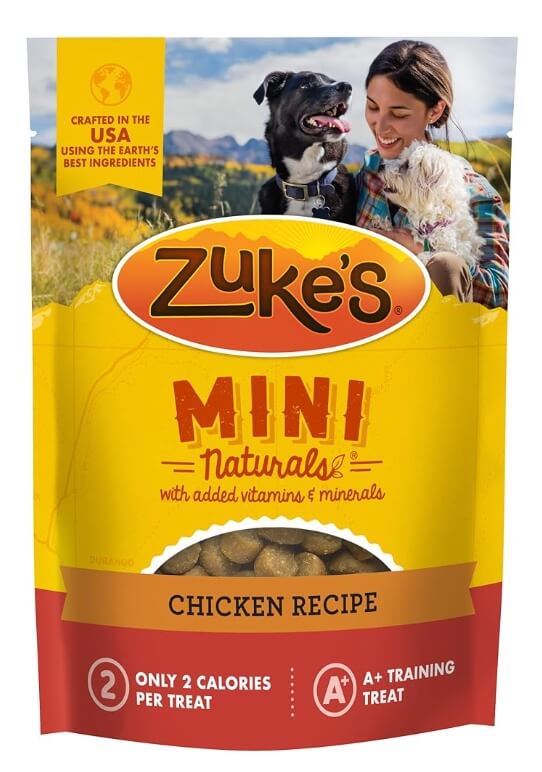
Zuke's Mini Naturals, Chicken, 16 oz
This is the training treat on our product list, ASIN B000H0ZJHW. The live page is Zuke's Mini Naturals made with chicken, 16 ounces. Use them for the repetitions Gibeault starts a few feet away: name, come, mark, pay. When the dog will come in the house every time, you still pay. You just do not need the liver for a recall across the kitchen.
If the dog will not eat outside, the place is too hard. Go back indoors or shorten the line. A treat the dog refuses is not a higher standard. It is a failed setup.
For a dog who cares more about a toy than about food, the RSPCA says to put that toy away and bring it out only for training. A round of tug when they arrive is a legal version of Gibeault's reward. Do not play tug on the leash. That habit is covered in the leash guide.
The long line is a fence you can carry
Gibeault's outdoor sequence is specific. Do not let the dog roam free just because indoor recall looks finished. Repeat the same steps on a 6-foot leash. Then use a 20-foot or a 30-foot long line, and give more of that distance only as the recalls keep working. If the dog does not come, walk toward them while you gather the slack, and set the picture up again. The RSPCA's UK page says the same tool in fewer words: a long training lead lets the dog have some freedom without free range.
This site does not have a long-line photo or a listing that could be checked against a live product page, so there is no long-line card. Buy a line in the length the AKC names, 20 or 30 feet, and handle it so it cannot cinch a hand or wrap a leg. If the dog is likely to hit the end at a run, clip it to the harness from the leash guide. The RSPCA's leash-equipment page says a harness keeps a pull off the neck. A long line used for a pre-walk sprint is a different session from a recall lesson. Mixing them is how the leash guide says a training walk turns into a tow.
Three games from the AKC keep the cue from meaning "the fun is over":
- 🐾Catch me. On leash, get their attention, turn, and run a few steps, then say the cue as they move with you. Stop and pay. Know they are watching before you move, so the leash does not yank them.
- 🐾Find me. Call from another room once the house recall is real. Pay when they find you.
- 🐾Hot potato. Two or more people stand apart with the good food and take turns calling. Pay every arrival, then send the dog back to play.
The RSPCA UK adds the rule under those games. Do not use the cue only to clip the leash and go home. Call in the middle of a good time, pay, and release them to the game again. The AKC says to do that a few times in one play session.
When come is the wrong project
A Golden who sticks to you in the house and falls apart when you pick up keys is not showing a recall failure. That pattern is the separation anxiety guide. Off-leash running is also the exercise that guide allows only after the dog actually comes back, and only for a dog who can be left without panic. Do not practice recalls by calling the dog in order to shut them away.
A dog who blows off come around other dogs, wildlife, or a crowd needs an easier picture, not a harsher one. The ASPCA's position is that training should not inflict distress, and its behavioral help page puts "come when called" in group class for ordinary manners. Chase that has become dangerous, or a dog who panics, is the kind of problem that page sends to a qualified trainer or behavior professional you have interviewed about methods. The ASPCA also says only a veterinarian diagnoses illness or pain. If an adult who used to come has stopped, and they seem sore, lost, or suddenly unwilling to move, book the clinic before you add distance.
Puppy recall starts in the house, with the same short game, during the routines in the puppy training guide and the socialization guide. An adult can learn it too. You may be undoing a cue that already means "I can ignore that word." Change the word, go back to a few feet, and keep the line on outside.
Sources
What "reliable" means, why off-leash is optional, starting indoors with the cue added only as the dog moves toward you, high-value food including freeze-dried beef liver, the catch-me, find-me, and hot-potato games, calling during play so the cue does not mean the fun is over, a poisoned cue and a new word, one cue rather than a string of repeats, and never punishing a dog for coming: American Kennel Club, reliable recall.
Name game, collar grab, the come sequence from a few feet to the end of a leash to a quiet room, sit on arrival, outdoor work on a 6-foot leash and then a 20-foot or 30-foot long line, using the line to control distance rather than to reel the dog in, and off-leash only in a safe place because no dog is perfect: Stephanie Gibeault, MSc, CPDT, for the American Kennel Club.
Follow-me at home before the yard, positive reinforcement, high-value food or a toy kept special, no off-leash walking near a road, do not chase a dog who missed the cue, and do not punish a miss: RSPCA Australia Knowledgebase, teaching recall. A harness so a pulling dog is not loading the neck: RSPCA Australia, leash equipment. Long training leads, a friendly voice, holding the collar as you pay, and not calling only to put the lead on or to tell the dog off: RSPCA England and Wales, come when called.
Reward-based training with food, praise, petting, and play, and opposition to equipment that causes pain or undue anxiety: ASPCA position statement on training aids and methods. Come when called as a group-class skill, and when a private trainer or behavior professional is the better fit: ASPCA, behavioral help.
P.S. Get the free Golden Retriever Owner Cheat Sheet — daily feeding, sleep, and care in one printable guide.
Get the Cheat Sheet when you join the newsletter — instant access in your welcome email.