
How to Obedience Train a Golden Retriever
By JJ Allan (goldenretriever.hair)
This is the how-to page: the order to train in, how to run a session, how each cue gets taught and then made reliable, and what to do when it stalls. If you only want the list of cues a Golden should know, that is the basic commands checklist. Come back here when you are ready to teach them.
Goldens are food-motivated, people-focused, and mouthy, and they stay puppyish well past their first birthday. That makes them quick to learn a cue in the kitchen and slow to do it at the park — and just as quick to lift food off the counter if the kitchen is unsupervised. Most of this plan is about closing that gap. Why the same dog learns a real cue so fast is the intelligence guide.
This guide is general training information, not veterinary advice. A sudden change in behavior, a dog who resists sitting or lying down, or a dog who seems painful during training should be checked by your veterinarian before you keep training.
The plan at a glance
Every cue goes through the same four stages. The stage tells you what to practice next, so you are never guessing.
| Stage | What it looks like | Move on when |
|---|---|---|
| 1. Get the behavior | Lure with a treat at the nose, or capture it when the dog offers it. No word yet. | The dog does it as soon as your hand moves, about 8 of 10 tries. |
| 2. Add the cue | Say the word once, just as the dog starts to do it. Mark (“yes” or a click) and pay. | The dog does it on the word alone, with no lure in your hand. |
| 3. Fade the food | Treats come from a pouch, not your hand. Pay most reps, then some, then mix in praise, play, or a door opening. | It still works when your hands are empty. |
| 4. Proof it | Add distance, duration, and distraction, one at a time, in new rooms, then the yard, then outside. | It works in places your dog has never practiced. |

How to run a session
Short is the point. Golden puppies and adolescents lose focus fast, and a session that ends because the dog is bored teaches the dog to check out. Aim for two to five minutes, two or three times a day, plus quick one-rep moments during the day: a sit before the food bowl goes down, a down before the leash goes on.
- 🐾Pick one cue and one stage. Write it down if it helps: “Down, stage 2, kitchen.”
- 🐾Load the pouch with tiny treats. Pea-sized or smaller. A Golden will do more reps for many small treats than a few big ones.
- 🐾Start with an easy warm-up rep. Something the dog already does well.
- 🐾Do five to ten reps of the new thing. If the dog gets three wrong in a row, you raised the difficulty too fast. Go back a step.
- 🐾End on a rep the dog gets right, then play or let the dog sniff.
VCA's guidance on reinforcement is that timing matters more than the treat: the reward has to land while the dog is still doing the behavior, or you pay whatever came next. That is why a marker word or a clicker helps. It tells the dog exactly which moment earned the food, and buys you a second to get the treat out.
Teach each cue, step by step
The checklist covers which cues matter. Here is how to actually teach the core five.
Sit
- 🐾Hold a treat at the dog’s nose and move it slowly up and back over the head. As the nose goes up, the rear goes down.
- 🐾The moment the rear touches the floor, say “yes” and feed.
- 🐾After a few sessions where the dog sits as soon as your hand moves, say “sit” once, just as the rear starts to drop.
- 🐾Then say “sit” with an empty hand, and pay from the pouch.
This is the luring method VCA describes. Do not push the hips down.
Down
- 🐾From a sit, take a treat from the nose straight down to the floor between the front paws, then slowly out along the floor.
- 🐾Mark and feed the instant the elbows touch down. Feed on the floor so the dog stays down.
- 🐾If the dog pops up, use a smaller movement, or capture it instead: keep treats handy and pay when the dog lies down on its own.
- 🐾Add “down” once the dog folds as your hand starts to move.
Use “off,” not “down,” for getting off furniture or people. One word, one behavior.
Stay
- 🐾Ask for a sit or down. Wait one second, mark, and feed while the dog is still in position.
- 🐾Build time in small steps: 2 seconds, 3, 5, 8. Mix in easy ones so it is not always harder.
- 🐾Once the dog holds 10 seconds, add one step of distance, and drop the time back to a few seconds.
- 🐾Always go back to the dog to pay. Then release with a word such as “okay” or “free.”
VCA’s method is to delay the reward a little longer each time. The release word matters: the stay ends when you say it ends, not when the dog decides.
Come
- 🐾Indoors, take a few steps away, and say the dog’s name in a happy voice. As the dog starts toward you, say “come.”
- 🐾Pay big when the dog arrives, and touch the collar before you hand over the treat.
- 🐾Play a back-and-forth game between two people in a hallway.
- 🐾Only use the word when you are fairly sure the dog will come. Never call the dog to something it dislikes.
Outdoor recall on a long line is its own project. The recall training guide covers it.
Leave it
- 🐾Hold a treat in a closed fist. Let the dog lick and paw. The moment the dog backs off, mark and pay from the other hand.
- 🐾When the dog backs off right away, say “leave it” as you present the fist.
- 🐾Progress to an open palm, then a treat on the floor under your foot, then a treat on the floor uncovered.
This one is worth extra time with a Golden, because the breed picks up everything.
A training timeline
These are realistic ranges for daily short sessions, not promises. Every dog is different, and an older dog with an old habit takes longer than a puppy with no habit yet.
| Weeks of training | Focus | What good looks like |
|---|---|---|
| Weeks 1–2 | Marker word, name response, sit, capturing down | Sits on a hand signal in the kitchen. |
| Weeks 3–4 | Cues on the word, short stays, indoor come, leave it with a fist | Sit and down on the word alone at home. |
| Weeks 5–8 | Fading the lure, stay with a few steps of distance, yard practice | Cues work in the yard with mild distractions. |
| Months 2–6 | Proofing in new places, longer stays, come on a long line | Cues work at the curb and in a quiet park. |
| Adolescence, about 6–18 months | Maintenance, easier steps when skills slip | Some regression is normal. Go back a stage, do not start over. |
For age-by-age daily routines in a puppy, see the puppy training schedule. This page is about the obedience skills themselves, at any age.
Adding distractions without losing the cue
A Golden who sits perfectly in the kitchen and ignores you at the park has not been stubborn. The cue was learned in one place, and it has not been practiced anywhere else yet.
- 🐾New rooms first. Bedroom, hallway, garage.
- 🐾Then the yard, at a quiet time of day.
- 🐾Then the front sidewalk, then a quiet park, then a busier one.
- 🐾Each time the place gets harder, make the ask easier. Short stays, close distance, better treats.
If your Golden cannot take food, the environment is too much. Move farther away from the distraction until the dog can eat again, then train there.
Troubleshooting
| Problem | Likely cause | Fix |
|---|---|---|
| Only sits when a treat is visible | The lure was never faded | Lure three times, then give the hand signal with an empty hand and pay from the pouch. |
| Breaks the stay right away | Time or distance increased too fast | Go back to 1–2 seconds and build again. Pay while the dog is still in position. |
| Ignores cues outside | Not practiced in that place yet | Practice in steps: yard, sidewalk, quiet park. Use better treats outdoors. |
| Mouths hands or grabs treats | Over-excited, or treats delivered at face height | Deliver treats low, with a flat palm. Shorten sessions. See the puppy biting guide. |
| Was reliable, now ignores you (6–18 months) | Adolescence | Go back a stage, pay more often, and give the dog more exercise before sessions. |
| Slow to sit or lie down, or yelps | Could be discomfort | Stop the session and ask your veterinarian. Do not force the position. |
VCA also warns against yelling cues: a loud voice raises arousal and makes it harder for the dog to respond calmly. Say the dog’s name, give the cue once in a normal voice, and wait a beat.
Why reward-based training, and what to avoid
The American Animal Hospital Association’s behavior management guidelines recommend reward-based training and advise against punishment-based methods. The American Veterinary Society of Animal Behavior’s position statement on humane training says the same, and links aversive methods with fear, stress, and aggression. That is why this plan uses no leash pops, prong collars, choke chains, or shock collars.
Not paying for the wrong behavior is enough. If the dog jumps for the treat, the treat goes away. If the dog sits, it arrives.
When to call your veterinarian or a behavior professional
A dog who suddenly stops sitting, will not lie down, snaps when touched, or seems slow or stiff may be in pain, and that is a veterinary question first. The AAHA guidelines treat behavior and medical health together for this reason. Talk to your veterinarian, and ask for a referral to a veterinary behaviorist or a certified reward-based trainer if your Golden shows fear, guarding, or aggression. The behavior problems guide is a starting point for those patterns.
For puppies, the AVMA notes that socialization and early training happen during a sensitive period, and your veterinarian should tell you which classes and outings are safe before vaccines are finished. The socialization guide covers that.
Gear that helps
You do not need much. The items below were each rated 4.5 stars or higher on Amazon when we checked them in October 2026.
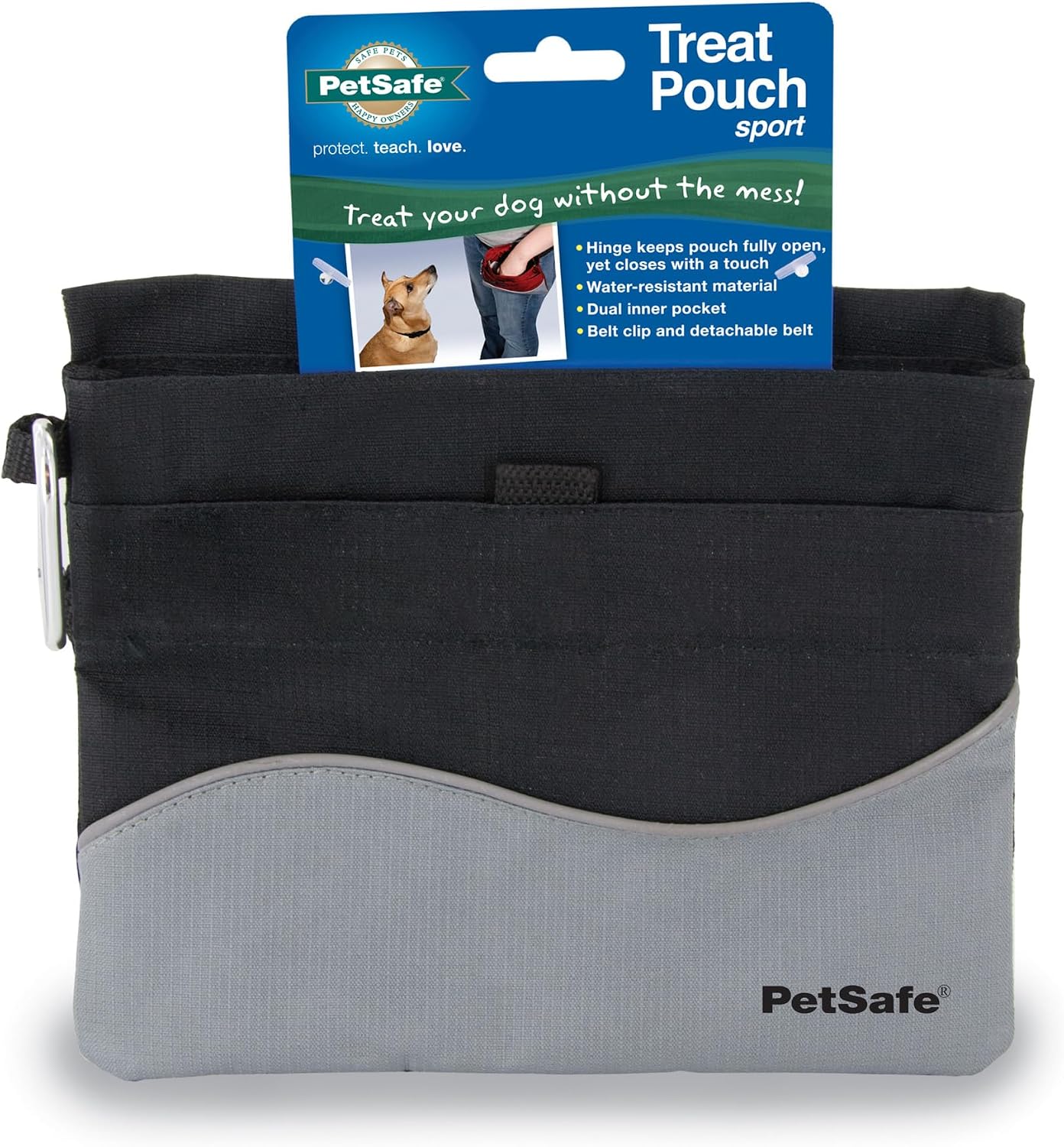
PetSafe Treat Pouch Sport, black, Standard
A belt pouch keeps treats out of your hands, which is how you fade the lure in stage 3. The pocket stays open while you feed and snaps shut between sessions. The Standard size holds about 2 cups.
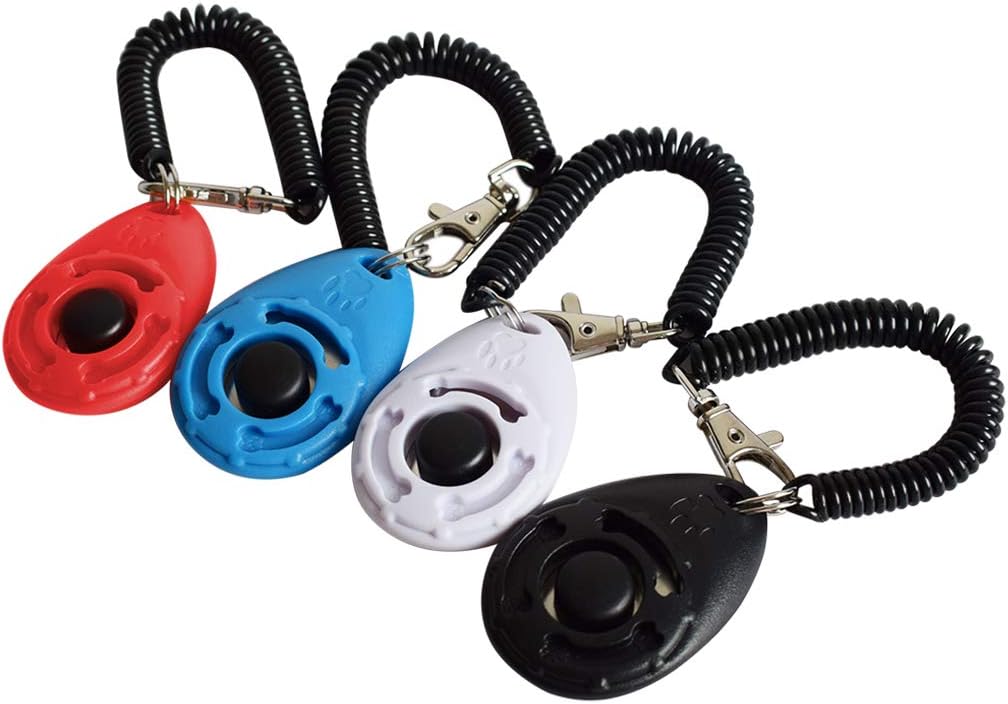
Ruconla training clicker, four-pack with wrist straps
A clicker is a marker: one sound that means “that, right there.” Click, then treat. A spoken “yes” works too. A four-pack lets you keep one in each room where you train.
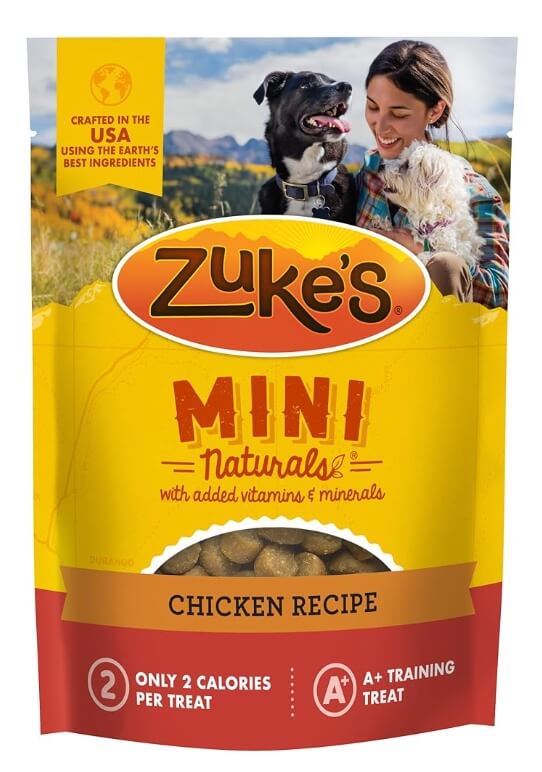
Zuke’s Mini Naturals, Chicken
Small, soft training treats, so you can do many reps in one session. Count training treats in the dog’s daily food, and ask your veterinarian if your Golden is on a weight plan.
Sources
How to lure, capture, and add a cue, and how to build a stay: VCA Animal Hospitals, Sit, Down, Stand and Stay. Timing of rewards and saying cues in a gentle voice: VCA Animal Hospitals, Using Reinforcement and Rewards. Teaching come indoors: VCA Animal Hospitals, Come, Wait, and Follow. Saying a cue once, and one word per behavior: VCA Animal Hospitals, Tone vs. Volume.
Reward-based training and behavior as part of medical care: AAHA Canine and Feline Behavior Management Guidelines. Risks of aversive training methods: AVSAB Position Statement on Humane Dog Training. Puppy socialization and early training: AVMA, Socialization of Dogs and Cats.
P.S. Get the free Golden Retriever Owner Cheat Sheet — daily feeding, sleep, and care in one printable guide.
Get the Cheat Sheet when you join the newsletter — instant access in your welcome email.