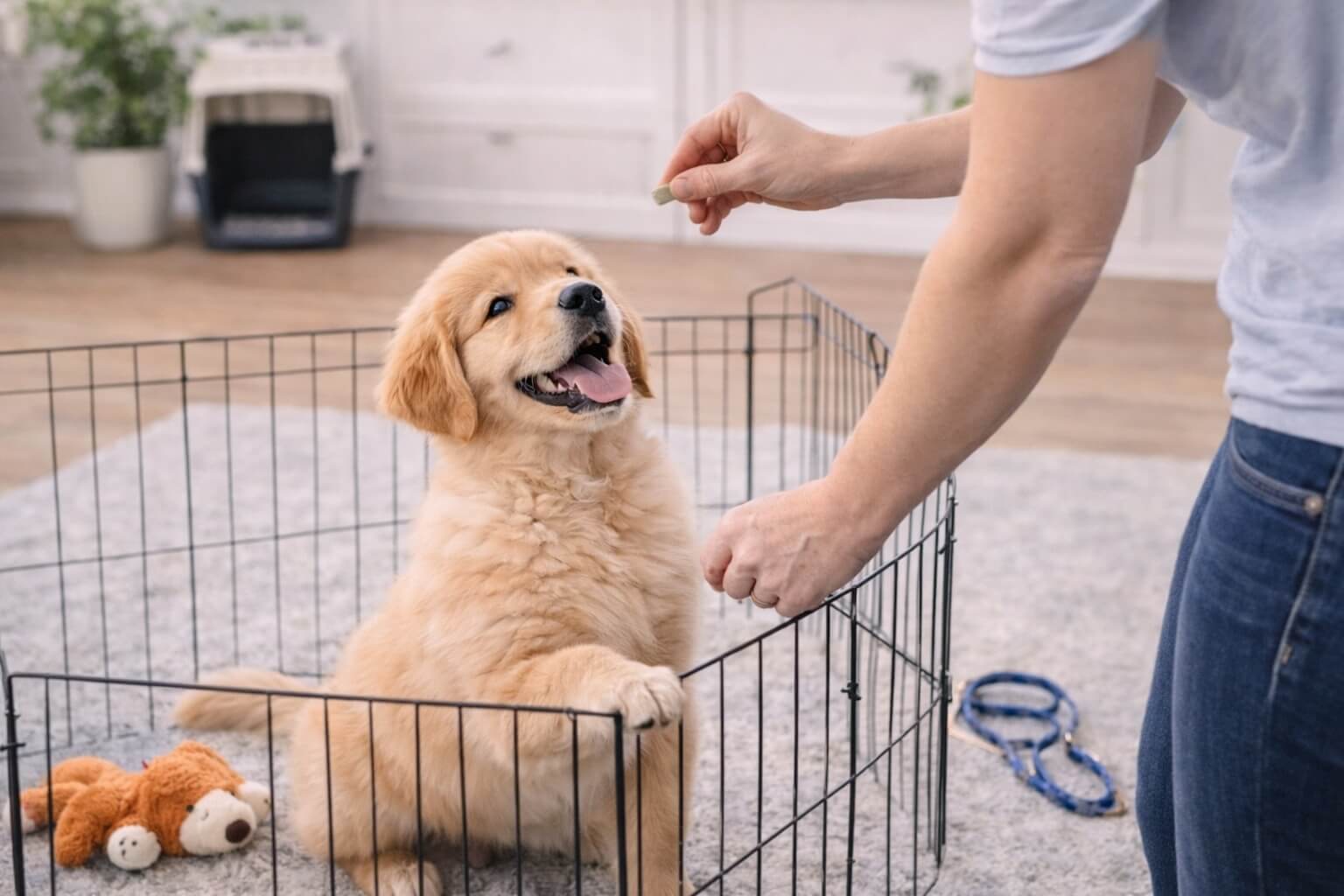
Golden Retriever Potty Training Guide (How to House Train Your Puppy)
GoldenRetriever.hair
By GoldenRetriever.hair
Potty training is one of the first big jobs new Golden Retriever owners face. Between frequent trips outside, the occasional accident, and sleepless nights, it can feel overwhelming—especially with a smart, energetic puppy who seems to learn some things quickly and ignore others. The good news is that Golden Retriever potty training is very achievable with the right structure and expectations.
Golden Retrievers are intelligent, eager to please, and highly responsive to positive reinforcement, which makes them generally easier to house train than many breeds. But they are still puppies: they have small bladders, limited control, and no idea what “house rules” are until you teach them.
This guide explains how to potty train a Golden Retriever puppy step by step, how long house training typically takes, and practical schedules and methods that work especially well for this breed.
How Easy Are Golden Retrievers to Potty Train?
Compared to many breeds, Golden Retrievers are usually easier to potty train because they are:
- 🐾Intelligent – They learn patterns and routines quickly.
- 🐾Eager to please – They genuinely want to do the “right” thing once they understand it.
- 🐾Food- and praise-motivated – They respond strongly to rewards.
Our Golden Retriever Intelligence Guide explains why Goldens rank among the smartest dog breeds in terms of working and obedience intelligence. Those same traits make them excellent candidates for structured potty training, and pairing house training with a basic commands checklist helps you build clear communication at the same time.
However, success still depends on:
- 🐾Consistency – Same rules, same routine, every day.
- 🐾Supervision – Preventing accidents rather than reacting to them.
- 🐾Clear communication – Making it obvious where and when the puppy should go.
An intelligent breed can also learn bad habits quickly if the structure is inconsistent. That’s why a solid plan matters as much as the puppy’s natural ability.
When to Start Potty Training a Golden Retriever
Potty training should start the moment your Golden Retriever puppy comes home.
As we discuss in the Golden Retriever First Week Home Guide, the first days are when you:
- 🐾Establish routines.
- 🐾Define where the bathroom is.
- 🐾Set house rules around supervision and freedom.
Why You Should Start Immediately
Puppies have:
- 🐾No concept of indoor vs outdoor toileting.
- 🐾A strong tendency to:
- 🐾Go wherever they are when the urge hits.
If the very first days at home include:
- 🐾Many unsupervised accidents indoors, the puppy may learn that:
- 🐾Carpet, rugs, and quiet corners are acceptable bathroom spots.
If instead you:
- 🐾Supervise closely.
- 🐾Take the puppy outside often.
- 🐾Reward them generously for going in the right place.
…they quickly learn that outside is where they should go.
Golden Retriever Potty Training Schedule
One of the most powerful tools in Golden Retriever house training is a structured potty schedule. Puppies have limited bladder control, and they do best when you plan bathroom breaks in advance instead of waiting for accidents.
General Potty Break Guidelines
Puppies can often hold their bladder for roughly:
- 🐾Their age in months + 1 hours (up to a point), under calm conditions.
But this is only a rough idea. During active play, excitement, or evenings, they may need to go much more frequently.
Use this Golden Retriever potty training schedule as a starting point:
| Puppy Age | Recommended Potty Break Frequency | |-----------|-------------------------------------------| | 8–10 weeks | Every 30–60 minutes when awake | | 10–12 weeks | Every 1–2 hours when awake | | 3–4 months | Every 2–3 hours when awake | | 5–6 months | Every 3–4 hours when awake | | Adult dogs | Typically 4–6 hours between breaks |
Key points:
- 🐾Very young puppies (8–10 weeks) often need to go immediately:
- 🐾After waking up.
- 🐾After playing.
- 🐾After eating or drinking.
- 🐾Evening and early morning are high-risk times for accidents.
Adjust this schedule based on your individual puppy’s:
- 🐾Activity level.
- 🐾Water intake.
- 🐾Medical needs (your veterinarian can help if you suspect a problem).
Signs Your Golden Retriever Puppy Needs to Go Outside
In addition to scheduled breaks, you need to learn your puppy’s signals. Many accidents happen because owners miss the early warning signs.
Common signs your Golden Retriever puppy needs a bathroom break:
- 🐾Sniffing the floor more intensely than usual.
- 🐾Circling or pacing in small areas.
- 🐾Suddenly leaving play to wander toward corners or another room.
- 🐾Heading toward the door (even if they don’t scratch or bark yet).
- 🐾Whining, fussing, or becoming restless in a crate or playpen.
If you notice any of these:
- 🐾Take your puppy outside immediately to their bathroom spot.
- 🐾Stay calm and quiet.
- 🐾Give them a few minutes to sniff and decide to go.
Over time, you’ll get better at spotting patterns like:
- 🐾“He always needs to go 10 minutes after eating.”
- 🐾“She often needs a quick potty break halfway through evening play.”
Responding quickly to these signals prevents accidents and reinforces the idea that:
- 🐾“When I feel this way, I’m taken outside.”
Step-by-Step Potty Training Method
Potty training works best when you treat it like a repeatable routine, not a one-off exercise. Here is a practical, step-by-step method for Golden Retriever puppy bathroom training.
Step 1: Choose a Consistent Bathroom Spot
Pick a specific area outside—ideally:
- 🐾Easy to access quickly.
- 🐾Safe, quiet, and not heavily trafficked.
Every time you take your puppy out to potty:
- 🐾Bring them to this same area first.
- 🐾Use a consistent phrase such as:
- 🐾“Go potty.”
- 🐾“Bathroom time.”
Over time, your puppy will associate:
- 🐾The location, surface, and cue with eliminating.
Step 2: Establish a Routine
Golden Retrievers thrive on predictable routines. As part of your daily schedule, take your puppy outside:
- 🐾First thing in the morning.
- 🐾After every nap.
- 🐾After every meal.
- 🐾After every play session.
- 🐾Before bedtime.
On top of that, follow the age-based schedule above for extra breaks while they’re awake.
Consistency teaches your puppy that:
- 🐾“These moments in my day are bathroom opportunities.”
Step 3: Reward Successful Bathroom Trips
When your puppy starts to eliminate in the right spot:
- 🐾Stay calm while they are going (don’t distract them).
- 🐾As soon as they finish, immediately:
- 🐾Praise enthusiastically.
- 🐾Give a small treat near that spot.
Timing is crucial:
- 🐾Reward within 1–2 seconds of finishing, so the puppy links:
- 🐾“Going potty outside” → “Good things happen.”
Avoid:
- 🐾Calling them away mid-stream to give a treat—that can accidentally teach them to stop early.
Step 4: Supervise the Puppy Indoors
The more you prevent accidents rather than react to them, the faster your puppy will learn.
Indoors:
- 🐾Keep your Golden Retriever puppy:
- 🐾Leashed to you (“umbilical cord” method) when actively supervising.
- 🐾In a small, puppy-proofed area when you’re busy.
- 🐾In a crate or playpen for short rest periods.
If you can’t watch your puppy, they should not have full run of the house. As we discuss in the Golden Retriever Behavior Problems Guide, too much early freedom often leads to:
- 🐾Sneaky accidents.
- 🐾Chewing.
- 🐾Other unwanted habits.
Crate Training and Potty Training
Crate training and potty training go hand in hand for many Golden Retriever puppies.
Our Golden Retriever Puppy Checklist Guide covers selecting a crate and other essential supplies, but here’s how the crate helps specifically with house training.
Why Crates Help With House Training
Most dogs have a natural instinct to:
- 🐾Avoid soiling their sleeping area, if they can help it.
When used correctly, a crate:
- 🐾Encourages the puppy to hold it a little longer.
- 🐾Protects them from:
- 🐾Wandering off.
- 🐾Practicing indoor accidents.
Proper Crate Size
The crate should be:
- 🐾Large enough for the puppy to:
- 🐾Stand up.
- 🐾Turn around.
- 🐾Lie down comfortably.
- 🐾Not so large that they can:
- 🐾Use one corner as a bathroom and another as a bed.
Many owners use a crate with a divider panel, expanding the space as the puppy grows.
Crate and Potty Break Schedule
When your puppy wakes up in the crate:
- 🐾Take them straight outside to the bathroom spot.
- 🐾Do not:
- 🐾Stop to play.
- 🐾Let them roam the house first.
After they potty and you reward them:
- 🐾You can:
- 🐾Bring them inside for supervised play, or
- 🐾Return them to the crate for a nap if it’s still downtime.
Crates should never be used as punishment. They should feel like:
- 🐾A safe, quiet den where your puppy can rest.
Common Potty Training Mistakes
Even with good intentions, some common mistakes can slow down Golden Retriever potty training.
Inconsistent Schedules
If potty breaks are:
- 🐾Random.
- 🐾Frequently delayed.
- 🐾Skipped entirely on busy days.
…your puppy will struggle to:
- 🐾Predict when they’ll get a chance to go outside.
Solution:
- 🐾Stick as closely as possible to a routine and adjust it gradually as your puppy matures.
Allowing Too Much Freedom Too Early
Giving a young Golden Retriever:
- 🐾Full access to multiple rooms, rugs, and carpeted areas,
…almost guarantees:
- 🐾Hidden accidents.
Each accident teaches your puppy:
- 🐾“This spot is okay for bathroom breaks.”
Solution:
- 🐾Gradually expand freedom only after your puppy has gone several weeks with:
- 🐾No accidents.
- 🐾Consistent outdoor toileting.
Punishing Accidents
Yelling, rubbing a puppy’s nose in a mess, or scolding after the fact:
- 🐾Does not teach them where to go.
- 🐾Often just makes them:
- 🐾Afraid to eliminate in front of you.
- 🐾More likely to sneak off and hide accidents.
Remember:
- 🐾Puppies do not understand retroactive punishment.
- 🐾They only link your reaction to what they are doing in the moment.
Solution:
- 🐾Quietly clean up accidents.
- 🐾Focus your energy on:
- 🐾Preventing the next accident.
- 🐾Rewarding correct behavior outside.
Not Cleaning Accidents Thoroughly
If indoor accidents aren’t cleaned with an enzyme-based cleaner, lingering scent can:
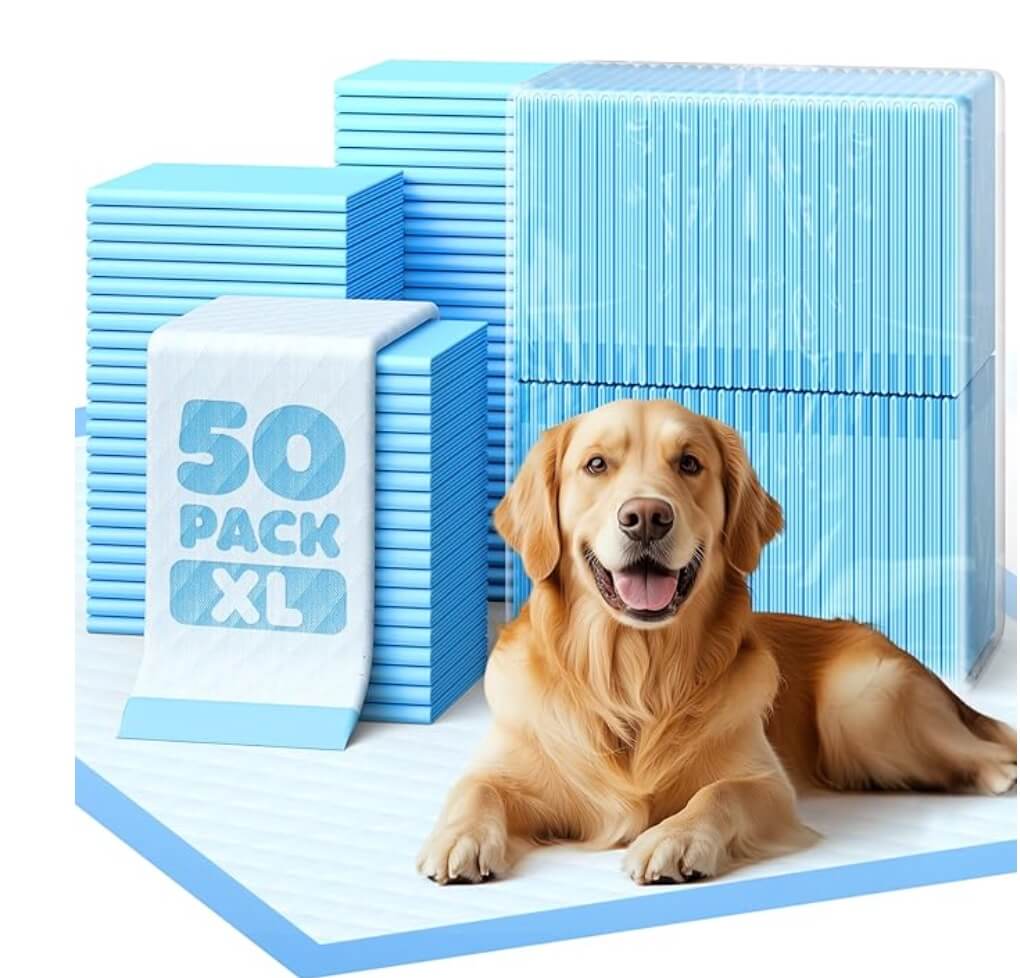
Extra-large pads help contain early potty-training accidents.
Useful for indoor situations when your puppy still needs frequent bathroom breaks.
High absorbency and leak resistance can make cleanup easier while routines are still being built.
- 🐾Encourage your Golden to use that spot again.
Be sure to:
- 🐾Blot up as much as possible.
- 🐾Use a pet-safe enzymatic cleaner on carpets, rugs, and upholstery.
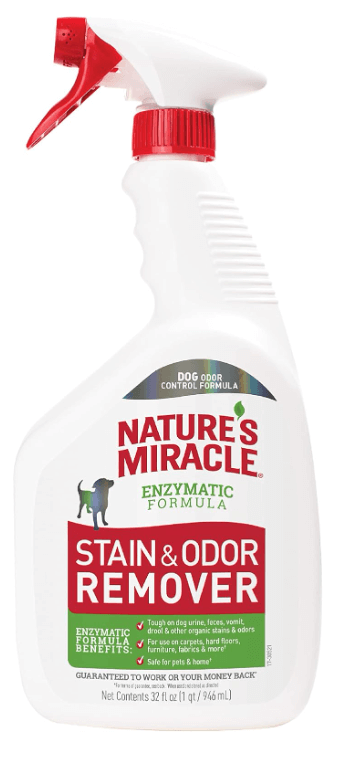
Enzymatic cleanup helps prevent repeat accidents.
Nature’s Miracle is a practical potty-training tool for breaking down urine stains and odor in carpets and soft surfaces.
Reducing lingering scent can make it less likely your puppy returns to the same indoor spot.
How Long Does It Take to Potty Train a Golden Retriever?
One of the most common questions is how long to potty train a Golden Retriever.
Realistic expectations:
- 🐾Early progress:
- 🐾Many owners see noticeable improvement within 2–4 weeks of consistent training.
- 🐾Fewer daytime accidents:
- 🐾Often by 3–4 months of age, especially with good supervision.
- 🐾More reliable control:
- 🐾Many Golden Retriever puppies are largely house trained by 4–6 months.
- 🐾Fully reliable:
- 🐾Some puppies still have occasional accidents up to 8–12 months, especially if routines change or supervision lapses.
Factors that affect timeline:
- 🐾Individual temperament and development.
- 🐾How strictly the schedule is followed.
- 🐾The level of supervision and crate use.
- 🐾Medical factors (urinary tract infections or other issues can delay progress—consult your veterinarian if you’re concerned).
Golden Retrievers are capable of learning quickly, but true house reliability takes:
- 🐾Time.
- 🐾Pattern repetition.
- 🐾A lot of successful trips outside.
Preventing Accidents
Accidents are part of Golden Retriever puppy potty training, but you can dramatically reduce them with proactive strategies.
Frequent Bathroom Breaks
Err on the side of:
- 🐾Too many breaks rather than too few—especially in the early weeks.
If accidents are happening:
- 🐾Increase the frequency of:
- 🐾Scheduled trips outside.
- 🐾Post-meal and post-play bathroom outings.
Consistent Routines
Try to keep:
- 🐾Feeding times.
- 🐾Play sessions.
- 🐾Potty breaks.
- 🐾Bedtime and wake times.
…relatively consistent from day to day. This regularity makes it much easier for your puppy’s:
- 🐾Body and brain to learn the pattern.
Monitoring Food and Water Schedules
For young puppies:
- 🐾Offer meals on a schedule instead of free-feeding all day.
- 🐾Remove water about 2–3 hours before bedtime (unless medically contraindicated and after consulting your vet), while ensuring they are well hydrated earlier in the day.
Predictable intake leads to:
- 🐾More predictable output.
As discussed in the Golden Retriever Behavior Problems Guide, structure and routine not only help with house training but also reduce other unwanted behaviors stemming from confusion or lack of consistency.
Managing Excitement and Exercise
Active play can trigger the need to go:
- 🐾Many puppies need a quick potty break:
- 🐾Before high-energy play.
- 🐾Immediately after vigorous activity.
Our Golden Retriever Exercise Needs Guide explains how much physical activity the breed requires. Pairing exercise sessions with planned bathroom breaks helps your puppy succeed.
Frequently Asked Questions
How long does it take to potty train a Golden Retriever puppy?
Most Golden Retriever puppies show significant improvement within a few weeks of consistent training and may be largely house trained by 4–6 months of age. However, full reliability—especially overnight and during schedule changes—can take up to 8–12 months for some dogs. Progress is rarely perfectly linear; expect occasional setbacks and focus on overall trends rather than a strict deadline.
Why does my Golden Retriever keep having accidents?
Persistent accidents usually point to:
- 🐾Inconsistent routines (irregular potty breaks).
- 🐾Insufficient supervision (too much freedom too soon).
- 🐾Not recognizing or responding quickly to early signs your puppy needs to go.
- 🐾Rarely, an underlying medical issue such as a urinary tract infection.
Review your schedule, supervision, and cleaning routine first. If accidents continue despite careful management, consult your veterinarian.
Should I punish my puppy for accidents?
No. Punishing a Golden Retriever puppy for accidents:
- 🐾Does not teach them where to go.
- 🐾Can make them:
- 🐾Afraid to eliminate in front of you.
- 🐾More anxious and sneaky about toileting.
Instead, quietly clean up accidents and focus on:
- 🐾Preventing future accidents through supervision and schedule.
- 🐾Generously rewarding successful outdoor bathroom trips so your puppy knows what you want.
Can older Golden Retrievers still be potty trained?
Yes. Dogs of any age can learn new bathroom habits with consistent training. Adult or rescue Goldens may come with:
- 🐾Previous habits (good or bad).
- 🐾Confusion about new house rules.
Use the same core principles:
- 🐾Frequent, scheduled bathroom breaks.
- 🐾Clear access to a consistent outdoor potty area.
- 🐾Rewards for going in the right place.
- 🐾Close supervision indoors to prevent rehearsing old habits.
Older dogs typically have better bladder control than young puppies, which can make retraining easier once expectations are clear.
Conclusion
Golden Retriever potty training is one of the first major projects you’ll tackle with your puppy—and one of the most important. While Golden Retrievers are naturally intelligent and eager to please, they still need clear routines, active supervision, and consistent positive reinforcement to learn where and when to go to the bathroom. By using a realistic potty training schedule, rewarding outdoor successes, supervising carefully indoors, and avoiding punishment, most Golden Retriever puppies become reliably house trained within a few months. With patience and structure, you’ll set the foundation for a clean home, a confident puppy, and good lifelong bathroom habits.
P.S. Get the free Golden Retriever Owner Cheat Sheet — daily feeding, sleep, and care in one printable guide.
Get the Cheat Sheet when you join the newsletter — instant access in your welcome email.