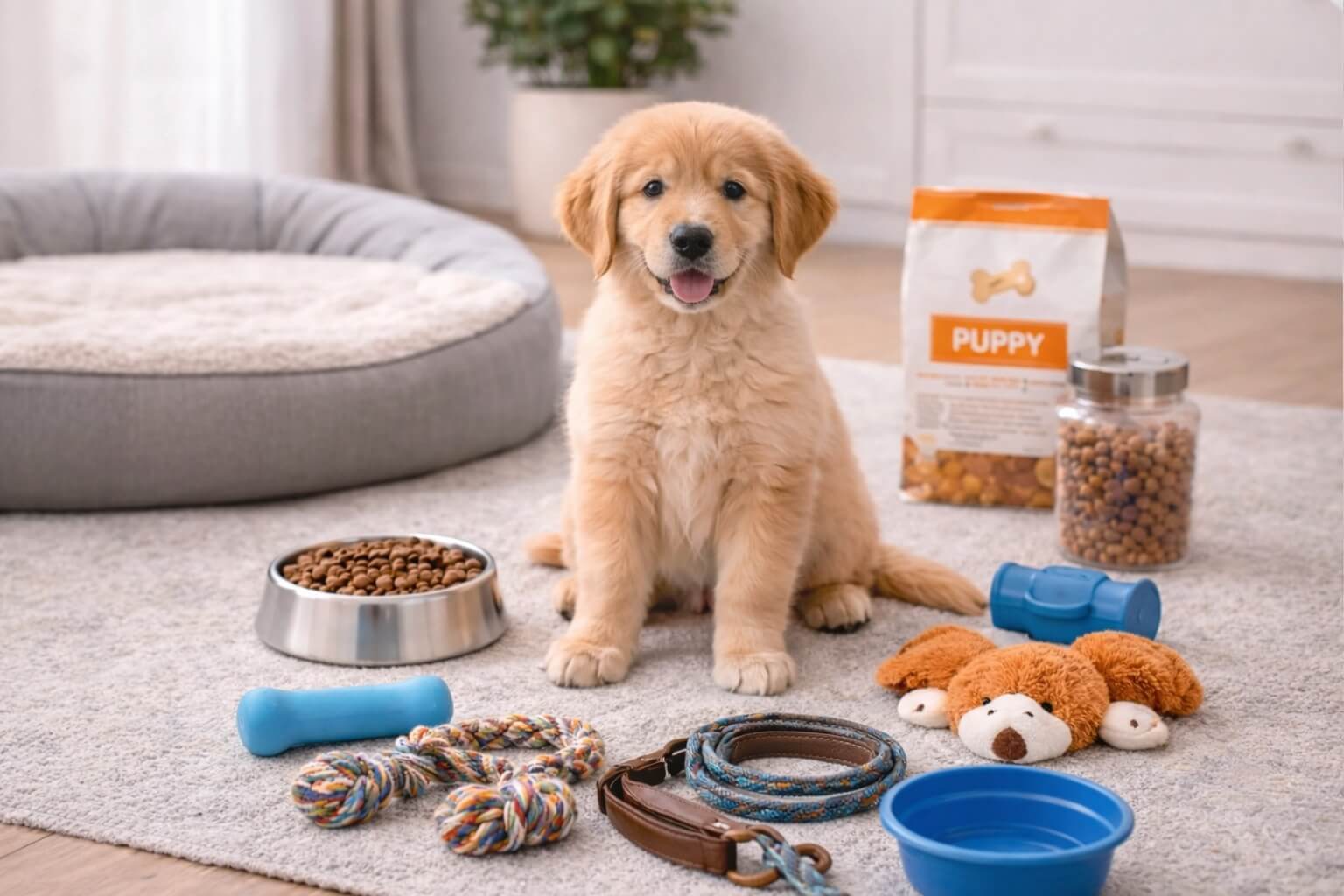
Golden Retriever Puppy Checklist Guide (Everything You Need Before Bringing Your Puppy Home)
GoldenRetriever.hair
By GoldenRetriever.hair
Bringing home a Golden Retriever puppy is exciting—but it’s also a real logistics project. Puppies don’t just need food and a bed; they need a safe environment, structure, and the right tools to set good habits from day one. The more you prepare before your puppy walks through the door, the smoother those first days will be for both of you.
Golden Retrievers are active, intelligent, and people-focused. They thrive when you provide:
- 🐾The right supplies (not every product on the shelf—just what actually matters).
- 🐾A puppy-proofed home.
- 🐾A basic routine for sleep, feeding, play, and training.
This guide is your complete Golden Retriever puppy checklist—an evidence-based, practical list of what you really need and how to use it when bringing home a Golden Retriever puppy.
Before pickup day, it can also help to review two standout dog books for owners so the first weeks feel less reactive and more intentional.
Pickup-to-Home Action Checklist
Before Pickup
- ☐ Book the first veterinary visit and ask the clinic when they want to see the puppy.
- ☐ Confirm the exact food, portion, meal times, and any medications or supplements currently given.
- ☐ Set up measured sleep, toilet, feeding, and supervised play areas before the puppy arrives.
- ☐ Puppy-proof cords, medications, cleaners, trash, plants, small objects, stairs, doors, and gates at puppy height.
- ☐ Prepare a secure transport plan and verify that the restraint or crate fits both the puppy and the vehicle.
- ☐ Put an ID plan, emergency clinic number, breeder or rescue contact, and insurance decision in one easy-to-find place.
At Pickup
- ☐ Collect vaccination, deworming, veterinary, microchip, registration, contract, and feeding records; clarify anything incomplete before leaving.
- ☐ Take enough of the familiar food for a gradual transition and ask about the puppy's recent sleep, stool, appetite, and toilet routine.
Once Home
- ☐ Keep arrival quiet, go directly to the planned toilet spot, supervise closely, and use the familiar food and routine at first.
- ☐ Confirm the veterinary visit and transfer or register the microchip and ID details in your name.
Essential Supplies for a Golden Retriever Puppy
Your Golden Retriever puppy essentials fall into a few main categories: feeding, sleeping, safety, grooming, training, and enrichment. For a tighter first-30-days focus, see our Golden Retriever puppy essentials guide. You don’t need to buy out the pet store, but a few well-chosen items will make your puppy’s first week much easier.
Food and Water Bowls
A good setup for food and water does more than hold kibble.
Consider:
- 🐾
Material
- 🐾Stainless steel is usually best:
- 🐾Durable.
- 🐾Easy to clean.
- 🐾Doesn’t retain odors.
- 🐾Avoid cheap plastic bowls:
- 🐾Can scratch and harbor bacteria.
- 🐾Some puppies develop skin irritation on their chins from certain plastics.
- 🐾Stainless steel is usually best:
- 🐾
Size
- 🐾Choose bowls that:
- 🐾Are large enough for a growing Golden.
- 🐾Aren’t so deep that tiny puppies struggle to reach.
- 🐾You can start with medium bowls and move up as your puppy grows.
- 🐾Choose bowls that:
- 🐾
Water access
- 🐾Provide fresh water and regular opportunities to drink. Do not routinely restrict a puppy's water to manage house training; ask your veterinarian if a medical or overnight plan requires a change.
Place bowls:
- 🐾On a washable mat in a consistent location.
- 🐾Away from high-traffic areas to minimize spills and jostling.
For detailed guidance on how much and how often to feed, see our Golden Retriever feeding chart and nutrition guides (e.g., Best Dog Food for Golden Retrievers and feeding chart resources).
High-Quality Puppy Food
One of the most important Golden Retriever puppy supplies is food that is nutritionally adequate for the puppy's growth.
Key points:
- 🐾
Check the current nutritional adequacy statement for growth, including growth of large-size dogs (70 lb or more as an adult) when that category applies to your puppy.
- 🐾
Compare:
- 🐾The nutritional adequacy statement and calorie density.
- 🐾Manufacturer nutrition expertise, quality-control practices, and feeding information.
- 🐾Your veterinarian's guidance for the individual puppy rather than assuming every Golden will have the same adult size or calorie needs.
Feeding Schedule and Portions
Before your puppy arrives, plan a basic feeding schedule:
- 🐾Most Golden Retriever puppies thrive on:
- 🐾3 meals per day (morning, midday, early evening).
- 🐾Keep mealtimes consistent to:
- 🐾Support potty training.
- 🐾Help you notice appetite or digestive changes quickly.
Portions depend on:
- 🐾Brand and formula.
- 🐾Age and current weight.
Use:
- 🐾The breeder or rescue’s recommendations.
- 🐾The food label’s guidelines as a starting point.
- 🐾Your vet and a feeding chart to adjust based on body condition.
For deeper detail on portions and growth, see our Golden Retriever feeding chart guide and nutrition-focused content.
Crate for Training and Sleep
A crate is one of the most valuable tools on your Golden Retriever puppy checklist.
Benefits:
- 🐾House training – Puppies are less likely to soil where they sleep, which helps build bladder control.
- 🐾Safe sleeping – Prevents chewing hazards and accidents when you can’t supervise.
- 🐾Calm space – Provides a den-like area where your puppy can rest undisturbed.
Crate size:
- 🐾For a Golden Retriever, look for:
- 🐾A crate that will ultimately fit an adult (~36–42 inches, depending on brand and lines).
- 🐾A crate with a divider panel so you can make the space smaller at first.
Fit guidelines:
- 🐾Puppy should be able to:
- 🐾Stand up.
- 🐾Turn around.
- 🐾Lie down comfortably.
- 🐾It should not be so large that one end can be used as a potty area.
For how to introduce the crate and handle the first night, see our Golden Retriever First Week Home Guide.
Disclosure: This page contains affiliate links. As an Amazon Associate, GoldenRetriever.hair earns from qualifying purchases at no extra cost to you.
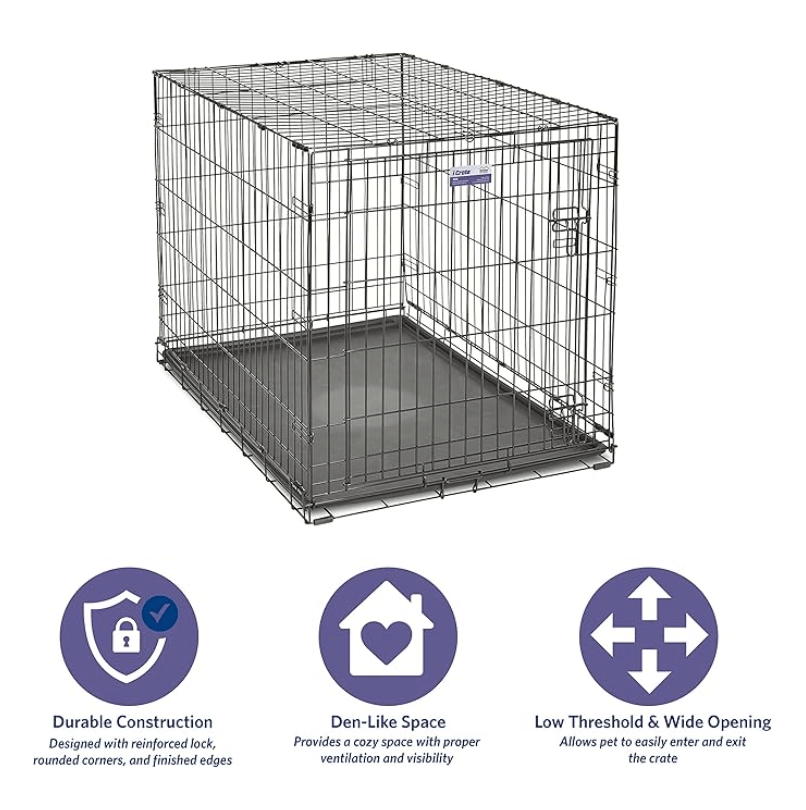
MidWest Homes for Pets iCrate Folding Dog Crate
An adult-size wire crate (36–42 inches, depending on your home and travel needs) with a divider panel so the usable space can grow with your Golden Retriever puppy.
Use the divider so the crate is only large enough to stand, turn, and lie down—then expand it as your puppy grows. Follow the current product label for sizing.
Puppy Bed
Your puppy also needs a comfortable place to rest:
- 🐾
In the crate:
- 🐾Use a crate mat or thin, washable bed.
- 🐾Avoid expensive plush beds early on—many puppies chew or have accidents on them.
- 🐾
Outside the crate:
- 🐾A separate dog bed in the living area gives your puppy a “home base.”
Look for:
- 🐾Durable covers with:
- 🐾Removable, washable fabric.
- 🐾Materials that:
- 🐾Are soft but not so thick that small puppies sink and struggle to move.
Teaching a “go to bed” cue early helps with:
- 🐾Settling during family time.
- 🐾Managing excitement when guests arrive.
Collar and Identification Tags
Every Golden puppy should have:
- 🐾
A flat, adjustable collar:
- 🐾Sized so you can fit two fingers snugly between collar and neck.
- 🐾Checked and adjusted weekly as your puppy grows.
- 🐾
ID tags with:
- 🐾Puppy’s name (optional).
- 🐾Your phone number.
- 🐾Any key medical info if relevant.
Even before your puppy knows your yard boundaries or routine, accidents like:
- 🐾An open gate.
- 🐾A startled dash out a door.
…can happen. An ID tag plus microchip (through your vet) are critical safety measures.
Leash and Harness
You’ll need equipment for walks and early leash training:
- 🐾
Leash
- 🐾A 4–6 foot flat leash is ideal for early training.
- 🐾Avoid retractable leashes at first—they encourage pulling and can be unsafe.
- 🐾
Harness vs collar
- 🐾For early leash work, many owners use a front-clip or Y-style harness to:
- 🐾Protect the puppy’s neck.
- 🐾Give more control without harsh corrections.
- 🐾Collars are still used for ID but not necessarily for all leash work.
- 🐾For early leash work, many owners use a front-clip or Y-style harness to:
Whatever you choose, plan to:
- 🐾Introduce leash and harness gradually and positively.
- 🐾Use treats and short sessions to build good leash habits from the start (see our Golden Retriever leash training guide).
Grooming Supplies for Golden Retriever Puppies
Golden Retrievers have a double coat—a dense undercoat and longer outer coat. Even as puppies, it pays to:
- 🐾Introduce grooming early.
- 🐾Make it a positive experience.
Puppy Brush
For the first months, you don’t need a full professional toolkit, but you do need:
- 🐾A soft slicker brush appropriate for puppies.
Why:
- 🐾Helps remove:
- 🐾Loose puppy fur.
- 🐾Small tangles.
- 🐾Gets your puppy used to:
- 🐾Being handled.
- 🐾Having their coat brushed without fuss.
As your puppy matures and adult coat comes in:
- 🐾You’ll likely add:
- 🐾An undercoat rake.
- 🐾A comb for feathering and behind the ears.
For detailed tool recommendations and techniques, see our Best Brushes for Golden Retrievers guide and Golden Retriever grooming guide.
Puppy Shampoo
Even if you don’t plan a full bath in week one, it’s good to have gentle puppy shampoo on hand.
Look for:
- 🐾Formulas labeled for:
- 🐾Puppies or mild, pH-balanced for dogs.
- 🐾Free from:
- 🐾Harsh detergents.
- 🐾Strong fragrances.
- 🐾Human shampoo ingredients (human pH differs from canine skin).
Bathing basics:
- 🐾Bathe for actual messes and according to the puppy's skin, activity, product directions, and veterinary advice rather than a fixed calendar.
- 🐾Frequent bathing with an unsuitable product or incomplete rinsing can irritate skin.
Our best shampoo for Golden Retrievers guide covers ingredient choices and bathing tips.
Nail Clippers or Grinder
Nail care starts early:
- 🐾Short, positive sessions teach your puppy that:
- 🐾Having their paws handled is normal.
- 🐾Nail trims are not scary.
You’ll need:
- 🐾Puppy-appropriate nail clippers or
- 🐾A dog-safe nail grinder (if you prefer grinding to clipping).
Practice:
- 🐾Touching paws.
- 🐾Gently holding each toe.
- 🐾Introducing tools slowly with treats.
Proper technique matters to avoid cutting the quick. See dedicated nail care content (or consult your vet/groomer) if you’re unsure.
Training and Enrichment Supplies
Golden Retrievers are among the most intelligent dog breeds. They need mental exercise as much as physical. The right Golden Retriever puppy supplies will help set up training and enrichment from day one.
Training Treats
You’ll use treats constantly in:
- 🐾House training.
- 🐾Crate training.
- 🐾Basic obedience and manners.
Choose:
- 🐾Small, soft treats you can break into tiny pieces.
- 🐾Higher-value options for:
- 🐾First leash sessions.
- 🐾Difficult distractions.
Guidelines:
- 🐾Use treat size appropriate for the puppy.
- 🐾Count treats as part of daily calorie intake to avoid weight gain.
Chew Toys
Chewing is normal and necessary for puppies:
- 🐾Helps with teething discomfort.
- 🐾Relieves boredom.
- 🐾Can protect your furniture if you provide appropriate outlets.
Have a variety of:
- 🐾Rubber or nylon chew toys suitable for puppies.
- 🐾So-called “teething” toys that can be chilled (check product safety).
Avoid:
- 🐾Very hard items that could damage teeth.
- 🐾Unsupervised use of items that can be shredded and swallowed.
Rotate toys:
- 🐾Keep a few out at a time.
- 🐾Swap them every few days to maintain novelty.
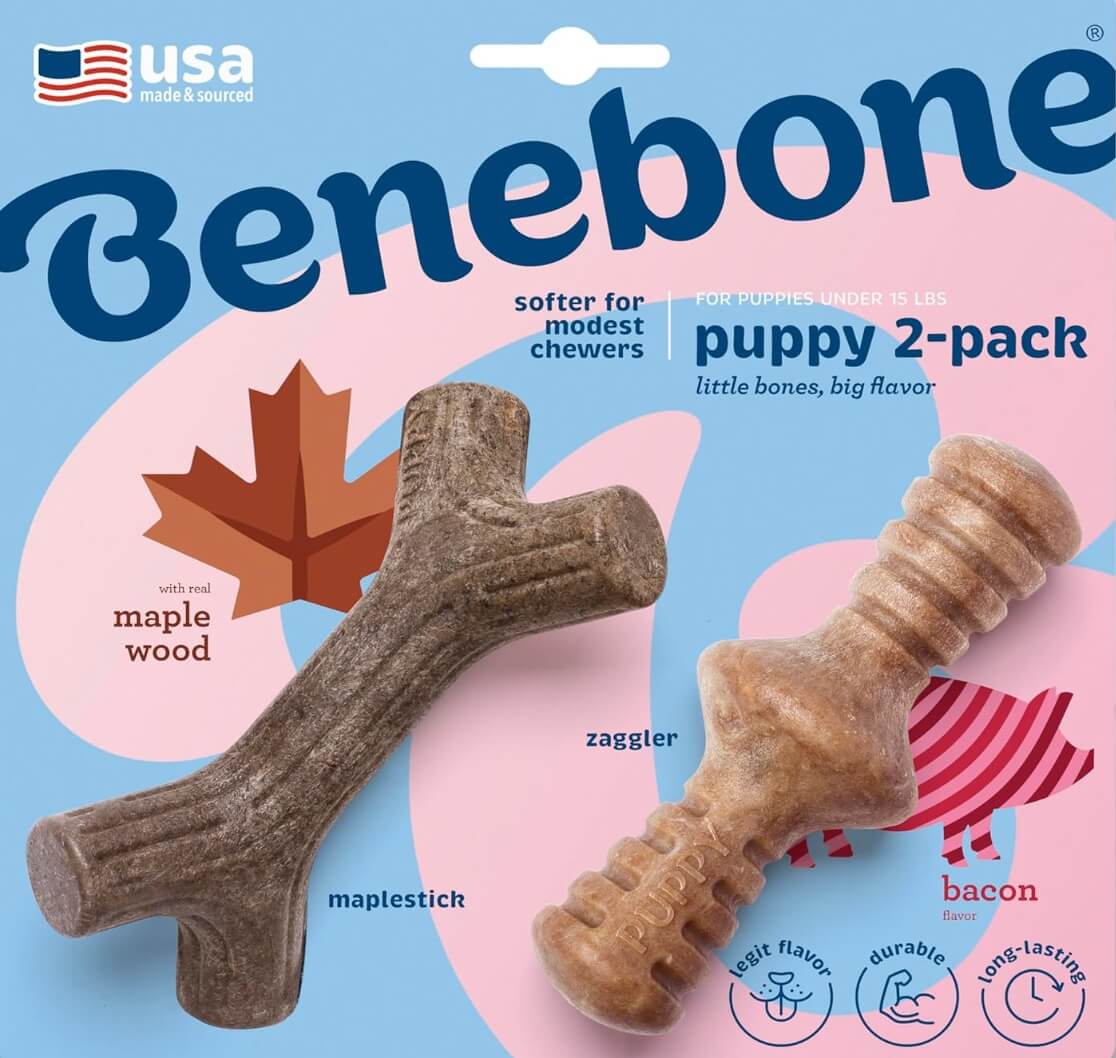
Benebone Puppy 2-Pack (Maplestick + Zaggler)
The pictured package is labeled for puppies under 15 lb and modest chewers. Many Golden puppies will outgrow that label quickly, so check the puppy's current weight and the current product packaging before buying.
Benebone describes the puppy line as only somewhat softer than its adult nylon. Hard chews can crack teeth and swallowed material can cause harm: supervise, inspect the toy and mouth, replace as directed, and stop if it seems too hard or is being ingested.
Puzzle Toys
Puzzle toys provide mental stimulation and slow down eating:
- 🐾Food-dispensing balls.
- 🐾Simple puzzle boards.
- 🐾Stuffable toys (e.g., KONG-type) that can be filled with a portion of meals.
Benefits:
- 🐾Engage a Golden’s problem-solving skills.
- 🐾Help prevent boredom and related behaviors.
Because Golden Retrievers have high working and obedience intelligence, as described in our Golden Retriever intelligence guide, puzzle-based enrichment is especially valuable.
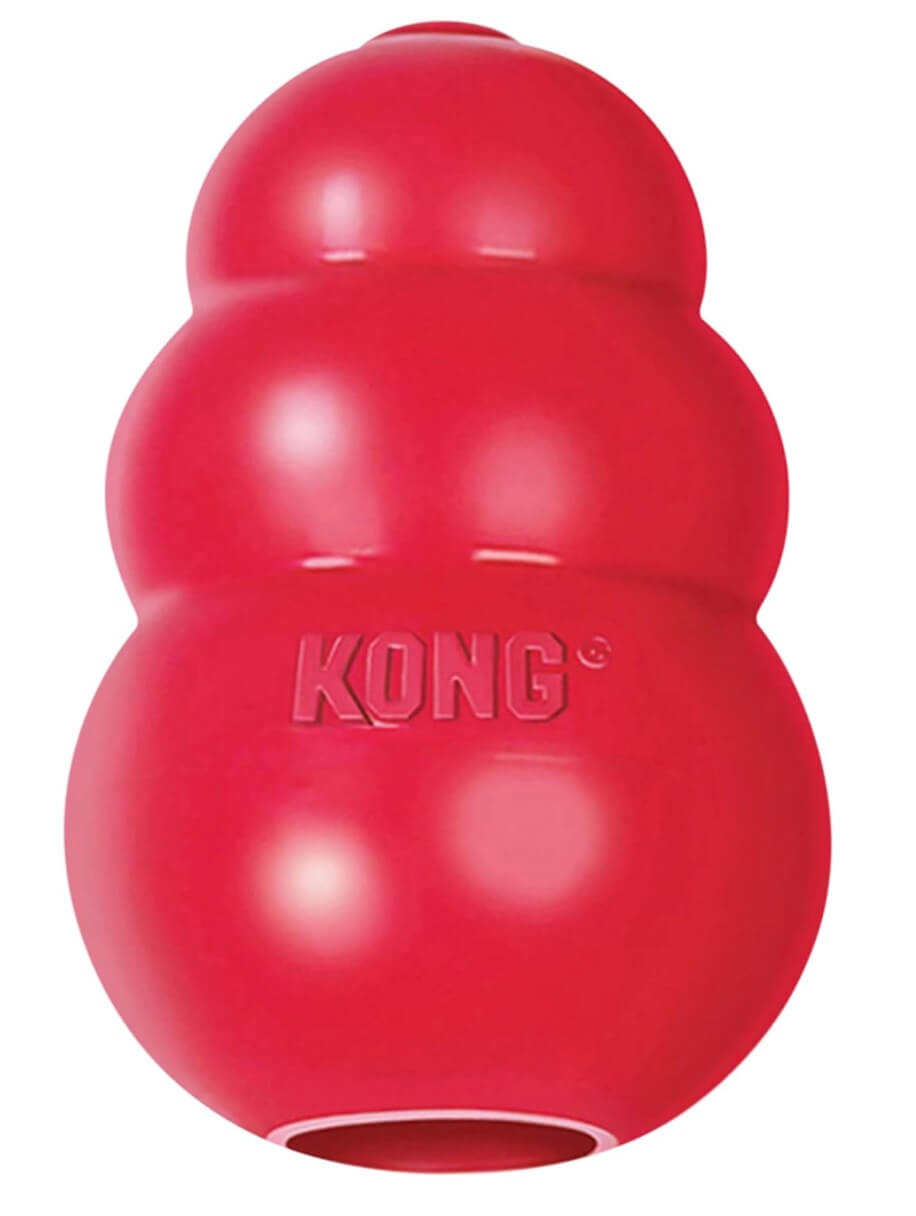
KONG Classic Stuffable Dog Toy
A stuffable rubber toy you can fill with part of your puppy’s normal meal for supervised enrichment and crate introduction.
Choose a size that fits your puppy using the current label, and stay with them while they work on it. This is not a substitute for a sized crate or a complete training plan.
Safety and Puppy-Proofing Supplies
Preparing for a Golden Retriever puppy is as much about limiting access as it is about buying toys.
Baby Gates
Baby gates are extremely helpful for:
- 🐾Restricting access to:
- 🐾Stairs.
- 🐾Kitchens.
- 🐾Formal living rooms.
- 🐾Creating defined “puppy zones” that are easier to supervise.
Consider:
- 🐾Pressure-mounted gates for temporary room boundaries. Do not use pressure-mounted gates at the top of stairs.
- 🐾Hardware-mounted gates for stairs or longer-term boundaries.
Electrical Cord Protection
Puppies may chew:
- 🐾Phone chargers.
- 🐾Laptop cables.
- 🐾Power cords.
Use:
- 🐾Cord covers or conduits.
- 🐾Strategic furniture placement to hide cords.
Prevention here can literally be life-saving, as electrical shocks can be serious.
Removing or Securing Toxic Plants and Hazards
Review your home for:
- 🐾Toxic plants (e.g., lilies, some ivy, sago palm).
- 🐾Rodent poison or insect baits.
- 🐾Loose medications or vitamins.
Secure:
- 🐾Trash cans with lids or inside cabinets.
- 🐾Laundry detergent pods and cleaning chemicals.
Think like a puppy:
- 🐾Anything that smells interesting and is within reach is a risk.
Preparing Your Home for a Golden Retriever Puppy
Once you have your Golden Retriever puppy supplies, focus on layout and environment.
Setting Up a Feeding Area
Choose a spot that:
- 🐾Is easy to clean.
- 🐾Has room for:
- 🐾Food and water bowls.
- 🐾A mat to catch spills.
Keep feeding area:
- 🐾Consistent—same place and times each day.
This helps your puppy:
- 🐾Understand where meals happen.
- 🐾Associate mealtime with that location, not begging at every human plate.
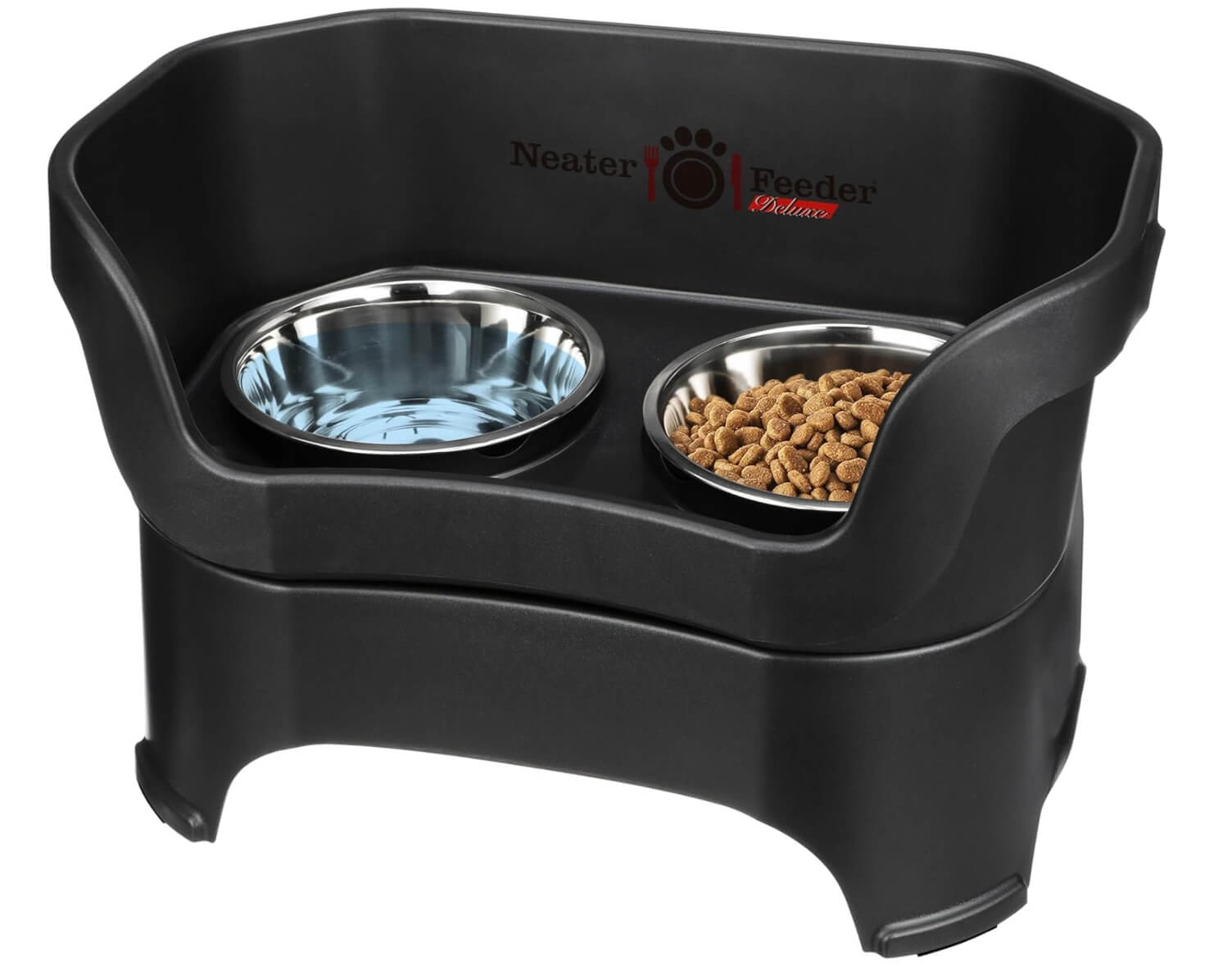
Neater Feeder Deluxe Elevated Dog Bowl (Large Breed)
This raised feeder is an optional spill-containment and easy-cleaning setup; it is not needed for every puppy and should not be purchased as a bloat-prevention device.
Check the current bowl and stand dimensions against the puppy's comfortable reach. The puppy should be able to eat and drink without stretching, climbing, or an awkward neck position, and the setup should stay stable as the puppy grows.
Establishing a Sleeping Area
Plan where your puppy will:
- 🐾Sleep at night.
- 🐾Nap during the day.
Typically:
- 🐾Crate in your bedroom or nearby at night.
- 🐾Crate or puppy pen in the main living area for daytime naps.
Add:
- 🐾A bed or mat.
- 🐾A quiet corner away from constant foot traffic.
Your Golden Retriever First Week Home Guide will be your roadmap for helping the puppy settle into these spaces.
Choosing a Potty Training Location
Decide before the puppy arrives:
- 🐾Which door you’ll use to go outside for potty.
- 🐾Which specific area in the yard (or nearby) is the potty spot.
Use:
- 🐾A consistent route and spot each time.
This speeds up:
- 🐾Potty training.
- 🐾Your puppy’s understanding of where bathroom breaks happen.
Enzymatic Accident Cleaner
Ordinary household cleaner may leave odor traces your puppy can still smell, which can encourage them to use the same indoor spot again. An enzymatic pet cleaner is meant to break down urine and stain residue on carpets and other soft surfaces.
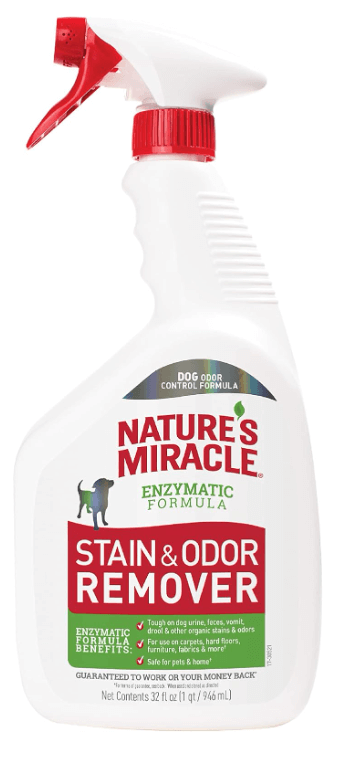
Nature’s Miracle Dog Stain and Odor Remover
An enzymatic cleaner for puppy accidents so leftover scent is less likely to turn one indoor miss into a repeat bathroom spot.
Blot first, then follow the current product directions on the surfaces listed on the label.
Creating a Routine for Your Puppy
Golden Retrievers thrive on structure. Before your puppy arrives, sketch out a basic daily routine.
Elements of a Puppy Routine
Include:
- 🐾
Feeding times
- 🐾Typically 3 times per day for young puppies.
- 🐾
Potty breaks
- 🐾Frequently during the day—after waking, eating, playing, and crate time.
- 🐾
Play and training
- 🐾Short (5–10 minute) sessions throughout the day.
- 🐾
Nap times
- 🐾Protected quiet periods in crate or pen.
- 🐾
Bedtime
- 🐾A consistent evening routine, which helps with:
- 🐾The Golden Retriever puppy first night.
- 🐾Sleep habits in the coming weeks.
- 🐾A consistent evening routine, which helps with:
Your routine doesn’t have to be minute-by-minute, but having a rough schedule makes it much easier for a puppy to learn:
- 🐾When to expect food.
- 🐾When to expect bathroom breaks.
- 🐾When it’s time to play or rest.
Use the first-week schedule chart for a sample daily rhythm, then adapt it to your puppy with the Golden Retriever first week home guide and puppy care guide.
Common Mistakes When Preparing for a Puppy
Even well-intentioned owners can make preparation mistakes. Being aware of them in advance helps you avoid extra stress.
Buying Too Many Toys and Gadgets
It’s easy to:
- 🐾Overbuy toys.
- 🐾Collect multiple overlapping products.
Instead:
- 🐾Start with:
- 🐾A handful of chew toys.
- 🐾A couple of puzzle feeders.
- 🐾One or two comfort toys.
You can always add more once you know:
- 🐾What your puppy actually likes.
- 🐾What holds up to chewing.
Not Puppy-Proofing Thoroughly
Supplies are helpful, but environment is crucial:
- 🐾If you skip puppy-proofing, you risk:
- 🐾Chewed cords.
- 🐾Ingested foreign objects.
- 🐾Unsafe exploration.
Walk through your home at puppy height:
- 🐾What can they reach?
- 🐾What can they chew?
- 🐾What can they get trapped in?
Address those items before your puppy arrives.
Inconsistent or Nonexistent Routines
If you wait to “see how it goes,” you’ll likely:
- 🐾Respond reactively instead of proactively.
- 🐾Confuse your puppy with inconsistent schedules.
Plan your Golden Retriever puppy routine in advance and adjust as needed, rather than improvising everything.
Unrealistic Training Expectations
Puppies are babies. Your first week should focus on:
- 🐾Safety.
- 🐾Building trust.
- 🐾Simple introductions to:
- 🐾Name.
- 🐾Crate.
- 🐾Potty rules.
Expecting:
- 🐾Perfect manners.
- 🐾No accidents.
- 🐾All-day calmness.
…will only create frustration. A more realistic goal is: steady progress and positive associations.
Frequently Asked Questions
What do I need before bringing a Golden Retriever puppy home?
At minimum, your Golden Retriever puppy checklist should include:
- 🐾Food and water bowls.
- 🐾The puppy's familiar food, with a current nutritional adequacy statement appropriate for growth and large-size growth when applicable.
- 🐾Crate and simple bed or crate mat.
- 🐾Collar with ID tag and a flat leash (and harness, if you plan to use one).
- 🐾A few chew toys and puzzle toys.
- 🐾Puppy-safe shampoo and a soft brush.
- 🐾Nail clippers or grinder.
- 🐾Baby gates or other barriers.
- 🐾Enzymatic cleaner for accidents.
Plus:
- 🐾A puppy-proofed home and a basic routine for feeding, potty, play, and sleep.
How much should I spend on puppy supplies?
Budgets vary, but you don’t have to buy premium everything. Focus spending on:
- 🐾Safety and durability (crate, gates, leash, collar).
- 🐾Nutrition (an appropriate, complete and balanced growth diet rather than marketing tier alone).
- 🐾Essential grooming tools.
You can start with:
- 🐾A modest set of toys and accessories.
Then expand once you see:
- 🐾Your puppy’s preferences.
- 🐾What actually gets used.
Do Golden Retriever puppies need special supplies?
Most basic items (bowls, crate, leash) are similar across breeds, but for Golden Retrievers:
- 🐾Choose supplies sized for a medium-to-large, growing dog.
- 🐾Select grooming tools suitable for a double coat.
- 🐾Plan for more substantial exercise and enrichment than very small or very low-energy breeds.
Because Goldens are active and intelligent, investing in:
- 🐾A good crate.
- 🐾Durable chew and puzzle toys.
- 🐾Quality grooming tools.
…pays off quickly.
When should I start training my Golden Retriever puppy?
Training starts the first day you bring your puppy home, but it should be:
- 🐾Gentle.
- 🐾Short.
- 🐾Reward-based.
You can immediately begin:
- 🐾Teaching their name.
- 🐾Rewarding potty outside.
- 🐾Introducing the crate.
- 🐾Marking and rewarding sits and calm behavior.
Formal advanced obedience can come later; your first priorities are:
- 🐾Building trust.
- 🐾Establishing routines.
- 🐾Making sure your puppy learns that following your guidance pays off.
Conclusion
Preparing for a Golden Retriever puppy goes far beyond buying supplies. A thoughtful Golden Retriever puppy checklist helps you have:
- 🐾Essential supplies ready: food, crate, collar, leash, toys, and grooming tools.
- 🐾A puppy-proofed home with safe spaces for sleep, play, and exploration.
- 🐾A basic daily routine for feeding, potty training, and rest.
When you do this groundwork before bringing your puppy home, your first week together can be less about scrambling to react and more about:
- 🐾Helping your puppy feel safe and welcomed.
- 🐾Starting good habits and training early.
- 🐾Building a foundation for health, confidence, and practical household skills.
From here, you can dive deeper into specific topics with our guides on first week home, puppy care, training, exercise needs, and grooming.
P.S. Get the free Golden Retriever Owner Cheat Sheet — daily feeding, sleep, and care in one printable guide.
Get the Cheat Sheet when you join the newsletter — instant access in your welcome email.