
Golden Retriever Puppy Not Sleeping Through the Night: Causes & What to Do
GoldenRetriever.hair
By GoldenRetriever.hair
Your Golden Retriever puppy cries at midnight, wakes again at 3 a.m., or will not settle at bedtime—and you are exhausted. Golden Retriever puppy not sleeping through the night is one of the most common early challenges new owners face.
Some puppies begin longer overnight stretches around 12 weeks, and many become more consistent between about 12 and 16 weeks—but those are general ranges, not a promise for every Golden. Younger puppies often wake because their bladders are small, the house is new, the crate is unfamiliar, or the day ran too long and noisy. Age, routine, health, and how you respond at night all shape how quickly nights get easier.
This guide covers why your puppy keeps waking, when longer sleep stretches often appear, and what to do tonight—not just how many total hours puppies sleep each day. For total sleep and nap ranges by age, see our Golden Retriever puppy sleep chart.
Quick Answer: When Will a Golden Retriever Puppy Sleep Through the Night?
Most young Golden Retriever puppies do not sleep through an adult-length night right away. Timing varies, but a realistic picture looks like this:
- 🐾Some puppies begin sleeping through a longer nighttime stretch around 12 weeks.
- 🐾Many become more consistent between about 12 and 16 weeks.
- 🐾Some need longer, especially before they can comfortably hold urine for a six-to-eight-hour stretch.
- 🐾These are general ranges, not deadlines every Golden Retriever puppy will meet.
“Sleeping through the night” for a young puppy usually means an age-appropriate continuous stretch—often about six to eight hours—not necessarily sleeping from early evening until late morning like an adult dog.
Common reasons a puppy keeps waking at night include:
- 🐾They need a nighttime potty break (especially under about 3–4 months).
- 🐾They feel unsettled in a new home or new crate.
- 🐾They are overtired or overstimulated from a busy evening.
- 🐾Nighttime responses teach them that crying brings play or attention.
- 🐾The daily schedule is inconsistent—naps, meals, and bedtime keep shifting.
The fix is usually a predictable puppy bedtime routine, age-appropriate potty trips that stay boring, calm responses, and gradual independence—not keeping the puppy awake all day to “wear them out.”
What “Sleeping Through the Night” Means for a Puppy
Owners often expect a full human night (10–12 hours) as soon as a puppy comes home. For most young Goldens, that is not realistic yet.
Think in terms of longer uninterrupted sleep, not a calendar guarantee:
- 🐾A successful stretch might be six to eight hours of quiet rest for a puppy that is ready for it.
- 🐾Progress often shows first as a longer first stretch, then fewer middle-of-the-night trips.
- 🐾Daytime sleep totals are separate—puppies still need many naps even after nights improve. Puppy sleep needs across a full day often fall roughly in the 12–20 hour range depending on age and activity, and young puppies commonly sleep around 16–18 hours across naps and nighttime rest (see Sources).
If you want hour-by-hour sleep totals rather than overnight troubleshooting, use the puppy sleep chart.
Is It Normal for a Golden Retriever Puppy Not to Sleep Through the Night?
Yes—especially in the first weeks home and for very young puppies. Progress is rarely perfectly linear. A puppy may sleep four hours one night, wake twice the next, then stretch longer again as bladder control and confidence grow.
What “normal” looks like depends on:
- 🐾Puppy age — younger puppies simply cannot hold their bladder as long.
- 🐾Time since arriving home — the first nights are often the hardest.
- 🐾Bladder control and health — diarrhea, extra drinking, or urinary issues increase wake-ups.
- 🐾Previous sleeping arrangement — littermates and breeder routines set early expectations.
- 🐾Crate familiarity — a crate the puppy already accepts settles faster than a brand-new den.
- 🐾Daytime nap quality — skipped naps often show up as nighttime fretting.
- 🐾Household routine — late guests, TV, and exciting play delay bedtime settling.
- 🐾Individual temperament — some Goldens are quieter settlers; others are more vocal.
If your puppy was previously quiet overnight and suddenly starts waking repeatedly, jump ahead to When to Contact Your Veterinarian—especially if you also see straining, vomiting, diarrhea, or lethargy.
Common Reasons a Golden Retriever Puppy Keeps Waking Up at Night
1. The Puppy Is Too Young to Hold Their Bladder All Night
Very young Golden Retrievers often need at least one overnight potty break. Asking an eight- or ten-week-old puppy for an uninterrupted adult-length night sets everyone up to fail.
What to do: Plan boring, scheduled or cue-based potty trips. Pair night timing with your puppy potty schedule by age.
2. The Puppy Needs a More Predictable Final Potty Break
If the last outing was incomplete, rushed, or too early, your puppy may wake soon after lights-out.
What to do: Make the last trip outdoors quiet, slow, and complete—wait for urine and stool when possible—then go straight to bed.
3. The Puppy Is Overtired
An overtired Golden Retriever puppy often looks hyper: bitey, zoomy, vocal, and unable to settle. Keeping them up “one more hour” usually makes night harder.
What to do: Protect daytime naps. Short awake windows work better than long, chaotic evenings. See how much sleep a Golden Retriever puppy needs, why tired puppies bite more, and overtired puppy biting patterns by age. For adult and senior sleep norms (beyond puppy charts), continue with our Golden Retriever sleeping guide.
4. The Puppy Is Overstimulated Before Bed
Rough play, visitors, squeaky toys, and bright screens keep arousal high right when you want calm.
What to do: Wind down 60–90 minutes before bed with calm chewing, gentle handling, or quiet training—not tug or fetch marathons.
5. The Puppy Has Not Adjusted to the Crate
New crates can feel lonely, cold, or confusing—especially if daytime crate time has been scarce or scary.
What to do: Use the crate for short, positive daytime rests before relying on it overnight. Our Golden Retriever first week home guide covers early nighttime crate training and bedroom placement.
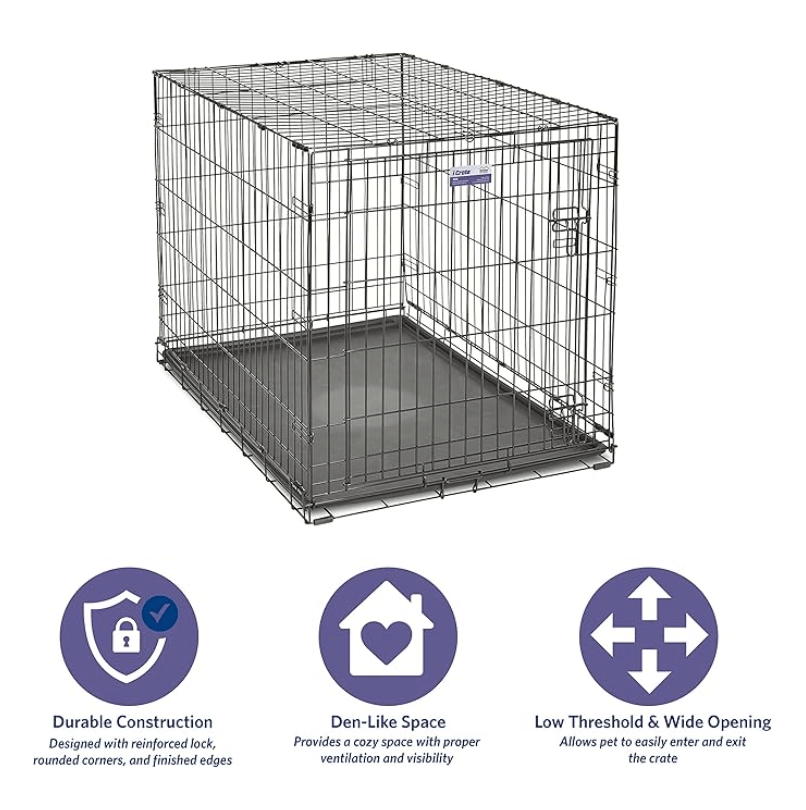
Best for: structured overnight sleep and potty-friendly crate size
MidWest Homes for Pets iCrate Folding Dog Crate
Larger size (42 x 28 x 30) – Best for home use, more room to stretch (especially for males). Smaller size (36 x 23 x 25) – Great for travel, fits most SUVs/vans.
A familiar, correctly sized crate gives many Golden Retriever puppies a predictable place to settle—use a divider early so the puppy does not treat one end as a bathroom.
6. The Sleeping Area Is Too Hot, Cold, Noisy, Bright, or Isolated
Drafts, street noise, TV light, or a crate suddenly moved to a distant room can trigger puppy waking up at night.
What to do: Keep the sleep spot comfortable, dark, and boring. For the first weeks, many puppies settle better with the crate in the bedroom, then gradually move farther later if you prefer.
7. The Puppy Is Hungry Because of Poor Meal Timing
A last meal too early—or a huge dinner right before bed—can leave a puppy restless, gassy, or asking for a middle-of-the-night bathroom trip.
What to do: Keep evening meals predictable. Avoid free-feeding late into the night. Match meals to your normal puppy feeding rhythm rather than adding random late snacks.
8. Teething or Physical Discomfort
Gum pressure, an awkward mat, a full collar, or itchiness can make settling hard.
What to do: Offer a safe puppy chew during evening wind-down, check bedding, and watch for limping or crying when touched. See our Golden Retriever teething guide if chewing spikes.
9. Too Much Exciting Interaction During Nighttime Wake-Ups
If every cry earns lights, snacks, and lap time, your Golden learns that night is social hour.
What to do: When it is a potty need, keep trips functional and boring. Soft reassurance is fine; play, wrestling, and long conversations are not.
10. Inconsistent Daytime and Nighttime Schedules
Naps at random times, shifting bedtimes, and weekend parties confuse a puppy trying to learn when sleep happens.
What to do: Aim for a repeatable rhythm—even if the exact clock times flex a little for your life.
11. Normal Adjustment After Leaving the Litter
Many puppies wake and cry the first nights after leaving littermates. They are relearning safety without the pile of warm bodies.
What to do: Stay calm and consistent. Improvement often shows within several nights when potty needs are handled and the room feels secure.
12. Illness, Digestive Upset, Urinary Issues, or Pain
Puppy suddenly waking up at night—especially with other symptoms—needs a different response than routine crate protest.
What to do: If you notice straining, frequent tiny urinations, diarrhea, vomiting, lethargy, feverish behavior, or pain signs, contact your veterinarian or urgent care rather than waiting for training to “fix” it.
What to Do Tonight If Your Golden Retriever Puppy Won’t Sleep
Follow this plan for tonight:
- 🐾Keep the evening calm — lower voices, fewer guests, dimmer lights.
- 🐾Stop intense play before bedtime — end fetch and roughhousing well before sleep.
- 🐾Take a final quiet potty trip — leash on, outdoors, wait it out.
- 🐾Place the puppy in the normal sleep area — same crate or pen every night.
- 🐾Keep the room dark and boring — no TV glare aimed at the crate.
- 🐾Respond to likely potty needs calmly — if the interval fits their age or they sound urgent, take them out.
- 🐾Carry or walk the puppy directly outside — do not roam the house “looking for the spot.”
- 🐾Avoid play, food, bright lights, or prolonged attention — silent praise for potty is enough.
- 🐾Return the puppy to bed immediately after potty — lights out again.
- 🐾Record wake-up times for several nights — patterns tell you whether you are dealing with bladder timing, habit, or a sudden change.
Nighttime potty trips should feel like a short business errand—not an adventure: calm, brief, on leash, focused on elimination, free from playtime, then a calm return to bed.
Golden Retriever Puppy Bedtime Routine (60–90 Minutes)
A simple puppy nighttime routine might look like this:
- 🐾Final meal — finish dinner early enough that digestion is underway before bed (exact timing depends on your puppy’s age and your schedule).
- 🐾Water — keep fresh water available through the evening; do not aggressively restrict water, especially in warm weather or after exercise. Some owners shorten free access briefly right before bed on a vet-informed plan, but dehydration is never the goal.
- 🐾Calm play or gentle training — short sits, hand targets, or sniffing—not high arousal games.
- 🐾Chewing or settling activity — a safe chew or a briefly stuffed toy under supervision.
- 🐾Final potty opportunity — last outdoor trip with patience.
- 🐾Quiet time — crate or pen, soft mat, low lighting.
- 🐾Lights-out routine — same cue words (“bedtime”), same place, calm exit.
Consistency beats perfection. Your Golden learns the chain: wind down → potty → sleep.
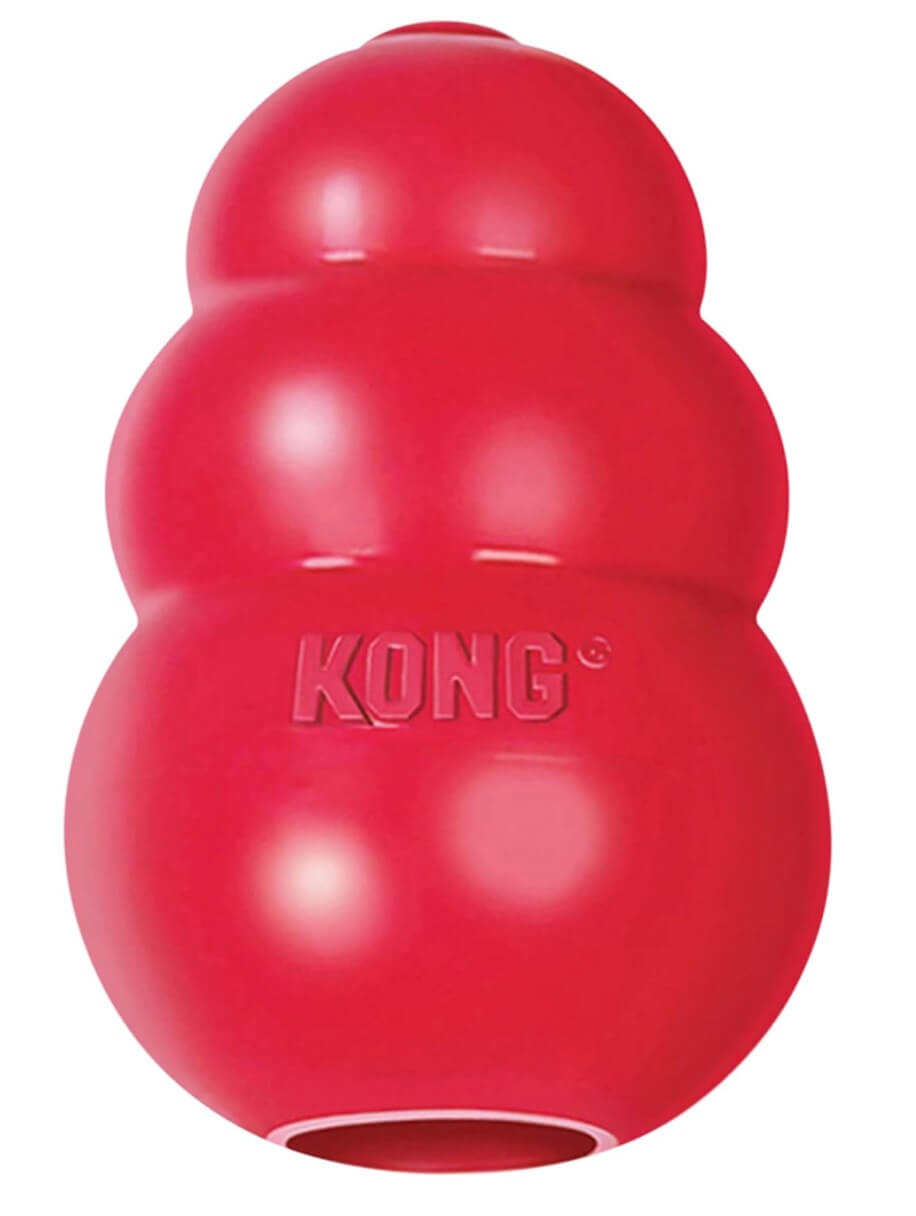
Best for: calm evening settling before crate time
KONG Classic Stuffable Dog Toy
Durable rubber toy that can be stuffed with treats or food to keep Golden Retriever puppies busy during crate time, quiet time, or supervised play.
Use stuffed toys for supervised wind-down earlier in the evening—not as an all-night distraction if your puppy is still learning not to treat night wake-ups as playtime.
Nighttime Expectations by Age
These are broad developmental expectations, not medical rules and not exact bladder capacities. Individual development, recent arrival in the home, routine, health, and temperament all affect timing. Soft stools, increased thirst, heat, or urinary issues can mean more frequent trips. For daytime intervals, use the full Golden Retriever potty training schedule.
| Puppy age | Reasonable nighttime expectation | Common reason for waking | Owner response |
|---|---|---|---|
| 8–10 weeks | Often 1–2 (sometimes more) wake-ups; uninterrupted adult nights are usually unrealistic | Small bladder capacity; new-home adjustment; incomplete final potty | Plan calm breaks; many owners set an alarm rather than waiting for frantic crying |
| 10–12 weeks | Often one planned break plus morning wake-up; first stretch may lengthen | Still needs overnight elimination; busy evenings delay settling | Keep trips boring; confirm the last evening potty was complete |
| 12–16 weeks | Longer stretches become more common for many puppies; some still need one night trip | Habit, incomplete wind-down, or still building bladder control | Protect naps; keep bedtime consistent; stretch intervals only as your puppy stays dry |
| 4–6 months | Many puppies sleep longer without a planned night outing—individuals still vary | Early-morning habit, sunrise/noise, or leftover evening excitement | Keep early responses boring; distinguish real potty need from “party energy” |
| Older than 6 months | Many sleep longer stretches with good habits; not guaranteed for every dog | Schedule changes, illness, or learned attention requests | Treat sudden new wetting or frequent urination as a possible medical issue |
How long can a puppy sleep without a potty break? It depends on age, size, last drink, last meal, and health. Do not treat “age in months plus one” formulas as medical guarantees. Use the table as a starting lens, then adjust from what your puppy actually does.
How to Tell Whether the Puppy Needs to Potty or Just Wants Attention
More likely a potty need
- 🐾Wakes after a predictable interval for their age
- 🐾Becomes restless, sniffs, circles, or fidgets after previously resting
- 🐾Cries more urgently or escalates quickly
- 🐾Eliminates promptly when taken outside
- 🐾Settles again after a brief, boring return to bed
If a resting puppy wakes and begins fidgeting or vocalizing, consider whether elimination is needed before assuming it is only attention-seeking.
More likely protest, loneliness, or attention
- 🐾Recently went potty and is dry outside
- 🐾Stops crying the moment you appear
- 🐾Wants to play, jump, or explore
- 🐾Does not eliminate outdoors
- 🐾Repeats the cycle soon after being returned if interaction was exciting
Do not ignore prolonged panic, physical distress, vomiting, diarrhea, breathing difficulty, or pain. Those are not “cry-it-out” moments—they are care moments. For longer daytime absences as your puppy grows, see Golden Retriever alone time by age; if distress is severe or worsening across contexts, also read our separation anxiety guide.
Puppy Crying in the Crate at Night
Not all puppy crate crying at night means the same thing:
| Type | What it often looks like | Better response | | --- | --- | --- | | Mild protest | Short fussing after bedtime | Wait briefly; soft calm voice or stay nearby | | Normal adjustment | First nights in a new home | Consistency, bedroom proximity, daytime crate practice | | Potty-related | Timed to bladder intervals; urgent tone | Boring outdoor trip, then straight back | | Escalating panic | Sustained frantic crying, thrashing, drooling | Check safety/comfort; do not leave a panicked puppy spiraling—reset calmly and seek trainer/vet advice if it persists | | Separation distress | Panic whenever you leave nearby rooms, day and night | Gradual alone-time skills; professional help if severe | | Physical discomfort | Crying when lying down, limping, swollen belly | Veterinary evaluation |
A balanced plan:
- 🐾Practice positive crate association during the day (meals, short rests, chews).
- 🐾Keep overnight placement close at first.
- 🐾Meet real potty needs without turning night into playtime.
- 🐾Avoid harsh “ignore everything forever” advice.
- 🐾Also avoid teaching the puppy that every squeak unlocks a cuddle party.
Helping a puppy adjust to a crate works best when the crate is already a calm place before midnight—see helping a puppy adjust to a crate in the first-week guide. A crate should never be used as punishment.
Overtired Puppies and Nighttime Sleep
When daytime sleep is short or interrupted, an overtired Golden Retriever puppy may become:
- 🐾Bitey and mouthy
- 🐾Hyperactive or zigzaggy
- 🐾Unable to settle
- 🐾More vocal
- 🐾More likely to get the zoomies
- 🐾More reactive to footsteps and noise
Keeping a puppy awake all day so they “sleep hard at night” usually backfires. Goldens need frequent nap cycles—see puppy sleep needs by age. Mouthing that spikes when they are overdue for a nap often tracks with the Golden Retriever puppy biting timeline and our guide to an overtired Golden Retriever puppy.
Sample Daily Schedule That Supports Nighttime Sleep
This is a pattern, not a fixed clock for every household or age:
- 🐾Wake → potty → short calm activity
- 🐾Breakfast → potty → short play/training → nap
- 🐾Potty → play or sniff walk → training snack → nap
- 🐾Lunch (if still on three meals) → potty → quiet chew → nap
- 🐾Afternoon potty → gentle social time → nap
- 🐾Dinner → potty → calm evening wind-down
- 🐾Final potty → crate / lights out
- 🐾Night: boring potty trips only as needed
The goal is a rhythm of activity → settle → sleep so bedtime is not the first quiet stretch of the day. For training focus by age, see the Golden Retriever puppy training schedule.
How Long Until a Golden Retriever Puppy Sleeps Through the Night?
Many puppies improve gradually—not on a guaranteed birthday. Progress often looks like:
- 🐾Fewer wake-ups
- 🐾A longer first sleep stretch
- 🐾Less crying after potty
- 🐾Easier return to sleep
- 🐾A later morning wake-up
When do Golden Retriever puppies sleep through the night? Some begin longer overnight stretches around 12 weeks, and many become more consistent between about 12 and 16 weeks. Others take longer to hold urine for a six-to-eight-hour stretch. Many puppies can sleep without a nighttime potty break by approximately four months, though individuals differ. Health issues, busy evenings, and new environments can reverse progress temporarily. Focus on the trend across a week, not one rough night.
A consistent bedtime and daily rhythm help (see the first week home schedule chart for an early pattern). When a puppy cannot yet make it through the night, plan a quiet, uneventful potty break—then return straight to bed.
Common Mistakes That Make Nighttime Waking Worse
- 🐾Keeping the puppy awake to “wear them out”
- 🐾Turning nighttime potty trips into playtime
- 🐾Changing the routine every night
- 🐾Feeding a large meal immediately before bed
- 🐾Ignoring possible illness when patterns suddenly change
- 🐾Moving the crate far away too soon
- 🐾Responding differently to every cry (sometimes play, sometimes yelling, sometimes ignoring panic)
- 🐾Using punishment for normal puppy wakes
- 🐾Expecting an eight-week-old puppy to behave like an adult dog
- 🐾Allowing long, exciting evening chaos after skipped naps
- 🐾Giving free run of a large room overnight before house training is reliable
Early-Morning Waking (Around 5 a.m.)
Golden Retriever puppy waking up early is not always the same problem as midnight crate crying. Early waking may relate to:
- 🐾A genuine potty need after a long first stretch
- 🐾An early bedtime that shifts the whole night earlier
- 🐾Sunrise, street noise, or household activity starting
- 🐾A predictable breakfast routine the puppy has learned to anticipate
- 🐾Learned expectations for play or attention when someone stirs
Keep early responses boring: quiet potty trip if needed, then back to bed—or a calm start if it is truly morning. Do not force a very young puppy to remain confined beyond its demonstrated ability. If the puppy is dry, recently toileted, and only seeking a party, delay exciting play until after a short settle period.
When to Contact Your Veterinarian
Contact your veterinarian the same day—or seek urgent care if your puppy looks unstable—if you notice nighttime waking plus:
- 🐾Sudden regression after previously remaining dry overnight
- 🐾Frequent urination or straining / discomfort when eliminating
- 🐾Diarrhea or repeated vomiting
- 🐾Excessive thirst or loss of appetite
- 🐾Lethargy, pain, crying when touched, or a swollen abdomen
- 🐾Persistent serious distress, frantic crate panic that does not settle with safety checks, or distress across day and night
- 🐾Lack of progress despite an age-appropriate, consistent routine over a reasonable stretch
- 🐾Persistent panting without heat or exercise, or breathing difficulty
This list does not diagnose a cause. Training cannot fix a urinary problem, digestive upset, or pain. When in doubt, get professional medical advice early.
FAQ: Golden Retriever Puppy Not Sleeping Through the Night
When should a Golden Retriever puppy sleep through the night?
There is no fixed date. Some puppies begin longer stretches around 12 weeks, and many become more consistent between about 12 and 16 weeks; others need more time before a six-to-eight-hour stretch feels comfortable. Measure progress by longer stretches and easier resettling, not a calendar guarantee.
How long can an eight-week-old puppy sleep at night?
Usually not a full adult night. Many 8–10-week-old puppies still need one or more calm overnight potty opportunities. Plan for interrupted sleep at this age rather than forcing confinement past what your puppy can stay dry for.
How often should I take my Golden Retriever puppy out at night?
Follow your puppy’s age, last outing, and cues. Young puppies often need one or more breaks; older puppies may stretch longer. Use your daytime and nighttime potty routine as a daytime baseline, then adjust overnight from what you observe.
Should I ignore my puppy crying at night?
Do not ignore clear potty needs, panic, or signs of pain. Brief mild protest can settle if you stay calm and consistent. Escalating distress needs a comfort/safety check—not harsh neglect and not a reward party. Never punish crying or indoor accidents.
Should I wake my puppy for a nighttime potty break?
For very young puppies, a planned wake-up can prevent accidents and frantic crying. As stretches lengthen, many owners gradually let the puppy sleep until they stir—unless your vet recommends a schedule for health reasons.
Why does my puppy wake around 5 a.m.?
Common reasons include a full bladder, sunrise or household noise, habit from prior early breakfasts, an early bedtime, and leftover evening overstimulation. Keep early responses boring, delay exciting morning play until after potty, and review whether bedtime or naps need adjusting.
When can nighttime potty breaks stop?
When your puppy regularly stays dry through a longer overnight stretch and resettles calmly without urgent elimination needs. Many puppies reach that point around four months, but individuals vary—stop planned wake-ups only after your puppy has shown reliable dry nights, not on age alone.
Should I keep my puppy awake during the day so they sleep at night?
No. That usually creates an overtired puppy who cannot settle. Protect naps so nighttime sleep has a foundation.
Can my Golden Retriever puppy sleep in my bedroom?
Yes—many owners start with the crate in the bedroom for the first weeks because proximity reduces panic and makes quiet potty trips easier. You can gradually shift the crate later if you prefer distance and your puppy remains settled.
Why was my puppy sleeping through the night and suddenly stopped?
Look for illness, diet change, diarrhea, new stressors, skipped naps, guests, schedule shifts, teething discomfort, or a crate location change. Sudden regression with medical red flags deserves a vet check.
How can I help my puppy settle after a nighttime potty trip?
Keep lights low, skip toys and snacks, return straight to the sleep spot, and stay briefly calm if needed—then exit consistently. Exciting “reward” attention teaches the puppy to ask for more wake-ups.
Should I remove water before bedtime?
Do not aggressively restrict water. Fresh water matters for health, especially in heat or after play. Some households manage evening access with a predictable schedule after talking with their veterinarian—never by forcing dehydration.
Related Golden Retriever Puppy Guides
- 🐾Golden Retriever Puppy Sleep Chart
- 🐾Overtired Golden Retriever Puppy
- 🐾Golden Retriever Potty Training Schedule Chart
- 🐾Golden Retriever First Week Home Schedule Chart
- 🐾Golden Retriever First Week Home Guide
- 🐾Golden Retriever Puppy Care Guide
- 🐾Golden Retriever Puppy Biting Timeline Chart
- 🐾Golden Retriever Alone Time by Age
- 🐾Golden Retriever Potty Training Guide
- 🐾Golden Retriever Puppy Training Schedule
Sources
These resources informed the timing ranges, routine guidance, and crate/potty recommendations above. They did not review or endorse this article.
- 🐾PetMD puppy sleep schedule overview (Dr. Rania Gollakner) — full-day sleep ranges and overnight timing variation
- 🐾AKC guidance on puppy schedules and routines — daily sleep totals, consistent bedtime, quiet nighttime potty breaks
- 🐾AKC crate training for puppies — many puppies sleep without a night potty break by about four months; crate is not punishment
- 🐾VCA overview of crate training — waking after rest may signal elimination needs; calm brief trips; do not ignore escalating distress
Conclusion
A Golden Retriever puppy not sleeping through the night is usually a mix of biology and routine—not a forever lifestyle. Some puppies begin longer stretches around 12 weeks and many become more consistent by about 12–16 weeks, but individuals vary. Age-appropriate potty breaks, a calm bedtime chain, honest reading of crate protest versus panic, and protected daytime naps are the tools that make nights quieter. Stick with a boring overnight plan for several consistent evenings, track what works, and get veterinary help when sudden waking arrives with illness signs. Better sleep is a practice you build—night by night—with your Golden.
P.S. Get the free Golden Retriever Owner Cheat Sheet — daily feeding, sleep, and care in one printable guide.
Get the Cheat Sheet when you join the newsletter — instant access in your welcome email.