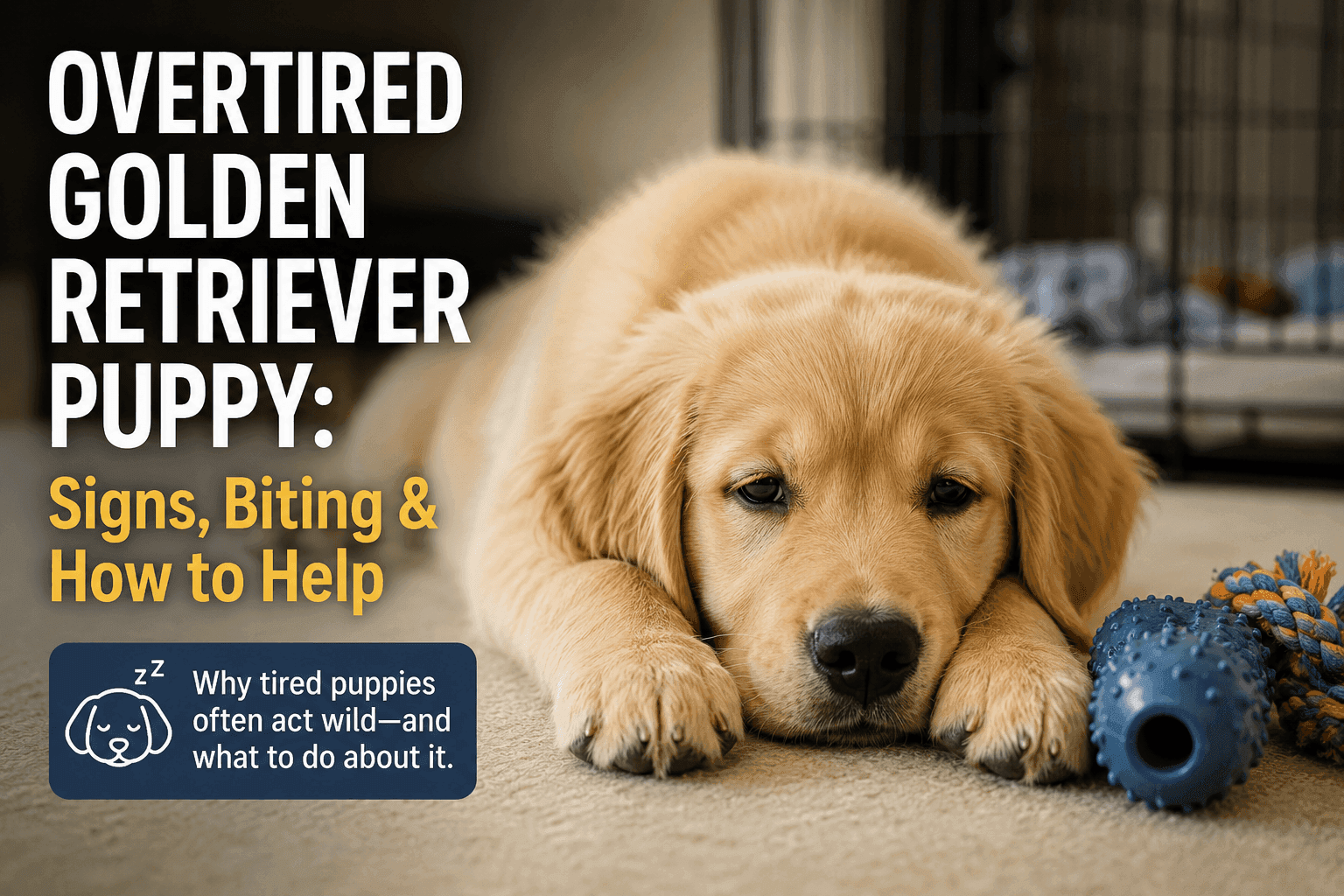
Overtired Golden Retriever Puppy: Signs, Biting & How to Help
GoldenRetriever.hair
By GoldenRetriever.hair
Your Golden Retriever puppy was fine an hour ago—then suddenly they are biting harder, racing the hallway, barking at nothing, and refusing to settle. Many owners assume that means more exercise. Often the opposite is true: an overtired Golden Retriever puppy can look hyperactive rather than sleepy.
Fatigue lowers impulse control. That is why evenings often bring wilder mouthing, zoomies, crate resistance, and tantrum-like behavior—especially after skipped naps or a busy day. This guide focuses on those behavioral clues and what to do right now, not on repeating every sleep-hour chart.
For total sleep ranges by age, see our Golden Retriever puppy sleep chart. For overnight waking, see puppy not sleeping through the night.
Quick Answer: Is My Golden Retriever Puppy Overtired?
An overtired Golden Retriever puppy may become more energetic, not less. Common signs include:
- 🐾Harder or more frequent biting
- 🐾Sudden zoomies
- 🐾Barking or whining
- 🐾Ignoring familiar cues
- 🐾Resisting the crate or pen
- 🐾Pacing or grabbing sleeves and pant legs
- 🐾Being unable to settle even in a quiet room
The usual fix is a calm reset, a quiet potty break, and an age-appropriate nap—not another round of intense play.
What Does an Overtired Golden Retriever Puppy Look Like?
Puppies do not always lie down politely when they need rest. Many lose self-control first. An overtired Golden can look:
- 🐾Under-exercised (“they still have energy”)
- 🐾Stubborn (“they know sit—they just won’t”)
- 🐾Poorly trained (“nothing works tonight”)
- 🐾Bored (“they need another toy”)
- 🐾Aggressive (“that bite felt mean”)
Overtiredness is not the explanation for every behavior problem. It is a common, overlooked factor—especially when the puppy was fine earlier, then melted down after a long awake stretch, exciting guests, or a late nap skip.
True aggression usually involves different patterns (stiff body language, growling with intent to create distance, repeated targeting). Normal puppy biting when tired is messy, frantic, and often followed by a crash once the puppy finally rests.
Signs Your Golden Retriever Puppy Is Overtired
| Sign | What it may look like |
|---|---|
| Harder or more frequent biting | Mouthing that was playful becomes sharper, grabby, or nonstop |
| Sudden zoomies | Frantic laps, sliding into walls, bouncing off furniture |
| Barking or whining | Vocalizing that does not stop with a potty trip or toy |
| Grabbing sleeves, hands, or pant legs | “Shark mode” aimed at moving people |
| Ignoring familiar cues | Sit, come, or leave-it vanish under arousal |
| Difficulty settling | Pacing, flopping, getting up again, circling the bed |
| Crate resistance | Refusing a normally accepted crate or pen |
| Pacing | Restless walking with no clear goal |
| Restlessness after exciting activity | Cannot wind down after visitors, park time, or rough play |
| More reactive to sounds or movement | Startles or lunges at tiny triggers |
| Sudden crash after a meltdown | Goes from wild to asleep within minutes |
| Still cranky after a short nap | Wakes mouthy because the nap was too brief |
If mouthing tracks with age and teething as well as fatigue, compare patterns in our Golden Retriever puppy biting timeline.
Why Overtired Puppies Bite More
Fatigue reduces the brain’s ability to regulate impulses. An overtired puppy is more likely to:
- 🐾Use their mouth to release tension
- 🐾Escalate from gentle mouthing to harder grabs
- 🐾Struggle with frustration when play stops
- 🐾Stay stuck in excitement mode after overstimulation
- 🐾Chew more during teething because gums + tiredness stack together
Overtired puppy biting is usually about poor self-regulation—not a decision to “be bad.” Redirect to a safe chew, end exciting play, and reset sleep. Do not punish a meltdown with more arousal or harsh corrections.
For step-by-step bite redirection (separate from nap strategy), see the full Golden Retriever puppy biting guide and puppy biting by age.
Overtired Puppy Versus Under-Exercised Puppy
Both can cause restless behavior. Adding more exercise to an exhausted puppy often makes things worse.
| Behavior clue | More likely overtired | More likely under-exercised |
|---|---|---|
| Timing | Late afternoon or evening after a long awake stretch | After a quiet day with little sniffing, play, or training |
| Ability to focus | Cannot follow simple cues they know | Still can focus if you start a game or walk |
| Reaction to a calm space | Settles once the room gets quiet and boring | Still seeks activity after rest opportunities |
| Response to more activity | Gets wilder, bitey, or more frantic | Often improves after a walk, training, or play |
| Recent nap history | Skipped or shortened naps | Naps happened, but little daytime enrichment |
| Recent physical activity | Already had plenty of play or visitors | Little movement or mental work today |
| Evening pattern | “Witching hour” melt after a busy day | Restlessness earlier if the whole day was empty |
Age-appropriate activity still matters—see Golden Retriever energy levels by age, Golden Retriever exercise needs, and the companion Golden Retriever exercise chart—but activity without rest is not a complete plan.
Overtired Puppy Versus Overstimulated Puppy
These often overlap, but they are not identical.
An overstimulated puppy may have had:
- 🐾Too many visitors
- 🐾Long, exciting play sessions
- 🐾Busy walks or puppy class
- 🐾Children playing nearby
- 🐾Noisy environments
- 🐾Too much handling
- 🐾Repeated training drills without breaks
Overstimulation keeps arousal high. When that stacks with a missed nap, the puppy tip into overtiredness: still wired, but no longer able to cope. The fix for both is usually the same short-term move—lower stimulation and rest—then prevent the pile-up next time.
The Golden Retriever Puppy “Witching Hour”
Many families notice a late-day stretch when the puppy becomes wild, bitey, and hard to manage. People call this the puppy witching hour. It is a nickname for a common pattern—not a medical diagnosis.
It often shows up because of:
- 🐾Accumulated fatigue from the day
- 🐾Disrupted or skipped naps
- 🐾Household evening activity (cooking, kids, TV, guests)
- 🐾Hunger before dinner
- 🐾Teething discomfort
- 🐾Overstimulation that never fully wound down
- 🐾An inconsistent evening routine
If evenings are the worst window, protect an afternoon nap, keep dinner and potty timing predictable, and start wind-down before the meltdown—not after. For bedtime settling specifically, see helping a puppy settle at bedtime.
What to Do When Your Puppy Is Overtired Right Now
When your Golden is already in shark mode:
- 🐾Stop exciting play — end tug, chase, and roughhousing.
- 🐾Lower household stimulation — quieter voices, fewer people hovering, dimmer lights if possible.
- 🐾Take a calm potty break — leash on, outdoors, businesslike. Use your normal puppy potty schedule by age as a guide.
- 🐾Offer water if needed — especially after play.
- 🐾Move to a quiet, dim environment — crate, pen, or calm room.
- 🐾Provide a safe chew or settling activity — supervised, not a new exciting game.
- 🐾Use the normal nap space — same place they already know.
- 🐾Avoid prolonged talking, play, or correction — calm and boring wins.
- 🐾Give time to decompress — settling can take several minutes.
- 🐾Note how long they had been awake — patterns help you prevent the next meltdown.
The goal is to help the puppy settle—not to punish them for being exhausted.
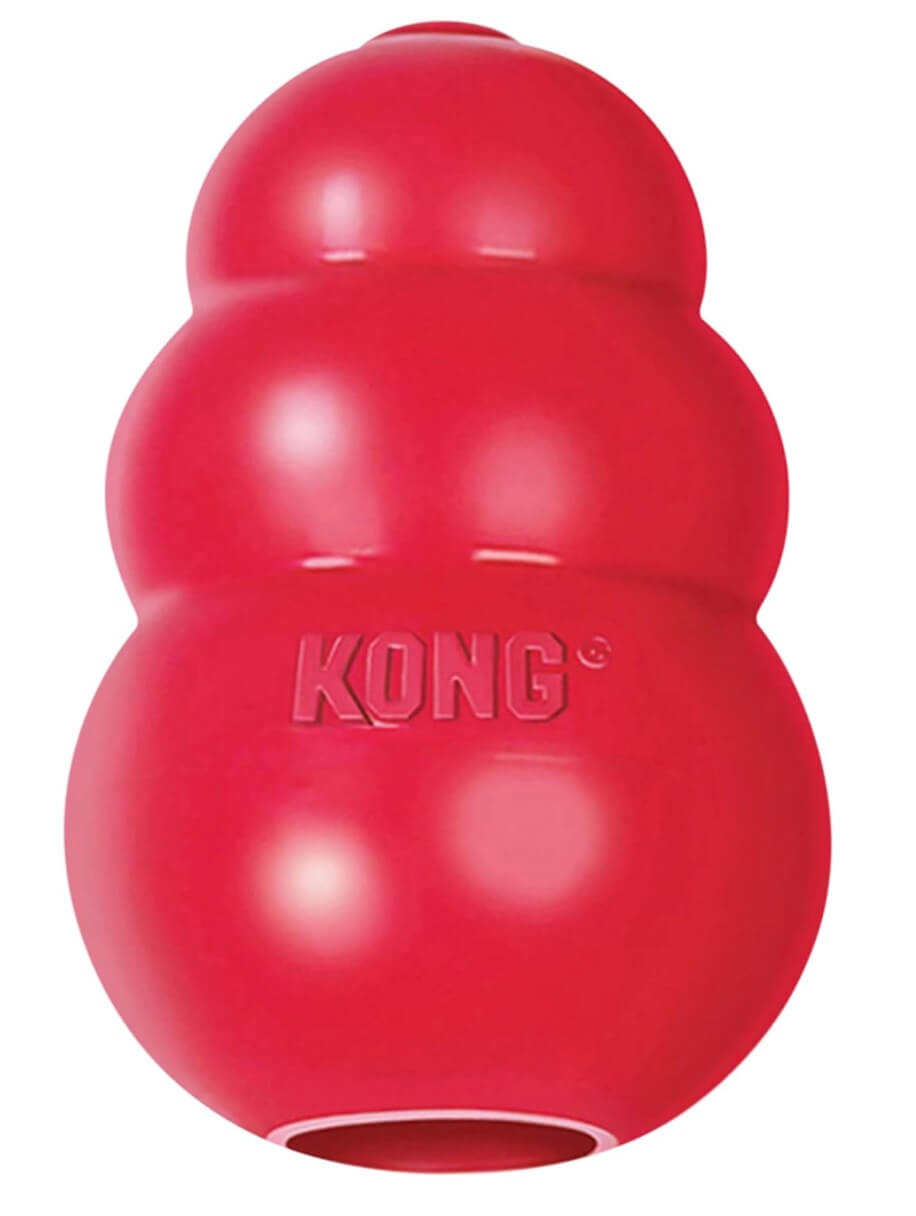
Best for: calm settling after play before a nap
KONG Classic Stuffable Dog Toy
Durable rubber toy that can be stuffed with treats or food to keep Golden Retriever puppies busy during crate time, quiet time, or supervised play.
A lightly stuffed KONG can help some puppies transition from wild arousal into quieter chewing—use it under supervision, then move into the nap routine.
Should You Use Enforced Naps?
Enforced naps simply mean you schedule rest instead of waiting for the puppy to “choose” sleep after they are already out of control.
Why they help:
- 🐾Young Goldens often fight sleep until they crash
- 🐾Predictable rest protects impulse control
- 🐾Shorter awake windows reduce evening meltdowns
How to do them well:
- 🐾Use a crate, pen, or quiet room your puppy already accepts
- 🐾Make the space positive with calm chews, meals, or quiet praise—never as punishment theater
- 🐾Keep lighting and noise low
- 🐾Watch for genuine distress (panic, injury risk, vomiting) versus mild protest
- 🐾Adjust length and timing for age and temperament
Do not use harsh “cry it out no matter what” advice. Mild fussing that settles is different from escalating panic. For crate introduction and first-week settling, see our Golden Retriever first week home guide. For longer alone-time expectations as they grow, see Golden Retriever alone time by age.
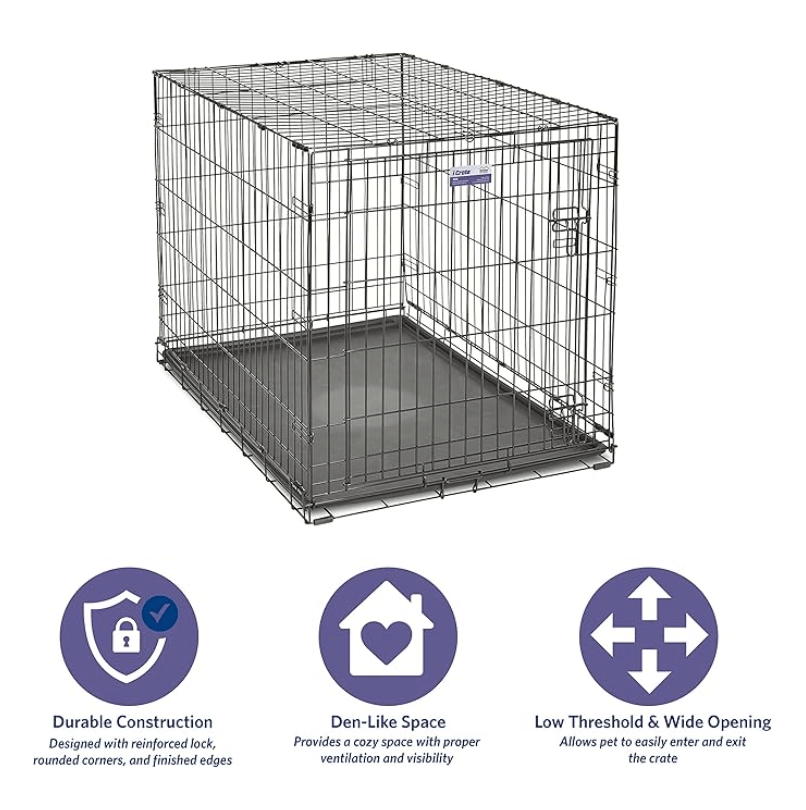
Best for: predictable daytime naps and overnight structure
MidWest Homes for Pets iCrate Folding Dog Crate
Larger size (42 x 28 x 30) – Best for home use, more room to stretch (especially for males). Smaller size (36 x 23 x 25) – Great for travel, fits most SUVs/vans.
A familiar crate with a divider can make enforced naps clearer for many puppies—introduce it positively during the day before relying on it during meltdowns.
Sample Nap Rhythm for a Golden Retriever Puppy
This is a flexible pattern—not a rigid medical rule. Young puppies often do best with frequent rest and relatively short awake windows.
A repeating cycle might look like:
- 🐾Potty
- 🐾Meal (when it is mealtime)
- 🐾Short activity — sniffing, gentle play, or a brief training game
- 🐾Calm chewing or quiet time
- 🐾Potty again
- 🐾Nap in crate, pen, or quiet space
- 🐾Repeat
Exact awake lengths vary by age, health, and individual puppy. Watch early signs (mouthing spikes, pacing, cue blindness) and rest before the full meltdown.
How Much Sleep Does a Golden Retriever Puppy Need?
Golden Retriever puppies need substantially more sleep than adult dogs. Totals vary by age, activity, health, and the individual puppy—often in the mid-teens to around 18–20 hours per day when very young, with gradual change as they mature.
This guide is about behavior when that sleep is missing. For the full age breakdown, use the Golden Retriever puppy sleep chart and how much sleep a Golden Retriever puppy needs by stage.
How to Prevent Overtired Behavior
- 🐾Schedule predictable naps instead of waiting for a crash
- 🐾Keep play sessions shorter and end on success
- 🐾Use calm transitions between activity and rest
- 🐾Avoid nonstop stimulation (guests + park + training + kids’ play with no breaks)
- 🐾Balance exercise with rest—not one or the other
- 🐾Keep meal and potty timing consistent
- 🐾Stop activity at the first early signs, not after the meltdown
- 🐾Create a repeatable evening wind-down
- 🐾Make the sleep area comfortable, familiar, and boring
- 🐾Skip late-night intense exercise when you need the puppy to settle
Common Mistakes That Make Overtired Behavior Worse
- 🐾Assuming every zoomie means the puppy needs more exercise
- 🐾Keeping the puppy awake to “make them sleep later”
- 🐾Waiting until the puppy is completely out of control before resting
- 🐾Turning nap time into punishment
- 🐾Stacking training sessions until the puppy is fried
- 🐾Expecting adult-level self-control from a baby Golden
- 🐾Changing routines every day
- 🐾Letting every household member excite the puppy right before bed
- 🐾Responding to biting with even more energetic play
- 🐾Ignoring possible pain or illness when behavior suddenly changes
When Overtired Behavior May Be Something Else
Not every wild or bitey episode is fatigue. Seek veterinary advice—or professional training support—if you notice:
- 🐾A sudden major behavior change without an obvious schedule cause
- 🐾Persistent pain, limping, or crying when touched
- 🐾Vomiting, diarrhea, or repeated urinary urgency
- 🐾Loss of appetite
- 🐾Lethargy between episodes
- 🐾Inability to settle even after solid rest
- 🐾Disorientation
- 🐾Severe panic
- 🐾Unusual aggression that does not match normal puppy mouthing
Fatigue management helps many Goldens. It does not replace medical care when something else is going on.
FAQ: Overtired Golden Retriever Puppy
How can I tell if my Golden Retriever puppy is overtired?
Look for a cluster of signs: harder biting, zoomies, cue blindness, pacing, crate resistance, and inability to settle—especially after a long awake stretch or skipped naps. If more activity makes the behavior worse and a calm nap helps, fatigue is a strong suspect.
Why does my puppy bite more when tired?
Fatigue reduces impulse control. Tired puppies often mouth harder to release frustration and excitement. Redirect, lower stimulation, and rest—do not treat every hard bite as intentional aggression.
Do overtired puppies get zoomies?
Yes. Golden Retriever puppy zoomies at night or in the evening often show up when the puppy is overdue for sleep, especially after a stimulating day.
Should I exercise an overtired puppy more?
Usually no. If the puppy is already past the point of calm focus, more intense play often increases biting and chaos. Reset first, then plan better activity-and-rest balance later.
How do I calm an overtired puppy?
Stop exciting play, take a calm potty break, lower noise and attention, offer a safe chew if helpful, and move to the normal nap space. Keep your own energy low.
Are enforced naps good for puppies?
For many young Goldens, yes—when the rest space is positive and you are not ignoring panic or medical distress. Enforced naps prevent the “fight sleep until meltdown” cycle.
How long should a Golden Retriever puppy nap?
Nap length varies by age and puppy. Focus on frequent rest across the day rather than one perfect number. Use puppy sleep needs by age for total-sleep context.
Why does my puppy fight sleep?
Puppies can stay stuck in arousal, especially with household noise and play. That is why scheduled rests work better than waiting for them to “decide” they are tired.
What is the puppy witching hour?
It is a common nickname for a late-day period of wild, bitey, unsettled behavior—often tied to accumulated fatigue and evening stimulation—not a veterinary term.
Can an overtired puppy look aggressive?
They can look intense: hard mouthing, grabbing clothes, frantic lunges. That is usually poor self-control, not adult aggression. Still take hard bites seriously by managing the environment and teaching bite inhibition—and get help if behavior seems fearful, targeted, or escalating unusually.
Should I put my overtired puppy in a crate?
If the crate is already a positive rest place, yes—it can support an enforced nap. If the crate is new or scary, use a pen or quiet room first and build positive associations during calmer moments.
Why is my puppy still cranky after a nap?
The nap may have been too short, the room too stimulating, or the puppy may need a potty break, food, or a vet check if crankiness persists with other symptoms.
Related Golden Retriever Puppy Guides
- 🐾Golden Retriever Puppy Sleep Chart
- 🐾Golden Retriever Puppy Not Sleeping Through the Night
- 🐾Golden Retriever Puppy Biting Timeline Chart
- 🐾Golden Retriever Puppy Biting Guide
- 🐾Golden Retriever Potty Training Schedule Chart
- 🐾Golden Retriever First Week Home Guide
- 🐾Golden Retriever Alone Time by Age
- 🐾Golden Retriever Energy Levels by Age
Conclusion
An overtired Golden Retriever puppy often looks wild—not sleepy. Harder biting, evening zoomies, cue blindness, and crate resistance are common when awake windows run too long. The practical response is a calm reset and an age-appropriate nap, then a routine that protects rest before the next meltdown. Match exercise to your Golden’s age, but never use more play as the only answer to exhaustion.
P.S. Get the free Golden Retriever Owner Cheat Sheet — daily feeding, sleep, and care in one printable guide.
Get the Cheat Sheet when you join the newsletter — instant access in your welcome email.