Golden Retriever Teething Guide (Stages, Symptoms & How to Help)
GoldenRetriever.hair
By GoldenRetriever.hair
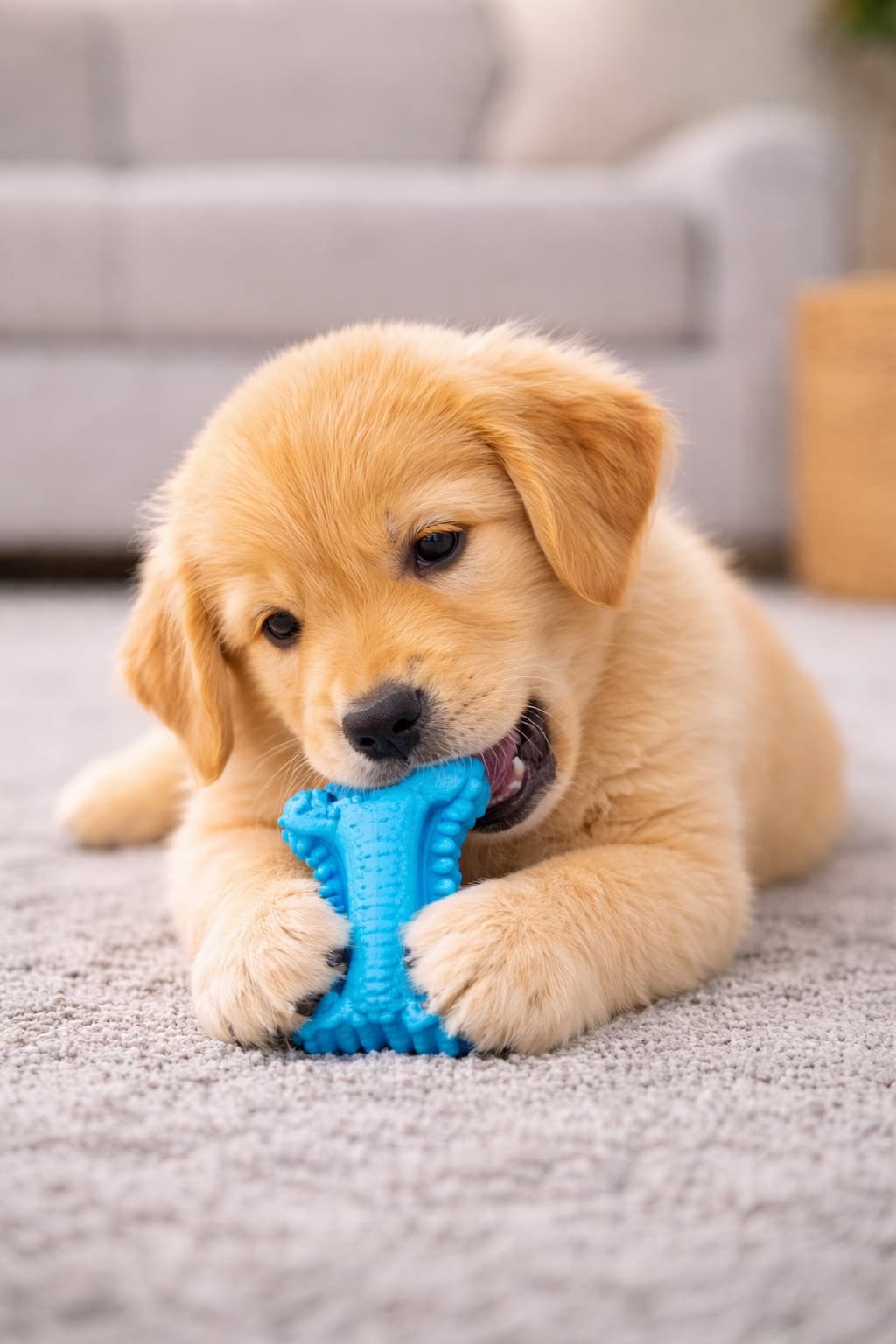
Teething is a normal and important stage of puppy development, but it can feel intense when you’re living with a mouthy, chewy Golden Retriever puppy. Many owners notice a sudden spike in chewing, biting, and gnawing on everything in sight and wonder if something is wrong. In most cases, this is simply Golden Retriever puppy teething at work.
Understanding the teething timeline, what’s normal, and how to manage your puppy’s environment makes this stage much easier. When you know when Golden Retrievers teethe, why they chew so much, and how to give them safe outlets, you can protect your home, your hands, and your puppy’s comfort at the same time.
This guide explains the Golden Retriever teething process, typical teething age ranges, common symptoms, and practical ways to help your puppy through the teething stage.
When Do Golden Retrievers Start Teething?
Like all dogs, Golden Retrievers go through two major dental phases:
- 🐾Puppy (baby) teeth erupt.
- 🐾Those baby teeth fall out and are replaced by adult teeth.
Golden Retriever Teething Timeline
While there is some individual variation, most Golden Retrievers follow a fairly predictable teething age pattern:
| Age | Teething Stage | |----------|------------------------------------------| | 3–4 weeks | Baby (deciduous) teeth begin appearing | | 8 weeks | Full set of puppy teeth present | | 3–4 months | Baby teeth begin loosening and falling out | | 4–6 months | Adult teeth actively emerging | | 6–7 months | Adult teeth fully developed in most dogs |
Key points:
- 🐾By the time your Golden Retriever puppy comes home (around 8 weeks in many cases), they already have a full set of sharp puppy teeth.
- 🐾The intense teething phase typically begins around 3–4 months of age, when baby teeth start to fall out and adult teeth push through the gums.
- 🐾Most Golden Retrievers are finished teething by about 6–7 months, although minor adjustments can continue slightly longer.
During the 3–6 month window, you’ll often see:
- 🐾A noticeable increase in chewing and mouthing.
- 🐾Occasional small baby teeth found on the floor or in toys.
- 🐾Drooling and interest in firm or cool surfaces to chew.
Signs Your Golden Retriever Puppy Is Teething
Not every puppy shows all the same signs, but common Golden Retriever teething symptoms include:
- 🐾
Increased chewing and mouthing
- 🐾A strong desire to chew on toys, blankets, and sometimes inappropriate objects.
- 🐾
Drooling
- 🐾More saliva than usual, especially when chewing.
- 🐾
Red or slightly swollen gums
- 🐾Gums may look a bit inflamed or irritated where new teeth are erupting.
- 🐾
Intermittent gum bleeding
- 🐾You may notice a small amount of blood on a toy or chew; this can be normal when baby teeth are loosening.
- 🐾
Mild irritability or fussiness
- 🐾Puppies may be a bit less patient or more easily frustrated.
- 🐾
Chewing household items
- 🐾Table legs, shoes, rugs, and anything within reach can become targets if safe chew options aren’t provided.
These behaviors are typically normal during teething, as long as your puppy:
- 🐾Is eating and drinking normally.
- 🐾Has normal energy levels.
- 🐾Does not show signs of severe pain or illness.
If you see significant swelling, pus, bad odor, refusal to eat, or extreme discomfort, contact your veterinarian to rule out infections, retained teeth, or other dental issues.
Why Golden Retriever Puppies Chew So Much
During the teething period, Golden Retriever puppy chewing can feel relentless. There are several reasons for this:
1. Relieving Gum Pressure
When adult teeth push through the gums:
- 🐾It creates pressure and discomfort.
- 🐾Chewing provides counterpressure that can temporarily soothe the sensation.
This is similar to how human babies use teething rings.
2. Exploring the World
Puppies explore with their:
- 🐾Mouths, noses, and paws.
Chewing and biting help them:
- 🐾Learn about textures.
- 🐾Understand what’s soft, hard, edible, or off-limits (with your guidance).
3. Strengthening Jaw Muscles
Chewing also helps:
- 🐾Develop jaw strength.
- 🐾Prepare puppies for a lifetime of:
- 🐾Eating.
- 🐾Carrying.
- 🐾Retrieving.
Our Golden Retriever Puppy Biting Guide explains that biting and chewing are normal behaviors, especially in a retriever breed. The key is to:
- 🐾Channel this chewing into safe outlets.
- 🐾Pair it with gentle training, so it doesn’t turn into long-term destructive habits.
Safe Chew Toys for Teething Puppies
One of the best ways to manage Golden Retriever puppy teething is to provide appropriate chew options that are:
- 🐾Safe.
- 🐾Durable.
- 🐾Satisfying for sore gums.
What to Look For in Teething Toys
Good teething toys are:
- 🐾Sized appropriately for a Golden Retriever puppy (not too small to swallow).
- 🐾Made from durable rubber or puppy-formulated materials.
- 🐾Not so hard that they can fracture baby teeth.
Examples include:
- 🐾
Rubber chew toys
- 🐾Sturdy rubber toys designed for puppies.
- 🐾
Textured teething toys
- 🐾Toys with ridges or bumps that gently massage gums.
- 🐾
Stuffable toys
- 🐾Rubber toys you can fill with a small amount of soft food or treats to keep your puppy occupied.
Frozen Chew Options
Cold can help soothe sore gums. With your veterinarian’s approval, you can try:
- 🐾Dampening a clean cloth, twisting it into a rope, freezing it, and supervising your puppy while they chew.
- 🐾Chilling certain approved puppy-safe teething toys in the fridge or freezer.
Always supervise to:
- 🐾Prevent shredding or swallowing fabric.
- 🐾Ensure your puppy doesn’t break off unsafe chunks.
Providing a variety of safe chew toys:
- 🐾Reduces the likelihood your puppy will turn to:
- 🐾Furniture.
- 🐾Shoes.
- 🐾Other household items.
Preventing Destructive Chewing
Teething doesn’t have to mean destroyed baseboards and chewed table legs. With some planning, you can greatly reduce destructive chewing while still allowing your puppy to meet their teething needs.
Supervise and Manage the Environment
As we emphasize in the Golden Retriever Behavior Problems Guide, management is just as important as training, especially with puppies.
Indoors:
- 🐾
Supervise your Golden Retriever puppy whenever they are:
- 🐾Loose in the house.
- 🐾Exploring new rooms.
- 🐾
Use:
- 🐾Baby gates.
- 🐾Exercise pens.
- 🐾Crates.
…to limit access to areas full of tempting chewing targets.
Remove or Protect Tempting Items
Before letting your puppy explore:
- 🐾Put away:
- 🐾Shoes.
- 🐾Laundry.
- 🐾Children’s toys.
- 🐾Protect:
- 🐾Wires and cords.
- 🐾Wooden furniture (with covers or deterrent sprays recommended by your vet).
Puppies can’t chew what they can’t reach—environmental control is your friend.
Redirect Chewing to Toys
If you catch your Golden chewing something inappropriate:
- 🐾Calmly interrupt (clap once or say their name).
- 🐾Remove or move the item.
- 🐾Immediately offer an appropriate chew toy.
- 🐾Praise when they start chewing the correct object.
Over time, this teaches:
- 🐾“Furniture and shoes are off-limits.”
- 🐾“Chew toys and bones are for chewing.”
Consistency here is crucial. Every time chewing something inappropriate is allowed, it becomes more likely to happen again.
For a roundup of chew toys for redirecting teething and biting, match the chew to your puppy’s current mouth — very hard objects can still damage baby teeth, so follow the product label and keep chewing supervised.
Teething and Puppy Training
Teething can temporarily impact training and behavior, but it doesn’t mean you should stop training altogether.
Increased Biting During Play
During the teething phase, you may notice:
- 🐾More play-biting and mouthing of hands, sleeves, and pant legs.
Use the strategies from the Golden Retriever Puppy Biting Guide:
- 🐾Redirect to toys.
- 🐾Pause play briefly if the puppy gets too rough.
- 🐾Reward gentle interactions.
Reduced Attention Span
Teething puppies may:
- 🐾Seem more distracted.
- 🐾Have slightly shorter patience for long training sessions.
Adjust by:
- 🐾Keeping sessions short and positive (2–5 minutes).
- 🐾Focusing on:
- 🐾Simple cues like sit, down, come, and name recognition.
- 🐾Calm behavior around family members.
Keeping Routines During Teething
Maintaining structure from the Golden Retriever First Week Home Guide is still important during teething:
- 🐾Keep feeding schedules consistent.
- 🐾Maintain your Golden Retriever potty training routine (see the Golden Retriever Potty Training Guide).
- 🐾Continue gentle socialization with people and environments.
Teething may make your puppy a bit more sensitive, but consistent, kind routines help them feel secure and keep progress moving forward.
Common Teething Mistakes Owners Make
Avoiding a few common mistakes will make Golden Retriever puppy teething much smoother.
Allowing Puppies to Chew Furniture or Hands
It can be tempting to think:
- 🐾“It’s just a phase, they’ll grow out of it.”
But if your puppy regularly:
- 🐾Chews chair legs.
- 🐾Gnaws on your hands or clothes.
…they’re learning habits that can persist long after teething ends.
Better:
- 🐾Interrupt and redirect to appropriate toys.
- 🐾Reward chewing on approved items.
Inconsistent Responses
If some family members:
- 🐾Allow rough mouthing or chewing on hands as “play,”
…while others correct it, the puppy will be confused.
Create household rules:
- 🐾No one plays with the puppy using bare hands as toys.
- 🐾Everyone redirects to chew toys whenever teething behavior starts.
Giving Unsafe Chew Items
Avoid:
- 🐾Cooked bones.
- 🐾Very hard items that can fracture teeth.
- 🐾Objects that can splinter or break into small, swallowable pieces.
When in doubt, ask your veterinarian which types of chews are:
- 🐾Safe for Golden Retriever teething age.
- 🐾Appropriate for your puppy’s size and chewing style.
Ignoring Signs of Dental Problems
While most teething discomfort is mild, you should not ignore:
- 🐾Severe or one-sided swelling.
- 🐾Persistent bad odor from the mouth.
- 🐾Reluctance to eat or chew.
- 🐾Baby teeth that do not fall out while adult teeth are already in place (retained deciduous teeth).
These may require veterinary attention. Early treatment helps prevent:
- 🐾Misaligned teeth.
- 🐾Infections.
- 🐾Long-term dental issues.
Frequently Asked Questions
When do Golden Retrievers stop teething?
Most Golden Retriever puppies stop teething around 6–7 months of age. By this time, the full set of adult teeth has typically emerged, and gum discomfort decreases significantly. Some puppies may still enjoy chewing after this point, but it is usually driven more by habit and enjoyment than by teething pain. After teething ends, keep oral health going with our Golden Retriever dental-care guide.
Why does my Golden Retriever chew everything?
During the teething phase, chewing is a normal response to gum discomfort and a natural way for puppies to explore their environment. If your Golden is chewing everything, it may be because:
- 🐾They are in the active teething window (around 3–6 months).
- 🐾They don’t have enough appropriate chew toys.
- 🐾They have too much unsupervised freedom around tempting objects.
Provide more safe chew options, supervise closely, and use redirection to teach them what is acceptable to chew.
Is teething painful for puppies?
Teething can cause mild to moderate discomfort, but most puppies cope well by:
- 🐾Chewing.
- 🐾Gnawing on toys.
- 🐾Occasionally whining or fussing.
If your puppy seems excessively distressed, refuses food, or shows signs of significant pain, consult your veterinarian. Most Golden Retrievers handle teething with only mild, manageable discomfort.
How can I soothe my puppy’s sore gums?
Safe ways to help soothe teething discomfort include:
- 🐾Offering frozen or chilled chew toys designed for puppies.
- 🐾Providing rubber or textured toys that massage the gums.
- 🐾Supervising short sessions with a damp, frozen washcloth as a chew (and removing it if it frays).
- 🐾Keeping training and play gentle and positive.
Avoid:
- 🐾Human teething gels or medications unless specifically prescribed by a veterinarian.
- 🐾Very hard items that may damage teeth.
Conclusion
Golden Retriever teething is a temporary but important stage in your puppy’s life. From about 3–6 months of age, your puppy will likely chew more, mouth more, and look for ways to relieve gum discomfort. By understanding the teething timeline, recognizing normal Golden Retriever teething symptoms, and providing safe chew toys, supervision, and consistent redirection, you can protect your home and set your puppy up for good habits. With patience, structure, and the right tools, most Golden Retrievers move through the teething phase smoothly and grow into well-mannered, comfortable adult dogs with healthy teeth and jaws.
P.S. Get the free Golden Retriever Owner Cheat Sheet — daily feeding, sleep, and care in one printable guide.
Get the Cheat Sheet when you join the newsletter — instant access in your welcome email.