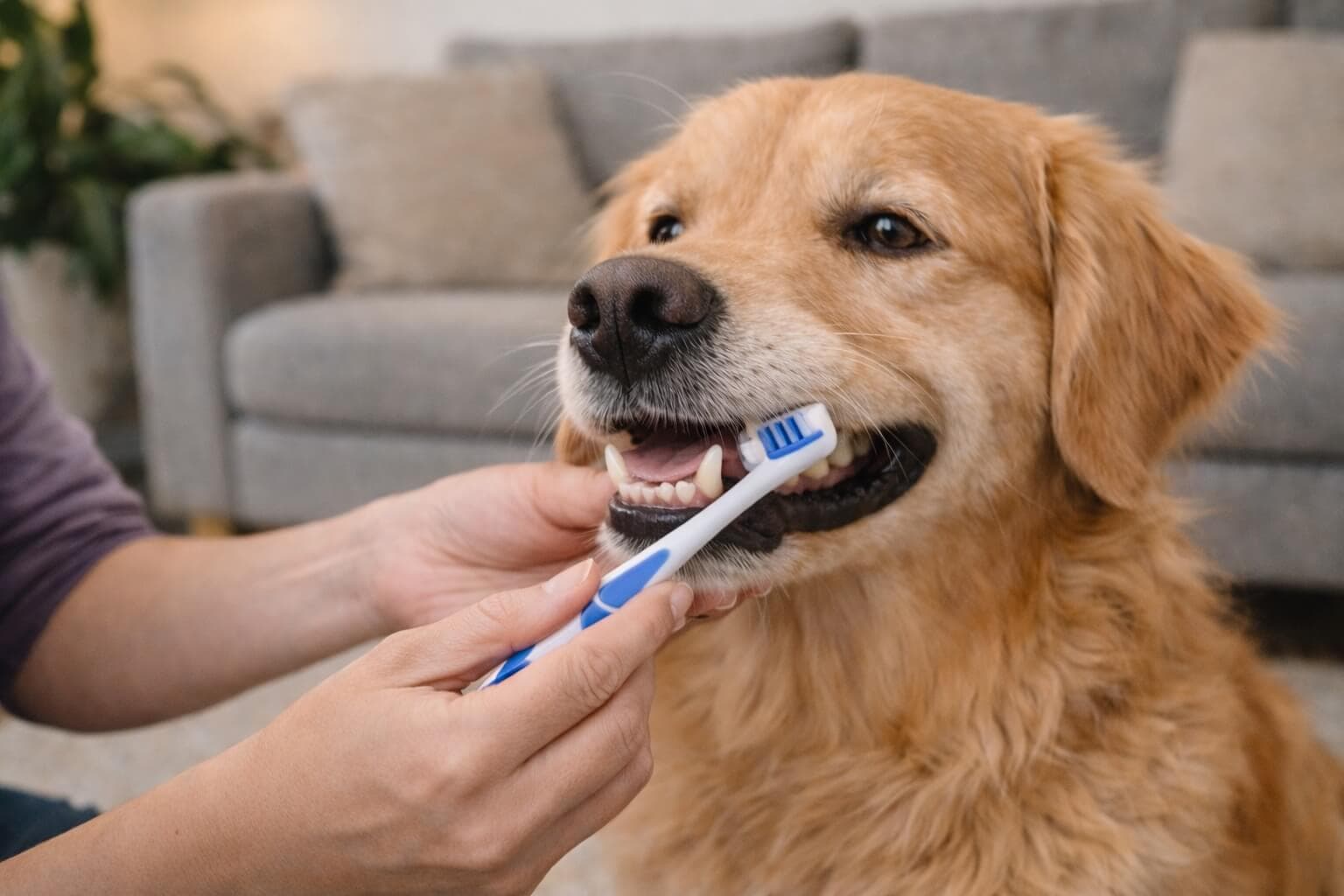
Golden Retriever Dental Care Guide (How to Keep Your Dog’s Teeth Healthy)
GoldenRetriever.hair
By GoldenRetriever.hair
Dental health is an important—but often overlooked—part of caring for a Golden Retriever. Many owners focus on food, exercise, and grooming, but Golden Retriever dental care is just as essential. Without regular oral care, dogs can develop plaque buildup, tartar, gum disease, tooth pain, and persistent bad breath. Over time, poor Golden Retriever dental health can even impact the heart, kidneys, and other organs when bacteria from the mouth enter the bloodstream.
The good news: with a simple routine, you can significantly reduce dental problems and keep your Golden’s mouth more comfortable. This guide explains why dental care matters, common problems to watch for, how to clean Golden Retriever teeth, and practical tools like brushing, dental chews, and professional cleanings. If you still have a puppy losing baby teeth, start with our Golden Retriever teething guide, then return here for lifelong oral care.
Why Dental Care Is Important for Golden Retrievers
Your Golden Retriever’s mouth is home to millions of bacteria. After eating:
- 🐾A thin film of plaque begins to form on the teeth.
- 🐾If not removed, plaque hardens into tartar (calculus).
Over time, this can lead to:
- 🐾Gingivitis – inflammation and redness of the gums.
- 🐾Periodontal disease – infection and damage to the structures supporting the teeth.
Oral Health and Overall Health
Chronic dental disease doesn’t just cause bad breath or loose teeth. Bacteria and inflammation in the mouth can:
- 🐾Enter the bloodstream.
- 🐾Place stress on:
- 🐾The heart.
- 🐾The kidneys.
- 🐾Other organs.
Maintaining good dog dental hygiene is one of the many ways to support your Golden’s long-term health and comfort. As discussed in the Golden Retriever Lifespan Guide, preventive care—including oral health—plays an important role in helping dogs live:
- 🐾Longer.
- 🐾Healthier.
- 🐾Higher-quality lives.
Common Dental Problems in Golden Retrievers
Understanding common dental issues helps you spot problems early.
Bad Breath (Halitosis)
Golden Retriever bad breath is one of the first signs many owners notice. While mild “dog breath” can be normal, strong, persistent odor often indicates:
- 🐾Plaque and tartar buildup.
- 🐾Gum disease.
- 🐾Infections or other oral issues.
Plaque, Tartar, and Gum Disease
Without cleaning:
- 🐾Plaque forms on teeth within hours of eating.
- 🐾Minerals in saliva cause plaque to harden into tartar, which:
- 🐾Adheres strongly to tooth surfaces.
- 🐾Irritates the gums.
This leads to:
- 🐾Gingivitis
- 🐾Red, swollen gums.
- 🐾Bleeding when chewing or brushing.
- 🐾Periodontitis
- 🐾Recession of gum tissue.
- 🐾Damage to tooth roots.
- 🐾Loose or lost teeth.
Damaged or Loose Teeth
Golden Retrievers who chew very hard objects or have advanced dental disease may develop:
- 🐾Cracked or fractured teeth.
- 🐾Loose teeth due to periodontal damage.
These can be painful and may require veterinary treatment, including:
- 🐾Extraction.
- 🐾Advanced dental procedures.
Early Warning Signs
Watch for:
- 🐾Persistent bad breath.
- 🐾Red or swollen gums.
- 🐾Yellow or brown buildup near the gumline.
- 🐾Bleeding from the mouth.
- 🐾Drooling more than usual.
- 🐾Pawing at the mouth.
- 🐾Reluctance to chew hard food or toys.
If you see these signs, schedule a veterinary dental evaluation.
How Often Should You Brush a Golden Retriever’s Teeth?
The most effective way to maintain Golden Retriever dental health is regular tooth brushing.
Ideal Brushing Frequency
Veterinary dentists generally recommend:
- 🐾Daily brushing for best results.
If daily brushing isn’t realistic:
- 🐾Aim for at least 3–4 times per week as a minimum.
Consistency matters more than perfection. Even if you start with:
- 🐾Short sessions a few times per week and build up, you will:
- 🐾Help reduce plaque.
- 🐾Slow tartar formation.
Brushing is especially important as your dog gets older. The Golden Retriever Senior Care Guide explains that senior dogs often:
- 🐾Have more dental issues.
- 🐾Benefit greatly from a consistent oral-care routine.
Step-by-Step Guide to Brushing Your Golden Retriever’s Teeth
Many owners feel unsure about brushing Golden Retriever teeth, but with a step-by-step approach, most dogs learn to tolerate and even enjoy it.
1. Choose Dog-Safe Toothpaste and Tools
Do not use human toothpaste—it often contains ingredients (like xylitol or fluoride) that are unsafe for dogs.
Instead, choose:
- 🐾
Dog-safe toothpaste
- 🐾Flavors like poultry or beef may be more appealing.
- 🐾Formulated to be swallowed safely.
- 🐾
Dog toothbrushes
- 🐾Options include:
- 🐾Double-ended brushes for large dogs.
- 🐾Finger brushes for easier control.
- 🐾Look for toothbrushes and dog-safe toothpaste specifically designed for canines under
/products.
- 🐾Options include:
A veterinarian-recommended enzymatic toothpaste like the one below can make brushing more effective and easier to stick with.

Virbac C.E.T. Enzymatic Dog Toothpaste
Veterinarian-recommended enzymatic toothpaste that helps reduce plaque and tartar while freshening breath. Safe for daily use and ideal for maintaining long-term dental health in Golden Retrievers.
2. Introduce Toothpaste Gradually
Start by:
- 🐾Letting your Golden lick a small amount of dog toothpaste from your finger.
- 🐾Pairing this with:
- 🐾Praise.
- 🐾Calm, positive interaction.
Do this for several days so they:
- 🐾Associate the flavor with something pleasant.
3. Get Your Dog Comfortable With Mouth Handling
Next, gently:
- 🐾Lift your Golden’s lips.
- 🐾Touch the outside surfaces of the teeth and gums with your finger.
Reward:
- 🐾Calm behavior.
- 🐾Even a few seconds of cooperation.
Gradually increase the time as your dog becomes more comfortable.
4. Start Brushing the Outer Tooth Surfaces
When your dog is relaxed with mouth handling:
- 🐾Put a small amount of toothpaste on the toothbrush or finger brush.
- 🐾Gently:
- 🐾Lift the lip.
- 🐾Brush the outer surfaces of the teeth, especially:
- 🐾Canines.
- 🐾Back molars (where plaque tends to build up most).
Use:
- 🐾Small, circular motions.
- 🐾A gentle touch—focus on the gumline where plaque accumulates.
You do not have to force your dog’s mouth open to brush the inner surfaces at first—the outer surfaces matter most and are easier to reach.
5. Keep Sessions Short and Positive
At the beginning:
- 🐾Aim for just a few seconds to a minute of brushing.
- 🐾Gradually add more time as your dog gets used to the routine.
Always:
- 🐾Praise your dog.
- 🐾Offer a small reward (a piece of kibble or a special treat).
This makes tooth brushing part of:
- 🐾A positive daily routine, similar to grooming or training.
Dental Chews and Toys
While brushing is the gold standard, additional tools can help support Golden Retriever tooth care.
Dental Chew Toys
Appropriate dental chew toys can:
- 🐾Provide mechanical abrasion that helps reduce plaque.
- 🐾Satisfy your Golden’s natural urge to chew.
Choose:
- 🐾Durable, dog-safe materials sized for large breeds.
- 🐾Toys with textured surfaces designed for dental use (see dental chew toys under
/products).
Avoid:
- 🐾Extremely hard objects (like some real bones, antlers, or very rigid plastic) that may risk tooth fractures.
Dental Treats and Chews
Veterinary dental products may include:
- 🐾Dental chews.
- 🐾Plaque-reducing treats or chews.
When selecting:
- 🐾Look for products with:
- 🐾Veterinary endorsements where available.
- 🐾Appropriate calorie content (to avoid weight gain).
You can explore dental treats in the /products section, but always:
- 🐾Factor them into your dog’s daily calorie intake.
Rinses and Additives
Some households also use:
- 🐾Water additives.
- 🐾Oral gels or wipes.
These can be helpful adjuncts, but they do not replace brushing.
Talk to your veterinarian about which products are appropriate for your Golden.
Signs Your Golden Retriever May Have Dental Problems
Recognizing problems early is a key part of Golden Retriever dental care.
Warning signs include:
- 🐾
Persistent bad breath
- 🐾Strong, foul odor that doesn’t improve with brushing or chews.
- 🐾
Red, swollen, or bleeding gums
- 🐾Especially when chewing or after brushing.
- 🐾
Yellow or brown buildup on teeth
- 🐾Visible tartar at the gumline.
- 🐾
Difficulty chewing or eating
- 🐾Dropping food.
- 🐾Favoring one side of the mouth.
- 🐾
Excessive drooling
- 🐾More saliva than normal.
- 🐾
Pawing at the mouth or face
- 🐾Indicating possible pain or irritation.
- 🐾
Loose, broken, or missing teeth
- 🐾Any concerning changes warrant prompt veterinary attention.
Some dental issues can also affect behavior:
- 🐾Irritability.
- 🐾Reduced interest in play.
- 🐾Resisting having their head or mouth touched.
The Golden Retriever Behavior Problems Guide reminds us that changes in behavior can signal underlying medical discomfort, including dental pain, not just “bad behavior.”
If you notice these signs, schedule a veterinary exam as soon as possible.
Professional Dental Cleanings
Even with excellent home care, many dogs eventually need professional dental cleanings.
What Happens During a Professional Cleaning?
Veterinary dental cleanings are typically performed:
- 🐾Under general anesthesia, which allows:
- 🐾Thorough cleaning above and below the gumline.
- 🐾Detailed examination of every tooth.
- 🐾Dental X-rays when needed.
Procedures may include:
- 🐾Scaling (removing plaque and tartar).
- 🐾Polishing tooth surfaces.
- 🐾Extracting severely diseased or damaged teeth, if necessary.
Anesthesia always carries some risk, but:
- 🐾Modern veterinary protocols and pre-anesthetic testing help minimize these risks.
How Often Are Cleanings Needed?
Frequency depends on:
- 🐾Your dog’s:
- 🐾Genetics.
- 🐾Diet.
- 🐾Home care routine.
- 🐾Existing dental disease.
Some Goldens may need:
- 🐾Cleanings every 1–2 years, while others go longer between procedures.
Your veterinarian will:
- 🐾Assess your dog’s mouth during regular checkups.
- 🐾Recommend timing for professional cleanings.
Dental Care for Senior Golden Retrievers
Senior Goldens often need extra dental attention.
As described in the Golden Retriever Senior Care Guide:
- 🐾Older dogs:
- 🐾Are more likely to have gum disease.
- 🐾May have loose or worn teeth.
For seniors:
- 🐾Maintain or start regular brushing if your dog tolerates it.
- 🐾Pay close attention to:
- 🐾Eating habits.
- 🐾Chewing patterns.
- 🐾Oral comfort.
Veterinarians may:
- 🐾Recommend more frequent dental monitoring.
- 🐾Adjust anesthesia plans for dental procedures based on age and overall health.
Addressing dental issues in senior dogs can:
- 🐾Improve appetite.
- 🐾Reduce chronic pain.
- 🐾Enhance overall quality of life.
Frequently Asked Questions
How often should I brush my Golden Retriever’s teeth?
Ideally, you should brush your Golden Retriever’s teeth every day. If daily brushing isn’t realistic, aim for at least 3–4 times per week. Consistency helps reduce plaque buildup and slow the development of tartar and gum disease.
Do dental chews replace brushing?
No. Dental chews and toys do not replace brushing, but they can be useful supportive tools. Brushing physically removes plaque from the surfaces of the teeth, especially near the gumline, which chews can’t reliably reach. Use dental chews, treats, and toys as supplements to a brushing routine, not a substitute.
Why does my Golden Retriever have bad breath?
Most often, Golden Retriever bad breath is caused by:
- 🐾Plaque and tartar buildup.
- 🐾Gum disease or oral infections.
Less commonly, bad breath can be related to:
- 🐾Gastrointestinal issues.
- 🐾Systemic diseases (such as kidney problems).
If bad breath persists despite improved dental care, consult your veterinarian to rule out more serious underlying causes.
When should I take my dog to the vet for dental problems?
You should see your veterinarian if you notice:
- 🐾Persistent strong bad breath.
- 🐾Red, swollen, or bleeding gums.
- 🐾Difficulty chewing or dropping food.
- 🐾Loose or broken teeth.
- 🐾Swelling around the mouth or face.
Regular checkups—combined with at-home care—help catch issues early and prevent more serious complications.
Conclusion
Golden Retriever dental care is a vital part of keeping your dog healthy and comfortable throughout their life. By brushing your Golden’s teeth regularly, using appropriate dental chews and toys, watching for early signs of dental problems, and scheduling professional cleanings when needed, you can greatly reduce the risk of gum disease, tooth loss, and related health complications. Consistent Golden Retriever tooth care supports fresher breath, a healthier mouth, and contributes to better overall well-being and longevity for your dog. With a manageable routine and the right tools—dog toothbrushes, toothpaste, and supportive dental products—you can make oral care a simple, effective part of your Golden Retriever’s regular health regimen. Build handling skills early with the puppy care guide, and keep coat and body care aligned through the Golden Retriever grooming guide.
P.S. Get the free Golden Retriever Owner Cheat Sheet — daily feeding, sleep, and care in one printable guide.
Get the Cheat Sheet when you join the newsletter — instant access in your welcome email.