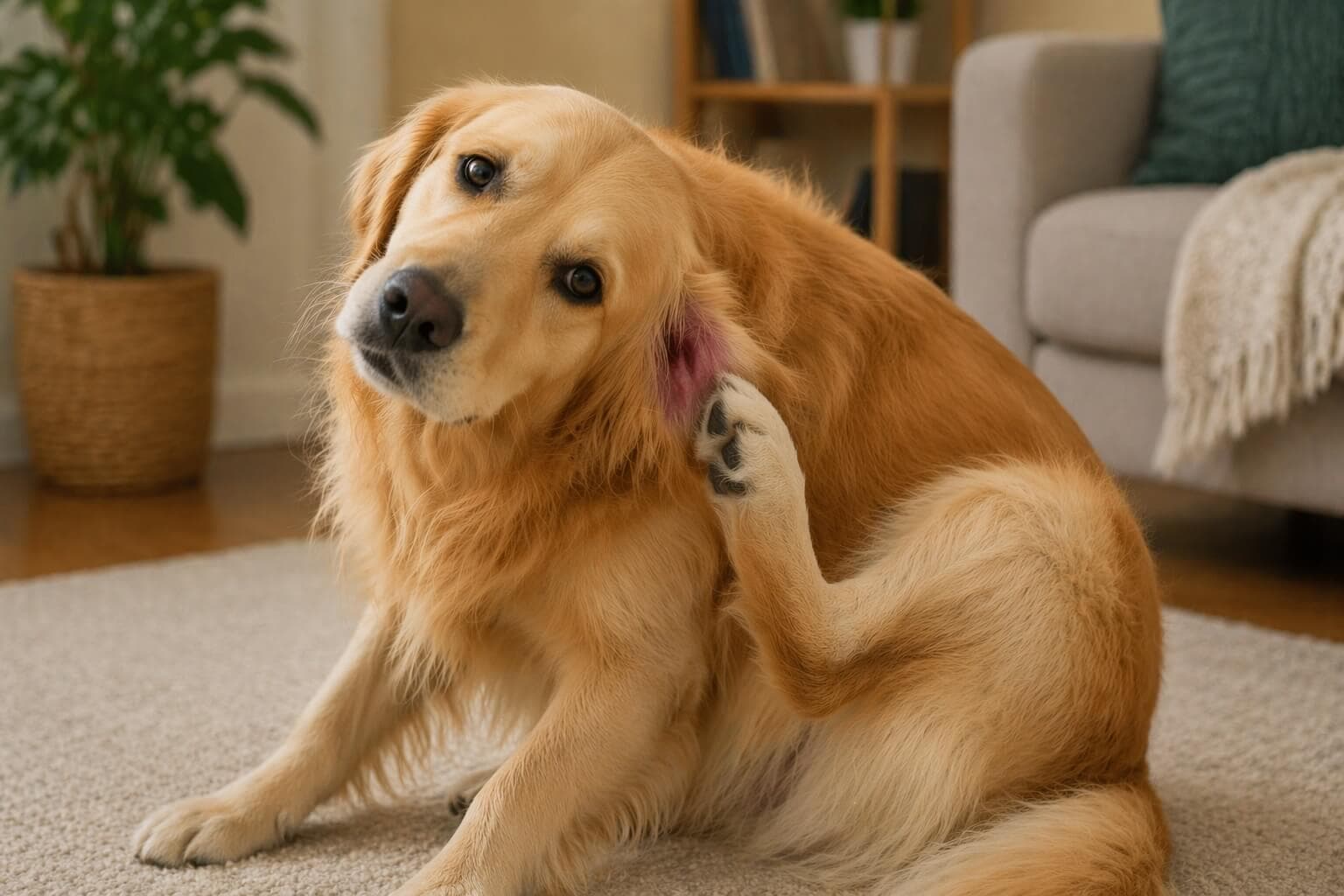
Golden Retriever Ear Infections
By JJ Allan (goldenretriever.hair)
A Golden Retriever's ear gets infected because the canal is built to hold moisture. The American Kennel Club describes a dog's ear canal as L-shaped, so fluid tends to stay in it, and it names floppy ears as a reason some dogs are at higher risk. VCA Animal Hospitals calls an outer-ear infection, otitis externa, one of the most common infections in dogs, and it lists large, floppy, or hairy ears among the traits that raise the risk. The Merck Veterinary Manual (published as the MSD Veterinary Manual) adds the breed context: ear-disease risk tracks skin-disease risk, and it names allergies in retrievers as that kind of pattern. A pendulous ear flap and water from swimming are on its list of factors that show up before the infection does.
This page is the cleaning guide and the scratching guide as well as the infection guide. It is not a diagnosis, and it does not include doses. Yeast, bacteria, and mites are not told apart by smell from the couch. VCA is explicit that over-the-counter drops are the wrong first move, because the veterinarian has to know the organism and whether the eardrum is intact. Some medicines can damage hearing if the eardrum is already ruptured.
Decide from the ear in front of you
Cornell's Riney Canine Health Center says a healthy ear needs a routine clean only when dirt or debris is actually there, because overcleaning irritates the canal. Dogs with floppy ears, allergies, or a history of infections may need cleaning more often, and an ear that just got wet, after a swim or a bath, is a reason to dry it and clean if your veterinarian has already said cleaning is safe. VCA's cleaning page says some dogs with healthy ears never need a clean, and that discharge or odor is the cue to clean a quiet ear. It also says the schedule is your veterinarian's, not a calendar on the fridge.
| If this is the ear | Do this | Why |
|---|---|---|
| Quiet, pale, no odor. A little wax, or the dog just swam. | Dry the flap and opening. Clean only if debris is there and your vet has said cleaning is appropriate. | Cornell: clean a healthy ear when debris is present, and after the ears get wet. Overcleaning irritates. |
| Scratching or head shaking for a day or two, with redness, odor, or discharge. | Stop home treatment. Call the veterinarian. | AKC: itching or odor is the cue to be seen. VCA: do not clean a red, inflamed, or painful ear first. |
| One ear only, especially if it started suddenly. | Same-day exam. Do not assume it is the allergy that affected both ears last time. | AKC: one ear makes a body-wide allergy less likely. VCA lists foreign material, a polyp, or a tumor as problems drops will not fix. |
| Both ears, and the paws, belly, or armpits itch too, or it keeps coming back. | Treat the ear the vet diagnoses, and ask about allergies. | VCA: allergies are involved in as many as 43 percent of ear-infection cases, and in 65 to 80 percent of dogs with food allergies the ears are affected. AKC: both ears often point to allergy. |
| Head tilt, stumbling, a swollen ear flap, blood, or crying when the ear is touched. | Urgent care. Do not clean, and do not wait out the weekend. | VCA: untreated infection can cause an aural hematoma or a ruptured eardrum, middle-ear disease, and hearing loss. AKC: middle- and inner-ear disease can affect balance. |
Why a Golden's ear stays wet
The part you can see is the pinna, the ear flap. The canal then runs down and turns inward toward the eardrum. That turn is the L the AKC describes, and it is why water and wax do not fall out on their own. Merck lists a pendulous pinna and excessive moisture, including swimming, as factors that are present before ear disease starts. Hair in and around the canal is on that same list. The AKC's practical version for a floppy ear is to have a groomer thin and trim hair in and around the opening, and to ask the veterinarian before anyone plucks hair from the canal. Merck calls plucking controversial: it is sometimes needed to treat an infection, and it is not a home grooming trick.
Allergy is the medical piece owners skip when they only dry the ears. VCA's figures are for dogs in general, not a Golden-only study: allergies are involved in as many as 43 percent of ear-infection cases, especially chronic or repeat ones, and ear infections occur in 65 to 80 percent of dogs with food allergies. The AKC's Dr. Hood says recurrent ear infections are often the first or only sign of a food or environmental allergy, because inflammation changes the wax, traps moisture, and lowers the local defenses. Merck lists allergy, including atopic dermatitis and adverse food reaction, as a primary cause, and Malassezia yeast plus bacteria such as Staphylococcus and Pseudomonas as the secondary overgrowth that follows. Hypothyroidism is on both VCA's and Merck's lists of hormone problems that can keep ears flaring. If the ears keep coming back after the drops, the next question is the skin, not a stronger cleaner. The on-site page is the allergies guide.
Constant scratching is a sign, not a habit
VCA says ear infections hurt, and that dogs shake and scratch to try to clear debris and fluid. The AKC's symptom list is the one owners already know: head shaking, scratching or rubbing, dark discharge, odor, redness, swelling, pain, itch, and crusts or scabs. A single shake after a swim can be the dog clearing water. Scratching that continues, or shaking that is vigorous and repeated, is the AKC's cue to be seen.
Which ear matters. The AKC says problems in both ears often fit an allergy, because the trigger is affecting the whole dog, and a problem in only one ear makes that less likely. A sudden one-sided itch can be a foreign body, and VCA says a foreign body, polyp, or tumor will not resolve with medication alone. Grass awns show up in that category for dogs who have been in long grass. Do not dig for one.
Ear mites, Otodectes, are the other itchy pattern people reach for. VCA says the signs overlap with infection, a dark discharge plus scratching and head shaking, and that mites are more common in puppies and kittens. Adult dogs sometimes pick them up from an infected puppy or cat. Mites also set up a secondary bacterial or yeast infection, so the debris you see is not a label. The AKC says vet-approved monthly parasite control can take mites off the list as a cause of the itch. Confirmation is still the clinic's, from the exam and often the microscope.
Yeast, bacteria, and mites
The AKC defines the infection as inflammation of the canal with overgrowth of yeast, bacteria, or both. Dr. Hood says a dark discharge can be yeast, parasites, bacteria, or a mix, and that mixed infections are common enough that treatment often has to cover yeast and bacteria together. Merck names Malassezia as the usual yeast and lists several bacteria, including Staphylococcus and Pseudomonas. This guide does not give you a chart you can treat from. The table is only so the appointment makes more sense.
| What it might be | What owners notice | The limit |
|---|---|---|
| Yeast, often Malassezia | Itch, odor, and debris. The AKC treats yeast with cleaning plus a topical antifungal made for ears, often with a steroid for swelling. | You cannot see yeast without a microscope. A brown wax can also be ordinary debris. |
| Bacteria, including Staphylococcus and, in some chronic ears, Pseudomonas | Pain, redness, odor, pus-like discharge. The AKC says bacterial infection is treated with topical antibiotic drops, and severe cases may add oral drugs. | The drug depends on the cytology, and sometimes a culture. Leftover drops from last time are the wrong drug until the vet says otherwise. |
| Ear mites, Otodectes | Intense itch and dark debris, more often in puppies. VCA: the signs look like infection, and a secondary infection is common. | Diagnosed on exam. Monthly parasite control, per the AKC, is prevention your vet chooses. It is not a treatment you start from a guess. |
What the vet actually checks
VCA and the AKC describe the same workup. The veterinarian looks in the canal with an otoscope to see debris, foreign material, and whether the eardrum is whole. If the canal is too swollen, too full, or too painful, VCA says sedation or anesthesia may be needed before that look is even possible. Cytology, a stained sample of the discharge, is what chooses the drug. Culture and susceptibility testing is for severe or chronic cases, when the clinic needs to know which organism is present and which drug can reach it. Merck says samples should be taken before the ear is cleaned, so the flush does not wipe away the evidence.
Tell them about swims, baths, which cleaner you use, whether hair was plucked, and any drops already in the ear. The AKC lists those questions because they change what the canal looks like and what is safe to put in it next.
Treatment stays with the clinic
VCA says medication is chosen for the organism: antibiotics for bacteria, antifungals for fungi, and some products combine those with an anti-inflammatory. The AKC says the veterinarian usually cleans the ear with a medicated cleanser and sends topical drops home. Severe infections may add oral antibiotics and anti-inflammatory medicine. Yeast is cleaning plus an ear-specific antifungal, often combined with a steroid to bring swelling down. A mixed infection is treated for both at once. None of those sentences is a dose, a brand of prescription drop, or a number of days you can set yourself.
Finish the course and go back for the recheck. The AKC says most uncomplicated infections improve within one to two weeks once the right treatment has started, and that severe infections or those tied to another disease can take longer, sometimes months. Stopping early, Dr. Hood says, is how resistant infections get a start. Gaps and skipped rechecks are how an infection returns. If the ear seems better on day three, that is not evidence the organism is gone.
Do not reuse last month's bottle. The organism may be different, and the eardrum may not be in the same condition. The AKC's line is not to put home remedies or old medications in the ear without checking first, because they can irritate the canal or damage the eardrum.
Chronic ears can change shape. VCA says long inflammation can thicken the canal until it narrows, which is called stenosis, and medicine then cannot reach the horizontal canal. Some dogs need surgery, including removal of the vertical canal or, in some cases, the entire canal, and total ear canal ablation can leave permanent hearing loss. That is the outcome of disease that was not controlled. It is not a decision this guide walks you through.
If allergies are the primary cause Merck describes, the drops treat the overgrowth and the allergy plan is what reduces the next one. A food trial, when a vet suspects food, is the AKC's 8 to 12 week elimination diet, usually aimed at the protein source. Do not start that experiment on your own in the same week you are also changing ear drugs. The skin problems guide is the broader map when the coat and the ears are both involved.
Clean a quiet ear. Leave a sore ear alone.
VCA's cleaning instructions are the technique to use on an ear your veterinarian has said is safe to clean. The supplies are a cleaner the clinic is happy with, cotton balls or gauze, and treats. No cotton-tipped swab in the canal.
For a large dog, VCA has you sit the dog with its rear in a corner, one side against the wall, and you on the other side. Hold the flap straight up so the canal straightens. Squeeze cleaner in until the canal is full. Spill is fine. Do not bury the bottle tip in the ear. If the tip touches the ear, VCA says to wipe it with a cotton ball soaked in alcohol before the next ear, so you do not carry yeast or bacteria across. Massage the base for about 30 seconds. You should hear a squish as the solution moves in the horizontal canal. Wipe the flap and the upper canal with cotton or gauze, let the dog shake, then wipe again. Go into the canal only as far as your finger reaches. Praise, treat, and use a fresh cotton ball or piece of gauze on the other ear. If the dog shows pain, stop and call the clinic.
Cornell offers the same sequence and one alternative if your dog hates solution poured into the canal: saturate the cotton first, then massage. It also says that during treatment of a severe infection, home cleaning is often delayed for the first few days until medicine has taken the pain and swelling down. That delay is the veterinarian's call. So is any wait between a cleaner and a medicated drop. VCA warns that some cleansers weaken the medicine, so ask before you stack them. This page will not invent that interval.
How often is the part the old cleaning article made too rigid. Cornell says maintenance for a healthy ear is only when debris is present, and that a common maintenance interval when cleaning is needed is every one to two weeks. Floppy ears, allergies, and repeat infections can justify more. An ear being treated can be cleaned as often as daily at the start, on the clinic's schedule, not yours. VCA says overcleaning a healthy ear can itself cause the irritation that leads to infection. A weekly wipe of every Golden, infected or not, is not what either page says.
Hydrogen peroxide and alcohol are the cleaners VCA tells you to avoid, especially in an inflamed or ulcerated canal. Use a dog ear cleaner. The vet picks which one, because some are better at wax and some include antibacterial or antifungal ingredients aimed at prevention, not at replacing a prescription.
The flush below is the ear cleaner already on this site's product list. It is not a diagnosis, and it is not the drop you use instead of the one the clinic prescribed.
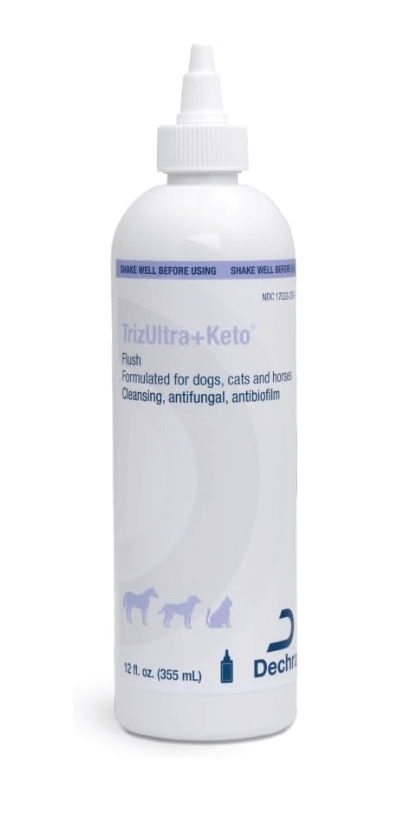
TrizULTRA + Keto Flush for Dogs, Cats and Horses
This is the Dechra ear flush on our product list. The listing linked here is the TrizULTRA + Keto flush, ASIN B005GWUGV0. VCA says a good cleaner matters, that peroxide and alcohol irritate, and that some cleaners include ingredients meant to help prevent infection or to lift wax. Your veterinarian still chooses the bottle, especially if the ear is already red, painful, or discharging, and especially if a prescription drop is going in the same ear.
Follow the label and the clinic for how much to use and how often. Do not use it as a treatment for an ear that has not been examined. If the dog flinches, stop.
A short list for a clean the clinic has approved:
- 🐾The ear cleaner your veterinarian named
- 🐾Cotton balls or gauze. VCA allows either. The AKC's Dr. Jeff Grognet prefers absorbent gauze, because paper towels and cotton can leave fibers that irritate the canal
- 🐾Treats
- 🐾A towel, because the shake is part of the method
Cotton balls and gauze are supplies, not a product this site has verified as a specific Amazon listing, so they are not linked here. A drying solution or ear powder is the same: the AKC says to ask the veterinarian whether a powder is useful for keeping a floppy ear dry. There is no drying product on the site's list that this page can point to with a verified ASIN.
After a swim
The AKC says excess moisture is a breeding ground for bacteria and yeast, and that floppy ears need extra care after a bath or a swim. Dry thoroughly. Do not pack the canal with a towel. Wipe the flap and the opening, then let the dog shake. Cornell recommends a routine clean when the ears get wet, if cleaning is appropriate for that dog. The swimming guide covers the water itself. Keeping shampoo and bath water out of the canal is the same idea on a bath day. The grooming guide and the grooming schedule are where ear checks sit next to the rest of coat care.
A daily look is still worth doing on a dog who swims or who has had infections: odor, redness, discharge, or new head shaking. That look is not a clean. If any of those are present, you are back in the vet row of the table.
Mistakes that make the next infection easier
A cotton swab in the canal is the expensive one. VCA and the AKC agree: it pushes debris deeper and can damage the eardrum. Swabs, if you use them at all, stay on the ear flap.
Overcleaning a healthy ear strips the protection the canal had. The AKC says cleaning too often removes protective oils and the bacteria that belong there, and that irritation can become an infection. VCA says the same. Match the clean to debris, wet ears, and the schedule your veterinarian set.
Cleaning or medicating an ear that is already painful spreads the problem and can put drug through a ruptured eardrum. VCA wants that ear examined first.
Stopping the drops when the head shaking eases, or restarting an old bottle because the smell seems familiar, skips the cytology. The AKC treats that as how resistance and recurrence happen.
Ignoring the other ear, or ignoring the skin, misses the pattern. Use a fresh cotton ball or gauze for each ear so you do not carry material across. If both ears and the skin are involved, ask about allergy rather than only buying more flush.
Plucking canal hair because a groomer did it once is the step Merck calls controversial. Ask before it happens again.
When it is not ordinary wax
Call the clinic promptly for odor, discharge, redness, swelling, scratching or head shaking that is not a one-time shake, or an ear the dog will not let you touch. That is the AKC's "any of the common signs" list, and it is the point of cytology.
Go the same day, or to urgent care, if you see a head tilt, stumbling, walking in circles, or a sudden change in balance. The AKC says middle- and inner-ear disease can affect balance, and in severe cases hearing and the facial nerve. VCA says a deep infection can rupture the eardrum and lead to an inner-ear infection and permanent hearing loss.
A puffy ear flap after a day of hard shaking is an aural hematoma. VCA describes it as broken blood vessels in the flap, a painful swelling that needs surgical treatment. Blood from the canal, crying when the ear is touched, or an ear that is suddenly held flat belongs in that same urgent group. Do not clean it on the way to the car.
Sources
Symptoms, the L-shaped canal, floppy ears, otoscope plus cytology, one ear versus both, yeast and bacterial treatment in general terms, mixed infections, the one-to-two-week course for uncomplicated cases, finishing medication, allergy as a cause of repeat infections, drying after swimming, gauze versus cotton fibers, and no home remedies or old drops: American Kennel Club, dog ear infections, including Dr. Kelly Hood and Dr. Jeff Grognet.
What otitis externa is, why over-the-counter drops are the wrong start, eardrum risk, allergy figures (as many as 43 percent of ear-infection cases, and 65 to 80 percent of dogs with food allergies), mites versus infection, aural hematoma, stenosis, and hearing loss: VCA, ear infections in dogs. How to clean, what not to put in the canal, cotton or gauze, and when not to clean at all: VCA, instructions for ear cleaning and ear medication in dogs.
How often to clean, the cotton-pad alternative, delaying a clean while a severe infection is painful, and cleaning after swimming: Cornell University College of Veterinary Medicine, Riney Canine Health Center.
Primary and secondary causes, pendulous ears, swimming, Malassezia, bacteria including Staphylococcus and Pseudomonas, Otodectes, retrievers and allergy, and taking samples before cleaning: Merck Veterinary Manual, otitis externa in animals.
P.S. Get the free Golden Retriever Owner Cheat Sheet — daily feeding, sleep, and care in one printable guide.
Get the Cheat Sheet when you join the newsletter — instant access in your welcome email.