
Golden Retriever Swimming
By JJ Allan (goldenretriever.hair)
A Golden Retriever was bred to retrieve from water, and many of them will launch at a lake the first chance they get. That history is not a safety plan. The AKC's water-safety article says even a strong swimmer stays under supervision, and that a first swim starts in calm, warm water with an easy way out. The American Animal Hospital Association makes the same split: Labs and spaniels tend to be strong swimmers, and the individual dog still has to be watched, because fatigue and a current do not care about the breed.
This page is the water itself. Heat on land is the heat safety guide. A summer week of walks, shade, and coat care is the summer care guide. Cold water, ice, and a wet coat after you come in are the cold weather guide. Ears after a swim are the ear infections guide.
This guide is general information, not veterinary advice. Every dog is different, so check with your veterinarian before changing your Golden's diet, starting a supplement or medication, or trying a new treatment, and see a vet right away if symptoms are severe or sudden.
Teaching the first swim
The AKC's introduction is a bank, not a drop-off. Find calm, warm water and a gentle sloping edge. Bring treats and a toy, and get in yourself. Encourage a step in and a walk along the bank. Move deeper only as the dog settles. When walking in looks easy, ask for a step off toward a toy or a treat. If the dog swims, let it turn back to a place where it can stand, and help if it needs help. Many dogs will not step off on their own. The AKC's next step is to carry the dog a few feet out and let it swim toward the bank, guiding it. Once that return is comfortable, ask it to step off by itself again.
A dog that keeps avoiding the water, or that looks stressed, is finished for the day. The AKC says not to force it, and to pick another activity. AAHA's version is the same order: shallow water first, more depth as the dog is comfortable, and eyes on the dog the whole time. A pool with sheer sides is a poor first classroom. The dog has to know the exit before it knows the deep end.
Swimming is harder work than it looks. The AKC quotes that same practitioner's comparison: one minute of swimming is roughly four minutes of running. That is one person's estimate in the AKC article, not a laboratory measurement. Use it as a reason for short sessions and a rest, not as a training quota. A Golden who is swimming because the hips are sore still needs the arthritis guide's rule: water work is for a dog who already likes the water, and a formal rehab plan belongs to the clinic.
Read the swim in front of you
| What you see | What it often means | What to do |
|---|---|---|
| The dog will walk the edge and will not step off. Ears are back, or it keeps returning to you. | The AKC's picture of a first swim. Uncertainty is common. Avoidance that repeats is a stop, not a dare. | Stay in the shallow slope. End the session while the dog is still willing. Try another day. Do not throw the dog in. |
| The dog bites and splashes at the water, holds a ball with the mouth open, and will not come out when called. | The AKC warns that splash-biting can become a dog that swims until it is exhausted, and that a toy in the mouth is a way to swallow a lot of water. | Redirect to a flat floating toy, then call the dog out for a rest and a toilet break. Bring the fresh water bowl to the bank. |
| The shore has pea-green paint, slime, or scum, or a posted algae advisory. | The ASPCA's description of water that can hold toxic cyanobacteria, called blue-green algae. Wind can pile it on the shoreline where a dog drinks. | Leave. Do not let the dog swim, drink, or walk through the scum. Rinse the coat if it already went in, and call if any illness starts. |
| After a long retrieve session: staggering, a bloated belly, vomiting, drooling, pale gums, or glazed eyes. | The AKC's water-intoxication pattern. Swallowed water dilutes sodium. Cells swell, and the brain, inside the skull, has no room for it. | Emergency clinic now. Do not wait to see if a nap fixes a stagger. Do not give salt or any home mixture. |
| The next morning the tail hangs limp, the dog cries when it is touched, or sitting and squatting look hard. | VCA's limber tail, acute caudal myopathy, after hard play or a long swim, especially in cold water. A fracture, a back problem, or anal-gland disease can look the same. | Rest the dog and call the veterinarian. The exam decides which problem it is. |
| Head shaking, scratching, odor, or discharge in the hours or days after a swim. Or panting that will not settle once the dog is out and in the shade. | AAHA lists ear discomfort after swimming as a reason to call, and labored breathing or vomiting as distress, including from ingested water. | Ears go to the ear infections guide and the clinic if they stay angry. Heat distress means out of the water and a call. The heat safety guide is the land version of that emergency. |
Life jackets
The AKC wants a life jacket for swimming and for time on a boat, including for a dog that already swims well. Inspect it before you leave. A worn jacket is a hazard. The neck has to be snug enough that a front leg cannot slip through, and the dog still has to move. AAHA wants a bright or reflective jacket with a handle on the back so you can see the dog and lift it.
The BoatUS Foundation tested dog life jackets and stated the limit plainly: there are no design standards for them, and the Coast Guard does not certify them. Human life jackets carry a buoyancy rating because the Coast Guard requires it. The dog vests in that test did not. They changed how the dogs floated, in a horizontal swimming position, not with the head held up the way a human jacket is judged. A handle helps you haul a dog to a boat or a dock. It does not make an unattended swim acceptable, and it does not make a river current a safe place.
On a boat, the AKC says watch the dog so it does not jump, and if you use a leash, keep it short enough that the dog cannot go over the side while you are still holding the other end. A long line overboard is a tangle. AAHA adds shade, fresh water, and distance from hooks, bait, and fuel.
Pools
AAHA treats a pool as its own hazard. Fence it so a dog cannot fall in alone. Teach the exit, steps or a pet ramp, and practice that exit on ordinary days, not on the day the dog is already tired. Pool chemicals come off in a fresh-water rinse. Drying includes paws, skin folds, and ears. A small swallow of properly maintained pool water is unlikely to harm most dogs, AAHA says. A large amount can upset the stomach. Fresh water stays on the deck.
A cover that a dog can walk onto and then sink through is a drowning trap. If you cannot see the water, the dog does not go near it. The same supervision rule the AKC uses for a lake applies to a backyard: nobody is "just inside" while the dog is in the pool.
Open water, current, and ice
AAHA's natural-water list is short. Currents in rivers and tides or riptides in the ocean can overpower a strong swimmer. Water that is discolored, foamy, scummy, or paint-like stays off the itinerary, and so does any beach or lake with an algae advisory. Wildlife, including jellyfish and snakes, is a reason for a leash or close control. Salt water is not drinking water. AAHA lists vomiting, diarrhea, dehydration, weakness, tremors, and seizures among the problems from too much of it.
NOAA describes a rip current for people, and the useful parts transfer as a decision about where the dog goes. A rip does not pull you under. It pulls you out. The escape is not a swim straight against it. NOAA says you may get out by swimming parallel to the shore, toward breaking waves, or by floating if the current circles back. People should swim at a lifeguarded beach, and stay at least 100 feet from piers and jetties, where permanent rips often sit. If someone is in trouble, NOAA's rule is to get a lifeguard or call 911, throw something that floats, and not to enter the water without flotation. That rescue rule is for a person going after a person. It is also the reason not to send a Golden into the surf and then swim out after it. Choose water without a current. If the dog is already in trouble, call for help and use the handle or something that floats. Do not add a second victim.
Ice is the cold version of the same mistake. The AVMA's cold-weather page says to stay off frozen ponds and lakes because you cannot know whether the ice will hold. A dog through the ice can drown. Going out after the dog can put both of you through. The cold weather guide is the rest of that season, including a wet coat that stops insulating once you are back on land.
Blue-green algae
The ASPCA Animal Poison Control Center describes cyanobacteria, called blue-green algae, as a warm-weather problem in fresh water, most likely when the air is about 75°F or warmer and sunny. The water often looks like pea-green paint or slime. Wind can concentrate the film along the shore, which is where a dog drinks and walks in. Dogs are poisoned by drinking it and by swimming in it. Cells on the coat can be swallowed later when the dog licks itself.
The ASPCA's sign list is an emergency list: seizures, panting, excessive drooling, respiratory failure, diarrhea, disorientation, vomiting, liver failure, and death. Neurologic damage and liver damage are both on the page. If any of that starts, call a veterinarian, or the ASPCA Animal Poison Control Center at (888) 426-4435. Public health departments post warnings where they test. A clear-looking lake is not a guarantee. An advisory, or water you would not let a child swim in, is a no.
Water intoxication
The AKC's water-intoxication article describes what too much swallowed water does. Sodium outside the cells falls, a state called hyponatremia. Cells take on fluid to rebalance. The liver can accept some of that swelling. The brain, inside bone, cannot. In dogs the overload usually comes from swimming, diving, retrieving, or biting a hose or a sprinkler, not from a normal bowl. The AKC says toy and small dogs are at greater risk because clearing the extra water is harder work for a small body. A high-drive dog may also keep going after it has taken on too much. Retrieving breeds were sometimes selected to move through water with less splash, which may mean they swallow less, and that is a tendency, not a promise about one Golden.
Signs the AKC lists: lethargy, bloating, vomiting, loss of coordination, restlessness, drooling, pale gums, dilated pupils, and glazed eyes. As brain pressure rises, breathing can fail, seizures can start, or the dog can become unconscious. The AKC says water intoxication can be mistaken for hypothermia or simple exhaustion, and that by the time blood is drawn the sodium number may already be moving back toward normal while the damage remains. Treatment is at a clinic. This page has no home recipe and no amount of salt to give. Prevention is the part you control: breaks, a chance to urinate so extra fluid can leave, no diving for objects, no hose-stream games, and a flat toy such as a flying disc instead of a tennis ball. Watch the stroke. A head held low with the mouth even slightly open is the AKC's higher-risk style.
Swimmer's tail
VCA calls limber tail acute caudal myopathy. Other names on that page include swimmer's tail, cold water tail, dead tail, limp tail, and rudder tail. It is a real strain or sprain of the muscles that wag the tail, from overuse. The scenes VCA names are hard play in the previous day, a long swim, or a hunt in the past few days. The dog may look fine at the time and be painful the next morning. The risk factors VCA highlights are overexertion and very cold water or cold weather. Working and hunting dogs are the usual patients. Large breeds show up more often. Any breed can get it.
The tail may hang between the legs, or stick out a short way and then drop. Rising is harder because the tail is part of balance. Sitting and squatting to urinate or defecate can hurt. Some dogs will not eat. Crying or pulling away when the tail is touched is a clue. VCA says the veterinarian feels the tail from the base to the tip, and may take X-rays, because a fracture, a dislocation, a back problem, anal-gland disease, prostate disease, and a skin infection under the tail can look the same.
Uncomplicated cases are treated with rest and an anti-inflammatory the veterinarian prescribes. VCA says most dogs are back to normal in a few days to a week, and that one episode does not mean the dog must give up swimming. Cornell's Riney Canine Health Center gives a slightly longer window: most dogs recover in a few days to two weeks, a few keep a mild change in how they carry the tail, and it can happen again if the same trigger returns. Cornell's prevention list is conditioning before hard work, shorter swims in cold water, and rest after heavy exercise. Those are two clinics' own timelines. Follow the veterinarian who examined the dog. Do not start a human painkiller while you wait.
Ears, coat, heat, and sun
AAHA's after-swim list is rinse with fresh water, then dry, especially paws, folds, and anywhere moisture sits. The rinse is for chlorine, salt, sand, algae, and bacteria on the coat. Check the ears if the dog swims often or has had ear trouble before. Call if you see head shaking, scratching, redness, odor, discharge, or discomfort. That exam and the home drying steps live in the ear infections guide. Do not pack the canal. Do not start leftover drops.
A thick coat holds water against the skin. Dry the chest, belly, feathering, and feet before the dog lies down in the sun or gets into a crate. The summer care guide is the broader hot-weather routine. The heat safety guide is what to do when panting, weakness, or collapse show up. AAHA's distress signs in the water are labored breathing, panting that is excessive, uncoordinated swimming, vomiting, and diarrhea. Get the dog out. Shade on a boat is part of the same plan, not an extra. A Golden will keep retrieving because the game is good. The game ending is your decision.
Gear that does one job
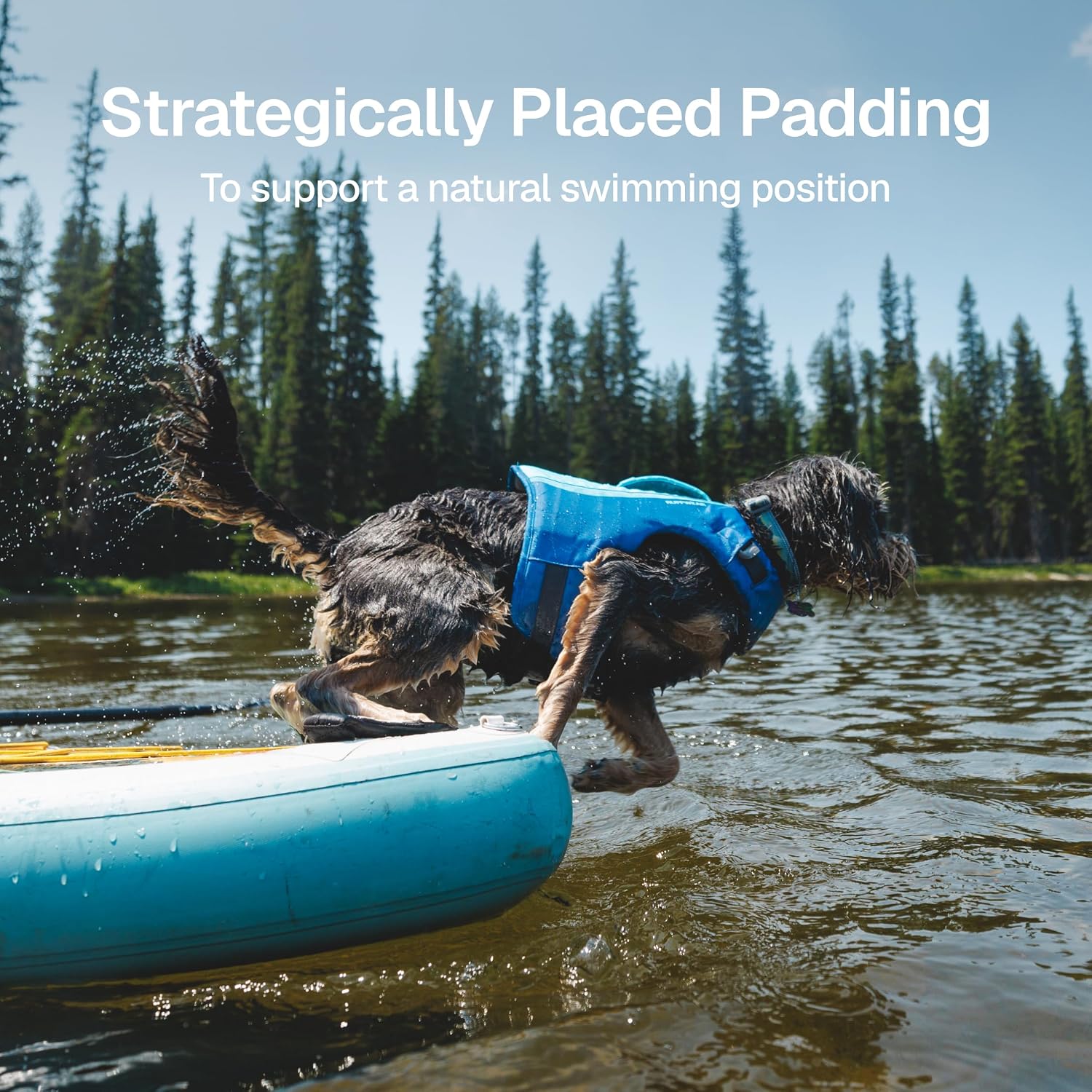
Ruffwear Float Coat, Deep Blue, Large
A swim vest with a reinforced handle for lifting a dog to a boat or a dock. On the size chart shown with this jacket, Large is a chest girth of 32 to 36 inches at the widest part of the rib cage. Medium is 27 to 32, and XL is 36 to 42. Measure before you buy. Many adult Goldens land in Medium or Large, not automatically in Large. In the BoatUS test, adult Goldens of 62 and 70 pounds both measured a 32-inch chest, right on the line between the two. A big male near 36 inches may need the XL. The AKC's fit check still applies: snug at the neck, free movement, and a look for wear before each trip. The BoatUS Foundation's point stands: this is not a Coast Guard-certified life jacket, and it does not replace you at the water.
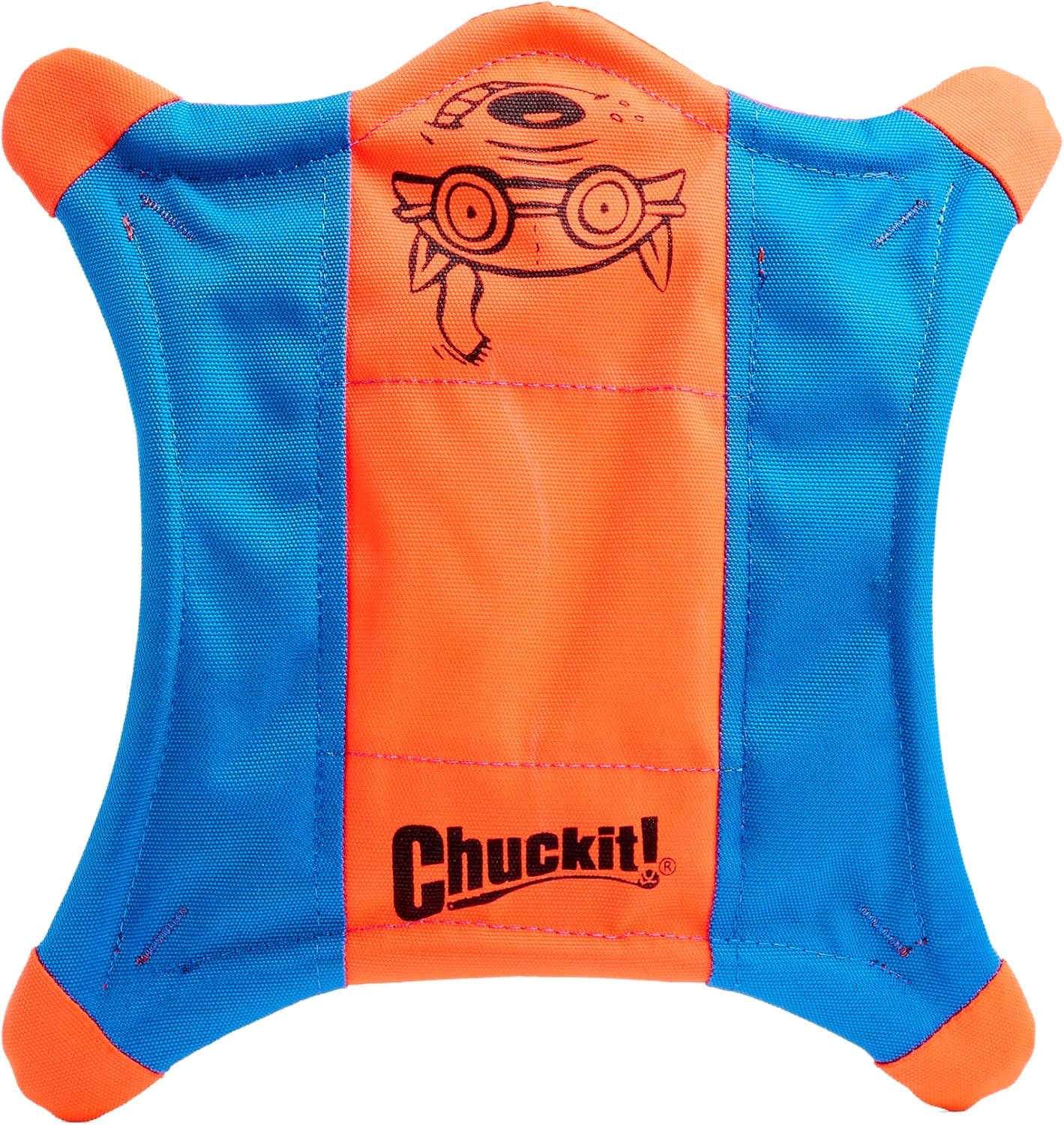
Chuckit! Flying Squirrel, large, 11 inches
A flat floating flyer. Chuckit says the large size is 11 inches across and suited to dogs of about 60 to 100 pounds, which covers most adult males and many females. A small female under 60 pounds may do better with the medium. The AKC prefers a flat toy over a tennis ball so the mouth can close and less water gets swallowed. Chuckit says it is not a chew toy. End the retrieve while the dog will still come out.
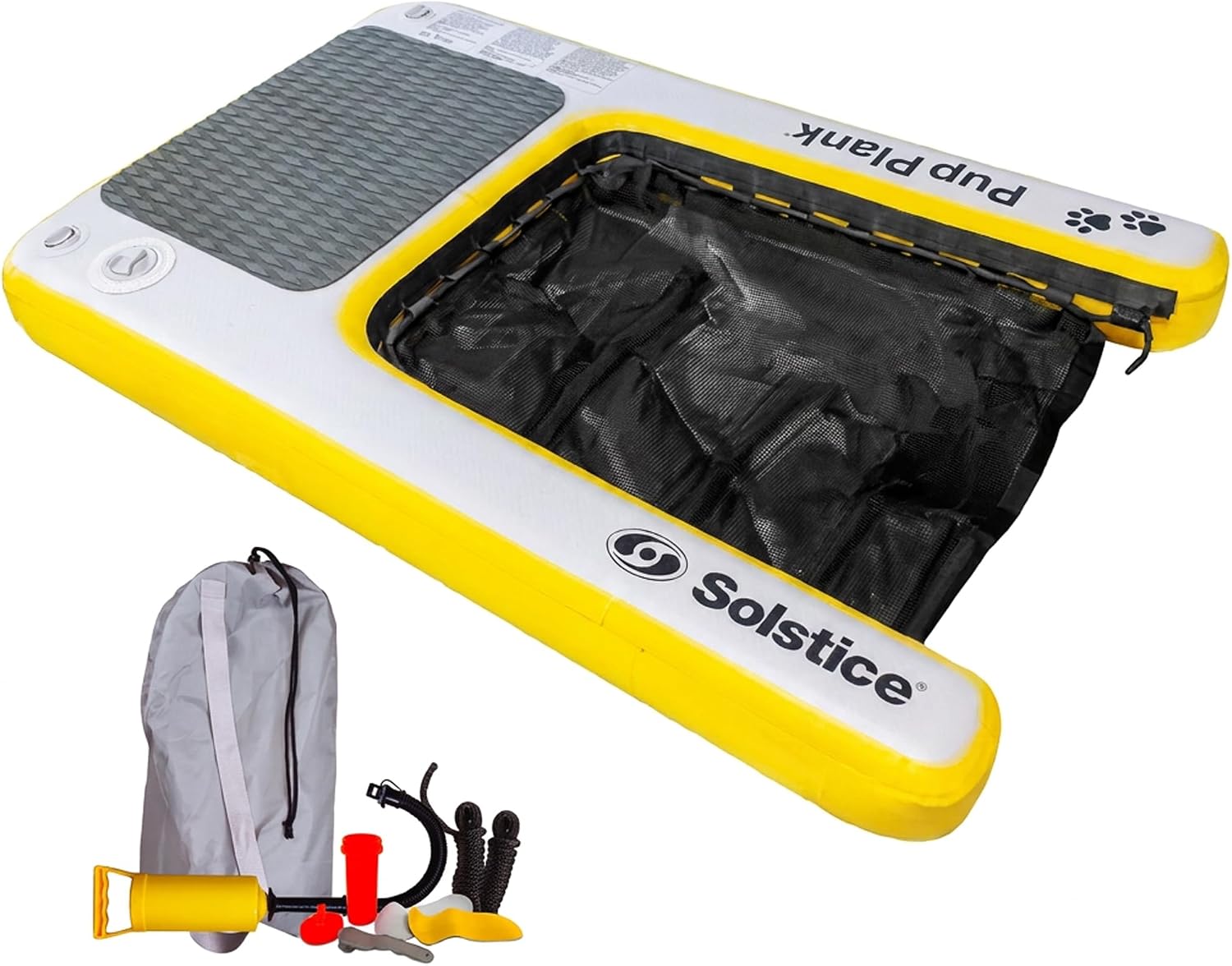
Solstice Pup Plank, extra large, 48 by 32 by 5 inches
An inflatable platform for a pool, dock, or boat, with a weighted mesh step that sinks so a dog can climb out, tie ropes, and a pump. Solstice states both 200 pounds and 120 pounds as the pet weight for this size. Plan on the lower number. A typical Golden is inside it. AAHA wants the exit practiced before the dog needs it in a panic. Tie the plank off. It is a way out of the water, not a restraint and not a substitute for a fence around the pool.
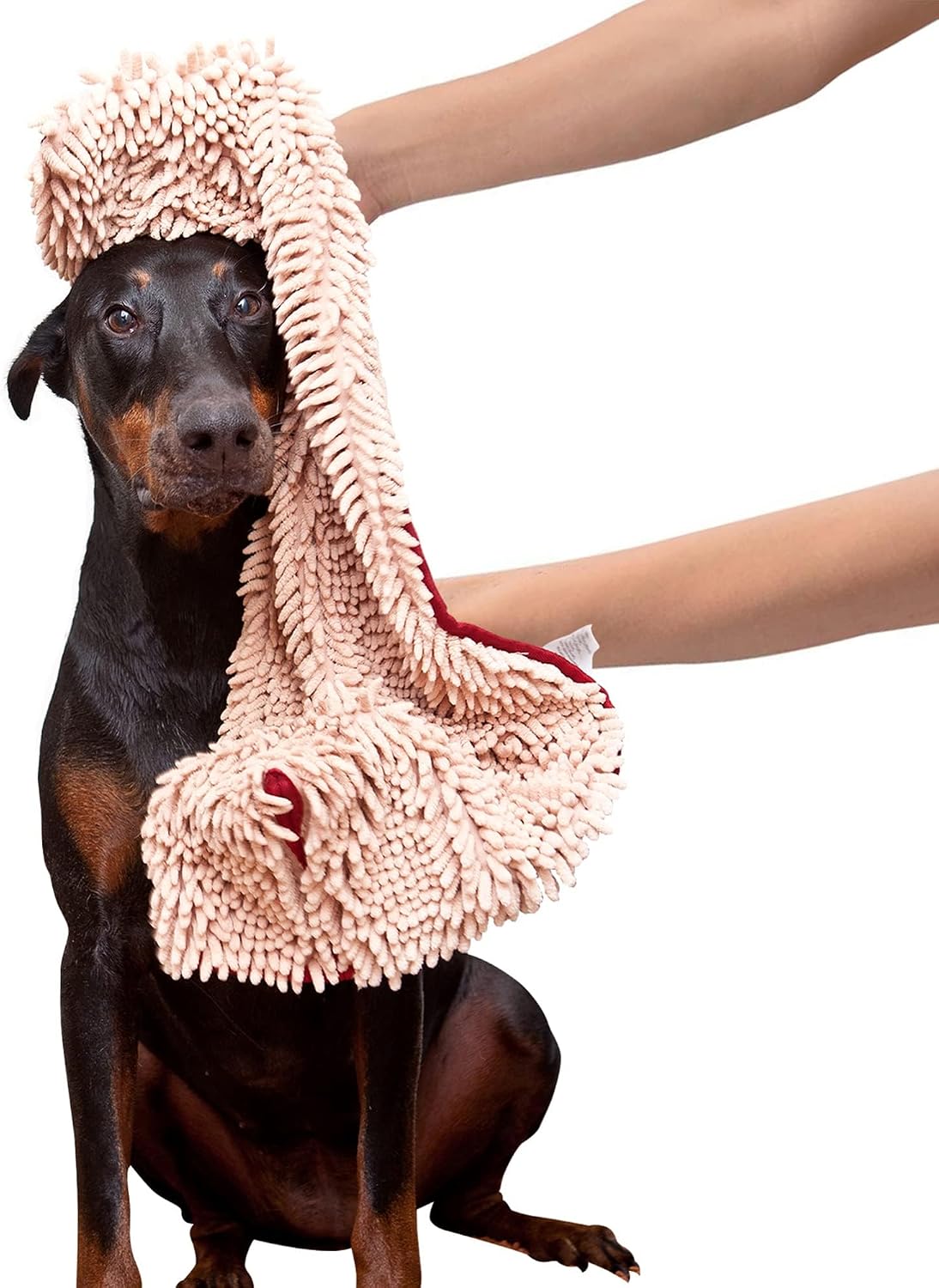
Soggy Doggy Super Shammy, beige, 31 by 14 inches
A microfiber chenille shammy with hand pockets for legs, belly, paws, and the coat. It is 31 by 14 inches, so a wet Golden gets dried in sections, and a second pass or a second towel is reasonable on a double coat. AAHA still wants a fresh-water rinse first when the swim was a pool, a lake, or the ocean, and a look at the ears. The shammy does not go in the ear canal.
When to call a vet
Go to an emergency clinic for the AKC's water-intoxication signs after swimming or hose play: staggering, bloating, vomiting, drooling, pale gums, dilated pupils, glazed eyes, difficulty breathing, a seizure, or collapse. Do not give salt, sports drinks, or any medicine from the house.
Call a veterinarian or the ASPCA Animal Poison Control Center at (888) 426-4435 if the dog swam or drank where blue-green algae was possible and then pants hard, drools, vomits, has diarrhea, seems disoriented, or seizes. Rinse the coat with fresh water so the dog does not lick more of it off, and tell the clinic what the water looked like.
Call for a tail that is limp and painful after a swim or a hard day, especially if the dog will not sit, rise, or posture to urinate. VCA wants an exam because other diseases mimic limber tail. Use only the pain medicine the veterinarian prescribes.
Call for ears that stay uncomfortable after drying: odor, discharge, redness, or head shaking that continues. The ear infections guide is the home-care page. The clinic is the one that decides on medicine.
Call for heat distress that does not settle in the shade: panting that stays extreme, weakness, vomiting, or a dog that cannot get up. The heat safety guide covers the cool-down on land. A swim in warm water is not the treatment.
Questions owners ask
Do Golden Retrievers already know how to swim?
Many take to water. AAHA still says ability varies, and the AKC's first-swim plan assumes the dog may need a sloping bank, a person in the water, and several short tries. A dog that avoids the water gets a different activity, not a shove off a dock.
Does my Golden need a life jacket?
The AKC recommends one for swimming and for boats, including for a capable swimmer. AAHA wants it snug, bright, and fitted with a handle. The BoatUS Foundation says the Coast Guard does not certify dog life jackets and that they have no buoyancy rating like a human jacket. The jacket helps you float and lift the dog. You still stay with the dog.
Is a pool safer than a lake?
It removes current and algae, and it adds walls, chemicals, and covers. AAHA wants a fence, a practiced exit, a rinse, and fresh drinking water on the deck. A dog that cannot find the steps can drown in a clear pool.
What does blue-green algae look like, and is clear water safe?
The ASPCA says toxic water often looks like pea-green paint or slime, sometimes piled on the shore. Dogs are poisoned by drinking it or swimming in it, and by licking cells off the coat. Clear water is not a lab test. Posted advisories and scum are both reasons to leave. Signs of poisoning are an immediate call to a veterinarian or (888) 426-4435.
Can a Golden drink too much while swimming?
Yes. The AKC describes water intoxication from swimming, retrieving, diving, and biting a hose. A flat toy, rest breaks, and a chance to urinate are the prevention. The water bowl on shore is still allowed. The emergency is a stagger, a bloat, vomiting, or a change in the eyes after water play. That goes to a clinic. There is no dose of anything to give at home.
What is swimmer's tail?
VCA's name for it is acute caudal myopathy: a strain of the tail muscles after overuse, a long swim, or cold water. The tail hangs, and the dog may cry when it is touched. Cornell says most dogs recover in a few days to two weeks. VCA says a few days to a week for an uncomplicated case, with rest and a prescribed anti-inflammatory. A fracture and a back problem can look identical, so the tail gets an exam. One episode does not retire the dog from the water.
What should I do for the ears and the coat after a swim?
Rinse fresh water over the coat, dry the body, and wipe the ear flap and the opening. Let the dog shake. Do not push a towel into the canal. AAHA says to call if shaking, odor, discharge, or redness shows up. That follow-up is the ear infections guide. A damp double coat is also a hot-spot problem on a warm day, which is why the summer care guide pairs the swim with drying.
Sources
Life jackets for swimming and boating, a snug neck, a sloping-bank introduction, supervision, flat toys, water intoxication from swallowed water, one minute of swimming compared with about four minutes of running as a practitioner's estimate, fresh drinking water, and a short leash on a boat: AKC, water safety for dogs. Hyponatremia, the sign list through seizures and coma, clinic treatment, the higher risk for dogs that swim with the mouth open, flat toys instead of tennis balls, and rest plus a chance to urinate: AKC, water intoxication in dogs.
Swimming ability varies, life jackets with a handle, floating toys that do not sink, pool fences, practiced exits, chlorine rinses, pool water as a drinking hazard only in large amounts, currents and riptides, blue-green algae, salt water, boat shade, distress signs, and ear checks after swimming: AAHA, water safety for pets.
Cyanobacteria in warm sunny weather, pea-green paint or slime, poisoning from drinking or swimming, signs from seizures through liver failure, rinsing the coat, posted advisories, and the poison-control number: ASPCA, blue-green algae toxicity.
Acute caudal myopathy, the slang names including swimmer's tail, overuse and cold water, the next-morning pain, look-alike diseases, rest plus a prescribed anti-inflammatory, and recovery in a few days to a week: VCA Animal Hospitals, limber tail. Recovery over a few days to two weeks, recurrence, and shorter cold swims: Cornell University College of Veterinary Medicine, Riney Canine Health Center, limber tail.
No Coast Guard certification and no buoyancy rating for dog life jackets, and horizontal flotation rather than a head-up human life jacket: BoatUS Foundation, dog life jacket tests. Rip currents, swimming parallel to shore, distance from piers and jetties, and throwing flotation instead of entering the water unaided: NOAA, rip current safety. Ice that may not hold, and the risk of going after a dog that has broken through: AVMA, cold weather animal safety.
P.S. Get the free Golden Retriever Owner Cheat Sheet — daily feeding, sleep, and care in one printable guide.
Get the Cheat Sheet when you join the newsletter — instant access in your welcome email.