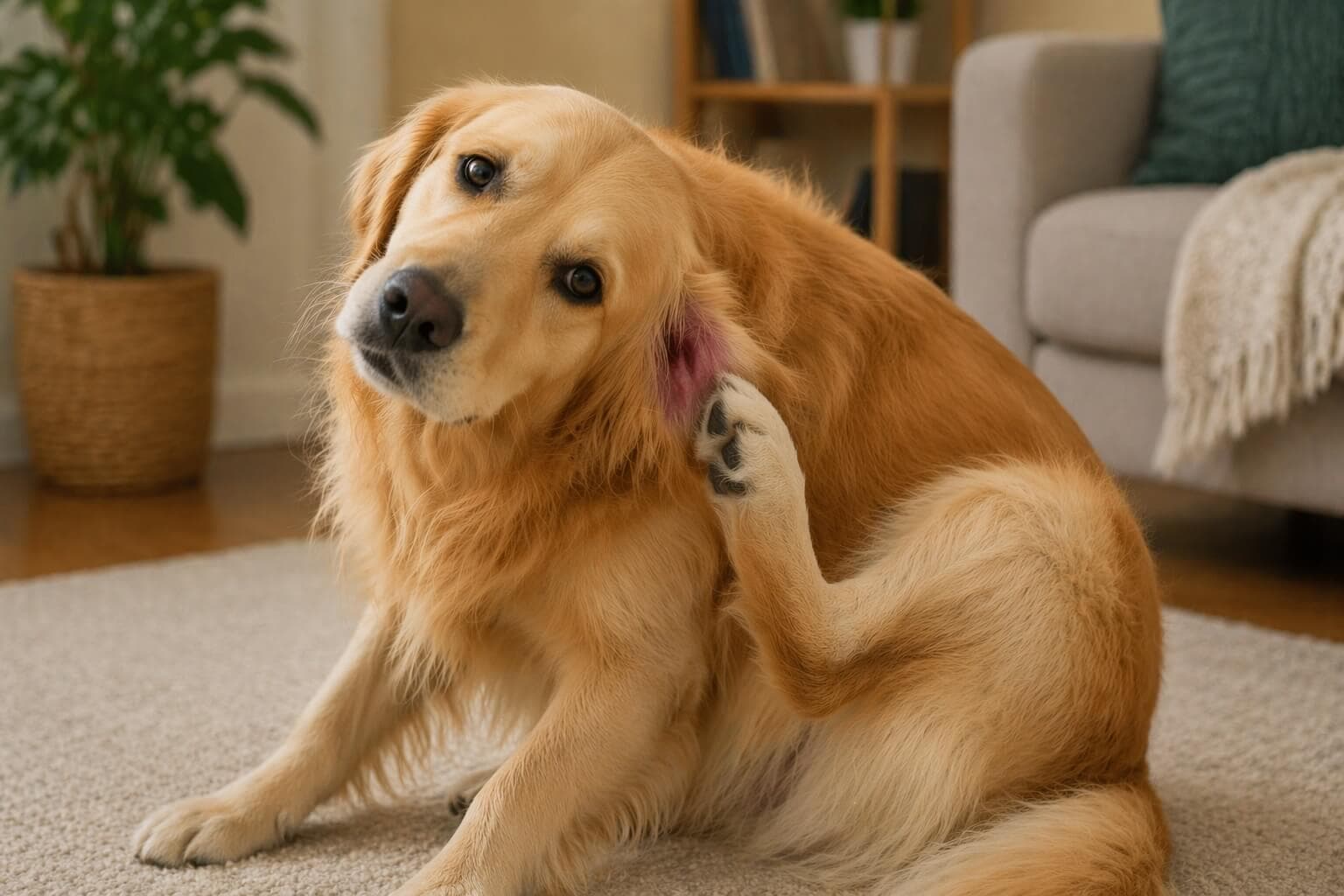
Golden Retriever Ear Infections Guide (2026)
GoldenRetriever.hair
By GoldenRetriever.hair
Quick Answer
Golden Retriever ear infections are common because of floppy ears, a dense coat, and moisture from swimming — all of which create a warm, humid environment where yeast and bacteria thrive. Common symptoms include head shaking, scratching at ears, redness, odor, and discharge. If your Golden is shaking their head, scratching constantly, or you notice ear smell or discharge, the first step is a vet visit. Ear infections need proper diagnosis — yeast, bacterial, and mite-related infections require different treatment. Guessing or using the wrong product can worsen the problem. Vets use an otoscope and often cytology (microscopic examination) to identify the cause and prescribe the right medication. Many Goldens with recurrent ear infections have underlying allergies; addressing those can reduce flare-ups. This guide covers causes, symptoms, types, treatment, and safe ear cleaning.
Why Golden Retrievers Are Prone to Ear Infections
Floppy Ears
Floppy-eared dogs like Golden Retrievers have less air circulation in the ear canal. Moisture and debris get trapped, creating ideal conditions for yeast and bacteria. This is one reason floppy ear dog infections are so common.
Dense Coat
The Golden’s thick coat extends into the ear area, trapping moisture and limiting airflow. Regular grooming around the ears helps, but the anatomy still favors infection.
Moisture from Swimming
Goldens love water. Water in the ear canal after swimming promotes yeast and bacterial growth. Drying ears after swimming is an important preventive step.
Allergy Connection
Many Golden Retrievers with recurrent ear infections have underlying skin allergies. Allergies inflame the ear canal, disrupting the normal barrier and allowing infections to take hold. See our skin allergies guide for more on managing allergies.
Signs & Symptoms of Ear Infections in Golden Retrievers
- 🐾Head shaking — Frequent or vigorous shaking
- 🐾Scratching — Pawing at ears, rubbing head on furniture or floor
- 🐾Redness — Inflamed ear canal or pinna
- 🐾Odor — Yeast often produces a distinct smell; bacterial infections can smell foul
- 🐾Discharge — Brown, yellow, or black; may be waxy, watery, or thick
- 🐾Pain when touched — Pulling away, crying, or guarding when ears are touched
- 🐾Holding ear flat — Or tilting head to one side
- 🐾Swelling — Of the ear flap or canal
Types of Ear Infections
Yeast Infections
Yeast (often Malassezia) overgrows in warm, moist ears. Common in dogs with allergies or after swimming. Typically produces brown, waxy discharge and a characteristic odor.
Bacterial Infections
Bacteria (e.g., Staphylococcus, Pseudomonas) can cause acute or chronic infections. Discharge may be yellow, green, or bloody; odor can be strong. Often accompanies or follows yeast overgrowth.
Ear Mites
Parasitic; more common in puppies and multi-dog households. Intense itching, dark, crumbly discharge. Less common in adult Goldens but possible.
Mixed Infections
Yeast and bacteria often occur together. Treatment must address both. Your vet will determine the mix through cytology.
Comparison: Yeast vs Bacterial vs Mite-Related Infections
| Type | Typical Symptoms | Discharge Appearance | Treatment Approach |
|---|---|---|---|
| Yeast | Itching, head shaking, odor; often chronic or recurrent | Brown, waxy; sometimes dark | Antifungal ear drops; address underlying allergies or moisture |
| Bacterial | Pain, redness, odor; may be acute or chronic | Yellow, green, or bloody; may be thick | Antibiotic ear drops; sometimes oral antibiotics for severe cases |
| Mite-related | Intense itching; often in puppies | Dark, crumbly (coffee-ground-like) | Parasiticide; treat all pets; clean environment |
What Causes Recurrent Ear Infections?
Allergies
Allergies (environmental or food) inflame the ear canal and disrupt the normal barrier. Many Goldens with recurring ear infections have underlying allergies. Managing allergies can reduce ear flare-ups. See our skin allergies guide.
Moisture
Water from swimming, bathing, or humidity promotes yeast and bacteria. Drying ears after water exposure helps prevent recurrence.
Improper Cleaning
Over-cleaning or using harsh products can irritate the ear and worsen problems. Cotton swabs pushed into the canal can damage the eardrum. Gentle, vet-recommended cleaning is best.
Underlying Medical Conditions
Hypothyroidism, autoimmune disease, or anatomical issues can contribute. If infections keep coming back, your vet may recommend further workup.
How Vets Diagnose Ear Infections
Otoscope Exam
A vet looks into the ear canal to assess inflammation, discharge, and whether the eardrum is intact. This guides safe treatment — some medications shouldn’t be used if the eardrum is ruptured.
Cytology (Microscope)
A sample of discharge is examined under a microscope to identify yeast, bacteria, or mites. This determines the right medication.
Culture (Chronic Cases)
For recurrent or resistant infections, a culture identifies the specific bacteria and which antibiotics will work.
Important: Diagnosis and treatment should be guided by your veterinarian. This guide is for education only.
Treatment Options
Topical Medications
Ear drops or ointments containing antifungal, antibacterial, or anti-inflammatory ingredients. Applied directly into the ear canal as directed. Complete the full course even if symptoms improve.
Oral Medications
For severe or deep infections, oral antibiotics or antifungals may be prescribed. Used when topical treatment alone isn’t enough.
Cleaning Protocols
Gentle ear cleaning before applying medication can improve effectiveness. Your vet will recommend a safe cleaner and technique.
Addressing Root Causes
If allergies drive recurrent infections, managing allergies — diet trials, medication, environmental control — can reduce flare-ups. See our skin allergies guide.
Golden Retriever Ear Cleaning (Prevention)
Safe Cleaning Frequency
For most Goldens, cleaning every 1–2 weeks is sufficient. Dogs prone to infections or who swim often may need more frequent cleaning. Your vet can advise based on your dog’s history.
How Often
- 🐾No history of infections: Every 1–2 weeks or after swimming
- 🐾Recurrent infections: As directed by your vet; may be more frequent during maintenance
- 🐾Active infection: Follow your vet’s protocol; don’t over-clean during treatment
What Not to Use
- 🐾Cotton swabs — Never insert into the ear canal; risk of eardrum damage
- 🐾Hydrogen peroxide — Can irritate healthy tissue
- 🐾Alcohol — Drying and irritating
- 🐾Human ear drops — Not formulated for dogs
Use only vet-recommended ear cleaners. Apply to the canal, massage the base of the ear, and let your dog shake. Wipe the outer ear with a soft cloth.
Drying Ears After Swimming
After swimming, dry the ear flap and canal opening with a towel or a drying ear solution. This simple step can significantly reduce infection risk.
Common Mistakes Owners Make
- 🐾Using cotton swabs deep in the canal — Can push debris deeper and damage the eardrum. Use only on the outer ear.
- 🐾Over-cleaning — Strips protective wax and can irritate the canal. Clean only as often as your vet recommends.
- 🐾Stopping medication early — Symptoms may improve before the infection is fully cleared. Finish the full course.
- 🐾Ignoring recurring infections — Recurrent ear infections often signal allergies or other underlying issues. A workup can identify and address the cause.
- 🐾Using leftover medication — Different infections need different treatments. Don’t reuse old drops without vet approval.
Learn more about GoldenRetriever.hair and our approach to Golden health.
When to See a Vet Immediately
Seek urgent care if your Golden has:
- 🐾Severe swelling — Of the ear flap or face
- 🐾Balance issues — Stumbling, falling, unable to stand
- 🐾Head tilt — Persistent tilt to one side (can indicate middle/inner ear involvement)
- 🐾Intense pain — Crying, aggression when ears are touched
- 🐾Blood in discharge — Or profuse bleeding from the ear
These can indicate a more serious problem, including middle ear infection or eardrum damage. Prompt evaluation is important.
FAQ
Why does my Golden Retriever keep scratching its ears?
Ear infections, allergies, ear mites, or foreign material can cause ear scratching. Golden Retrievers are prone to ear infections due to floppy ears and moisture. A vet exam and cytology can identify the cause and guide treatment.
What causes Golden Retriever ear smell?
Ear smell is often from yeast or bacterial overgrowth. Yeast infections typically produce a distinct, sometimes sweet odor; bacterial infections can smell foul. Proper diagnosis ensures the right treatment.
How often should I clean my Golden Retriever's ears?
For most Goldens, every 1–2 weeks is sufficient. Clean after swimming. Dogs with recurrent infections may need more frequent cleaning as directed by their vet. Over-cleaning can irritate the ear canal.
Are Golden Retriever ear infections contagious?
Yeast and bacterial ear infections are not typically contagious between dogs. Ear mites are contagious. Your vet can advise if other pets in the household need treatment.
Can ear infections cause long-term damage?
Untreated or recurrent ear infections can lead to chronic inflammation, scarring, and in severe cases, hearing loss. Middle ear involvement can affect balance. Early treatment and addressing underlying causes help prevent long-term damage.
Why does my Golden Retriever shake its head?
Head shaking is a common sign of ear discomfort — infection, mites, foreign material, or moisture. Occasional shaking is normal; frequent or vigorous shaking warrants a vet exam.
What is the brown stuff in my Golden Retriever's ears?
Brown discharge can be normal ear wax, yeast overgrowth, or debris. Thick, smelly, or excessive brown discharge often indicates infection. Your vet can examine a sample under the microscope to determine the cause.
Do allergies cause ear infections in Golden Retrievers?
Yes. Allergies inflame the ear canal and disrupt the normal barrier, allowing yeast and bacteria to overgrow. Many Goldens with recurrent ear infections have underlying allergies. Managing allergies can reduce ear flare-ups. See our skin allergies guide.
How can I prevent ear infections in my Golden Retriever?
Dry ears after swimming, clean gently every 1–2 weeks with a vet-recommended product, avoid cotton swabs in the canal, and address underlying allergies if infections recur. Weight management also supports overall health; see our weight and obesity guide and lifespan guide for wellness tips.
P.S. Get the free Golden Retriever Owner Cheat Sheet — daily feeding, sleep, and care in one printable guide.
Get the Cheat Sheet when you join the newsletter — instant access in your welcome email.