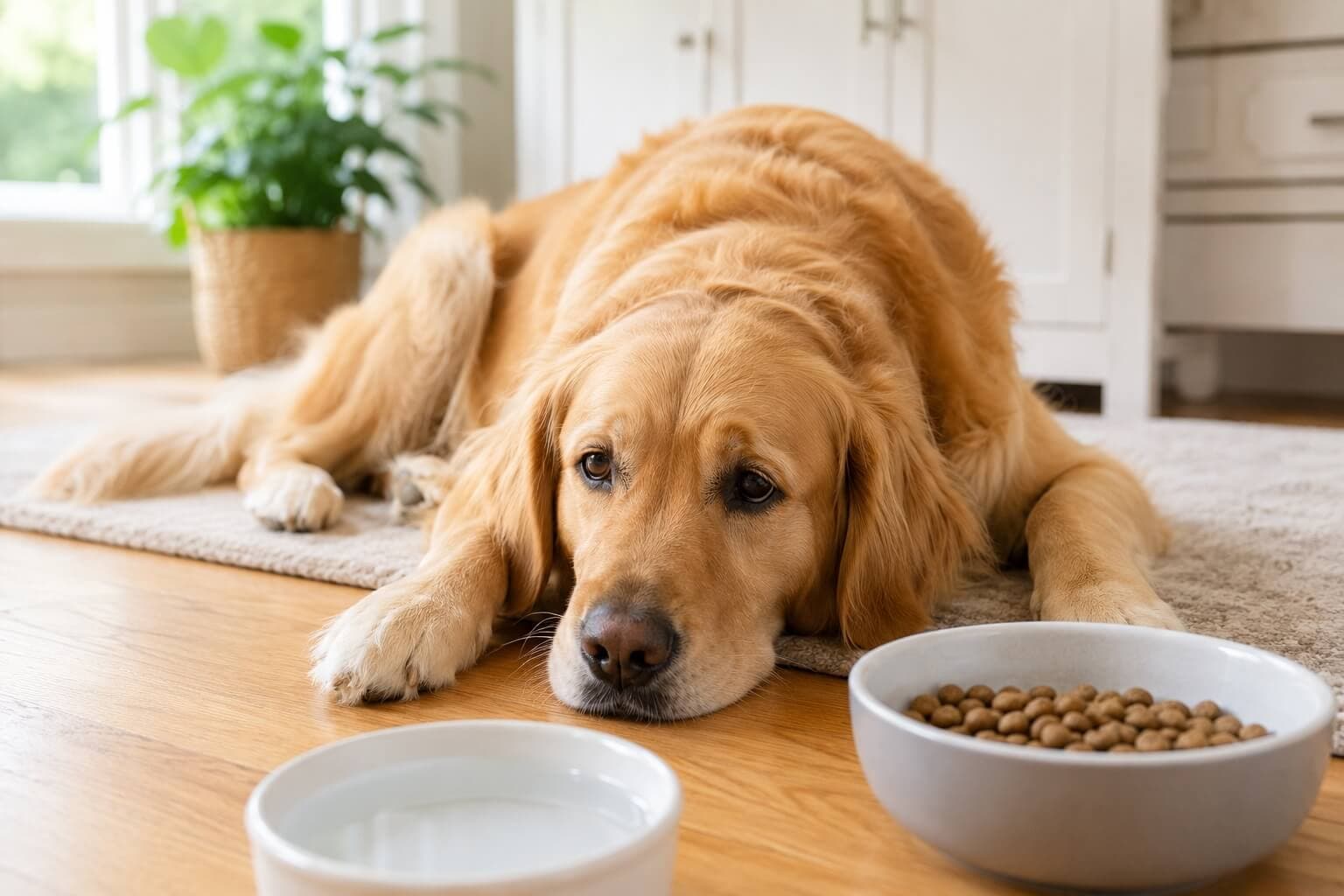
Golden Retriever Diarrhea: Causes, What to Feed & When to Call the Vet
GoldenRetriever.hair
By GoldenRetriever.hair
Loose stool happens to many dogs at some point. Golden Retriever diarrhea can be mild and short-lived, but it can also mean a food upset, parasites, stress, infection, toxin exposure, or a more serious medical problem. Puppies, seniors, and dogs who are already unwell can get into trouble faster, so it pays to take diarrhea seriously without panicking.
This guide is educational only. It is not a substitute for an exam, diagnosis, or treatment plan from your veterinarian. When in doubt, call your vet.
Quick Answer: What Should You Do If Your Golden Retriever Has Diarrhea?
- 🐾Look at the whole dog, not just the stool: energy, appetite, thirst, gum color, and whether they are vomiting or in pain.
- 🐾Remove access to new treats, table scraps, compost, garbage, and anything they might have scavenged.
- 🐾Offer fresh water freely unless your vet has told you otherwise for a specific condition.
- 🐾Do not give human anti-diarrhea medication (or any medication) unless your veterinarian tells you it is safe for your dog.
- 🐾Call your vet if diarrhea lasts more than 24–48 hours, if there is blood or black/tarry stool, repeated vomiting, severe lethargy, signs of dehydration, bloat-like belly pain, suspected toxin ingestion, or pale gums—or sooner for puppies, seniors, or dogs with other illnesses.
- 🐾Puppies: call sooner rather than waiting, especially with vomiting, low energy, poor appetite, or watery stool that keeps coming.
If your Golden Retriever seems very weak, painful, bloated, repeatedly vomiting, or may have eaten something toxic, treat it as urgent and contact a veterinarian or emergency clinic right away.
Golden Retriever Diarrhea: Common Causes
Many things can upset a Golden’s gut. Often more than one factor is involved.
- 🐾Sudden food changes — switching kibble overnight is a common trigger.
- 🐾Too many treats or table scraps — rich, fatty, or unfamiliar foods may overwhelm digestion.
- 🐾Garbage or scavenging — spoiled food, compost, or “street snacks” can cause irritation or infection.
- 🐾Food intolerance or sensitivity — not every food sensitivity is a true allergy, but both can contribute to golden retriever upset stomach signs.
- 🐾Stress or routine changes — travel, boarding, new pets, or loud events may loosen stool in some dogs.
- 🐾Parasites — giardia, worms, and other parasites can cause diarrhea; diagnosis needs testing.
- 🐾Viral or bacterial infections — contagious illness is possible, especially with exposure to other dogs’ stool.
- 🐾Eating too fast — gulping food may cause vomiting or softer stool in some dogs; ask your vet about safe slow-feeding strategies if this is a pattern.
- 🐾Medication side effects — antibiotics and other drugs may change stool; report changes to your vet.
- 🐾Pancreatitis or other internal disease — sometimes diarrhea is a clue to a bigger problem, not “just food.”
- 🐾Toxins or foreign objects — plants, chemicals, toys, or bones can be dangerous; urgent care may be needed.
Golden Retriever Puppy Diarrhea: Why It Needs Extra Caution
Golden retriever puppy diarrhea deserves a lower threshold for calling the vet. Puppies can dehydrate more quickly than adults, and common concerns include parasites, dietary change after adoption, stress, and infectious illness.
Diarrhea in the first weeks home may reflect a diet transition, stress, parasites, or infection—often you cannot tell which from stool alone. If a puppy is bright, eating, drinking, and has a single soft stool, some vets still prefer a quick call for guidance. If there is vomiting, lethargy, poor appetite, blood, or repeated watery stool, treat it as urgent.
For routine puppy setup and feeding rhythm, see Golden Retriever Puppy Care Guide, Golden Retriever Puppy Feeding Schedule Chart, and Golden Retriever Puppy Checklist.
What to Feed a Golden Retriever With Diarrhea
What to feed depends on severity, age, and other symptoms. For mild, short-lived loose stool in an otherwise healthy adult who is eating and drinking, some veterinarians suggest a temporary bland diet—but this is not right for every dog, and you should ask your vet first if symptoms are moderate or severe, last more than a day, or the dog is a puppy, senior, pregnant, nursing, or medically fragile.
Examples people sometimes discuss with their vet include plain boiled chicken or turkey with plain white rice, in small, frequent meals, if the dog tolerates it. Avoid fatty foods, rich treats, dairy, and new foods while stool is abnormal. When stool firms up, transition slowly back to regular food over several days rather than an abrupt switch.
For longer-term feeding questions, use Golden Retriever Feeding Chart, Golden Retriever Feeding Schedule Guide, Best Dog Food for Golden Retrievers, and Golden Retriever Weight & Obesity Guide—but remember that chronic or recurring diarrhea needs veterinary diagnosis, not only a diet tweak.
What Not to Do
- 🐾Do not give human anti-diarrhea drugs (or any medication) without your vet’s approval—risk varies by age, size, other symptoms, and medications already in use.
- 🐾Do not ignore red flags such as blood, black/tarry stool, collapse, or a painful, distended abdomen.
- 🐾Do not bounce between foods every few days; that makes it harder for your vet to interpret patterns.
- 🐾Do not withhold water unless a veterinarian specifically instructs you to for a controlled situation (for example, some pre-procedure instructions).
- 🐾Do not assume all diarrhea is “just something they ate.”
- 🐾Do not delay calling for puppies, seniors, or dogs with other health problems.
When to Call the Vet
Use this as a decision aid, not a replacement for professional judgment.
Call your vet soon if:
- 🐾Diarrhea lasts more than 24–48 hours
- 🐾Your puppy has diarrhea
- 🐾Your senior dog or medically complex dog has diarrhea
- 🐾Diarrhea keeps coming back over several weeks
- 🐾Appetite drops or your Golden is losing weight
- 🐾You notice signs of dehydration, such as dry gums, sunken eyes, skin tenting, or very low energy
- 🐾Diarrhea starts after a new medication
Seek urgent or emergency care if:
- 🐾There is blood in the stool
- 🐾Stool looks black or tarry
- 🐾Your Golden has repeated vomiting with diarrhea
- 🐾Your dog is severely lethargic, collapsing, or has pale gums
- 🐾The abdomen looks painful, tight, or bloated
- 🐾Your Golden may have eaten something toxic or swallowed a foreign object
- 🐾Your dog is straining but producing little or no stool
A painful, bloated abdomen can be an emergency because Goldens can be at risk for GDV. Read the Golden Retriever Bloat (GDV) Guide for more context.
Some chronic conditions—including serious diseases—can present with gut signs. If diarrhea is one piece of a bigger pattern, your vet may discuss broader screening. For context on serious breed-related topics, see Golden Retriever Cancer Guide and Golden Retriever Senior Care Guide when your dog is aging or has ongoing health concerns.
How to Prevent Diarrhea in Golden Retrievers
You cannot prevent every case, but you can reduce common triggers:
- 🐾Transition food slowly over about 7–10 days (or as your vet recommends).
- 🐾Measure meals and avoid accidental double-feeding.
- 🐾Limit rich treats and table scraps.
- 🐾Block access to garbage, compost, and counters.
- 🐾Keep parasite prevention and stool checks up to date with your vet’s plan.
- 🐾Avoid frequent diet experiments; change foods deliberately, not on impulse.
- 🐾Watch stool when you change food, treats, or supplements.
- 🐾Consider stress when routines change (moving, new pets, travel).
For feeding consistency and weight management, pair this with Golden Retriever Feeding Chart and Golden Retriever Weight & Obesity Guide.
Related Golden Retriever Guides
- 🐾Golden Retriever Feeding Chart
- 🐾Best Dog Food for Golden Retrievers
- 🐾Golden Retriever Allergies Guide
- 🐾Golden Retriever Skin Problems Guide
- 🐾Golden Retriever Bloat (GDV) Guide
- 🐾Golden Retriever Puppy Care Guide
FAQ
Why does my Golden Retriever have diarrhea?
Common reasons include diet change, scavenging, stress, parasites, infection, medication effects, and underlying disease. The same appearance of diarrhea can have different causes, so monitor closely and call your vet when red flags appear or symptoms persist.
What can I feed my Golden Retriever with diarrhea?
For some mild cases, vets may suggest a short-term bland diet after they have ruled out emergencies—but ask first, especially for puppies, seniors, vomiting, blood in stool, or illness lasting more than a day. Do not lock in a long-term homemade diet without veterinary guidance.
When should I worry about Golden Retriever diarrhea?
Worry sooner for blood, black/tarry stool, repeated vomiting, severe lethargy, dehydration, bloat-like pain, pale gums, toxin exposure, puppies, seniors, or diarrhea beyond 24–48 hours. Golden retriever diarrhea with those features is not a wait-and-see situation.
Is diarrhea common in Golden Retriever puppies?
It can be, but puppy diarrhea still needs extra caution because puppies may dehydrate faster and may have parasites or infections that adults handle differently. When unsure, call your vet.
Can changing dog food cause diarrhea?
Yes. Sudden food changes are a frequent cause. A gradual transition is one of the best preventive steps.
Should I give my Golden Retriever medicine for diarrhea?
Do not use human medications unless your veterinarian says they are appropriate for your dog’s age, weight, and overall situation. Some drugs are unsafe or misleadingly “helpful” without a diagnosis.
Can diarrhea be related to allergies?
Sometimes. Food sensitivity or other allergy-related issues can contribute to gut signs, but they are not the only explanation. For skin and allergy context, see Golden Retriever Allergies Guide.
Most Goldens bounce back quickly when the cause is minor—but the safest mindset is: support hydration, keep the diet boring and consistent, remove obvious triggers, and escalate to your vet when warning signs show up. You do not need to figure it out alone; that is what your veterinary team is for.
P.S. Get the free Golden Retriever Owner Cheat Sheet — daily feeding, sleep, and care in one printable guide.
Get the Cheat Sheet when you join the newsletter — instant access in your welcome email.