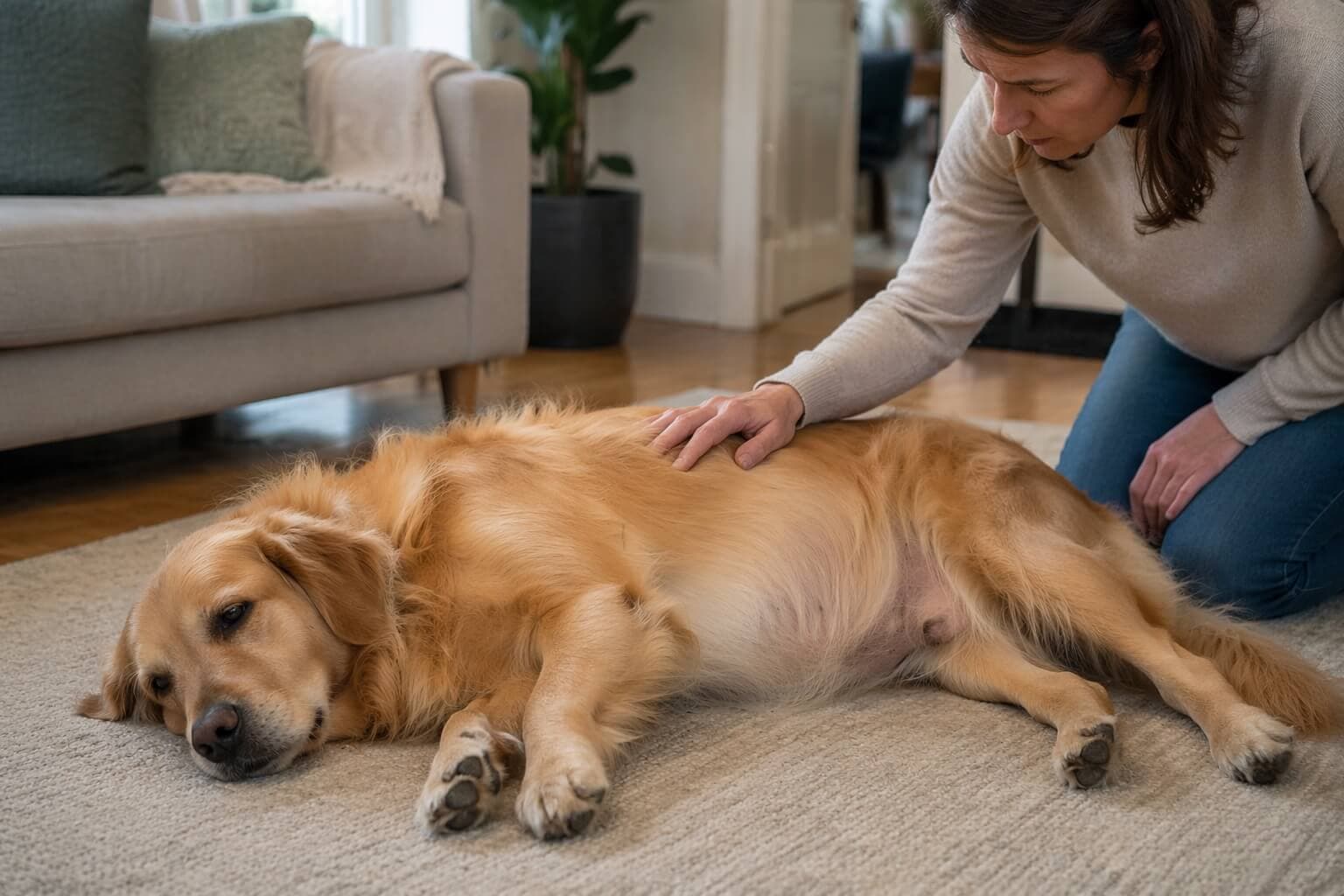
Golden Retriever Bloat (GDV) Guide (2026)
GoldenRetriever.hair
By GoldenRetriever.hair
Quick Answer
Golden Retriever bloat — gastric dilatation volvulus (GDV) — is a life-threatening emergency. The stomach fills with gas and may twist, cutting off blood flow and causing shock. Early warning signs include a distended abdomen, unproductive retching (trying to vomit but nothing comes up), excessive drooling, restlessness or pacing, and rapid breathing. If you see these signs, call your vet or an emergency clinic immediately. Do not wait. GDV can progress rapidly; minutes matter. There are no safe home treatments. Transport your dog carefully and get veterinary care as fast as possible. Golden Retrievers are at higher risk due to their large, deep chest. This guide covers what bloat is, signs to watch for, what to do in an emergency, and prevention strategies.
What Is Bloat in Golden Retrievers?
Gastric Dilatation
The stomach fills with gas, fluid, or food. It expands and presses on surrounding organs and blood vessels. This alone can cause distress and shock.
Volvulus (Twisting)
In GDV, the stomach twists on itself. This traps gas and cuts off blood flow to the stomach and sometimes the spleen. Tissue can die; toxins build up; shock and organ failure follow quickly.
Why GDV Is Life-Threatening
Without treatment, GDV leads to shock, organ damage, and death. Survival depends on rapid diagnosis, stabilization, and surgery. Even with prompt care, outcomes vary. Time is critical.
Why Golden Retrievers Are at Risk
Large, Deep Chest
Large, deep-chested breeds are at higher risk. The stomach has more room to move and twist. Golden Retrievers fit this profile.
Rapid Eating
Dogs that eat quickly swallow more air. This can contribute to gastric dilatation. Slower feeding may help reduce risk.
Genetics
Breed and family history affect risk. Some lines have higher incidence. You cannot change genetics, but you can reduce modifiable factors.
Stress Factors
Stress, anxiety, or excitement around mealtimes may play a role. Feeding in a calm environment is a reasonable precaution.
Signs of Bloat in Golden Retrievers
- 🐾Distended abdomen — Swollen, tight, or drum-like belly; may appear rapidly
- 🐾Unproductive retching — Trying to vomit but nothing comes up (or only small amounts)
- 🐾Excessive drooling — More than usual; may be thick
- 🐾Restlessness / pacing — Unable to get comfortable; Golden Retriever pacing and drooling together is a concerning combination
- 🐾Rapid breathing — Panting or labored respiration
- 🐾Pale gums — May indicate poor circulation or shock
- 🐾Weakness or collapse — In advanced cases
Simple Bloat vs GDV
| Type | What Happens Internally | Urgency Level | Typical Symptoms | Treatment Urgency |
|---|---|---|---|---|
| Simple bloat (gastric dilatation) | Stomach fills with gas/fluid but does not twist | Urgent | Distended abdomen, discomfort, may retch; may progress to GDV | Vet evaluation needed; may be managed without surgery if caught early |
| GDV (gastric dilatation volvulus) | Stomach twists; blood flow cut off; shock develops | Life-threatening emergency | Unproductive retching, rapid swelling, restlessness, pale gums, collapse | Immediate surgery required; stabilization first; every minute counts |
Emergency – Call Your Vet Immediately If…
If your Golden Retriever shows any of these signs, call your vet or an emergency clinic right away. Do not wait.
- 🐾Unproductive retching — Trying to vomit repeatedly with little or nothing coming up
- 🐾Rapid abdominal swelling — Belly becoming visibly distended in a short time
- 🐾Collapse — Weakness, inability to stand, or collapse
- 🐾Pale or white gums — Indicates poor circulation or shock
- 🐾Weak or rapid pulse — Or difficulty finding a pulse
- 🐾Rapid, labored breathing — Especially with a distended abdomen
- 🐾Obvious distress — Restlessness, pacing, inability to get comfortable with a swollen belly
GDV is a surgical emergency. There are no safe home treatments. Get to a vet as fast as you can.
What To Do If You Suspect Bloat
- 🐾Call your vet or an emergency clinic immediately — Describe the signs. They will advise you to come in.
- 🐾Do not wait — Even if symptoms seem mild, they can worsen quickly.
- 🐾Do not attempt home remedies — No gas-relief medications, no forcing water, no manipulation. These can delay care or cause harm.
- 🐾Transport carefully — Keep your dog as calm as possible. Avoid pressure on the abdomen. Drive safely but without unnecessary delay.
- 🐾Know your nearest emergency clinic — Have the address and number saved. After-hours, regular vets may be closed.
How Vets Diagnose and Treat GDV
Diagnosis
X-rays confirm gastric dilatation and whether the stomach has twisted. Bloodwork assesses shock and organ function.
Stabilization
Before surgery, vets stabilize the dog — IV fluids, sometimes decompression to release gas, and treatment for shock. This improves surgical outcomes.
Surgery (Gastropexy)
Surgery untwists the stomach (if twisted), assesses tissue viability, and typically includes gastropexy — tacking the stomach to the body wall to reduce the risk of future twisting.
Post-Op Care
Recovery involves hospitalization, pain management, and gradual return to normal activity. Your vet will provide specific instructions.
Important: Diagnosis and treatment must be performed by a veterinarian. This guide is for education only.
Can Bloat Be Prevented?
Feeding Smaller Meals
Splitting daily food into 2–3 smaller meals may reduce risk. Avoid one large meal per day.
Slower Feeding Bowls
Puzzle feeders or slow-feed bowls can reduce air swallowing. See our feeding chart for portion guidance.
Avoiding Intense Exercise Immediately After Meals
Wait at least 1–2 hours after a meal before vigorous exercise. This is a common recommendation, though evidence is mixed.
Prophylactic Gastropexy
Some owners choose preventive gastropexy — tacking the stomach to the body wall during a planned surgery (e.g., spay) — to reduce GDV risk. This is a decision to make with your vet based on your dog’s risk factors and your situation.
Common Myths About Bloat
Raised Bowls
Some sources claim raised bowls increase bloat risk; others suggest they help. Current evidence does not clearly support either. If your vet has a recommendation for your dog, follow it.
Grain-Free Diets
Grain-free diets have been linked to heart disease (DCM) in some dogs, not to bloat. There is no evidence that grain-free feeding prevents bloat. Focus on evidence-based prevention: smaller meals, slower eating, avoiding exercise right after meals.
Water Restriction
Restricting water around meals is not a proven prevention and can cause dehydration. Provide fresh water; avoid excessive water intake immediately before or after large meals if your vet advises, but do not withhold water inappropriately.
FAQ
Can Golden Retrievers get bloat?
Yes. Golden Retrievers are large, deep-chested dogs and are at higher risk for bloat (GDV). Knowing the signs and having an emergency plan can save lives.
What are the first signs of bloat in a Golden Retriever?
Early signs include a distended abdomen, unproductive retching (trying to vomit with nothing coming up), excessive drooling, restlessness or pacing, and rapid breathing. If you see these, call your vet immediately.
Is bloat in Golden Retrievers always fatal?
No, but it is life-threatening. Survival depends on how quickly the dog receives veterinary care. Prompt diagnosis, stabilization, and surgery give the best chance of recovery. Delaying care significantly worsens outcomes.
How quickly does GDV progress?
GDV can progress in minutes to hours. Some dogs deteriorate rapidly. Do not wait to see if symptoms improve — assume it is an emergency and seek care immediately.
Should I feed my Golden Retriever from a raised bowl to prevent bloat?
Evidence is mixed. Some studies suggest raised bowls may increase risk; others do not. There is no strong consensus. Discuss with your vet. Focus on proven strategies: smaller meals, slower eating, and avoiding intense exercise right after meals.
What is prophylactic gastropexy?
Gastropexy is a surgery that tacks the stomach to the body wall so it cannot twist. Prophylactic gastropexy is done preventively (often during spay/neuter) in high-risk dogs. It significantly reduces the risk of GDV recurrence. Discuss with your vet whether it is appropriate for your Golden.
Can I treat bloat at home?
No. There are no safe home treatments for bloat or GDV. Attempting home remedies wastes time and can cause harm. Get to a vet immediately.
Does feeding smaller meals help prevent bloat?
Splitting food into 2–3 smaller meals per day is a commonly recommended prevention strategy. It may reduce gastric distension. See our weight and obesity guide for portion guidance and our lifespan guide for overall health priorities.
What should I do if my Golden Retriever has a swollen stomach and is retching?
Call your vet or an emergency clinic immediately. Do not wait. Transport your dog carefully and get veterinary care as fast as possible. These are emergency signs of bloat. Learn more about GoldenRetriever.hair and our approach to Golden health.
P.S. Get the free Golden Retriever Owner Cheat Sheet — daily feeding, sleep, and care in one printable guide.
Get the Cheat Sheet when you join the newsletter — instant access in your welcome email.