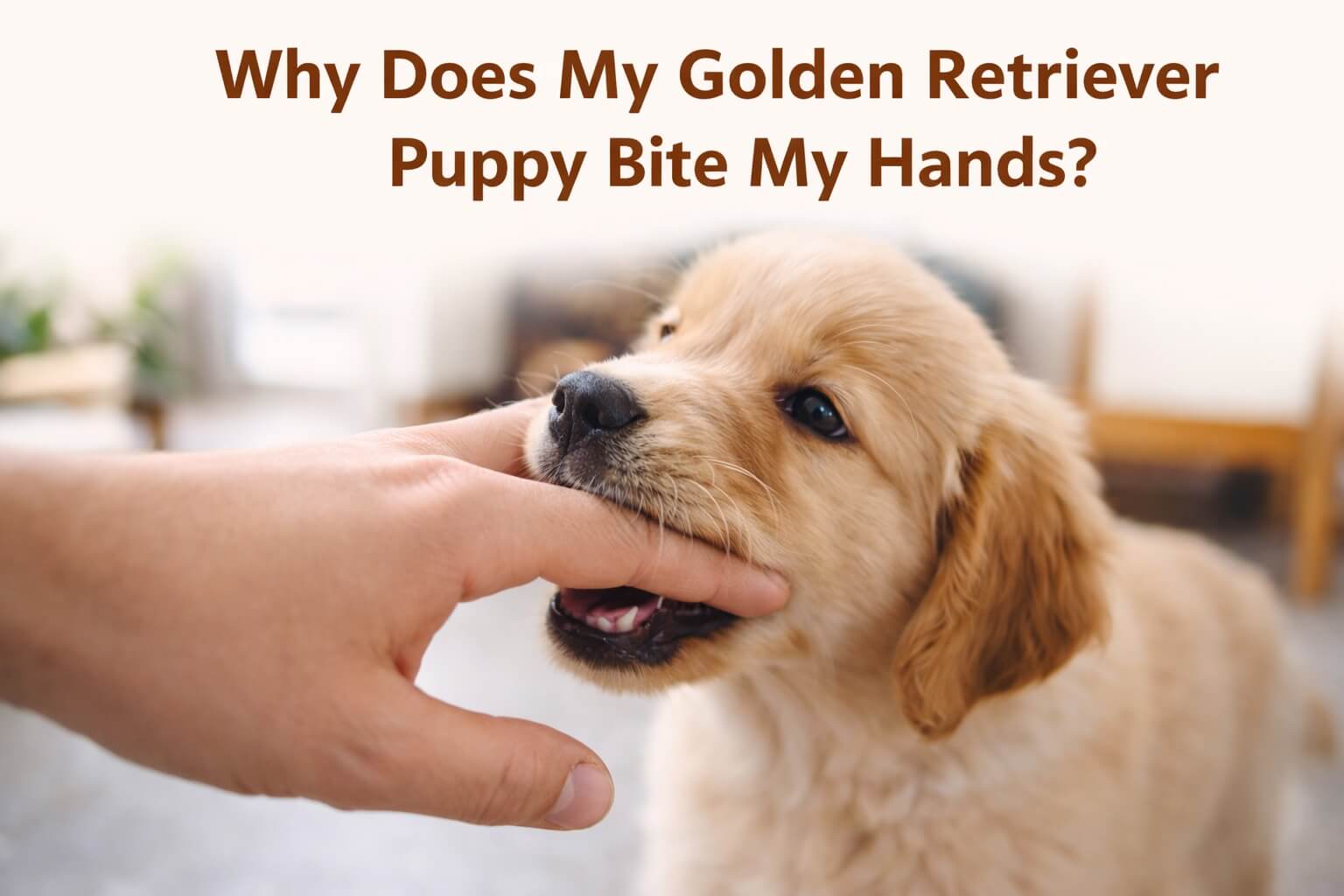
Why Does My Golden Retriever Puppy Bite My Hands?
GoldenRetriever.hair
By GoldenRetriever.hair
If your Golden Retriever puppy seems obsessed with your hands — nibbling fingers, grabbing sleeves, or launching at your palms — you are describing one of the most common puppy behaviors in the breed. Hands are not “bad.” They are simply the most interesting toys in the room: they move, smell like food, type on keyboards, and react dramatically when teeth make contact.
This guide explains why hands get targeted, what is normal, what accidentally trains the habit, and a practical plan to reduce hand biting without scaring your puppy. For broader biting context (including when it feels “aggressive”), see our Golden Retriever puppy biting aggressively guide. For foundational mouthing and bite inhibition, start with the Golden Retriever puppy biting guide.
Quick Summary
- 🐾Hands are easy targets: they move, smell interesting, and often reward biting with attention or motion
- 🐾Most hand biting is normal mouthing and play, not dominance or malice
- 🐾Common drivers include teething, overstimulation, overtiredness, and accidental reinforcement
- 🐾Fixing it is mostly management + calm consequences + redirection — not punishment drama
- 🐾If biting is paired with fear, guarding, or injury, treat it as more than “typical puppy stuff”
Table of Contents
- 🐾Quick Summary
- 🐾Quick Answer: Why Does My Golden Retriever Puppy Bite My Hands?
- 🐾Is It Normal for Golden Retriever Puppies to Bite Hands?
- 🐾Why Puppies Target Hands Specifically
- 🐾Why Does My Puppy Bite My Hands and Not My Partner’s?
- 🐾Most Common Reasons Your Golden Retriever Puppy Bites Your Hands
- 🐾Biting Hands During Play vs Biting From Overstimulation
- 🐾Teething vs Attention-Seeking vs Overexcitement
- 🐾What to Do in the Moment When Your Puppy Bites Your Hands
- 🐾How to Stop Hand Biting Step by Step
- 🐾Mistakes That Accidentally Teach Puppies to Bite Hands
- 🐾When Hand Biting May Be a Bigger Problem
- 🐾FAQ
- 🐾Conclusion
Quick Answer: Why Does My Golden Retriever Puppy Bite My Hands?
Because your hands are available, moving, and rewarding. Golden Retriever puppies explore the world with their mouths, and Goldens tend to be social and persistent. When you pet, play, type, or wave your arms, your puppy experiences that as an invitation to interact — and “interaction” often means mouthing.
Hands also sit at perfect puppy height. They carry food scent from snacks and meals. They respond quickly when teeth land, which can feel like a fun game even when you are frustrated.
That does not mean you should accept painful biting. It means the fix is usually training mechanics (what you do before and after teeth touch skin), not a personality problem.
Is It Normal for Golden Retriever Puppies to Bite Hands?
Yes — hand targeting is extremely common, especially between roughly 8 weeks and 5–6 months, when teething, play drive, and impulse control are all still developing. Many puppies improve noticeably as routines stabilize — see our puppy biting timeline chart for a simple phase overview.
“Normal” does not mean “ignore it.” Hand biting can:
- 🐾hurt,
- 🐾frighten guests or kids,
- 🐾and become a rehearsed habit if the puppy learns it reliably produces attention.
Your goal is not to eliminate every soft mouth check forever on day one. Your goal is to teach a clear rule: teeth on people ends the fun, and toys and calm behavior earn rewards.
Why Puppies Target Hands Specifically
Hands Move Like Prey (Even When You Are Not Trying)
Quick wrist flicks, typing, and reaching toward the puppy can trigger chase-and-mouth behavior. Puppies are not “being mean”; they are responding to motion.
Hands Are Warm, Soft, and Close
Mouthing a sleeve or finger is physically easy compared to wrestling a rope on the floor. If the easiest interesting thing is your hand, your puppy will choose it.
Hands Deliver Food and Petting
Your puppy learns associations fast:
- 🐾hands appear → meals,
- 🐾hands appear → affection,
- 🐾hands appear → play.
That makes hands a high-value focal point.
Goldens Are People-Directed
Many Golden Retrievers want to be near you constantly. “Near you” often means “near your hands.” That proximity increases accidental bites during excitement.
Why Does My Puppy Bite My Hands and Not My Partner’s?
It is common for one person to feel “picked on.” That usually reflects who the puppy has learned to engage with, not favoritism.
- 🐾More hand motion: typing, cooking, gesturing while talking, or reaching toward the puppy more often
- 🐾Bigger reactions: louder voices, faster movement, or quicker pull-backs when teeth touch skin — all of which can feel like part of the game
- 🐾More hand play: wrestling, finger games, or letting teeth-on-skin slide “just this once”
- 🐾More food scent on hands: the person who snacks, feeds, or preps meals is extra interesting
- 🐾Stronger reinforcement history: puppies repeat what works — if biting one person reliably produces attention, they will go back to that person
Household consistency matters: agree on the same rule (teeth on people ends the fun) and the same calm reset so your puppy does not learn two different games under one roof.
Most Common Reasons Your Golden Retriever Puppy Bites Your Hands
1. Normal Play Mouthing
Puppies play with littermates using teeth. Humans get the same “play style” unless you teach a different one.
2. Teething Discomfort
Teething can increase mouthing and chewing. If you want a week-by-week lens, use our teething timeline chart.
3. Overstimulation
Long, wild play sessions often end in biting. The puppy is not “bad” — they are too activated to make good choices.
4. Overtiredness
An exhausted puppy bites more. If evenings are brutal, check naps and wind-down routines — our potty training schedule chart is also useful as a simple daily rhythm template (meals, naps, calm windows), even if potty training is not your main issue.
5. Attention-Seeking (Even “Negative” Attention)
If biting is the fastest way to make you look, speak, or move, your puppy will repeat it. Puppies do not moralize “good vs bad attention” the way humans do.
6. Under-Exercised Brain or Predictable Boredom
When mental needs are low, mouthiness can become a hobby. Short training reps help — our basic obedience training guide is a good companion here.
7. Accidental Training History
If hand wrestling was cute at 8 weeks, your puppy may now think hands are toys. Habits form fast.
Biting Hands During Play vs Biting From Overstimulation
Use this as a practical lens, not a perfect diagnosis. Many puppies show both, depending on the minute.
| Signal | Play-Driven Hand Mouthing | Overstimulation / “Too Wired” |
|---|---|---|
| Body language | Bouncy, loose, returns to play cues | Frantic, harder to redirect, less “listening” |
| Timing | Often starts when you initiate play | Often worsens after long play or late evening |
| Response to pause | Can settle briefly with a clear reset | May escalate if you add fast movement or loud voices |
| What helps | Toy swap, short play, rules | End play earlier, nap, calmer environment |
If your puppy is mostly “wired,” read when Golden Retrievers calm down for a realistic maturity lens — it helps owners survive the messy middle without panic.
Teething vs Attention-Seeking vs Overexcitement
These overlap, but the interventions differ slightly.
Teething-Heavy Biting
- 🐾Worse when gums are sore.
- 🐾Improves with legal chews, frozen options (if vet-approved), and rest.
- 🐾Often paired with chewing furniture or corners, not only hands.
Attention-Seeking Biting
- 🐾Happens when you are focused elsewhere (phone, laptop, conversation).
- 🐾Drops when you proactively reward calm nearby behavior before the biting starts.
Overexcitement Biting
- 🐾Spikes during greetings, zoomies, or rough play.
- 🐾Improves when you shorten play and avoid “wrestling with hands” entirely.
If you are unsure which bucket dominates, track one week of timestamps. Patterns usually become obvious fast.
What to Do in the Moment When Your Puppy Bites Your Hands
Think boring, predictable, safe.
- 🐾Freeze your hands. Fast flailing reads as “game on.”
- 🐾Offer a toy at mouth level if you can do it calmly.
- 🐾If biting continues, stand up and remove attention for 10–30 seconds (a micro-reset). If needed, step behind a gate (reverse timeout: you leave calmly).
- 🐾If the puppy is overtired, switch to a chew + low stimulation (pen/crate/ex-pen with something calm — not as punishment theater).
- 🐾Around children: adults manage the puppy; kids do not “train bite inhibition.” Use gates and short supervised greetings.
If your puppy grabs sleeves as well as hands, handle it the same way: freeze, redirect to a toy, and end interaction calmly if biting continues.
What not to do
- 🐾Do not hit, shake, or pin your puppy for mouthing — it increases fear and risk without teaching a soft mouth.
- 🐾Avoid yelling as your main strategy; many puppies find it exciting.
How to Stop Hand Biting Step by Step
1. Decide the Household Rule (One Sentence)
Example rule: “Teeth on skin ends interaction immediately.” Everyone should agree — mixed messages create persistent biting.
2. Stop Accidentally Rewarding Teeth-on-Skin
If biting makes you talk louder, move faster, or chase, your puppy learns biting works. Replace that pattern with:
- 🐾calm pause,
- 🐾toy,
- 🐾or brief separation.
3. Redirect to a Toy Every Time (Early and Often)
Keep toys in pockets or on tables in bite-heavy rooms. The swap should feel like a better offer, not a struggle.
Recommended Chew Tool (Redirection)
Disclosure: This section contains affiliate links. As an Amazon Associate, GoldenRetriever.hair earns from qualifying purchases at no extra cost to you.
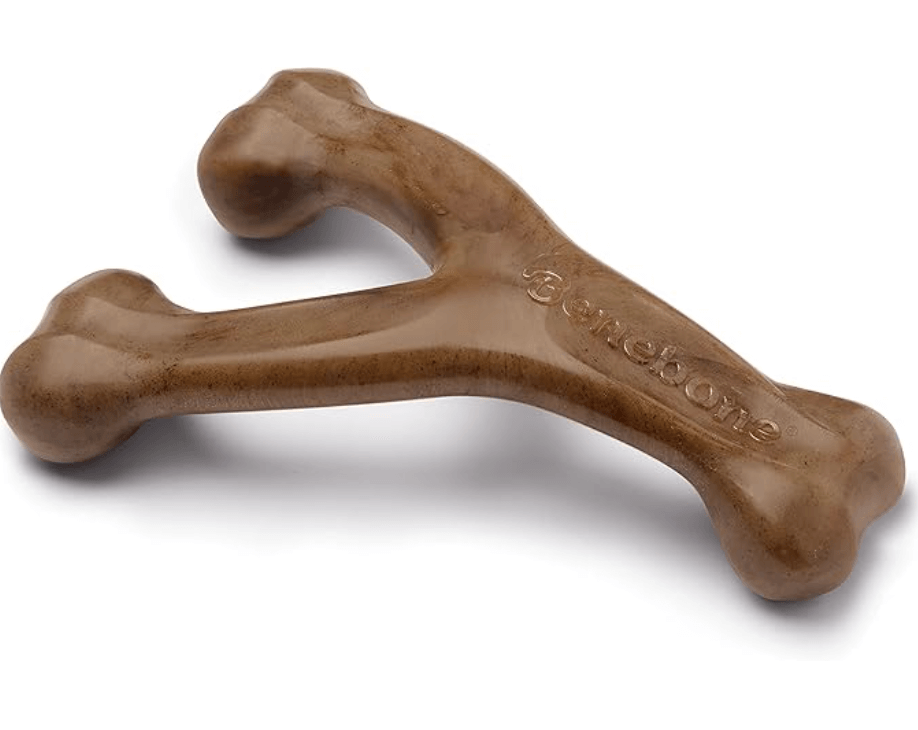
Best for: swapping hands for a legal chew
Benebone Wishbone Durable Dog Chew Toy
A harder nylon chew you can present when your puppy targets fingers or sleeves. Size to the current label; it is not a baby-tooth teething solution.
Supervise use; inspect and replace when worn. If your puppy still has baby teeth, start with the softer Benebone Puppy line.
4. Teach “Hands Are Boring” Between Training Moments
Outside active training, hands should be calm: less hovering over the puppy’s face, less finger-wiggling games.
5. Reward Calm Behavior Before the Bite Happens
Catch moments like:
- 🐾four paws on the floor,
- 🐾sitting to say hi,
- 🐾choosing a toy independently.
Training Treat Pick (Small, Soft Rewards)
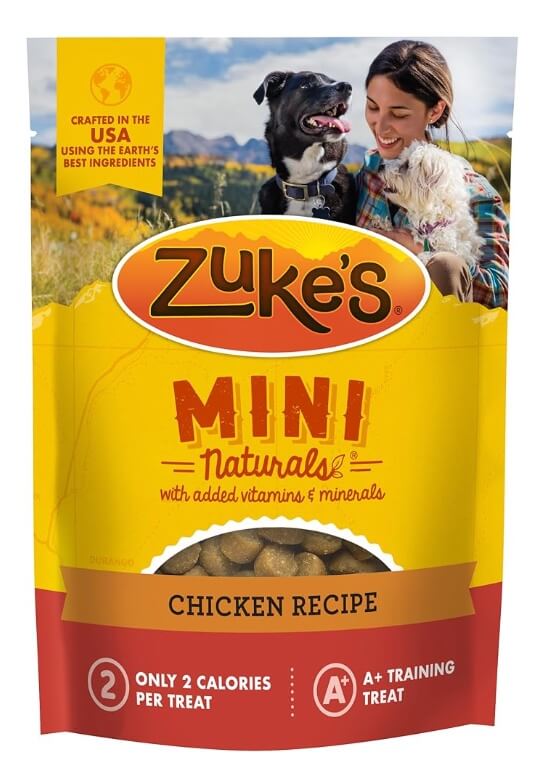
Best for: frequent calm-reward reps without huge calories
Zuke’s Mini Naturals Training Treats
Small, soft pieces are easy to use during short training bursts (sit, check-in, “off”).
Break treats into tiny pieces so rewards support habits rather than replacing meals.
Follow package feeding guidance and your vet’s advice for your puppy’s age and size.
These tools do not replace training — they make redirection and calm repetition easier.
6. Use Short Sessions
Do 2–5 minute training reps many times per day instead of one long chaotic session.
7. End Play Before the Shark Phase
If you wait until your puppy is wild, you are practicing the wrong reps. End play early, add a chew, then a nap.
8. Be Consistent for Several Weeks
Progress is usually incremental: fewer worst episodes per week, faster recovery after redirection, softer mouth over time. If you want a simple biting phase overview, revisit the puppy biting timeline chart.
Mistakes That Accidentally Teach Puppies to Bite Hands
- 🐾Hand wrestling and “cute” finger-chasing games
- 🐾Moving faster when bitten (pulling away wildly), which triggers more chasing
- 🐾Yelling that sounds exciting
- 🐾Inconsistent timeouts (sometimes you ignore, sometimes you engage)
- 🐾Petting while the puppy is mouthy (you reinforce “teeth + petting” as a bundle)
- 🐾Using hands as toys during rough play
Fixing hand biting is less about being strict and more about being boring and predictable when teeth touch skin.
When Hand Biting May Be a Bigger Problem
Treat these as reasons to upgrade your plan (management + professional guidance), not reasons to panic:
- 🐾Biting that regularly breaks skin or causes injury
- 🐾Biting paired with fear, freezing, or retreat
- 🐾Biting paired with resource guarding (food, chews, spaces)
- 🐾Biting that does not improve with consistent redirection and calm consequences
- 🐾Biting directed at children you cannot supervise safely
If intensity feels closer to “panic biting” than “rude play,” read our puppy biting aggressively guide for a broader framework — and consider a qualified trainer or a veterinary behavior referral if safety is at risk.
FAQ
Why does my Golden Retriever puppy bite my hands and not toys?
Because hands move like interactive objects and are always nearby. Toys only work if they are easy to access and consistently rewarded. Make toys the “winning choice,” not an afterthought.
Why does my puppy bite my hands when I pet him?
Often arousal: petting ramps excitement up, and excitement spills into mouthing. Try slower petting, pause before the bite threshold, or pet only when your puppy is calm.
Why does my Golden Retriever puppy bite my hands when I stop petting him?
That is usually frustration, overarousal, or attention-seeking — not spite and not proof of aggression. When petting stops, some puppies try to “restart” the interaction the fastest way they know: with teeth. It can also happen if petting was building excitement right up to the edge, then stopping feels abrupt.
Practical approach: end petting before the shark line; stand up or cross arms if teeth appear; offer a chew or a short calm reset; reward calm sits when you are not petting so stopping contact is not always a “loss” for your puppy.
Why does my puppy bite my hands during play?
Play biting is normal, but you still teach boundaries. Use toys as the contact point, keep play short, and end play calmly when teeth target skin.
Why does my puppy bite harder at night?
Usually fatigue + overstimulation. Add an earlier wind-down: calmer play, potty break, chew time, then sleep.
Is hand biting dominance?
No — that framing is outdated and unhelpful. Hand biting is almost always play, teething, attention-seeking, or overstimulation — training fixes, not dominance fixes.
How long until my puppy stops biting my hands?
Many puppies improve a lot by 4–6 months with consistency, but timelines vary. If there is zero improvement over several weeks of good mechanics, get help.
Can hand biting become aggression?
Most hand biting is normal mouthing. Risk rises if the behavior is paired with fear, guarding, or injury, or if it keeps escalating despite consistent training.
Conclusion
Your Golden Retriever puppy bites your hands because hands are interesting, available, and often rewarding — not because your puppy “loves” upsetting you. The fix is calm structure: redirect, end interaction when needed, prioritize sleep, reward calm, and stop rehearsing hand wrestling as a game.
With consistent routines, most puppies improve gradually rather than all at once.
If you want one companion page to bookmark next, use the Golden Retriever puppy biting guide for the full mouthing playbook, and keep the teething timeline chart nearby if gums and chewing are a big part of your story.
P.S. Get the free Golden Retriever Owner Cheat Sheet — daily feeding, sleep, and care in one printable guide.
Get the Cheat Sheet when you join the newsletter — instant access in your welcome email.