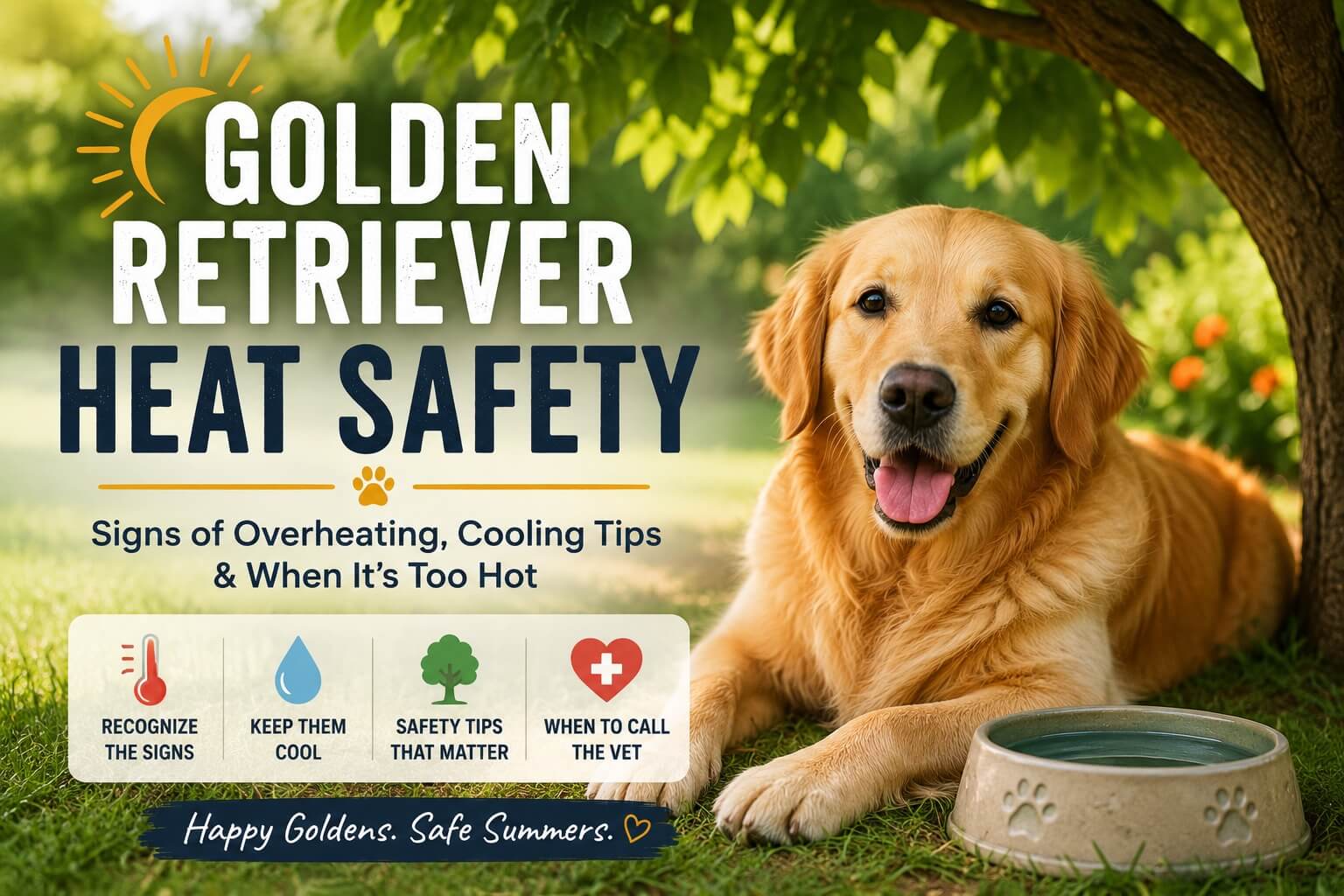
Golden Retriever Heat Safety: Signs of Overheating, Cooling Tips & When It’s Too Hot
GoldenRetriever.hair
By GoldenRetriever.hair
Golden Retrievers love walks, fetch, hikes, yard time, and being wherever their people are. But hot weather can turn normal activities risky faster than many owners expect, especially during humid days, heat waves, and periods of intense summer sun. Golden Retriever heat safety is about planning ahead, reading your dog’s signals, and knowing when conditions are becoming unsafe.
This guide is educational only and is not a substitute for veterinary care. If your Golden Retriever shows signs of heatstroke or severe distress, seek veterinary help right away.
Quick Answer: How Do You Keep a Golden Retriever Safe in Hot Weather?
- 🐾Move walks to cooler morning or evening hours.
- 🐾Watch the heat index and humidity, not just the temperature.
- 🐾Limit strenuous exercise in hot conditions.
- 🐾Carry water and take shaded breaks.
- 🐾Avoid hot pavement when possible.
- 🐾Never leave a dog in a parked car.
- 🐾Know the warning signs of overheating.
- 🐾Call a vet quickly if symptoms are severe or not improving.
How Hot Is Too Hot for a Golden Retriever?
There is no single universal number that is safe for every Golden Retriever. Heat risk depends on air temperature, humidity, direct sun, surface temperature, activity level, age, body condition, coat condition, hydration, underlying health, and the individual dog.
That means the better question is not only “how hot is too hot for a Golden Retriever?” It is also: How hard is my dog working, how humid is it, what surface are we walking on, and how quickly can we stop and cool down if needed?
Humidity matters because dogs rely heavily on panting to release heat. A humid day can be much harder on a Golden than the thermometer alone suggests. The heat index is useful context because it reflects how hot conditions feel when humidity is included.
Think in terms of risk rising rather than one magic cutoff:
- 🐾Warm, dry shade with low activity may be manageable for some healthy adult dogs.
- 🐾Direct sun, high humidity, hot pavement, and active exercise raise risk quickly.
- 🐾Puppies, seniors, overweight Goldens, and dogs with medical issues need more conservative choices.
If conditions feel oppressive to a person standing still, they may be too demanding for a Golden Retriever doing active exercise.
Why Golden Retrievers Can Struggle in Heat
Dogs cool mainly through panting, with only limited heat release through their paw pads. Golden Retrievers are also active, enthusiastic dogs. Many will keep walking, swimming, retrieving, or playing because the activity is fun, even when their body should be slowing down.
A Golden’s double coat is not a reason to shave them for heat management. Coat care still matters, but shaving is not the core heat-safety solution. For broader warm-weather grooming and seasonal care, see the Golden Retriever summer care guide.
Some Goldens may be less heat-tolerant than others, including:
- 🐾puppies who do not regulate activity reliably
- 🐾senior dogs
- 🐾overweight dogs
- 🐾very intense or high-drive dogs
- 🐾dogs recovering from illness
- 🐾dogs with heart, breathing, endocrine, or other medical concerns
Golden Retriever Overheating Signs to Watch For
Watch for Golden Retriever overheating signs early, before the situation becomes severe:
- 🐾heavy or persistent panting
- 🐾excessive drooling
- 🐾seeking shade or refusing to continue
- 🐾restlessness or unusual anxiety
- 🐾weakness, wobbliness, or lethargy
- 🐾vomiting or diarrhea
- 🐾bright red, pale, gray, or otherwise abnormal gums
- 🐾collapse, confusion, or seizures
The more severe signs are urgent and may indicate heatstroke. Golden Retriever heatstroke signs such as collapse, disorientation, seizures, abnormal gums, or symptoms that do not improve promptly after stopping activity require veterinary help.
When Heat Becomes an Emergency
Suspected heatstroke can be an emergency. If symptoms are severe, worsening, or not improving quickly, contact a veterinarian or emergency vet right away.
When in doubt, treat suspected heatstroke as urgent rather than waiting to see if it passes.
Can You Walk a Golden Retriever in Hot Weather?
Yes, sometimes — but walking a Golden Retriever in hot weather requires more judgment than following the usual schedule. Timing and intensity matter.
During hot periods, early morning or later evening walks are usually safer than midday outings. Shorter, slower walks are safer than long, strenuous routes. Bring water, choose shaded paths when possible, and watch the dog, not just the clock.
Stop the walk if your Golden:
- 🐾slows down or lags behind
- 🐾seeks shade repeatedly
- 🐾lies down or refuses to continue
- 🐾pants heavily and cannot settle
- 🐾seems anxious, weak, wobbly, or uncomfortable
Skip or shorten the walk if:
- 🐾the heat index is elevated
- 🐾humidity is high
- 🐾pavement is very hot
- 🐾your dog is older, overweight, recovering from illness, or unusually tired
- 🐾there is no shade or access to water
For regular exercise planning outside high-heat conditions, see the Golden Retriever exercise needs guide.
Helpful for Hot-Weather Walks and Outings
A large-capacity travel water bottle with a built-in drinking bowl can make it easier to offer water during summer walks, park visits, beach days, road trips, and longer outdoor outings with your Golden.
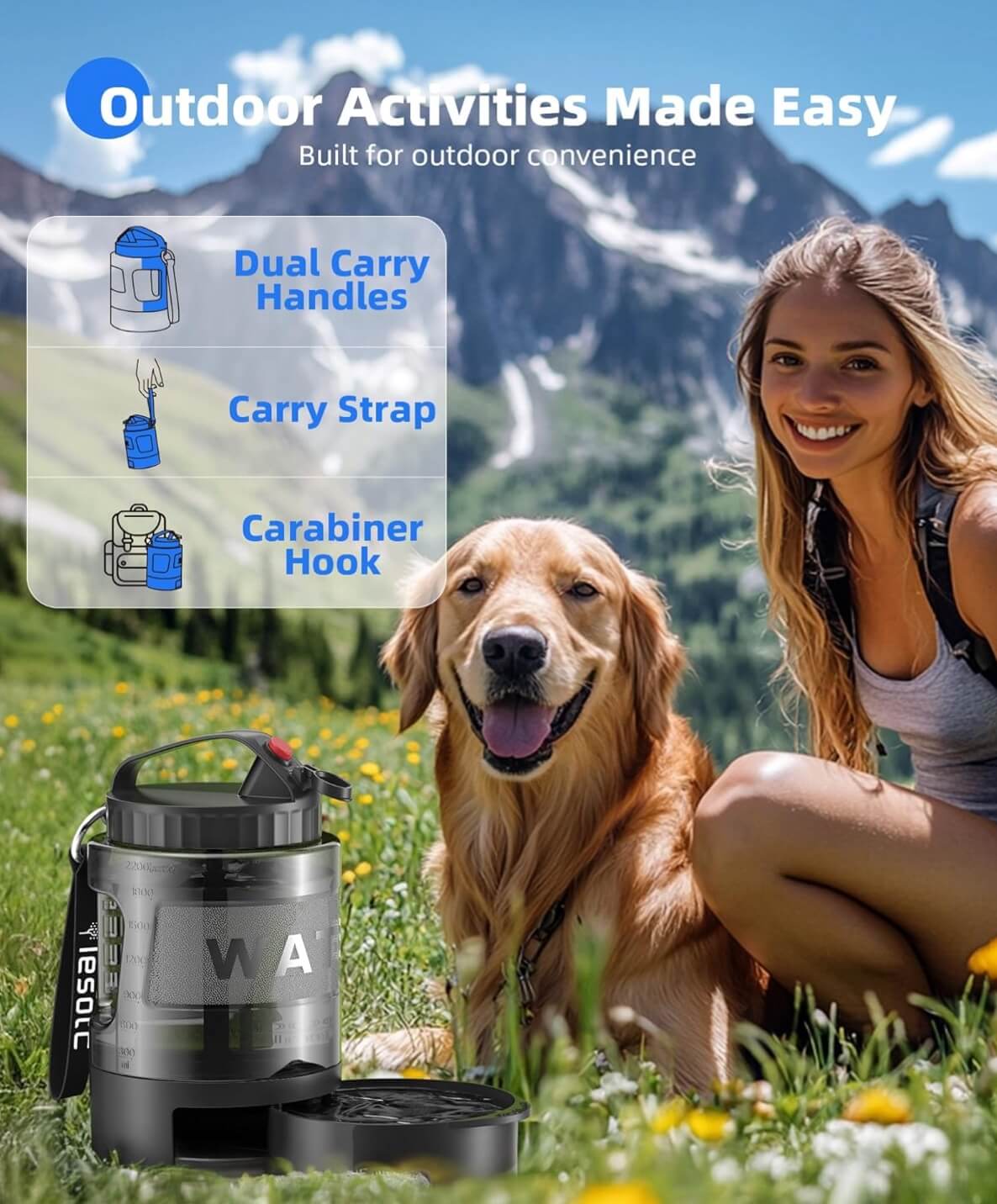
lesotc Large Dog Travel Water Bottle with Pull-Out Bowl
A large-capacity 77 oz travel water bottle with a pull-out drinking bowl, designed for hikes, beach days, road trips, park visits, and hot-weather outings with larger dogs.
Helpful for summer walks and outdoor adventures when your Golden needs easy access to water on the go.
Hot Pavement and Golden Retriever Paws
Pavement can become much hotter than the air temperature. Asphalt, concrete, and dark surfaces can hold heat and make a short walk uncomfortable or unsafe for paw pads.
If a surface feels painfully hot to a human hand or bare foot, it may be unsafe for your dog’s paws. Grass, shade, dirt paths, and cooler times of day are better choices when pavement is hot.
For more detail on paw checks, cracked pads, trimming fur around the feet, and surface safety, read the Golden Retriever paw care guide.
How to Cool Down a Golden Retriever Safely
If your Golden seems too hot, act early:
- 🐾Stop activity immediately.
- 🐾Move to shade or air conditioning.
- 🐾Offer small amounts of cool drinking water if your dog is alert and able to drink safely.
- 🐾Use cool or room-temperature water on the body and improve airflow with a fan when possible. Avoid ice baths unless a veterinarian specifically instructs you.
- 🐾Use airflow from a fan if available.
- 🐾Contact a veterinarian if symptoms are significant, worsening, or not improving promptly.
Do not force water into a dog’s mouth. Do not delay care for collapse, confusion, abnormal gums, seizures, repeated vomiting, or severe weakness.
Helpful for Cooling Comfort Indoors
A self-cooling pet pad can give your Golden a more comfortable place to rest indoors after hot-weather walks, yard time, or outdoor adventures. It is best framed as a comfort tool for rest and recovery — not as a substitute for avoiding dangerous heat or seeking veterinary care when symptoms are concerning.
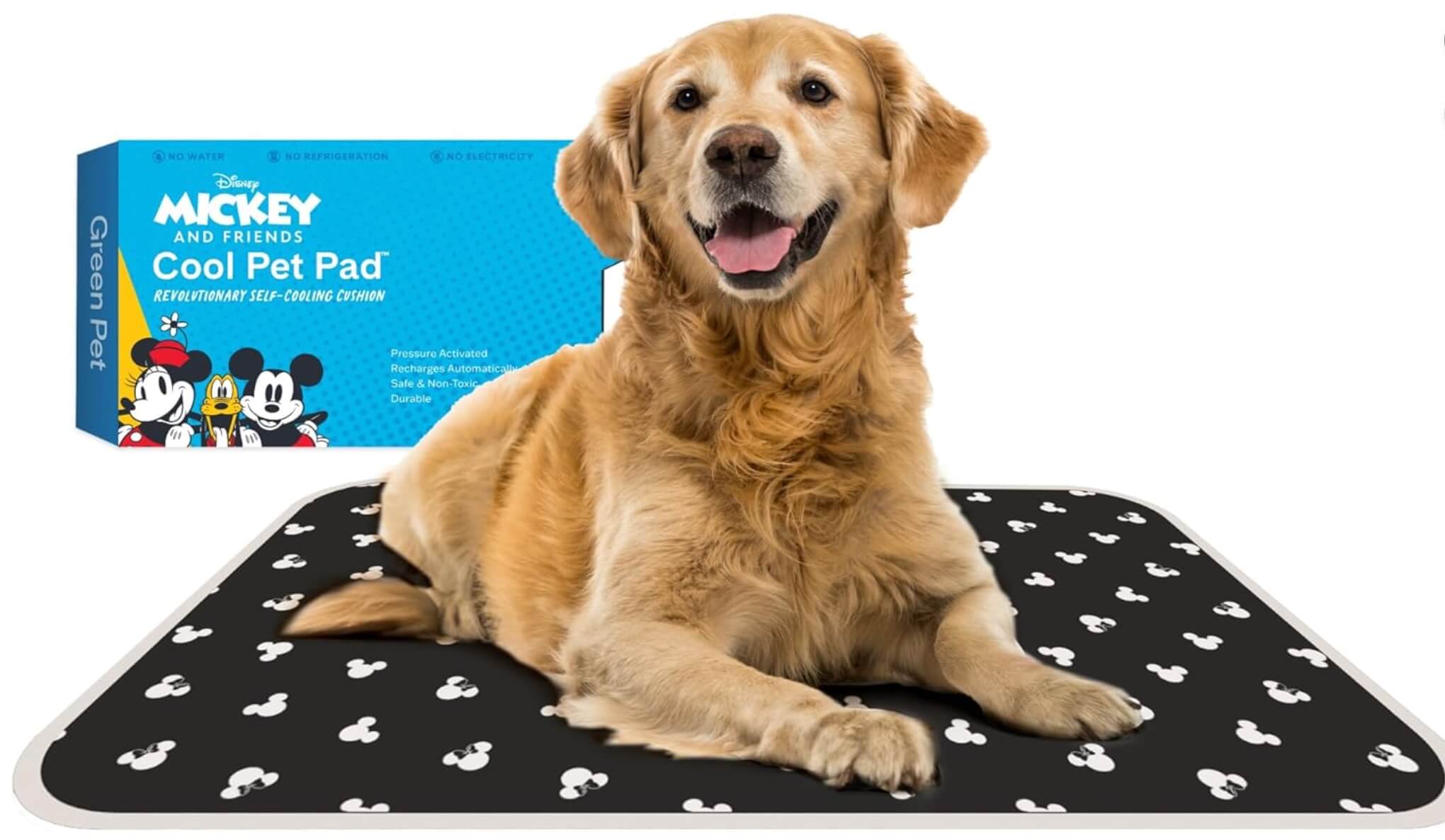
The Green Pet Shop Large Cool Pet Pad
A large self-cooling, pressure-activated pet mat designed for dogs from 46–80 lbs, with non-toxic gel and no water or electricity required.
Helpful for giving your Golden a cooler place to rest indoors after hot-weather walks, yard time, or outdoor adventures.
Heat Safety Checklist for Golden Retriever Owners
- 🐾Fresh water is available.
- 🐾Shade is available.
- 🐾Exercise is moved to cooler parts of the day.
- 🐾No long waits in cars.
- 🐾Paw surfaces are checked before walks.
- 🐾Cooling supplies are packed for outings.
- 🐾Early overheating signs are watched closely.
- 🐾Rest breaks are planned during hikes, beach trips, swimming days, or yard play.
If backyard play is part of your summer routine, also review fence shade, water access, and supervised outdoor time in our Golden Retriever yard-and-fence guide.
If your summer plans include trails or water, pair heat planning with the Golden Retriever hiking guide and Golden Retriever swimming guide.
Common Heat Safety Mistakes Owners Make
- 🐾Assuming a happy dog cannot be overheating.
- 🐾Walking at the usual time during a heat wave.
- 🐾Focusing only on air temperature and ignoring humidity.
- 🐾Letting a dog play hard without breaks.
- 🐾Leaving water at home on short walks.
- 🐾Trusting car shade or cracked windows.
- 🐾Ignoring early signs like slowing down or seeking shade.
How This Connects to Summer Care
This guide focuses specifically on heat, overheating, walking decisions, cooling steps, and when symptoms may be urgent. For broader warm-weather topics such as grooming, seasonal routines, paw protection, outdoor activities, and general Golden Retriever summer safety, see the Golden Retriever summer care guide.
Related guides:
- 🐾Golden Retriever paw care guide
- 🐾Golden Retriever exercise needs
- 🐾Golden Retriever swimming guide
- 🐾Golden Retriever car travel guide
- 🐾Golden Retriever hiking guide
FAQ
How hot is too hot for a Golden Retriever?
There is no single universal cutoff. Humidity, direct sun, pavement temperature, activity level, age, health, body condition, and the individual dog all matter. As heat risk rises, scale back, move activity to cooler hours, or skip strenuous exercise.
What are the first signs a Golden Retriever is overheating?
Early signs can include heavy panting, drooling, slowing down, seeking shade, restlessness, or refusing to continue. Take those signs seriously and stop activity before symptoms escalate.
Can Golden Retrievers go for walks in a heat wave?
Walks may need to be shortened, moved to early morning or late evening, or skipped depending on conditions and the dog. High humidity, direct sun, hot pavement, and a dog who seems tired or uncomfortable are reasons to be conservative.
How do I cool down my Golden Retriever after being outside?
Stop activity, move to shade or air conditioning, offer small amounts of cool water if your dog is alert and can drink, use cool water and airflow if needed, and contact a veterinarian if symptoms are concerning, severe, worsening, or not improving promptly.
Are Golden Retriever puppies more sensitive to heat?
Puppies can be less predictable about pacing themselves and may keep playing when they should rest. Owners should be conservative with hot-weather exercise, keep outings short, and watch closely for early signs of overheating.
Is hot pavement dangerous for Golden Retrievers?
Yes. Hot pavement can irritate or injure paw pads. Use cooler times of day, shaded routes, grass, or natural surfaces when possible, and check surfaces before asking your dog to walk on them.
When should I call the vet for possible heatstroke?
Call a vet promptly for symptoms that are significant, worsening, or not improving after stopping activity and beginning safe cooling. Seek emergency care for collapse, inability to stand, confusion, seizures, abnormal gums, repeated vomiting, severe weakness, or suspected heatstroke.
Golden Retrievers do not need to stay indoors all summer, but owners do need to respect heat, humidity, and the dog’s limits. The safest approach is simple: plan activity around the weather, watch for early warning signs, cool down quickly when needed, and treat suspected heatstroke as urgent.
P.S. Get the free Golden Retriever Owner Cheat Sheet — daily feeding, sleep, and care in one printable guide.
Get the Cheat Sheet when you join the newsletter — instant access in your welcome email.