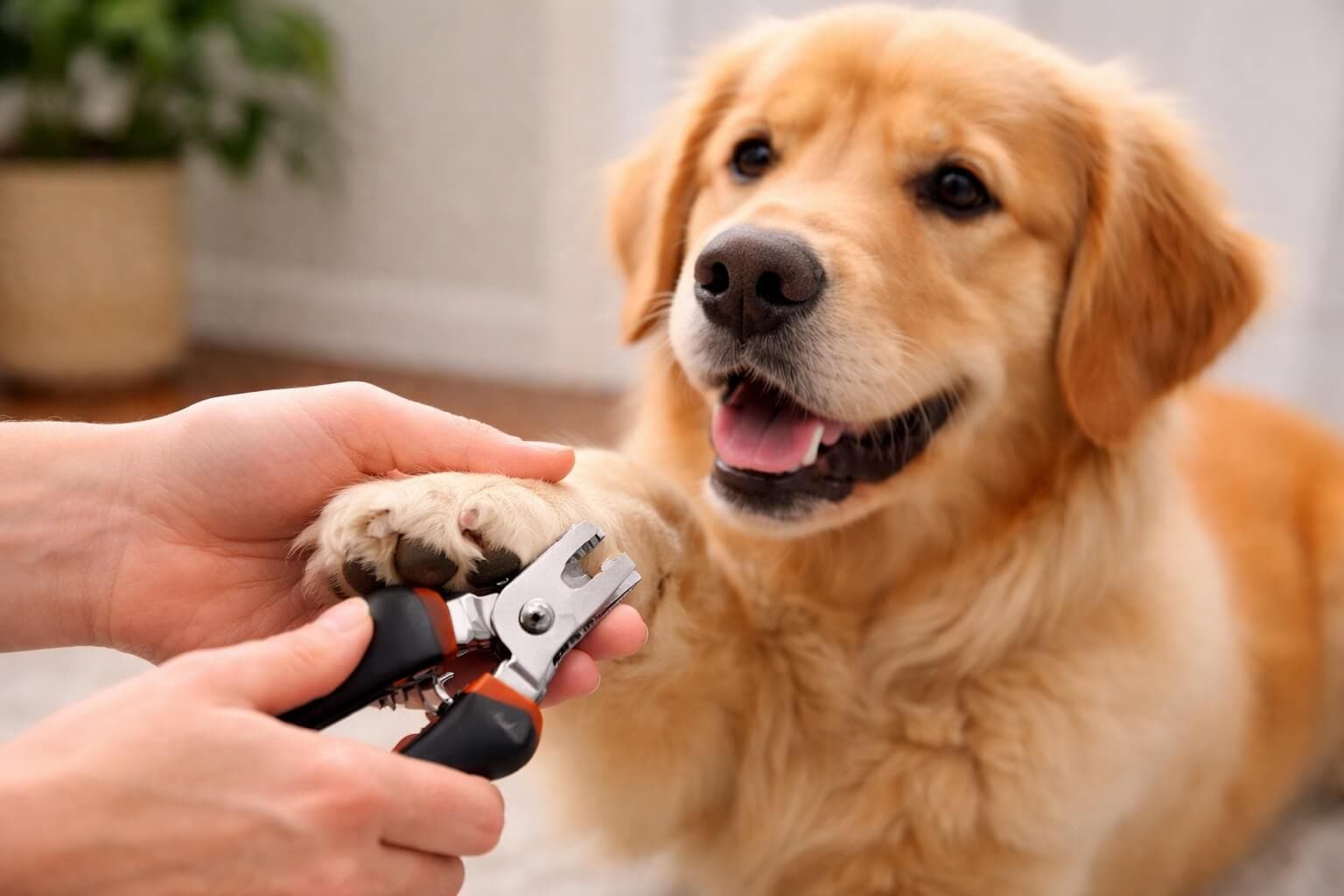
Golden Retriever Nail Trimming Guide: How to Trim Safely & How Often
GoldenRetriever.hair
By GoldenRetriever.hair
Golden Retriever nail trimming is a routine part of grooming that many owners dread — but it doesn't have to be. Overgrown nails affect your Golden's gait, posture, and joint health. With the right tools, technique, and patience, you can keep your dog's nails at a healthy length without stress. This guide covers how often to trim Golden Retriever nails, how to cut them safely, how to avoid the quick, and what to do when your dog resists.
Table of Contents
- 🐾Quick Answer: How Often Should You Trim a Golden Retriever's Nails?
- 🐾Why Nail Care Is Important for Golden Retrievers
- 🐾How Long Should Golden Retriever Nails Be?
- 🐾How Often to Trim Golden Retriever Nails
- 🐾Step-by-Step Guide: How to Trim Golden Retriever Nails Safely
- 🐾Nail Clippers vs Nail Grinders
- 🐾Tips for Dogs That Resist Nail Trimming
- 🐾Common Nail Trimming Mistakes Owners Make
- 🐾When to Ask a Groomer or Vet for Help
- 🐾FAQ
Quick Answer: How Often Should You Trim a Golden Retriever's Nails?
Trim Golden Retriever nails every 2–4 weeks for most dogs. Active Goldens who walk on pavement may need less frequent trimming — concrete naturally wears nails down. Indoor or less active dogs often need trimming every 2–3 weeks. The goal is to keep nails short enough that they don't touch the ground when your dog stands. If you hear nails clicking on the floor, they're too long. Use guillotine or scissor-style clippers, or a nail grinder. Take small amounts at a time to avoid the quick — the pink, blood-filled tissue inside the nail. If you cut the quick, it bleeds and hurts; apply styptic powder or cornstarch and stay calm. For dogs that resist, work on desensitization and positive reinforcement over time. See our Golden Retriever grooming guide for a full routine that includes nail care.
Why Nail Care Is Important for Golden Retrievers
Impact on Walking and Posture
When Golden Retriever nails grow too long, they change how your dog stands and walks. Long nails push the toes upward and alter the angle of the foot. The dog may compensate by shifting weight, which affects the entire leg and spine. You may notice a shortened stride, an uneven gait, or reluctance to run or jump. Over time, this can contribute to joint stress — a real concern for a breed prone to hip and elbow issues.
Joint and Paw Health
Overgrown nails increase pressure on the toe joints and can cause splayed feet. They're also more likely to snag, split, or break, which is painful and can lead to infection. Keeping nails at a proper length supports healthy paw structure and reduces strain on the legs and joints. Golden Retriever nail care isn't just cosmetic — it's part of maintaining mobility and comfort, especially as your dog ages.
How Long Should Golden Retriever Nails Be?
Ideal Nail Length
Golden Retriever nails should be short enough that they don't touch the ground when your dog stands on a flat surface. There should be a small gap between the nail tip and the floor. When your Golden walks, you shouldn't hear clicking. The nail should not curl under or grow past the pad.
Signs Nails Are Too Long
- 🐾Clicking on floors — Nails tap when your dog walks on hardwood or tile
- 🐾Nails visible from the side — When your dog stands, you can see nails extending past the toe
- 🐾Nails touching the ground — No gap between nail tip and floor when standing
- 🐾Curved or curled nails — Especially on dewclaws, which don't wear down naturally
- 🐾Reluctance to walk or run — Discomfort from altered posture
- 🐾Splayed feet — Toes spreading to compensate for long nails
If nails are severely overgrown, the quick may have grown out with them. In that case, trim a tiny amount every 1–2 weeks to encourage the quick to recede. Don't try to cut them short in one session — you'll hit the quick.
How Often to Trim Golden Retriever Nails
Typical Trimming Schedule
Most Golden Retrievers need nail trimming every 2–4 weeks. That's a starting point — adjust based on your dog's lifestyle and how fast the nails grow.
- 🐾Active dogs on pavement — May need trimming every 4–6 weeks; concrete wears nails down
- 🐾Indoor or grass-only dogs — Often need trimming every 2–3 weeks
- 🐾Puppies — Nails grow quickly; check weekly and trim as needed
- 🐾Senior dogs — May need more frequent trims if they're less active
Factors That Affect Nail Growth
- 🐾Activity level — More walking on hard surfaces = more natural wear
- 🐾Surface — Pavement, concrete, and rough terrain wear nails; grass and carpet do not
- 🐾Individual variation — Some Goldens have faster-growing nails than others
- 🐾Dewclaws — The inner "thumb" nails don't touch the ground and almost always need trimming
Consistency matters. Trimming a little often is easier and safer than letting nails get long and then trying to cut them back.
Step-by-Step Guide: How to Trim Golden Retriever Nails Safely
Preparing Your Dog
- 🐾Choose a calm time — Not right after exercise or when your dog is excited
- 🐾Use a non-slip surface — A mat or towel on the floor helps your Golden feel secure
- 🐾Have treats ready — Small, high-value rewards for cooperation
- 🐾Position your dog — Standing or sitting, with good access to the paws. Some owners trim with the dog lying on its side
- 🐾Stay calm — Dogs pick up on anxiety. If you're nervous, your dog will be too
Choosing the Right Tool
- 🐾Guillotine clippers — A hole for the nail; blade cuts when you squeeze. Good for clear nails where you can see the quick.
- 🐾Scissor-style clippers — Two blades that cut like scissors. Good for thicker nails; some owners find them easier to control.
- 🐾Nail grinder — Electric tool that files the nail down. No risk of cutting the quick in one clip, but some dogs dislike the noise and vibration.
For Golden Retrievers, guillotine or scissor clippers both work well. Grinders are a good option for dogs that tolerate them — they allow you to take off small amounts and smooth the edges. See Nail Clippers vs Nail Grinders for a full comparison.
Trimming Technique
- 🐾Hold the paw firmly but gently — Don't squeeze; support the toe
- 🐾Identify the quick — In light/clear nails, it's the pink area inside. In dark nails, you can't see it — trim conservatively
- 🐾Cut in small increments — Take off 1–2 mm at a time. Better to do multiple small cuts than one big one
- 🐾Cut at a slight angle — Follow the natural curve of the nail; avoid cutting straight across
- 🐾Check the cut surface — After each cut, look at the nail. A gray or pink dot in the center means you're getting close to the quick; stop
- 🐾Do dewclaws — Don't forget the inner dewclaws; they grow long and can curl into the leg
Avoiding the Quick
The quick is the blood supply and nerve inside the nail. Cutting it causes bleeding and pain. To avoid it:
- 🐾Light nails — The quick is visible as a pink area. Cut in front of it
- 🐾Dark nails — You can't see the quick. Trim tiny amounts and look at the cut surface. When you see a dark or gray dot in the center, stop — that's the start of the quick
- 🐾When in doubt, stop — It's better to trim again in a few days than to quick your dog
- 🐾Use a grinder — If your dog tolerates it, grinding removes small amounts and reduces the risk of hitting the quick in one cut
If you do cut the quick, apply styptic powder, cornstarch, or a clean cloth with pressure. Hold for 1–2 minutes. Stay calm — your dog will recover. The nail will be sensitive for a day or two. Avoid trimming that nail again until it's healed.
Nail Clippers vs Nail Grinders
Pros and Cons
| Feature | Clippers | Grinder |
|---|---|---|
| Speed | Fast; one cut per nail | Slower; gradual filing |
| Risk of quicking | Higher if you cut too much at once | Lower; removes small amounts |
| Noise | Quiet | Motor noise; some dogs dislike it |
| Vibration | None | Can bother sensitive dogs |
| Result | Sharp edge; may need filing | Smooth edge; no sharp tips |
| Learning curve | Moderate | Easier for beginners (less risk of quicking) |
| Cost | Lower | Higher |
Which Works Best for Golden Retrievers?
Both work. Clippers are the traditional choice — quick, quiet, and inexpensive. Many Golden Retriever owners use guillotine or scissor clippers successfully. Grinders are ideal for owners who are nervous about cutting the quick, or for dogs with dark nails where the quick is hard to see. The downside is that some Goldens are scared of the noise and vibration. If you want to try a grinder, introduce it slowly with treats and short sessions.
If you prefer a grinder, a quiet, low-vibration option like the one below can make nail trimming easier and reduce the risk of cutting the quick.

Casfuy 6-Speed Dog Nail Grinder
Quiet, safe nail grinder that helps keep nails at the correct length without sharp edges, reducing the risk of cutting the quick and making trimming easier for Golden Retriever owners.
For a full grooming toolkit including nail tools, see our best brushes for Golden Retrievers guide and grooming guide.
Tips for Dogs That Resist Nail Trimming
Training and Desensitization
Many Golden Retrievers dislike nail trimming because they've had a bad experience or were never acclimated to it. The solution is gradual desensitization:
- 🐾Touch paws without tools — Gently hold paws, touch nails, give treats. Do this daily until your dog is relaxed
- 🐾Introduce the tool — Let your dog see and sniff the clippers or grinder. Reward calm behavior
- 🐾Simulate trimming — Hold the tool near the nail, touch the nail with it, but don't cut. Reward
- 🐾One nail at a time — When ready, trim a single nail. Reward heavily. Stop. Do more another day
- 🐾Build up slowly — Over weeks, work up to a full paw, then all four paws in one session
Positive Reinforcement
- 🐾Use high-value treats (small pieces of chicken, cheese, or a favorite snack)
- 🐾Reward after each nail, or after each paw
- 🐾Keep sessions short — 2–3 minutes is enough when starting
- 🐾End on a success. If your dog gets stressed, stop and try again later
Handling Anxious Dogs
- 🐾Don't restrain forcefully — Wrestling creates more fear. If your dog is struggling, stop and work on desensitization instead
- 🐾Try a different position — Some dogs do better lying down, or with their back against you
- 🐾Trim when tired — After a walk or play session, your Golden may be more relaxed
- 🐾Consider a helper — Someone to hold and distract with treats while you trim
- 🐾Professional help — If your dog is severely anxious, a groomer or vet may have more experience and a calmer environment. See When to Ask a Groomer or Vet for Help
Common Nail Trimming Mistakes Owners Make
- 🐾Cutting too much at once — Increases the risk of hitting the quick. Take small amounts; trim more often if needed
- 🐾Skipping dewclaws — Dewclaws don't wear down and can grow long enough to curl into the leg. Trim them every time
- 🐾Using dull or wrong-sized clippers — Dull blades crush instead of cut; too-small clippers can crack the nail. Use sharp, appropriately sized tools
- 🐾Trimming when the dog is stressed — Creates a negative association. Wait for a calm moment or work on desensitization first
- 🐾Ignoring dark nails — Dark nails require extra care. Trim conservatively and look at the cut surface after each clip
- 🐾Forgetting the back feet — All four paws need attention. Back nails often grow slower but still need trimming
- 🐾Giving up after one bad experience — If you quick your dog once, they may be wary. Go back to desensitization and take it slow
When to Ask a Groomer or Vet for Help
Consider professional help if:
- 🐾Your dog is severely anxious — Aggressive restraint or fear that doesn't improve with training
- 🐾Nails are severely overgrown — The quick may have extended; a groomer or vet can trim safely and show you how to maintain
- 🐾You've quicked your dog multiple times — You or your dog may need a break; a professional can trim while you work on desensitization
- 🐾You're uncomfortable doing it — There's no shame in outsourcing. Many owners have groomers trim nails during regular grooming appointments
- 🐾Your dog has health issues — Arthritis, mobility problems, or conditions that make handling paws difficult
Groomers and vets trim nails daily and are used to anxious dogs. They can also recommend the best nail clippers for Golden Retrievers if you want to try again at home later. Nail care is part of a complete Golden Retriever grooming routine that includes brushing, bathing, and ear care — see our full guide for the complete picture.
FAQ
How often should you trim a Golden Retriever's nails?
Trim every 2–4 weeks for most Golden Retrievers. Active dogs who walk on pavement may need it every 4–6 weeks. Indoor or less active dogs often need trimming every 2–3 weeks. Dewclaws need attention every time — they don't wear down naturally. If you hear nails clicking on the floor, they're too long.
What is the best way to trim Golden Retriever nails?
Use guillotine or scissor-style clippers, or a nail grinder. Hold the paw gently, identify the quick (pink in light nails; trim conservatively in dark nails), and cut small amounts at a time. Take 1–2 mm per cut. Stop when you see a gray or pink dot in the cut surface. Have styptic powder or cornstarch on hand in case you cut the quick.
How do you avoid cutting the quick on a Golden Retriever?
In light nails, the quick is visible — cut in front of it. In dark nails, trim tiny amounts and check the cut surface after each clip; a dark or gray dot means you're near the quick — stop. Use a grinder for gradual removal if your dog tolerates it. When in doubt, trim less and repeat in a few days.
Are nail clippers or grinders better for Golden Retrievers?
Both work. Clippers are fast and quiet; grinders remove small amounts and reduce the risk of quicking. Some Goldens dislike the noise and vibration of grinders. If your dog tolerates a grinder, it can be easier for beginners. Choose sharp, well-sized clippers if you prefer that route. See our grooming guide for tool recommendations.
What if my Golden Retriever won't let me trim his nails?
Work on desensitization: touch paws and nails daily, introduce the tool gradually, reward calm behavior, and trim one nail at a time. Use high-value treats and keep sessions short. Don't restrain forcefully — that increases fear. If your dog remains severely anxious, a groomer or vet can trim while you continue training at home.
How long should Golden Retriever nails be?
Golden Retriever nails should be short enough that they don't touch the ground when your dog stands. There should be a small gap between the nail tip and the floor. You shouldn't hear clicking when your dog walks. Nails should not curl under or extend past the pad.
Conclusion
Golden Retriever nail trimming is a skill you can learn. Trim every 2–4 weeks, use the right tools, take small amounts to avoid the quick, and work on desensitization if your dog resists. Consistency and patience matter more than perfection. If you're unsure or your dog is too anxious, a groomer or vet can help. Nail care is one part of a complete grooming routine — for brushing, bathing, and coat care, see our Golden Retriever grooming guide, shedding guide, and best brushes for Golden Retrievers.
P.S. Get the free Golden Retriever Owner Cheat Sheet — daily feeding, sleep, and care in one printable guide.
Get the Cheat Sheet when you join the newsletter — instant access in your welcome email.