
Golden Retriever Hip Dysplasia Guide (2026)
GoldenRetriever.hair
By GoldenRetriever.hair
Quick Answer
Golden Retriever hip dysplasia is a developmental condition where the hip joint doesn’t form properly — the ball and socket don’t fit snugly, which can lead to arthritis, pain, and mobility issues over time. Common signs include limping on a back leg, difficulty rising, reluctance to jump or climb stairs, a bunny-hopping gait, and stiffness after rest. If you notice any of these, the first step is a vet exam. Many Goldens with hip dysplasia live full, comfortable lives with weight management, controlled exercise, joint supplements, and sometimes medication or surgery. Keeping your Golden lean is one of the most effective ways to reduce stress on the hips — even a few extra pounds make a difference. This guide covers signs, diagnosis, treatment options, home management, and prevention.
What Hip Dysplasia Is (and What It Isn’t)
Hip dysplasia is a developmental orthopedic condition. The hip is a ball-and-socket joint; in dysplasia, the socket is shallow or the ball doesn’t sit correctly. That leads to looseness (laxity), wear over time, and eventually arthritis.
What it is not: Hip dysplasia is not a sudden injury. It develops as the puppy grows, though signs may not appear until later. It’s also not the same as elbow dysplasia, though both are common in Goldens.
Why Golden Retrievers Are Prone
Golden Retrievers are among the breeds most affected by hip dysplasia. Genetics play the largest role — the condition runs in lines. Other factors include:
- 🐾Rapid growth — Puppies that grow too quickly have higher risk
- 🐾Overfeeding — Excess calories and weight stress developing joints
- 🐾Exercise — Too much high-impact activity before skeletal maturity can worsen joint development
Responsible breeders screen parents with hip scores (OFA or PennHIP) to reduce risk. See our growth chart for healthy development milestones. Marketing terms like “English Cream” do not guarantee better joint health—see our English vs American Golden Retriever guide for what type labels actually mean.
Early Signs & Symptoms (By Age)
Puppies (Under 12 Months)
- 🐾Bunny-hopping gait (both back legs moving together)
- 🐾Reluctance to jump or climb
- 🐾Stiffness after rest
- 🐾Occasional limping that comes and goes
Puppies rarely show obvious pain early on. Subtle gait changes are often the first clue.
Adults (1–7 Years)
- 🐾Difficulty rising from lying down
- 🐾Limping on a back leg, especially after exercise
- 🐾Stiffness in the morning or after naps
- 🐾Reduced interest in running or playing
- 🐾Swaying or wobbly hind end when walking
Seniors (7+ Years)
- 🐾Same signs as adults, often more pronounced
- 🐾Slower to get up
- 🐾Shorter walks before tiring
- 🐾May be harder to distinguish from general aging — a vet exam helps
How Vets Diagnose It
A vet will start with a physical exam: feeling the hips, checking range of motion, and watching your dog walk. They may perform an Ortolani test to assess joint laxity.
Imaging confirms the diagnosis. X-rays under sedation show the hip joint structure and any arthritis. Some vets use PennHIP for earlier detection in young dogs. OFA scoring grades hips from excellent to severely dysplastic.
Important: Diagnosis and treatment should be guided by your veterinarian. This guide is for education only and does not replace professional care.
Severity Levels
| Severity | Typical Signs | Typical Management |
|---|---|---|
| Mild | Occasional stiffness, subtle gait changes, may show no obvious lameness | Weight management, controlled exercise, joint supplements, monitor over time |
| Moderate | Noticeable limping, difficulty rising, reduced activity, stiffness after rest | Weight control, low-impact exercise, supplements, pain medication as needed, physical therapy |
| Severe | Significant lameness, reluctance to bear weight, muscle loss, obvious pain | Medication, surgery (e.g., FHO or THR), strict activity modification, long-term management |
Treatment Options
Non-Surgical Approaches
- 🐾Weight management — Keeping your Golden lean reduces stress on the hips. See our weight and obesity guide.
- 🐾Controlled exercise — Short, frequent walks; avoid jumping and high-impact play
- 🐾Joint supplements — Glucosamine, chondroitin, omega-3s; many owners report improvement
- 🐾Pain medication — NSAIDs or other drugs as prescribed by your vet
- 🐾Physical therapy — Underwater treadmill, stretching, strengthening
Pros: Lower cost, no surgery, works well for many mild to moderate cases.
Cons: May not be enough for severe dysplasia; requires ongoing commitment.
Surgical Options
- 🐾FHO (Femoral Head Ostectomy) — Removes the ball of the hip; scar tissue forms a false joint. Often used for smaller dogs or when THR isn’t an option.
- 🐾THR (Total Hip Replacement) — Replaces the hip with an artificial joint. Gold standard for severe cases; excellent outcomes in many dogs.
- 🐾JPS (Juvenile Pubic Symphysiodesis) — Done in very young puppies to alter pelvic growth; preventive, not corrective.
Pros: Can dramatically improve quality of life in severe cases.
Cons: Cost, recovery time, anesthesia risk. Your vet will advise based on your dog’s age, size, and severity.
Home Management
Safe Exercise
- 🐾Short, frequent walks on soft surfaces
- 🐾Swimming (if your dog enjoys it) — low impact, builds muscle
- 🐾Avoid: jumping, rough play, long runs, slippery floors
Floors & Stairs
- 🐾Use rugs or mats on slippery floors
- 🐾Limit or block access to stairs; consider a ramp for cars and furniture
- 🐾Provide traction on tile and hardwood
Reducing jumping is key — a ramp like this can help protect your dog's hips long-term:
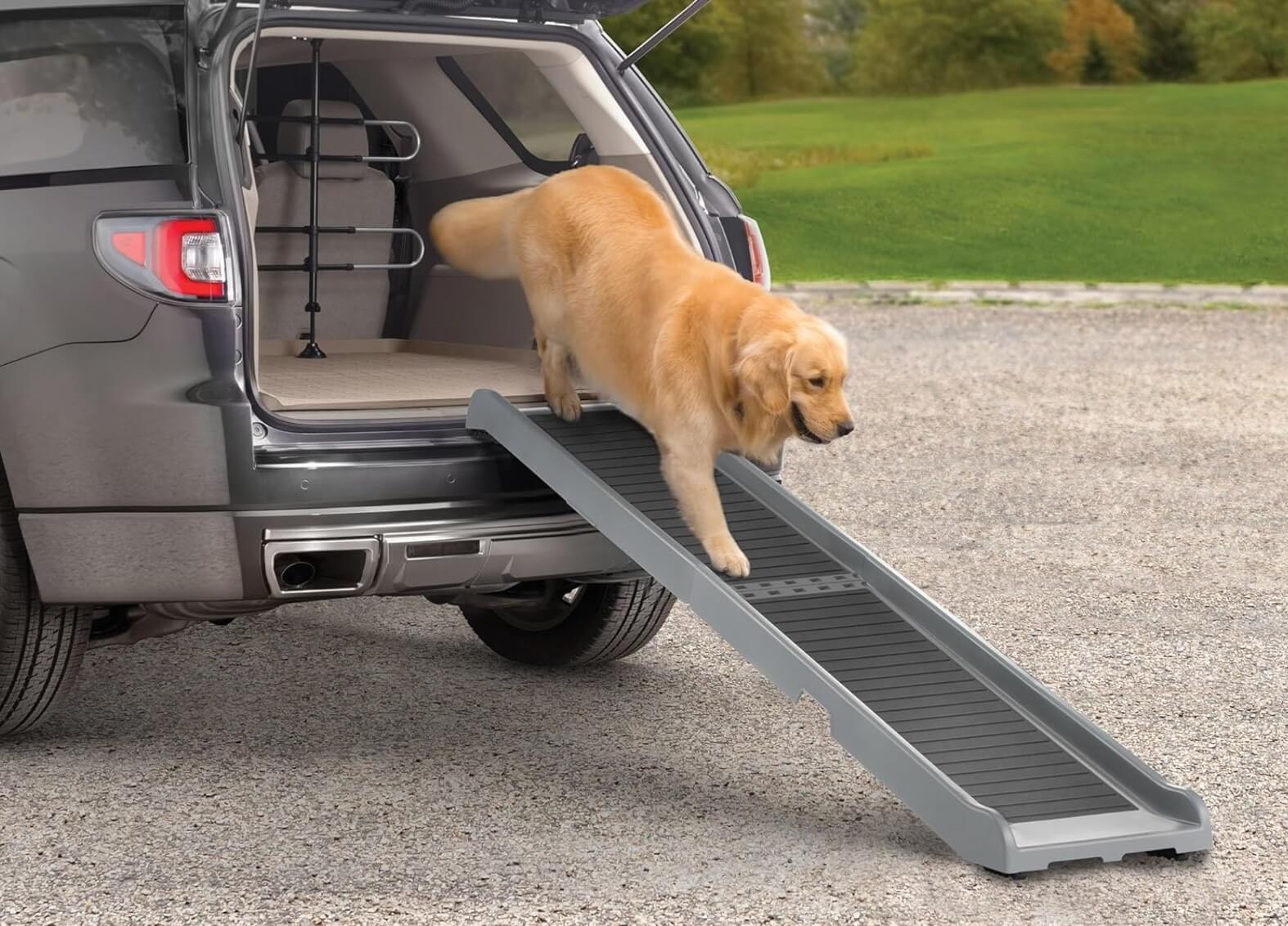
Portable non-slip dog ramp designed to help large Golden Retrievers get into SUVs, trucks, beds, and couches more safely and comfortably.
Especially helpful for senior Goldens, dogs with arthritis or hip issues, and any dog that struggles with jumping. The traction grip surface and sturdy build make it a strong long-term support option.
Bedding
- 🐾Orthopedic or memory-foam beds reduce pressure on joints
- 🐾Warm, draft-free sleeping areas help stiff muscles
Dogs with hip dysplasia benefit greatly from proper support while resting.
👉 An orthopedic bed like this helps reduce strain on hips and improves comfort:
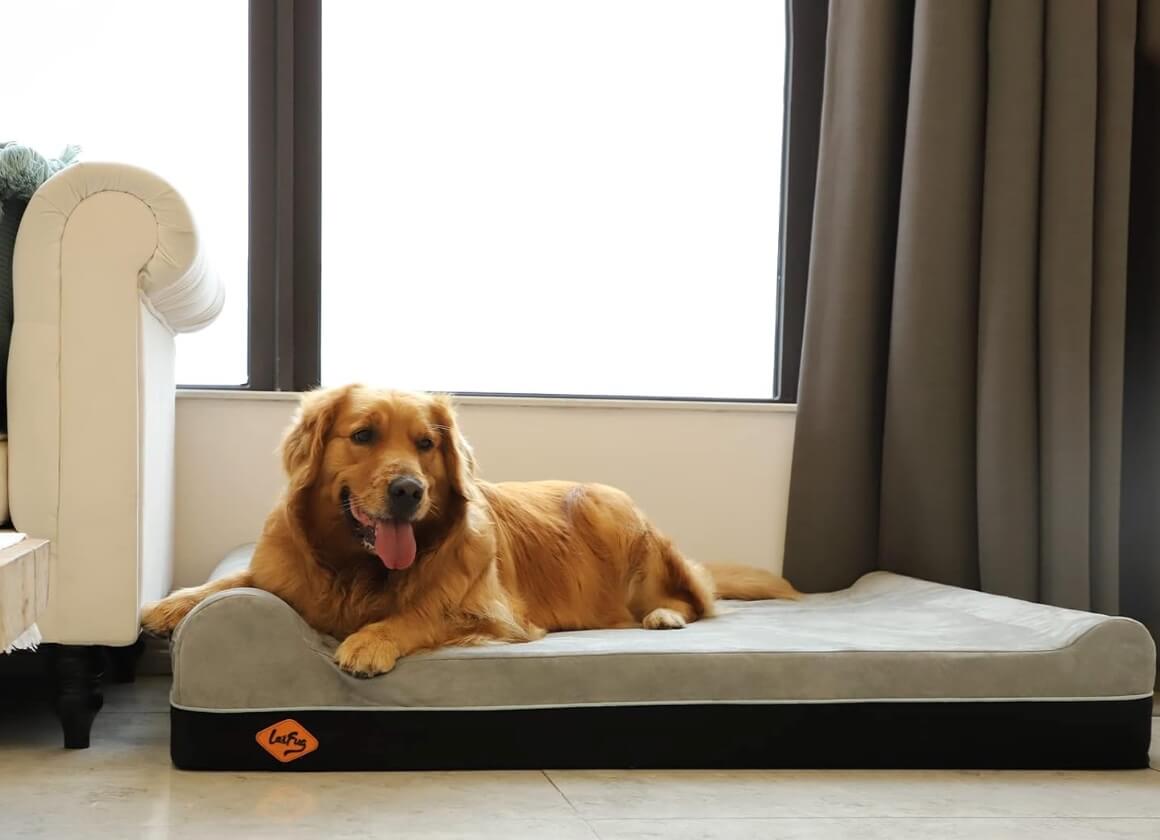
Best for: joint support and all-day comfort for large Golden Retrievers. Supportive orthopedic bed designed for larger dogs. Helps reduce pressure on joints and improves sleep quality — especially as your dog grows. A great long-term upgrade many owners switch to after basic beds wear out.
Weight, Nutrition, and Joint Support
Keeping your Golden at a lean body condition is one of the most effective ways to support hip health. Extra weight multiplies stress on the joints.
- 🐾Use our feeding chart for appropriate portions
- 🐾If your Golden is overweight, see our weight and obesity guide
- 🐾Consider joint-supportive diets or supplements (omega-3s, glucosamine, chondroitin) — discuss options with your vet
Prevention & Risk Reduction
What helps:
- 🐾Choosing breeders who screen parents (OFA/PennHIP)
- 🐾Supporting steady growth in puppies — avoid overfeeding
- 🐾Age-appropriate exercise — no excessive jumping or running before skeletal maturity
- 🐾Keeping your Golden lean throughout life
What’s hype:
- 🐾No supplement or diet can “fix” hip dysplasia once it’s present
- 🐾Genetics are the main driver; you can’t eliminate risk entirely
- 🐾Early spay/neuter may affect joint development in some dogs — discuss timing with your vet
Common Mistakes Owners Make
- 🐾Ignoring early signs — Subtle stiffness or gait changes warrant a vet visit
- 🐾Overfeeding — Extra weight worsens symptoms; portion control matters
- 🐾Too much high-impact exercise — Long runs, jumping, and rough play stress the hips
- 🐾Slippery floors — Hard surfaces without traction increase strain and injury risk
- 🐾Skipping vet follow-ups — Hip dysplasia can progress; regular check-ins help adjust the plan
When to See a Vet
See your vet promptly if your Golden shows:
- 🐾Sudden or worsening limping
- 🐾Inability or reluctance to bear weight on a back leg
- 🐾Crying or vocalizing when moving or touched
- 🐾Loss of appetite or energy with mobility changes
- 🐾Difficulty standing or walking
- 🐾Swelling, heat, or obvious pain around the hip
These can indicate a flare-up, injury, or other condition that needs evaluation.
FAQ
What are the first signs of hip dysplasia in a Golden Retriever?
Early signs often include a bunny-hopping gait, stiffness after rest, reluctance to jump or climb stairs, and occasional limping on a back leg. Puppies may show subtle changes; adults often have more obvious difficulty rising or reduced activity.
Can hip dysplasia be prevented in Golden Retrievers?
You can’t eliminate risk — genetics play the largest role. Reducing risk includes choosing breeders who screen parents (OFA/PennHIP), avoiding overfeeding puppies, supporting steady growth, and keeping your Golden lean throughout life. See our growth chart and feeding chart for guidance.
At what age do Golden Retrievers show signs of hip dysplasia?
Signs can appear as early as a few months of age (often subtle) or not until adulthood. Many Goldens are diagnosed between 1–2 years when arthritis develops. Seniors may show worsening signs as arthritis progresses.
Should I exercise my Golden Retriever with hip dysplasia?
Yes, but in a controlled way. Short, frequent walks on soft surfaces, swimming, and low-impact activity help maintain muscle and mobility. Avoid jumping, long runs, and high-impact play. Your vet can tailor a plan to your dog’s severity.
Is surgery necessary for hip dysplasia?
Not always. Many Goldens with mild to moderate hip dysplasia do well with weight management, exercise modification, supplements, and medication. Surgery (such as THR) is typically considered for severe cases when quality of life is significantly affected. Your vet will advise based on your dog’s situation.
How much does hip dysplasia treatment cost?
Costs vary widely. Non-surgical management (supplements, medication, physical therapy) is ongoing but generally lower cost. Surgery (FHO or THR) can range from a few thousand to ten thousand dollars or more, depending on the procedure and location.
Can a Golden Retriever with hip dysplasia live a normal life?
Many do. With weight management, appropriate exercise, and sometimes medication or surgery, most Goldens with hip dysplasia can enjoy a good quality of life. Early diagnosis and consistent care make a difference.
Does weight affect hip dysplasia in Golden Retrievers?
Yes. Extra weight significantly increases stress on the hip joints and can worsen pain and arthritis. Keeping your Golden lean is one of the most effective ways to support hip health. See our weight and obesity guide for safe weight loss strategies.
P.S. Get the free Golden Retriever Owner Cheat Sheet — daily feeding, sleep, and care in one printable guide.
Get the Cheat Sheet when you join the newsletter — instant access in your welcome email.